
Learn the CNC process step-by-step from design to precision machining including types, materials, and tips for efficient manufacturing and prototyping.
The Fundamentals of CNC Machining – What It Is and Why It Matters
CNC machining stands for Computer Numerical Control machining, a subtractive manufacturing technique that uses computer software to control machine tools like mills, lathes, and routers. Simply put, CNC transforms digital designs into precise physical parts by following programmed instructions. This technology has evolved from simple manual machines to highly advanced automated fabricators that deliver repeatable accuracy and efficiency.
Core Definition and Evolution
- What is CNC?CNC machining automates the cutting and shaping of materials using pre-programmed computer commands, replacing manual operation.
- Evolution highlights:
- Early 1950s: Introduction of numerical control for toolpaths
- 1970s-80s: Integration with CAD (Computer-Aided Design) and CAM (Computer-Aided Manufacturing)
- Today: Multi-axis and hybrid systems expanding capabilities
Key Components Breakdown
| Component | cURL Too many subrequests. |
|---|---|
| Hardware | Machines like CNC mills, lathes, routers that physically shape materials. |
| Software | CAD to design parts; CAM to convert designs into G-code (machine instructions). |
| Control Systems | Interprets G-code to drive motors and tools accurately during machining. |
Why Adopt CNC? Benefits and Misconceptions
Benefits:
- Precision & Consistency: Repeat complex shapes exactly, time after time.
- Speed: Faster production than manual machining.
- Versatility: Handle a range of materials and designs, from prototypes to full-scale runs.
- Automation: Reduces human errors and labor costs.
Common Misconceptions:
- CNC machining is only for large industries – Actually, it suits small shops and startups too.
- It’s hard to learn – Modern software and tutorials make CNC accessible to beginners.
- Only metal can be machined – Plastics, wood, composites, and even recycled materials are machinable with CNC.
By understanding these basics, you can appreciate how CNC machining streamlines manufacturing, enhances product quality, and supports innovation across industries. Whether you’re a beginner or a seasoned pro, mastering the CNC process opens up new possibilities for modern fabrication.
The Step-by-Step CNC Process – From Concept to Completion
Getting a part from an idea to reality with CNC machining follows a clear process. Here’s how it typically unfolds:
Design Phase with CAD Models
First, you create a detailed 3D design using CAD (Computer-Aided Design) software. This digital model lays out the exact shape and dimensions of your part. It’s the blueprint the machine will follow.
CAM Programming and G-Code Conversion
Next, CAM (Computer-Aided Manufacturing) software takes the CAD model and plans the toolpaths — the routes cutting tools will take to shape the material. This setup generates G-code, the language CNC machines understand, effectively translating your design into machine instructions.
Machine Setup and Calibration
Before cutting starts, the machine needs setup. This means loading the right tools, securing your raw material, and calibrating the machine to ensure accuracy. Proper alignment here is crucial to avoid costly mistakes.
Execution and Monitoring with Quality Control
Then, the CNC machine runs the program, precisely removing material according to the G-code. During this phase, operators monitor the process to catch any issues early, keeping an eye on speed, feeds, and tool wear.
Post-Processing and Inspection Methods
After machining, parts often require cleaning, deburring, or surface finishing before they’re ready. Finally, thorough inspection confirms dimensions and tolerances meet the specs, ensuring top quality.
cURL Too many subrequests.
cURL Too many subrequests.
cURL Too many subrequests.
cURL Too many subrequests.
cURL Too many subrequests.
cURL Too many subrequests.
cURL Too many subrequests.
cURL Too many subrequests.
cURL Too many subrequests.
cURL Too many subrequests.
cURL Too many subrequests.
cURL Too many subrequests.
- cURL Too many subrequests. cURL Too many subrequests.
- cURL Too many subrequests. cURL Too many subrequests.
- cURL Too many subrequests. cURL Too many subrequests.
cURL Too many subrequests.
Materials and Tools in the CNC Process – Choosing for Optimal Results
When it comes to the CNC process, picking the right materials and tools is key for getting the best results. Different materials behave differently under the machine, so knowing what works is super important.
Compatible Materials: Pros and Cons
- Metals like aluminum, steel, and titanium are common for CNC machining. Aluminum is lightweight and easy to machine but softer, while steel is tougher and great for heavy-duty parts but takes more time to cut.
- Plastics such as ABS and nylon are easy to shape and cost-effective, ideal for prototypes or less demanding parts.
- Wood and composites are less common but useful in specific applications where aesthetics or weight matters.
Each material has trade-offs in cost, durability, and ease of machining. Your choice depends on what fits your project needs best.
Tooling Essentials: Cutting Speeds, Feeds, and Coatings
- Setting the right cutting speeds and feed rates ensures smooth machining without wearing tools out too quickly.
- Using the proper tool coatings like titanium nitride or diamond-like coatings improves tool life and cutting performance, especially when working with tough materials.
- Regular tool maintenance and replacement prevent issues and keep your parts precise.
Material-Specific Machining Considerations
- Hard metals need slower speeds but stronger, tougher tooling.
- Softer materials may run faster but risk melting or tearing if feeds aren’t right.
- For plastics, avoiding excessive heat buildup is crucial to prevent warping or melting during the process.
Sustainability and Recycled Feedstocks
Many shops in the U.S. are moving toward sustainability by using recycled metal scraps and eco-friendly tooling practices. Choosing materials and tools that support recycling and lower waste helps reduce environmental impact without compromising quality.
In short, understanding materials and tooling basics helps you make smart decisions in the CNC process, leading to better parts, less downtime, and saved costs.
Advantages, Limitations, and Best Practices for CNC Success
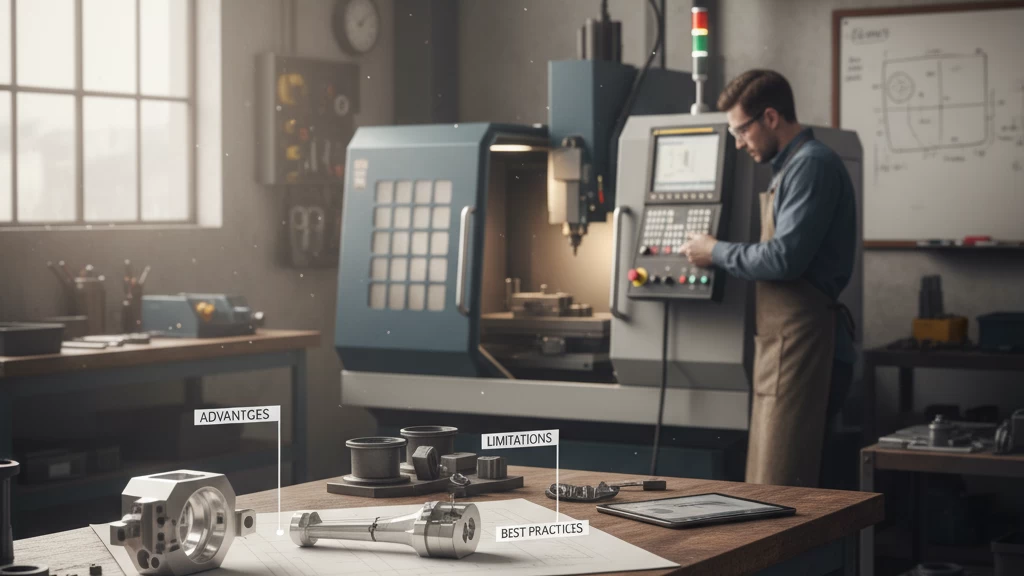
When it comes to the CNC process, the perks are clear. You get precision, speed, and versatility all rolled into one. CNC machines can reproduce complex parts with tight tolerances consistently, which is a huge advantage for everything from prototypes to full production runs. Plus, automated fabrication workflows cut down manual labor, reducing human error and speeding up turnaround times.
But CNC machining isn’t without its challenges. Here are a few common drawbacks and how to handle them:
- High upfront costs: Machines and software can be pricey. Mitigate this by choosing equipment that fits your scale — whether you’re starting small or planning to scale up.
- Programming complexity: Converting CAD designs into G-code can be tricky at first. Get familiar with CAM programming basics and consider training or software that simplifies this step.
- Material limitations: Some materials are tough to machine or require special tooling. Always check the material compatibility and tooling specs beforehand.
- Maintenance needs: Regular calibration and upkeep keep machines running smoothly and parts accurate.
For CNC beginners or businesses looking to grow their CNC capabilities, here are some pro tips:
- cURL Too many subrequests.
- cURL Too many subrequests.
- cURL Too many subrequests.
- cURL Too many subrequests.
cURL Too many subrequests.
- cURL Too many subrequests.
- cURL Too many subrequests.
- cURL Too many subrequests.
- cURL Too many subrequests.
cURL Too many subrequests. cURL Too many subrequests.
cURL Too many subrequests.
cURL Too many subrequests.
cURL Too many subrequests.
- cURL Too many subrequests. cURL Too many subrequests.
- cURL Too many subrequests. cURL Too many subrequests.
- cURL Too many subrequests. Medical devices need to meet strict standards for safety and precision. CNC processes create implants, surgical tools, and prosthetics with exact specs, improving patient outcomes.
- Consumer Goods Prototypes: Whether it’s electronics, sporting goods, or home appliances, CNC prototyping speeds up product development by quickly turning designs into working models.
- Emerging Trends: AI integration is changing the CNC process by optimizing cutting paths and reducing waste. Hybrid processes, combining additive and subtractive methods, are also opening new possibilities for complex parts and faster turnaround.
Across all these sectors, CNC machining offers a reliable way to meet quality standards and keep production efficient, making it a trusted choice for businesses focused on innovation and accuracy.
 German
  English
  Spanish (Peru)
  Korean
  Spanish (Spain)
  Italian