
Discover what is forged aluminum its high strength lightweight properties and how it compares to cast aluminum for automotive aerospace and cookware uses.
The Forging Process: How Forged Aluminum Is Made
Forged aluminum starts with selecting the right aluminum alloys, commonly 6061 and 7075 series. These alloys are chosen for their strength, durability, and workability during forging.
Step 1: Selecting Aluminum Alloys
- 6061 alloy: Known for good corrosion resistance and weldability
- 7075 alloy: High strength, often used where extra toughness is needed
Step 2: Heating Billets for Plasticity
The selected aluminum billets (solid chunks) are heated to 400–500°C (752–932°F). This high temperature makes the aluminum soft and malleable, allowing it to be shaped without cracking.
Step 3: Die Forging Techniques
Forging employs different methods to form the billet into the desired shape:
- Open-die forging: The billet is worked between flat or simple-shaped dies, good for large, simple shapes.
- Closed-die forging: Also called impression-die forging, the aluminum is pressed into a die cavity closely matching the final shape, producing detailed parts with excellent strength.
- Roll forging: The billet is passed through rollers to reduce thickness and elongate the material, ideal for certain profiles.
Step 4: Trimming, Heat Treatment, and Finishing
- After forging, any excess metal is trimmed off to achieve precise dimensions.
- The aluminum then undergoes heat treatment, commonly T6 tempering, which involves solution heat treatment and aging to maximize strength and hardness.
- Finally, finishing processes like machining, anodizing, or polishing refine the parts for performance and appearance.
This controlled process ensures forged aluminum parts have superior structural integrity, making them stronger and more reliable than cast or extruded alternatives.
Key Properties of Forged Aluminum
Forged aluminum stands out because of its strong mechanical, physical, and thermal properties — making it a top choice across many industries.
Mechanical Strength
- High tensile strength: Forged aluminum can reach up to 83 ksi, which means it can handle heavy loads without breaking.
- Excellent fatigue resistance: It resists cracking and failure, even under repeated stress over time. This makes it reliable for parts that see constant use, like automotive and aerospace components.
Physical Benefits
- Lightweight: With a density around 2.7 g/cm³, it’s much lighter than steel but still tough enough for demanding applications.
- cURL Too many subrequests.cURL Too many subrequests.
cURL Too many subrequests.
- cURL Too many subrequests.cURL Too many subrequests.
- cURL Too many subrequests.cURL Too many subrequests.
cURL Too many subrequests.
| cURL Too many subrequests. | cURL Too many subrequests. |
|---|---|
| cURL Too many subrequests. | cURL Too many subrequests. |
| cURL Too many subrequests. | cURL Too many subrequests. |
| cURL Too many subrequests. | cURL Too many subrequests. |
cURL Too many subrequests.
cURL Too many subrequests.
cURL Too many subrequests.
Grain Structure
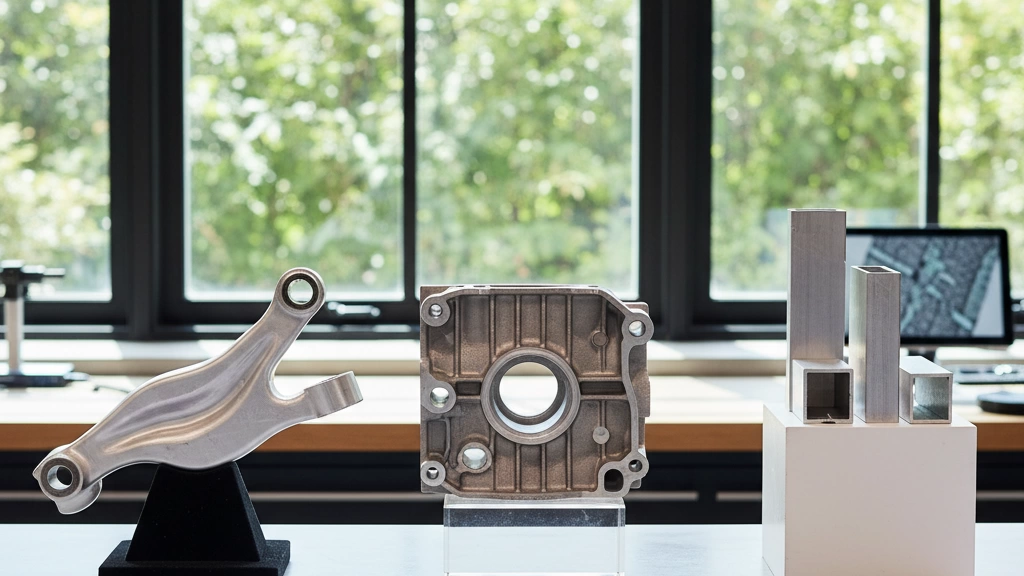
- Forged aluminum: Grains are aligned and compressed, creating stronger, more uniform metal.
- Cast aluminum: Has a porous, uneven grain structure that can lead to weak spots.
- Extruded aluminum: Grains flow along the length, offering good strength but not as uniform as forged.
Performance Metrics
| Property | cURL Too many subrequests. | cURL Too many subrequests. | cURL Too many subrequests. |
|---|---|---|---|
| Tensile Strength | Up to 83 ksi | 20–45 ksi | 35–65 ksi |
| Fatigue Resistance | Excellent | Poor | cURL Too many subrequests. |
| Impact Resistance | High | Low | cURL Too many subrequests. |
| Weight-to-Strength | Best | Heaviest | Good |
Cost and Production
- Forged aluminum: Costs more upfront due to complex die forging, but lasts longer and performs better. Worth it for critical parts.
- Cast aluminum: Cheapest and quick to produce, but less durable.
- Extruded aluminum: Mid-range price, good for long shapes but less strength than forging.
Pros/Cons At-A-Glance
| Type | Pros | Cons |
|---|---|---|
| Forged | Superior strength, fatigue resistance, consistent quality | Higher cost, shape limits |
| Cast | Low cost, complex shapes | Porosity, weaker structure |
| Extruded | Cost-effective, good uniformity | Lower strength than forged |
In short, forged aluminum is your go-to when strength, durability, and performance matter—perfect for automotive, aerospace, and high-end consumer goods. Cast and extruded aluminum fit well for budget-friendly or non-critical uses.
Common Applications of Forged Aluminum

cURL Too many subrequests.
- cURL Too many subrequests. cURL Too many subrequests.
- cURL Too many subrequests. cURL Too many subrequests.
- cURL Too many subrequests. cURL Too many subrequests.
- cURL Too many subrequests. cURL Too many subrequests.
cURL Too many subrequests.
cURL Too many subrequests.
cURL Too many subrequests.
cURL Too many subrequests.
cURL Too many subrequests.
cURL Too many subrequests.
cURL Too many subrequests.
cURL Too many subrequests.
cURL Too many subrequests.
cURL Too many subrequests.
When picking forged aluminum, knowing what to look for makes all the difference. Here are the key points to keep in mind:
Hallmarks of Forged Aluminum
- Smooth finish: Forged aluminum typically has a clean, polished look without rough spots.
- No porosity: Unlike cast aluminum, forged pieces won’t have tiny holes or bubbles.
- Certification stamps: Look for marks like ASTM B247; these confirm the forging standards were met.
Quick Buying Guide
- Choose brands known for premium forged products—they often highlight their forging process prominently.
- Avoid no-name or generic items that don’t mention forging or certifications.
- Ask retailers or manufacturers about alloy type (6061 or 7075 are common forgings) to ensure quality.
Maintenance Tips
- Clean forged aluminum with mild soap and water—avoid harsh chemicals.
- Prevent thermal shock by warming cookware slowly; sudden temp changes can damage the metal’s surface.
- Regularly check for dents or cracks, especially if used in automotive or aerospace parts.
| cURL Too many subrequests. | cURL Too many subrequests. | cURL Too many subrequests. | cURL Too many subrequests. |
|---|---|---|---|
| Surface Finish | Smooth, polished | Rough, porous | Smooth |
| Strength | High, aligned grain | Lower, porous | cURL Too many subrequests. |
| Certification | Often stamped (ASTM) | Rarely stamped | Sometimes |
| Price | Premium | Lower | Mid-range |
By focusing on these signs, you’ll confidently select forged aluminum products that last longer and perform better.
Future Trends in Forged Aluminum Technology
Forged aluminum is evolving fast thanks to new tech and materials. One big innovation is additive forging hybrids, which combine traditional forging with 3D printing. This lets manufacturers create complex shapes while keeping the strength and durability forged aluminum is known for. It’s a game-changer for industries that need lightweight yet strong parts without wasting materials.
Another trend is the rise of sustainable aluminum alloys. These are designed to reduce environmental impact by using more recycled content or alloys that require less energy to produce. This shift aligns perfectly with the growing focus on eco-friendly manufacturing.
cURL Too many subrequests. cURL Too many subrequests. cURL Too many subrequests.
cURL Too many subrequests.
 German
  English
  Spanish (Peru)
  Korean
  Spanish (Spain)
  Italian