
Discover gear types, functions, and applications in engineering with detailed guides, calculations, and maintenance tips for makers and professionals.
If you’ve ever wondered how machines from cars to clocks transfer power so smoothly, the answer lies in one simple yet powerful component: gears. Whether you’re a student tackling your first engineering project, a DIY enthusiast building something new, or a professional navigating industrial applications, mastering the world of gears is key to innovation and efficiency. In this guide, you’ll get a clear, no-fluff breakdown of gear types, how they work, and why choosing the right one can make all the difference. Ready to unlock the full potential of gears in your next project? Let’s get started.
The Fundamentals: What Are Gears and How Do They Work
Gears, or gears, are essential mechanical components used to transmit motion and torque between rotating shafts. At their core, they consist of several parts: the crown (the gear’s circular body), teeth (the individual tooth-shaped protrusions that interlock with other gears), the hub (the central part connecting the gear to the shaft), and the primitive circle, which is an imaginary circle that defines the gear’s size and tooth placement.
Gears work through no-slip contact, meaning their teeth mesh perfectly without slipping, ensuring precise motion transfer. When one gear turns, it drives another, enabling changes in speed and torque. By using different sizes of wheels, you can increase or decrease torque — a smaller gear turning a larger one reduces speed but increases torque, and vice versa.
Key parameters for designing gears include the module (the size of the teeth), the number of teeth, and the pitch diameter (the diameter of the primitive circle). For example, if a gear has 40 teeth with a module of 2 millimetres, its pitch diameter is simply the number of teeth multiplied by the module, resulting in 80 millimetres.
An infographic comparing gears versus belt drives highlights the advantages and drawbacks of each: gears offer precise motion control and higher torque transmission, while belts provide quieter operation and easier maintenance.
It’s fascinating to note that innovations related to gears can be traced back to early inventions like the ancient Greek Antikythera mechanism, seen as a technological ancestor to today’s complex machinery. This rich history connects through Spanish-speaking cultures, including Mexico, where robotics and automation increasingly rely on advanced gear systems, continuing this legacy of mechanical innovation.
A Historical Evolution From Ancient Mechanisms to Industrial Powerhouses
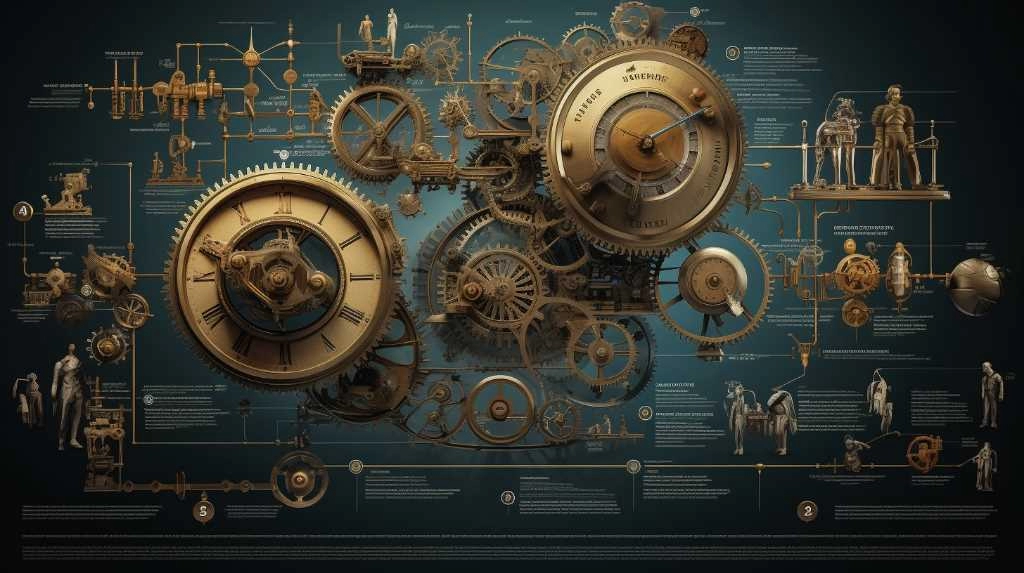
Gears have been around for thousands of years, dating back to about 150–100 BC with the famous Antikythera mechanism, an ancient Greek device considered one of the first complex gear systems. Around the same time, early Chinese mills also used basic gears to improve efficiency in grinding grain.
Fast forward to the Industrial Revolution, gears became essential in powering machines with the development of precision milling techniques. This period marked a huge leap, turning simple wheels into finely crafted components. Today, modern CNC (computer numerical control) fabrication allows even more accurate gear production, meeting strict ISO tolerances common in European and United Kingdom manufacturing.
Material innovation has played a big role in this evolution. Early gears were made from bronze or cast iron, but now high-performance polymers and advanced alloys offer better strength, durability, and noise reduction. These advances help meet the growing demands of industries like automotive, aerospace, and robotics, making gears more reliable and efficient than ever before.
Exploring Types of Gears Matching Design to Application
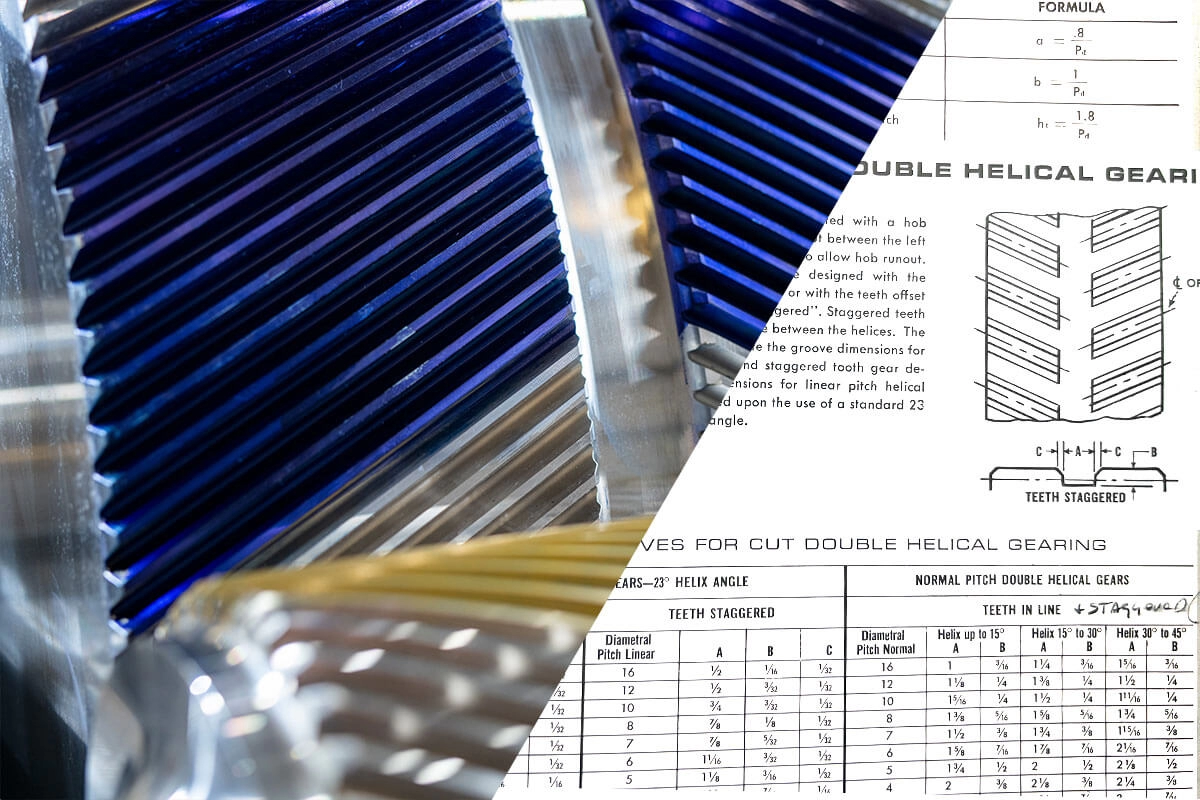
Gears come in various types, each designed to fit specific needs based on axis alignment and tooth profile. Here’s a quick breakdown:
Classification by Axis Alignment and Tooth Profile
- Parallel Shafts: Gears rotate on axes that are parallel.
- Intersecting Shafts: Axes intersect, often at 90 degrees.
- Skew Shafts: Axes are neither parallel nor intersecting, requiring special gear geometry.
- Tooth Profile: Mainly straight (spur) or inclined (helical) teeth.
Common Types of Gears
- Spur Gears:
- Simple, cost-effective for parallel shafts
- Efficient at moderate speeds and loads
- Downsides: noisy and less suited for very high loads or speeds
- Helical Gears:
- Teeth angled for smoother, quieter operation
- Better for high-speed and high-load applications
- Axial thrust forces need proper management
- Bevel Gears:
- Change rotational direction by 90 degrees
- Available in straight and spiral tooth forms
- Common in automotive differentials and machinery
- Worm Gears:
- Provide high reduction ratios in a compact space
- Self-locking feature prevents back-driving
- Ideal for elevators, conveyors, and hoisting systems
- Planetary Gears:
- Compact, multi-speed setups with high torque density
- Widely used in transmissions and robotics
- Rack and Pinion:
- Convert rotational into linear motion
- Perfect for steering systems and automated robotics
Selection Matrix for Gear Types
| Gear Type | Load Capacity | Efficiency | Noise Level | Cost | Common Usage Areas |
|---|---|---|---|---|---|
| Spur | Medium | High | High | Low | General machinery, conveyors |
| Helical | High | High | Low | Medium | Automotive, vibration-sensitive equipment |
| Bevel | Medium-High | Medium | Medium | Medium | Automotive differentials |
| Worm | Low-Medium | Low | Low | Medium | Lifting equipment |
| Planetary | High | Medium-High | Medium | High | Robotics, transmissions |
| Rack & Pinion | Medium | High | Low | Medium | Steering, linear actuators |
Pro Tip
For applications sensitive to vibrations, we recommend choosing vast’s custom helical gears. Their precision and noise reduction make them perfect for delicate machinery and equipment requiring smooth transmission.
This quick guide should help you match the right type of gears to your specific application needs.
Design and Calculation Essentials Building Reliable Gear Systems
Designing reliable gears starts with a clear, step-by-step process:
- Load Analysis: Understand the forces your gears will face. This helps decide the size and material.
- Profile Generation: Create the gear tooth shape, usually using the involute curve for smooth meshing.
- Meshing: Make sure gear teeth fit and work together without slipping or excessive wear.
Key Calculations to Know
- Gear Ratio: Determines speed and torque changes. It’s the ratio of teeth between driver and driven gears.
- Bending Stress: Check tooth strength using the Lewis equation, which helps prevent cracks or breaks.
- Wear Prediction: Estimate how long gears will last based on friction and load. Tools like Python scripts or online calculators can simplify this.
Common Gear Failures and How to Avoid Them
Watch out for these typical issues:
- Pitting: Small surface cracks caused by stress.
- Friction and Heat: Excessive friction leads to wear.
- Misalignment: Incorrect positioning causes uneven load and damage.
Prevention Tips:
- Proper lubrication with the right grease or oil.
- Regular alignment checks.
- Using quality materials and design optimised for your load.
Useful Tools and Resources
- CAD Software: For precise gear modelling and simulation.
- Vast’s Free Gear Design Consultation: Specialised help for Spanish-speaking users in the UK and Mexico.
- Visual Flowchart: Step-by-step guide cómo calcular engranajes para tu máquina simplifies the process and ensures accuracy.
Following these essentials helps you build durable, efficient gear systems tailored to your needs.
Real World Applications Gears in Action Across Industries
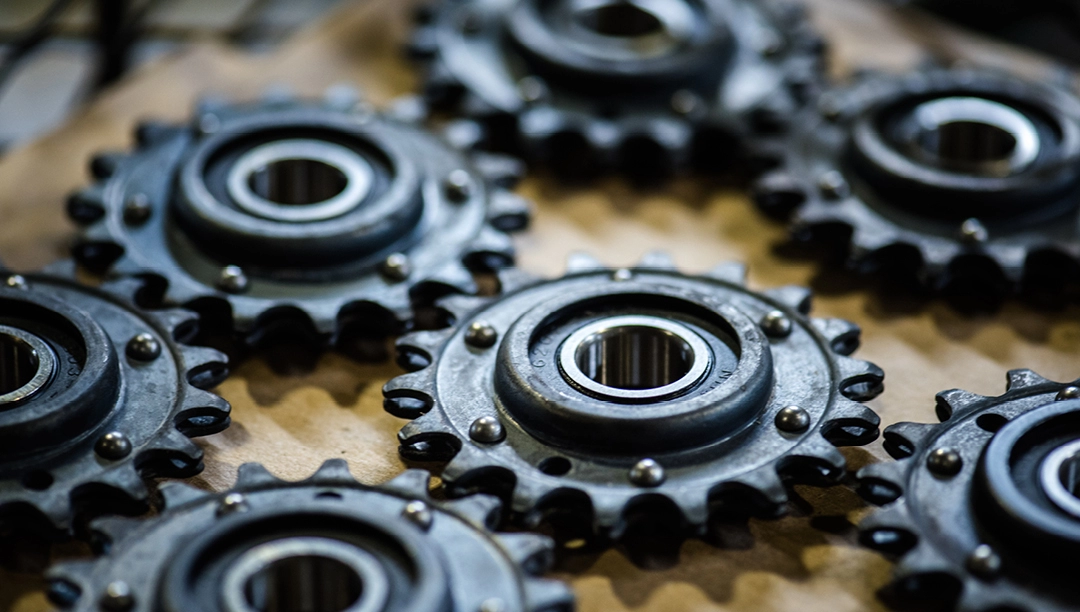
Gears play a crucial role across many industries here in the UK, powering everything from automotive to consumer products. Here’s a quick look at where they make a difference:
Automotive Industry
- Found in transmissions and differentials, gears help improve efficiency and performance.
- Spanish electric vehicles (EVs) are increasingly using advanced gear systems for smoother rides and better energy use.
Manufacturing
- Conveyors and CNC machines rely on precise gears for consistent movement and accuracy.
- Mexico’s maquiladoras especially benefit from these reliable gear systems, ensuring smooth assembly line operations.
Robotics and Energy
- Robots use high-precision gears to achieve exact movements.
- Drones and wind turbines incorporate gears to transfer energy efficiently and maintain performance under stress.
Consumer Goods
- From clocks to kitchen appliances and DIY projects, gears ensure smooth, reliable operation in everyday tools.
Case Study
A local factory equipped with Vast custom planetary gears has seen significant gains in compact design and multi-speed capability. Although details remain confidential, this demonstrates how tailored gear solutions can enhance productivity and flexibility.
Future Trends
- 3D-printed polymers are beginning to offer lightweight, durable gears at lower costs.
- Smart sensors integrated with gears enable predictive maintenance, reducing downtime and repair costs.
By understanding these real-world applications, you will see why choosing the right gears matters, making your projects more efficient, reliable, and future-ready.
Maintenance Troubleshooting and Next Steps with Vast
Keeping your gears running smoothly requires regular maintenance and knowing how to identify issues early. Here are best practices to help you extend gear lifespan and avoid costly downtime:
- Lubrication types: Use the appropriate grease or oil recommended for your gear type and application to reduce friction and wear.
- Alignment checks: Misaligned gears cause noise, vibration, and premature damage. Regularly inspect shaft positioning and make adjustments as needed.
- Wear monitoring: Watch for tooth pitting, cracks, or abnormal wear patterns. Early detection can prevent larger failures.
Troubleshooting Guide for Common Gear Issues
If you notice any of these problems, take action quickly:
- Unusual noise or grinding: Check lubrication levels and gear alignment.
- Gear slipping or backlash: Inspect teeth for damage and adjust gear mesh.
- Overheating: Verify lubrication quality and load conditions.
- Vibration: Look for worn bearings or misalignment.
- Tooth wear or pitting: Evaluate load and lubrication, replace if severe.
Next Steps with Vast Custom Gears
Vast specialises in custom gears designed to meet your exact needs, whether you’re in Spain, Mexico, or the UK. Contact us for:
- Free quotes tailored to your application
- Expert consultation in Spanish and English
- Custom gear solutions for vibration-sensitive or heavy-duty projects
Recap and FAQs
To wrap up, understanding maintenance basics and early troubleshooting helps you keep gears efficient and reliable. Ready to innovate with your gear systems? Check out our beginner-friendly FAQ section or reach out to Vast for personalised support.
Let us help you get the perfect gear solution for your machine!
 English
  Chinese
  Spanish (Peru)
  German
  Korean
  Spanish (Spain)
  Italian