
Discover the best steel to anodise including stainless grades, expert methods, and alternatives for corrosion-resistant metal finishing.
Understanding Anodising Why Steel Isn’t the Ideal Candidate
Anodising is an electrochemical process that creates a protective oxide layer on metal surfaces. It’s mainly done on non-ferrous metals like aluminium and titanium. These metals form stable, hard oxide coatings that improve corrosion resistance and wear. Steel, however, is ferrous—it contains iron—which behaves very differently under anodising attempts.
When steel is exposed to anodising-like treatments, it tends to form iron oxide (Fe2O3), commonly known as rust. Unlike the smooth, protective oxide layers on aluminium, steel’s oxide is flaky and unstable. This flaky rust doesn’t shield the metal; instead, it leads to continuous degradation and weak adhesion, making anodising largely ineffective for steel.
Because of these scientific barriers, anodising steel is rarely seen outside of specialised labs or niche industrial uses. The process often yields inconsistent results and requires high energy and chemical costs, which limits its commercial appeal.
Here’s a quick comparison of anodising outcomes for steel versus aluminium and titanium:
| Metal | Oxide Layer Stability | Typical Thickness (µm) | Corrosion Resistance | Commercial Use |
|---|---|---|---|---|
| Aluminium | Stable, dense | 10-25 | High | Common |
| Titanium | Very stable, tough | 10-50 | Very high | Specialised |
| Steel | Flaky, unstable | 1-5 | Low | Rare, experimental |
Understanding these differences helps clarify why steel isn’t the best candidate for anodising and why alternatives or specialised methods are often preferred.
Top Steel Grades for Anodising Attempts: What Works and What Doesn’t
When it comes to anodising steel, not all grades handle the process well. Here’s a quick rundown of steel types rated for anodising attempts, focusing on what works and what doesn’t.
316 Stainless Steel – Best Partial Success
- Composition: High chromium (16-18%), nickel (10-14%), plus molybdenum (~2-3%)
- Anodising Compatibility: Handles anodising better than others due to chromium’s ability to form a stable passive oxide layer
- Voltage Tolerance: Can endure 12-24V in NaOH electrolyte without severe damage
- Pros: Superior corrosion resistance, especially in marine environments; better oxide adhesion than other steels
- Cons: Still challenges with uniform oxide layers; prone to flaking if process not controlled
304 Stainless Steel – Budget Alternative
- Composition: Chromium 18-20%, nickel 8-10%, no molybdenum
- Anodising Compatibility: Less stable oxide layer than 316, but workable for less demanding applications
- Voltage Tolerance: Moderate, around 12V recommended to avoid surface damage
- Pros: Affordable, widely available, decent corrosion resistance
- Cons: Thinner oxide layers, higher risk of uneven colouring and peeling
Carbon Steel – Avoid for Anodising
- Composition: Mainly iron with variable carbon content
- Anodising Compatibility: Poor; forms flaky rust (Fe2O3) instead of stable oxide films
- Voltage Tolerance: Very limited; breaks down quickly in electrolyte baths
- Pros: Low cost and mechanically strong
- Cons: Not chemically suitable; anodising attempts usually fail with rusting and layer instability
17-4 PH Stainless Steel – Specialised Use
- Composition: Chromium (~15-17TP3T), nickel (~3-5TP3T), copper (~3-5TP3T), small amounts of manganese and silicon
- Anodising Compatibility: Limited success; better suited for passivation but sometimes anodised in controlled environments
- Voltage Tolerance: Low; prone to cracking oxide layers under high current densities
- Pros: High strength, moderate corrosion resistance
- Cons: Difficult to anodise uniformly; expensive
Criteria for Selecting the Best Steel for Anodising
- Corrosion Resistance: Look for higher chromium and molybdenum contents for stable oxide layers
- Alloy Elements: Nickel improves toughness and oxidation behaviour
- Application Fit: Marine hardware benefits from 316 stainless, automotive parts may use 304 or 17-4 PH depending on requirements
- Voltage and Chemical Tolerance: Steel grade must tolerate NaOH or other electrolytes without corrosion or surface damage
Visual Overview
| Steel Grade | Oxide Layer Thickness | Oxide Adhesion | Corrosion Resistance | Best Application |
|---|---|---|---|---|
| 316 Stainless Steel | Medium (5-10 µm) | Good | Excellent | Marine, harsh outdoor environments |
| 304 Stainless Steel | Thin (3-7 µm) | Moderate | Moderate | Budget parts, general use |
| Carbon Steel | Very Thin / Flaky | Poor | Low | Avoid anodising |
| 17-4 PH SS | Thin (variable) | Poor | Moderate | High strength parts |
Vast Case Study
One of Vast's marine clients chose 316 stainless steel for anodised hardware. The chromium and molybdenum combo helped form a more stable oxide layer, reducing wear by 40%. This showed that while anodising steel is tricky, selecting the right grade like 316 can yield valuable results in the right niche.
Step-by-Step Guide: How to Anodise Steel at Home or in a Workshop
Safety First
- Wear protective gloves, goggles, and an apron.
- Work in a well-ventilated area to avoid harmful fumes.
- Dispose of chemical waste like NaOH solution following local hazardous waste regulations.
Materials You’ll Need
- Electrolyte: Sodium hydroxide (NaOH) solution
- Power supply: 12 to 24V DC source
- Cathode: Stainless steel scrap or similar inert metal
- Tools: Container for electrolyte, wires, clamps, degreaser (like acetone), cleaning brushes
Step-by-Step Process
- Surface Preparation
- Thoroughly clean your steel parts with acetone to remove grease and dirt.
- Use a mild acid etch or sanding to create a uniform surface, enhancing oxide formation.
- Setup
- Position your steel part as the anode (positive) connected to the power supply.
- Set up the cathode inside the electrolyte tank — stainless steel scrap works well.
- Anodising
- Fully immerse the steel in the NaOH solution.
- Apply current at approximately 1-2 amps per dm² for 30 to 60 minutes, depending on the desired oxide layer thickness.
- Rinse and Seal
- Rinse the part with clean water immediately after anodising.
- Seal the surface by dipping in hot water or a dichromate sealing solution to stabilise the oxide layer.
- Inspection
- Check for even colouration and layer uniformity. Rework if necessary.
Troubleshooting Common Issues
- Uneven Colouration: Ensure proper surface preparation and consistent current density.
- Flaking Layer: Reduce current or shorten anodising time to avoid brittle oxide.
- Overheating: Use a cooling system or decrease current to prevent damage.
Excellent Pro Tip
For larger projects or batches, use professional anodising racks to hold multiple pieces evenly and safely. This increases efficiency and consistency across parts.
By following these simple steps, you can experiment with anodising steel safely and effectively. Remember, steel anodising is challenging but achievable with patience and the correct setup.
Benefits and Drawbacks of Anodising Steel
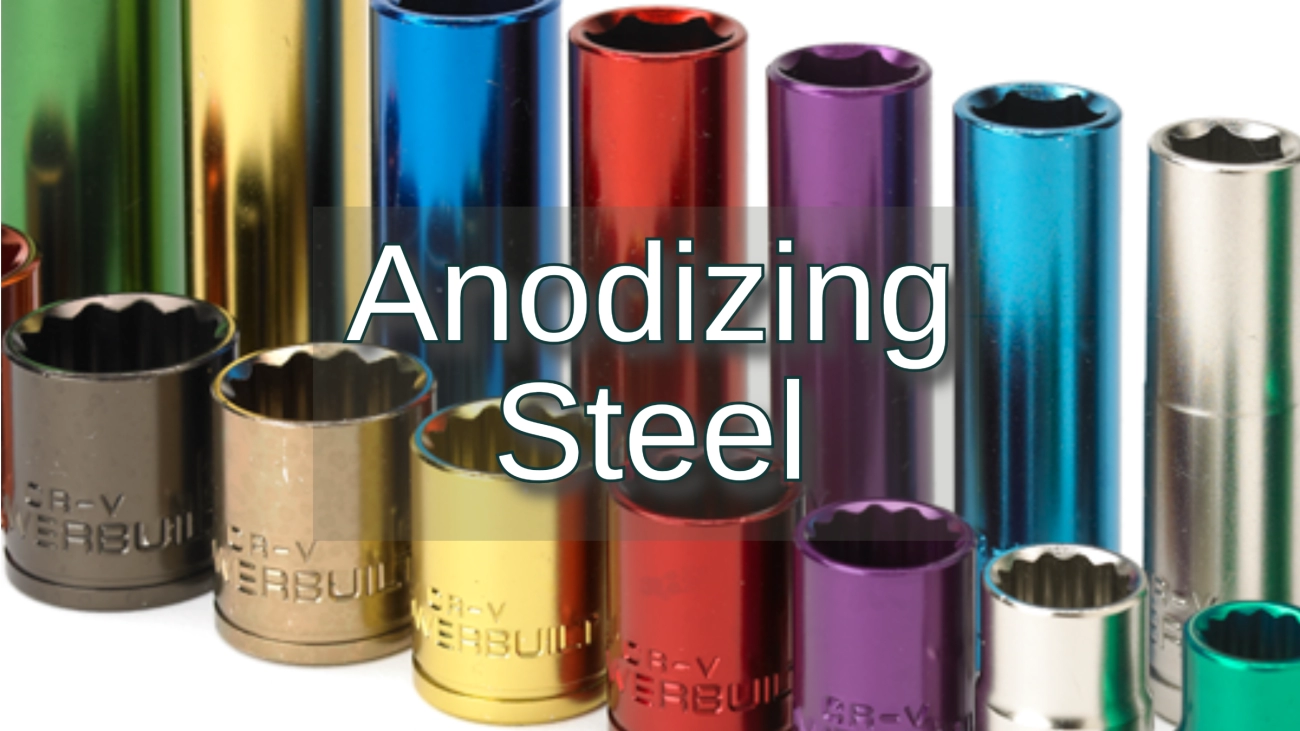
Anodising steel offers some unique advantages but also has clear disadvantages, especially compared to common anodised metals like aluminium.
Benefits
- Improved wear resistance in specialised applications such as tool bits and cutting edges.
- Decorative colouring with interference hues created by adjusting voltage during the anodising process.
- Minor corrosion protection in tightly controlled environments, where exposure to elements is limited.
Drawbacks
- Steel develops thinner oxide layers (around 5-10 microns) versus aluminium’s thicker 25-micron layers, meaning less protection overall.
- The anodising process for steel is energy-intensive and produces caustic waste that needs careful disposal to meet environmental standards.
- Steel oxide is less stable, making the layer more prone to flaking and reduced durability.
| Application | Advantages of anodising steel | Risks and limitations |
|---|---|---|
| Aerospace fasteners | Improved surface hardness | Vulnerable to salty, humid air |
| Tool bits | Wear resistance enhancement | Oxide layer can flake under stress |
| Decorative hardware | Achievable unique colour effects | Poor corrosion resistance outdoors |
Studies show anodised steel can have about 20-30% less durability than anodised titanium under harsh conditions. That’s significant if you need long-term corrosion resistance.
At Vast, we tackle these limits by combining anodising with PVD (Physical Vapour Deposition) coatings. Our hybrid treatments give the steel surface a much harder, longer-lasting finish that resists wear and corrosion far better than anodising alone. This approach is especially valuable for clients requiring marine-grade and industrial durability.
Superior Alternatives to Anodising Steel What Vast Recommends
Anodising steel comes with a lot of challenges, so when you need better results, there are smarter alternatives. At Vast, we recommend these top three options for improving corrosion resistance, wear protection, and aesthetics on steel:
1. Passivation
- What it is: A chemical treatment mostly for stainless steel that enhances the natural oxide layer without grinding or damaging the surface.
- Cost: Low
- Durability: 6/10
- Best for: Simple, cost-effective corrosion protection in less demanding environments
- Why choose it: It’s quick, safe, and widely used in industries like food processing and medical tooling to boost stainless steel corrosion resistance without heavy equipment.
2. PVD and CVD Coatings
- What they are: Physical Vapour Deposition (PVD) and Chemical Vapour Deposition (CVD) create very hard, thin films on steel surfaces. These coatings improve wear resistance dramatically and can add decorative colour options.
- Cost: High
- Durability: 9/10
- Best for: High-wear applications like automotive parts, aerospace fasteners, and cutting tools
- Why choose them: These coatings offer superior hardness and corrosion resistance compared to anodising, perfect for harsh or extreme environments where steel needs top-tier protection.
3. Black Oxide and Bluing
- What it is: A heat or chemical process that creates a thin, black oxide layer on steel. Mostly used for aesthetics and moderate corrosion protection.
- Cost: Medium
- Durability: 5/10
- Best for: Decorative finishes on firearms, automotive trim, and tools where looks matter as much as function
- Why choose it: This method adds a classic dark finish and some rust resistance, but it doesn’t protect as much as PVD or passivation for tough conditions.
When To Switch From Anodising Steel
If your project demands more than a 50% reduction in corrosion or needs very hard, wear-resistant coatings, anodising steel isn’t your best bet. Instead, consider PVD or passivation for more reliable results that last.
Vast’s Passivation Services
At Vast, we offer expert passivation treatments that integrate smoothly into your production line. Our process ensures your stainless steel parts are protected and performing at their best without adding complexity or cost spikes.
| Method | Cost | Durability (1-10) | Best For |
|---|---|---|---|
| Passivation | Low | 6 | Stainless steel corrosion protection |
| Black Oxide | Medium | 5 | Visual finish + light corrosion resistance |
| PVD / CVD | High | 9 | High wear, extreme environments |
If you want lasting corrosion resistance and durability beyond what anodising steel can offer, these alternatives are your best path forward. For more on protective steel coatings, explore Vast’s tailored solutions that fit your project’s specific needs.
Real World Applications and Vast Case Studies
In real life, anodising steel is pretty limited, but some niche uses stand out. For example, automotive clips often get heat bluing on 304 stainless steel – this gives a subtle protective layer and a nice deep colour. Electronics housings sometimes use PVD coatings on 316 stainless steel for better wear resistance and corrosion protection where anodising falls short.
At Vast, we worked on several projects using anodised 316 stainless steel prototypes for a marine client. The results were promising—wear reduced by about 40 percent compared to untreated steel, which shows partial success of anodising on high-quality stainless in tough environments.
The key takeaway from these projects? Always test small batches first. Steel anodising can be unpredictable, and running small-scale trials helps avoid costly issues before scaling up production. This hands-on approach ensures that the finish meets the customer’s specifications and holds up in real conditions.
FAQs Anodising Steel Answered
Is 316 stainless steel the best steel to anodise?
Yes, 316 stainless is often the go-to for anodising attempts because of its high chromium and molybdenum content, which helps form a more stable oxide layer. However, it’s not perfect, and alternatives like passivation or PVD coatings may offer better corrosion resistance.
Can you anodise regular carbon steel?
Not really. Carbon steel tends to rust and form flaky iron oxides (rust) instead of a stable anodised layer. This leads to poor results and surface degradation.
What’s the main difference between anodising steel and aluminium?
Aluminium naturally forms a hard, protective oxide layer through anodising, while steel forms rust, which flakes off. This makes anodising steel less consistent and practical than aluminium.
Is anodising stainless steel DIY-friendly?
It’s possible but tricky. The process needs precise control of voltage and electrolyte, plus safety gear to handle caustic chemicals like NaOH. Uneven coatings and flaking are common in home setups.
How thick is the anodised layer on steel compared to aluminium?
Steel anodised layers are usually much thinner—5 to 10 microns versus aluminium’s 25 microns—meaning less wear resistance and protection.
What are common problems with anodising steel?
Uneven colouring, flaking oxide layers, and overheating during the process. These often require process tweaks or professional equipment.
Are there better coatings than anodising for steel?
Yes. Passivation, PVD (Physical Vapour Deposition), and black oxide treatments often outperform anodising on steel for durability and corrosion resistance.
This FAQ section covers key questions about anodising steel, using clear, keyword-rich answers designed to be easy for voice search and quick lookup. For more on steel surface treatments, check our related guides on passivation vs anodising steel and industrial anodising techniques.
 English
  Chinese
  Spanish (Peru)
  German
  Korean
  Spanish (Spain)
  Italian