
Discover top CNC drill machines, spindles, bits, prices, and expert buying tips for wood, metal, and PCB drilling in 2025.
CNC Drill vs CNC Mill – Which One Do You Actually Need in 2025?
If you’re trying to decide between a CNC drill and a CNC mill, you’re not alone. Both machines handle drilling, but they have real differences that can impact your workflow and budget. In 2025, the key distinctions boil down to rigidity, spindle power, tool-changing capabilities, and cost.
When a CNC Mill with Drilling Capability Makes More Sense
For about 90% of small shops and hobbyists, a CNC mill that can drill is the smarter, more flexible choice. Mills offer stronger build quality and better spindle power, so they can handle everything from milling complex parts to drilling holes without switching machines. Plus, mills often feature automatic tool changers that shift between cutting and drilling tools on the fly—saving time and floor space.
When You Actually Need a Dedicated CNC Drilling Machine
Dedicated CNC drill presses or gantry drilling machines shine when your work is focused heavily on drilling—especially repetitive, high-speed, or multi-hole tasks. If you’re running deep-hole metal drilling, tapping, or high-volume production runs, a dedicated CNC drill offers superior rigidity, optimised spindle speeds for drilling, and multi-spindle setups that mills just can’t match. These machines typically cost more upfront but deliver higher drilling efficiency and longevity in specialised applications.
In short, if your projects mostly involve milling with some drilling mixed in, stick with a CNC mill. But if drilling is your bread and butter—think industrial drilling centres or precision PCB drilling—investing in a dedicated CNC drill can pay off big time.
Types of CNC Drilling Solutions Available in 2025
In 2025, you’ve got several CNC drilling solutions depending on your shop size and needs:
- Dedicated CNC Drilling Machines: These include gantry-style setups, multi-spindle machines, and classic CNC drill presses. Perfect if you need high rigidity and fast drilling on metals or wood with repeatable precision.
- High-Speed Drilling Spindles for CNC Routers/Mills: If you already own a CNC router or mill, adding a high-speed spindle designed for drilling can save space and money while boosting drilling capabilities.
- CNC Routers with Automatic Drilling Packages: Some routers now come with built-in automatic tool changers and drilling attachments—ideal for shops handling wood, plastics, or light metals at moderate speeds.
- PCB and Prototyping Micro-Drill Machines: Specialised for printed circuit boards and tiny, precise holes. These compact CNC drills offer exceptional accuracy for electronics prototyping.
- Industrial Drilling & Tapping Centres: These heavy-duty machines handle large batches and tough materials, including deep-hole drilling and tapping in automotive or aerospace manufacturing.
Each option fits different budgets and production needs, so it’s about matching the right CNC drilling machine to your workload and materials.
Key Specifications to Compare Before Buying a CNC Drill
When selecting a CNC drill, focus on these essential specifications to ensure a suitable fit for your workshop and material requirements.
| Specification | What to Look For | Notes |
|---|---|---|
| Spindle Power & RPM | Range from 1 kW up to 15 kW+ | More power for metal & deep holes |
| Maximum Drilling Diameter | Varies for steel, aluminium, wood | Steel requires a smaller maximum diameter compared to wood |
| Positioning Accuracy & Repeatability | Usually measured in microns (±0.01 mm or better) | Crucial for consistent hole placement |
| Tool Changer | Automatic vs manual | Automatic saves time on multi-hole jobs |
| Work Envelope & Throat Depth | How large and deep your workpiece can be | Larger envelope accommodates bigger parts |
| Cooling System | Air, mist, or flood coolant | Flood cooling is better for heat-sensitive metals |
| Control Software | Must support Mach3/4, LinuxCNC, GRBL, Centroid, Siemens, etc. | Choose software you’re comfortable with |
Quick tips:
- If you drill mostly steel or hard metals, prioritise spindle power and cooling.
- For woodworking, maximum drilling diameter and speed are more important.
- Automated tool changes boost productivity but increase the cost.
- Compatibility with your current CNC control system avoids headaches later.
Keep these specifications in mind to avoid overspending on features you won’t use or ending up with a machine that can’t handle your projects.
Best CNC Drill Machines & Spindles in 2025 (Tested & Reviewed)
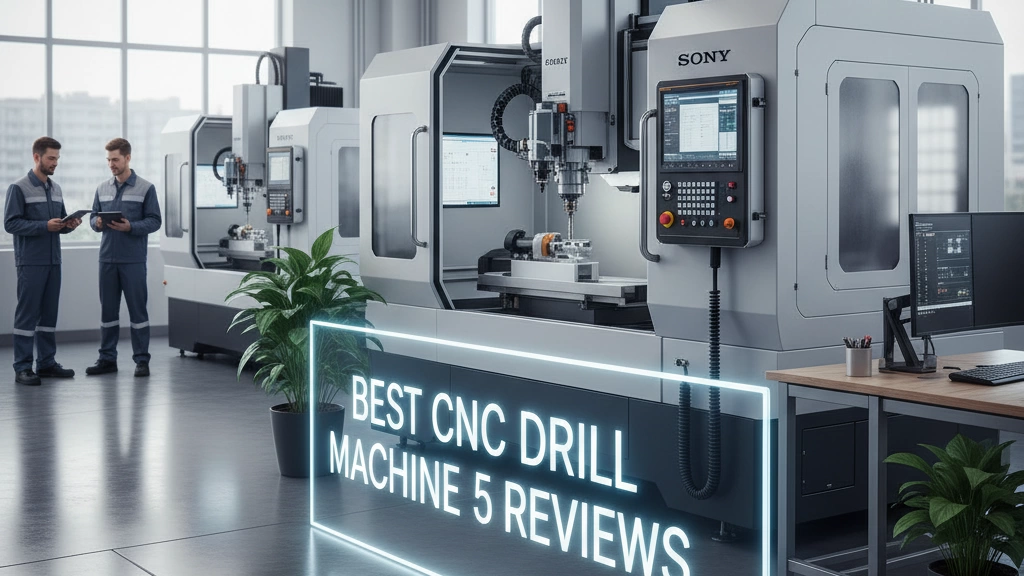
Finding the right CNC drill machine or spindle in 2025 depends on your workshop size, budget, and drilling needs. Here’s a quick overview of the top choices for various uses:
Best Overall for Small/Medium Workshops
For most small to medium workshops, the Tormach 440 CNC Drill Mill stands out. It combines solid rigidity with versatile spindle power (up to 3.5 kW) and a reliable automatic tool changer. It handles steel, aluminium, and wood well, making it a perfect all-round choice under $40K.
Best Budget Machine Under $5,000
On a tight budget? Consider the BobsCNC Evolution 3 with CNC drill upgrade or entry-level CNC routers with a high-speed drilling spindle add-on. These setups cover woodworking and light aluminium drilling with decent accuracy and repeatability.
Best for Metal & Deep-Hole Drilling
If you’re drilling metal or deep holes regularly, the Gantry-style Multi-Spindle CNC Drilling Machines from Haas or Hurco are unmatched. These industrial machines offer high spindle power (10 kW+), deep throat depths, and flood coolant options perfect for tough metals and big projects.
Best High-Speed Spindle Upgrade
Want to upgrade an existing CNC mill or router? The HSD ES915 or Kress 770 FME high-speed spindles are great. They reach up to 30,000+ RPM, perfect for PCB drilling and fine metalwork. They bolt right on and bring new life to older machines at a fraction of the cost of a new CNC drill press.
Best Industrial Drilling Centre
For heavy-duty production, EMAG’s Vertical CNC Drilling & Tapping Centres lead the pack. These machines feature multi-axis capabilities, fast tool changers, and extreme rigidity, tailored for continuous industrial use in the manufacturing sector.
No matter your needs, choosing a CNC drill machine or spindle that matches your material, volume, and workshop size ensures you get the most out of your investment in 2025.
CNC Drill Bits – What Actually Works in 2025
Choosing the right CNC drill bits is key for clean, precise holes whether you’re working with wood, metal, or PCBs. Here’s a quick rundown to help you pick the best bit for your job in 2025.
Carbide vs HSS vs Diamond-Coated
- Carbide bits are the go-to for toughest materials like steel and stainless. They stay sharp longer and handle high speeds well.
- HSS (High-Speed Steel) bits work great for softer metals and wood. They’re budget-friendly but wear out faster than carbide.
- Diamond-coated bits shine for super-hard materials and PCBs, offering unbeatable precision for micro drilling tasks.
Spot Drill vs Twist vs Brad-Point vs Through-Hole
- Spot drill bits start your hole perfectly, preventing wandering.
- Twist drills are the most common, excellent for general-purpose drilling.
- Brad-point bits are best for wood, giving clean entry and no tear-out.
- Through-hole bits handle deep holes efficiently, great for metal with coolant channels.
Recommended Brands & Where to Buy
You’ll find quality bits from Kennametal, Bosch, Amana Tool, and Guhring easily at major suppliers like MSC Industrial, Travers Tool, and Amazon. Local tool distributors in the UK often stock these, too.
Feed & Speed Charts
Matching feed rates and RPM to your bit and material is vital for longer bit life and perfect holes. For quick reference, download our free feed & speed chart PDF—it covers everything from softwood to hardened steel to help you set up right the first time.
Picking the right CNC drill bits means less downtime, better results, and more repeat business. Keep a varied kit handy and swap smart to nail every job.
Average CNC Drill Price Ranges in 2025
Here’s what you can expect to pay for CNC drill setups in 2025, covering everything from hobby projects to full industrial machines:
- Entry-level hobby CNC drills (GRBL controller + basic spindle): $800 – $2,500
Perfect for hobbyists or small home workshops tackling wood, plastics, and light metals. - Mid-range 4×4 CNC routers with drilling packages: $4,000 – $9,000
Great for small to medium workshops needing versatile machines that can handle milling and drilling jobs. - Professional spindle upgrade kits (high-speed or heavy-duty spindles): $1,200 – $4,500
Ideal if you already have a router or mill but want better drilling performance without buying new equipment. - Industrial multi-spindle CNC drilling centres (3-6 spindles): $35,000 – $150,000+
Built for high-volume metalworking workshops where speed, precision, and durability are essential.
Prices vary based on features like spindle power, automation, and control system compatibility. For most UK small workshops, a mid-range router with drilling capability offers the best balance of cost and functionality.
How to Choose the Perfect CNC Drill for Your Material & Volume
Picking the right CNC drill comes down to what you’re drilling and how much work you’re doing. Here’s a quick decision matrix to help you narrow it down, whether you’re working with wood, aluminium, steel, stainless steel, or PCBs—and whether your volume is low, medium, or high.
| Material | Volume | Recommended CNC Drill Type | Key Features to Look For |
|---|---|---|---|
| Wood | Low to Medium | CNC router with drilling package | Moderate spindle power, air or mist cooling |
| Wood | High | Dedicated CNC drilling machine or multi-spindle | Fast tool change, larger work envelope |
| Aluminium | Low to Medium | CNC mill with high-speed drilling spindle | 3-5 kW spindle, flood coolant option |
| Aluminium | High | Industrial drilling & tapping centre | High rigidity, tool changer, precision |
| Steel | Low | CNC mill with powerful spindle | 7-15 kW spindle, flood coolant, stiff frame |
| Steel | Medium to High | Dedicated CNC drill press or multi-spindle centre | High spindle torque, tool changer, coolant |
| Stainless Steel | Any | Industrial CNC drilling centre | High rigidity, powerful spindle, advanced software |
| PCB | Low to Medium | PCB/prototyping micro-drill machine | Ultra-high speed spindle, fine positioning |
| PCB | High | Automated CNC gantry drilling or multi-spindle | Automated tool change, precision repeatability |
Tips to Choose Smart
- Volume matters: If you drill a lot, look for automated tool changers and robust cooling.
- Material hardness: Harder materials like steel and stainless steel need more spindle power and coolant.
- Work envelope: Make sure your parts fit comfortably without re-fixturing.
- Budget: Small workshops often do well with CNC mills that handle drilling, saving significant costs.
- Software compatibility: Confirm your CNC drill works with your control system.
Choosing based on your specific combination will save you time and money while improving your output quality.
Installation, Software & First Project Tips
Getting your CNC drill set up correctly from the start makes all the difference. Here’s a quick guide to get you going smoothly.
Bed Leveling & Squaring
- Level the bed: Use a bubble level or digital gauge to ensure your drill’s work surface is perfectly flat. Uneven beds cause accuracy issues.
- Square the machine: Check your spindle and rails to confirm they’re at 90 degrees to the bed. This helps drilling straight holes every time.
- Tighten everything: After leveling and squaring, lock down all bolts and screws to keep everything steady during operations.
Recommended Post Processors
- Choose a post processor that matches your CNC controller like Mach3, Mach4, LinuxCNC, Centroid, or Siemens.
- If you’re new, Mach3/4 are popular and widely supported, making troubleshooting easier.
- For complex drilling cycles, ensure your post processor supports canned drilling cycles to save time.
First Safe Drilling Job Walkthrough
- Start with a soft material like wood or plastic to test your setup.
- Run a simple programme with slow feed rates and lower spindle speeds.
- Watch for any unusual noises or tool deflection.
- Confirm hole positions with a calliper to check accuracy.
- Make adjustments if holes are off before moving on to metals or harder materials.
Following these steps will get your CNC drill operating safely and accurately, right out of the gate.
Maintenance & Longevity – Make Your CNC Drill Last 10+ Years
Keeping your CNC drill in top shape is key to getting 10+ years of solid use. Here’s how to make it last:
- Regular Cleaning: Dust, metal shavings, and debris build-up can wear down parts fast. Clean your machine daily or after each use, especially around the spindle and tool changer.
- Lubrication: Follow the manufacturer’s schedule for greasing moving parts and keeping slides smooth. Lack of lubrication causes extra friction, which leads to premature wear.
- Check Coolant Systems: Whether you use air, mist, or flood cooling, test your system often. Proper cooling prevents overheating and spindle damage, so don’t skip it.
- Inspect Tools & Bits: Sharp drill bits reduce stress on the machine and improve precision. Replace worn bits timely to avoid extra load on your CNC drill spindle.
- Tighten Bolts and Fasteners: Vibration from drilling can loosen screws and bolts. Inspect and tighten fixtures monthly to maintain machine rigidity.
- Software and Firmware Updates: Keep your control software and CNC firmware updated. This improves performance and can prevent software-related problems.
- Scheduled Maintenance Checks: Set routine maintenance times — monthly or quarterly — with a checklist covering spindle health, accuracy tests, and electrical inspections.
- Protect from Environment: Avoid moisture, dust, and extreme temperatures in your workshop. Use covers when the machine is idle to protect delicate components.
Investing a little time in maintenance saves big money on repairs and downtime, ensuring your CNC drill delivers accurate, smooth performance for years. When you treat your CNC drill right, it treats you right back.
 English
  Chinese
  Spanish (Peru)
  German
  Korean
  Spanish (Spain)
  Italian