
Explore comprehensive insights on mould parts including components, functions, maintenance tips, and optimisation for efficient injection moulding processes.
The Anatomy of an Injection Mould: Core Components and Their Roles
Understanding the essential mould parts is key to mastering injection moulding. Each component plays a specific role in creating high-quality parts with precision and efficiency. Let’s break down the core elements that make up a typical injection mould.
Mould Base and Structural Foundation
The mould base is the backbone of any injection mould. It provides a sturdy, aligned platform that holds all other components together securely. Usually made from hardened steel or aluminium, the mould base ensures durability and stability during the moulding cycle. It also simplifies assembly and maintenance, acting as the foundation on which inserts, runners, and other parts are mounted.
Cavity and Core Inserts: The Heart of Part Formation
At the centre of part manufacturing are the cavity and core inserts. These mould parts form the shape of the moulded product by creating the hollow and solid spaces inside the mould. Precision mould inserts must be finely polished and engineered to exact tolerances to achieve detailed, defect-free parts. The cavity typically defines the outer surface, while the core forms the inner features — together shaping the final product.
Runner and Gating System: Ensuring Even Material Flow
The runner and gating system is like the mould’s circulatory system, guiding molten plastic from the injection nozzle into the cavity and core inserts evenly and efficiently. Proper runner design optimises material flow and reduces waste, while gating placement minimises turbulence and pressure drop, preventing defects like air traps or burn marks. Whether cold or hot runner systems are used, this network is critical for consistent part quality across production runs.
By mastering these core mould parts—the base, the inserts, and the flow systems—you set the stage for reliable, precise injection moulding performance that meets today’s manufacturing demands.
Ejection and Guiding Mechanisms: Smooth Part Release Without Defects
In every quality injection mould, ejection and guiding mechanisms play a huge role in getting parts out cleanly and without damage. These mould parts work together to push the moulded piece free and keep everything perfectly aligned.
Ejector Pins, Sleeves, and Plates: Pushing Parts Free
Ejector pins are the workhorses here. After the plastic cools and hardens, these pins push the finished part out of the mould cavity smoothly. Sleeves and plates support the pins, giving strength and stability. Together, they make sure the part doesn’t stick or warp during release, preventing common defects and keeping cycle times tight.
Guide Pins, Bushings, and Locating Rings: Precision Alignment
Guiding components keep the moving parts of the mould perfectly aligned each cycle. Guide pins slide right into bushings, holding everything on track and preventing misalignment. Locating rings help position the mould securely on the injection machine, which is key for consistent part quality. Without this precision, parts can come out damaged or poorly shaped.
Together, these ejection and guiding mould parts are essential for efficient production and defect-free injection moulded parts, helping you make reliable products your customers expect.
Support Systems: Cooling, Venting, and Feeding for Optimal Performance
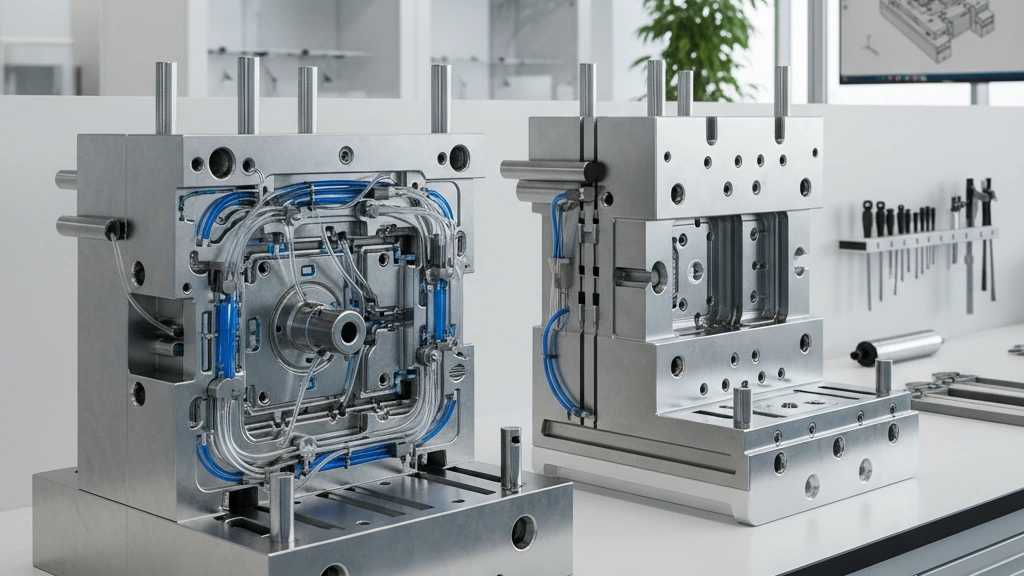
Proper support systems in mould parts are essential to keep production smooth and parts flawless. Here’s how cooling, venting, and feeding work together to optimise performance.
Cooling Channels and Baffles: Temperature Control Mastery
Cooling channels and baffles help control the mould’s temperature during injection moulding. When the plastic melts and fills the mould cavity, it needs to cool evenly and quickly to maintain its shape and avoid warping.
- Cooling channels: These are pathways inside the mould parts where water or coolant flows to absorb heat.
- Baffles: Installed to direct coolant flow, ensuring consistent cooling across tricky spots.
Efficient cooling reduces cycle times and improves part quality, making your mould parts last longer.
Venting System: Avoiding Air Traps and Burn Marks
Venting is all about letting trapped air escape from cavities during moulding. Without proper venting:
- Air pockets can cause burn marks or short shots (where the molten plastic doesn’t fully fill the cavity).
- Defects increase, and you risk damaging the mould or losing parts.
Small vents or venting grooves in mould inserts help cleanly release air, ensuring smooth plastic flow and defect-free parts.
Sprue and Feed System: From Machine to Mould
The sprue and feed system connects the injection moulding machine to the mould cavity, guiding molten plastic where it’s needed. It includes:
- Sprue: The main channel where molten plastic enters the mould.
- Runner system: Distributes plastic evenly to multiple cavities when needed.
- Gate: Controls flow into each cavity, impacting part quality and cycle time.
Optimising the runner and gating system in your mould parts ensures even material flow, reduces waste, and boosts efficiency on the shop floor.
Together, these support systems ensure your mould parts perform reliably, reduce cycle times, and maintain consistent part quality throughout production.
Material Selection and Customisation: Tailoring Mould Parts to Your Needs
Choosing the right materials for your mould parts is key to achieving reliable, long-lasting performance. Common materials like tool steel, aluminium, and stainless steel each offer different advantages:
- Tool steel is tough and wear-resistant, ideal for high-volume runs and precision parts.
- Aluminium is lightweight and cools faster, perfect for prototypes or lower-volume projects.
- Stainless steel offers corrosion resistance, making it suitable for moulds working with corrosive plastics or moist environments.
Deciding between custom and standard mould parts depends on your specific needs. Standard parts are cost-effective and quick to replace, but custom parts provide precise control over fit, finish, and performance. If your products require tighter tolerances or unique design features, investing in custom parts tailored by experts like Vast can save time and reduce defects in the long run.
By carefully selecting and customising your injection mould components, you ensure your moulds run smoothly, produce high-quality parts, and meet the demands of UK manufacturing standards.
Maintenance and Troubleshooting: Extending Mould Life and Minimising Downtime
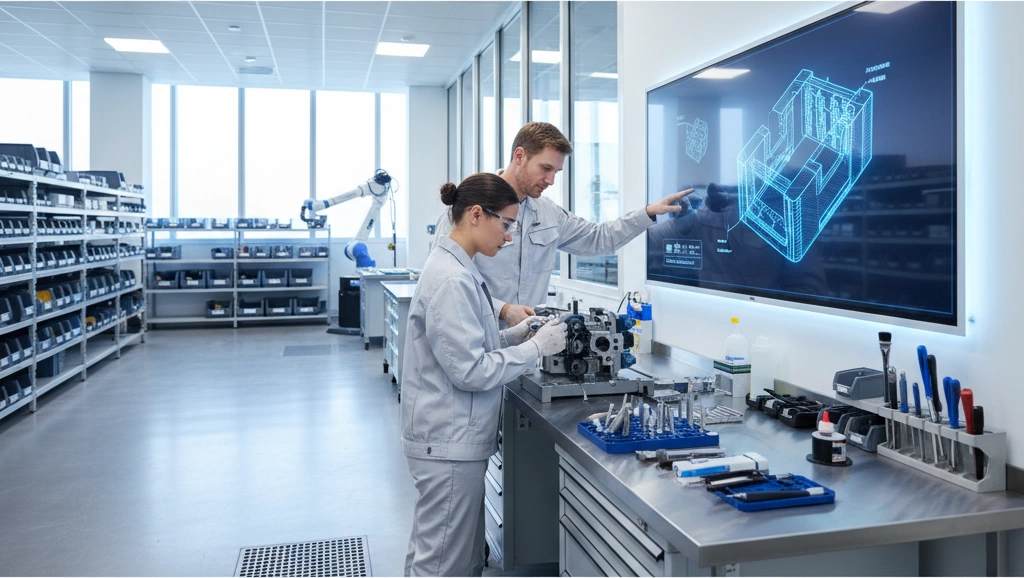
Keeping your mould parts in top condition is key to avoiding costly downtime. Regular maintenance helps identify issues early and prolongs the lifespan of your injection mould components.
Routine Inspection Protocols
- Check ejector pins and sleeves for wear or bending—these parts endure significant stress.
- Inspect guide pins and bushings to ensure smooth alignment and prevent damage during mould cycles.
- Clean cooling channels and vents to prevent clogging, which can cause uneven cooling and defects.
- Look for signs of wear on cavity and core inserts, as precision mould inserts influence final part quality.
Common Failures and Remedies
- Ejector pins sticking or breaking: Often caused by dirt accumulation or misalignment; clean and realign pins regularly.
- Runner system blockages: Clear out debris and consider hot runner systems to reduce material waste and clogging.
- Vent blockages: Lead to air traps and burn marks; maintain vents and avoid excessive mould temperature.
Upgrades with Vast Components
Investing in upgraded mould parts from suppliers like Vast can improve durability and precision. Advantages include:
- Custom-fit ejector systems designed to reduce sticking and damage.
- Enhanced cooling channel designs for consistent temperature control.
- High-quality guide pins and locating rings for better mould alignment.
Regular care combined with premium replacement parts keeps your moulds running smoothly and your production line efficient.
Emerging Trends: Innovating Mould Parts for Tomorrow’s Manufacturing
The world of mould parts is evolving rapidly, and staying ahead means embracing new technology and smarter designs. Here’s what’s shaping the future of injection mould components:
Additive Manufacturing and Hybrid Moulds
3D printing, or additive manufacturing, is transforming how we produce mould parts. It allows us to create complex core and cavity inserts quickly and with less waste. Hybrid moulds, which combine traditional metalwork with 3D printed parts, offer better customisation and faster turnaround times. This approach is ideal for prototyping or low-volume runs here in the United Kingdom, where flexibility and speed are essential.
Smart Moulds with IoT Integration
Smart moulds are the next step. Embedding sensors into mould bases and runner systems enables manufacturers to monitor temperature, pressure, and flow in real-time. This results in fewer defects, improved cooling channel control, and faster troubleshooting. For factories in the United Kingdom aiming to enhance efficiency, these IoT-enabled moulds can reduce downtime and improve part quality.
Sustainable Innovations
With a growing focus on sustainability, mould parts now emphasise eco-friendly materials and energy-saving designs. Mould bases made from recycled steel or alloys improve longevity and reduce environmental impact. Optimising runner and gating systems, including hot runner technologies, reduces plastic waste. This not only meets eco-conscious market demands but also lowers production costs over time.
Adopting these trends helps companies in the United Kingdom stay competitive, improve product quality, and support greener manufacturing practices. That’s the direction mould parts are headed—and it’s exciting.
 English
  Chinese
  Spanish (Peru)
  German
  Korean
  Spanish (Spain)
  Italian