
Learn how to ream a hole with precision using the right tools and techniques for smooth finishes and accurate hole sizing every time.
What Is Reaming? Understanding the Fundamentals
Reaming is a machining process that improves the size, finish, and accuracy of an existing hole. Unlike drilling, which creates the initial hole, reaming fine-tunes it to achieve a precise diameter and smooth surface. The goal? A consistent, tight tolerance hole that’s ready for assembly or further machining.
Key Principles of Reaming
- Precision finishing: Reamers remove a small amount of material (usually 0.001 to 0.005 inches) to sharpen hole dimensions.
- Smooth surface: Reaming delivers a cleaner, more polished bore compared to drilling.
- Hole size control: It’s the go-to for achieving consistent hole tolerances necessary for bearings, bushings, or precision fasteners.
When to Ream: Precision Fits and Applications
You’ll ream a hole whenever you need exact fits—think dowel pins, shafts, or hydraulic components. It’s essential in:
- Precision engineering
- Automotive and aerospace parts
- Tool and die making
- Hydraulic cylinder assembly
Historical Context and Machining Relevance
Reaming has been a staple in metalworking since the Industrial Revolution. As manufacturing precision improved, reaming evolved from manual hand tools to CNC-controlled processes. Today, it bridges the gap between rough drilling and expensive finishing like grinding, making it indispensable in modern shops.
In short, reaming ensures holes meet tight tolerances and smooth finishes efficiently—a fundamental skill and process in both DIY and professional machining.
Essential Tools and Materials for Reaming a Hole
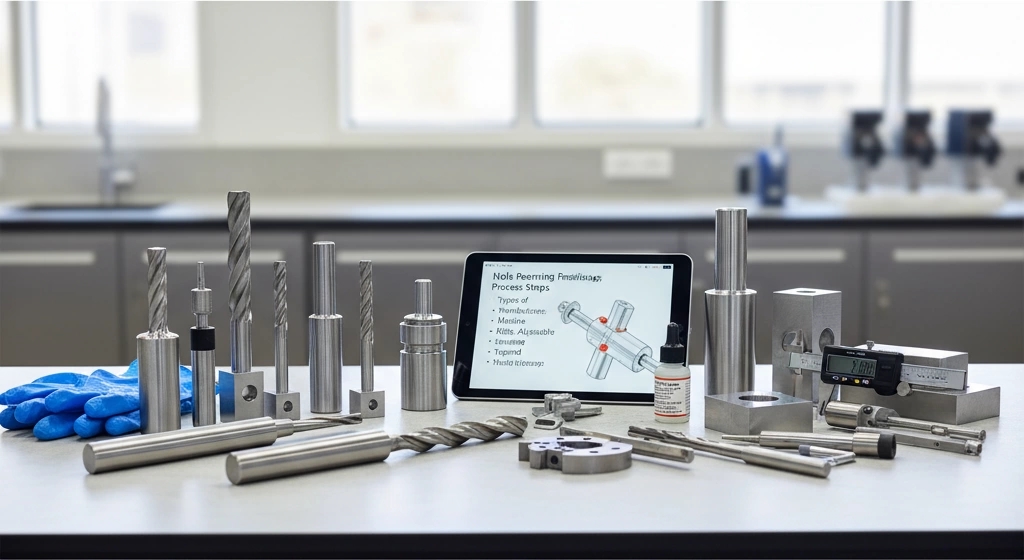
When it comes to reaming a hole, having the right tools and materials is key to getting a precise finish and staying efficient. Here’s a quick rundown of what you’ll need:
Types of Reamers and Their Uses
- Hand reamers: Great for small jobs or touch-ups. They give you control but need steady hands.
- Machine reamers: Used with drills or CNC machines, perfect for consistent, repeatable precision.
- Tapered reamers: Ideal when you need a slightly angled hole or to fix misaligned pilot holes.
- Shell reamers: These handle larger diameters and often come with replaceable cutters.
Supporting Tools and Measurement Instruments
- Drill bits for pre-drilling pilot holes—always choose one a bit smaller than your final hole size.
- Calipers and micrometers to check hole diameter and ensure you meet tight tolerances.
- Surface gauges or dial indicators for aligning your workpiece and reamer.
- Deburring tools to clean up edges before and after reaming.
Material-Specific Tool Choices and Safety Gear
- Harder materials like stainless steel need carbide or cobalt reamers.
- Softer materials such as aluminium can use high-speed steel (HSS) reamers.
- Always wear eye protection and use cutting fluid to reduce heat and improve surface finish.
- Gloves and hearing protection are good practices, especially in machine environments.
Quick-Reference Tool Matrix
| Material | Reamer Type | Recommended Use | Safety Gear |
|---|---|---|---|
| Aluminium | HSS straight flute | Light finishing | Eye protection |
| Stainless Steel | Carbide reamers | Precision, hard metals | Eye + hand protection |
| Cast Iron | HSS or carbide | Low vibration | Eye protection |
| Plastic | HSS with coatings | Soft material handling | Eye protection |
Using the right combination of tools, measuring equipment, and protective gear will help you ream a hole cleanly, accurately, and safely every time.
Preparing Your Workpiece: Setting Up for Success
Before you ream a hole, proper preparation is key to achieving a clean, precise finish. Start with pre-drilling the hole using the right drill size—usually a bit smaller than your final reamed size. This ensures the reamer can do its job smoothly without excessive wear. Don’t forget spot facing if your workpiece has uneven surfaces; it creates a flat area around the hole entrance, helping the reamer enter straight.
Next, make sure your workpiece is securely clamped and perfectly aligned. Even a slight shift can throw off hole tolerance and surface finish. Use a vice or fixture to keep the piece steady, and double-check alignment with measuring tools.
When planning your cut, leave a stock allowance of about 0.002 to 0.005 inches for the reamer to remove. This small margin helps prevent tool overload and ensures a smooth finish. Also, factor in environmental conditions such as temperature and humidity, which can affect material expansion or contraction, especially with metals.
For those using CNC machines, here are a few quick tips:
- Program the toolpath to maintain consistent speed and feed rates
- Use coolant to reduce heat and extend tool life
- Confirm that your machine’s spindle is properly aligned
- Perform test runs on scrap material to dial in settings before the actual workpiece
Setting up your workpiece correctly sets the stage for precise, clean holes every time.
Step-by-Step Guide: How to Ream a Hole Like a Pro
Reaming a hole correctly requires some care and attention. Here’s a straightforward way to do it like a professional every time.
Measurement and Marking
Start by measuring your workpiece carefully. Use a calliper or micrometer to mark exactly where the hole needs to be. Precision here saves you headaches later.
Pilot Hole Drilling Tips
Drill a pilot hole slightly smaller than your reamer size. Make sure the hole is straight and clean—this guides the reamer smoothly and prevents wobbling.
Reaming Speed and Feed Recommendations
Operate your reamer at the speed and feed rate suggested for your material. For most metals, a slower speed with steady pressure works best. Too fast, and you’ll risk tool wear or rough finishes.
Advancement Technique and Inspection
Push the reamer in steadily without forcing it. Keep the tool aligned with the hole to avoid tapering. After reaming, inspect the hole with a gauge or calliper for tight tolerance and smooth surface finish.
Hand vs. Machine Reaming
Hand reaming gives you more control on small jobs or tricky spots—just be patient and steady. Machine reaming is faster and more consistent, especially for multiple holes or tougher materials.
Demo/Video Reference
If you’re new to reaming, watching a demo video can be a great help. There are plenty online that show exactly how to hold the reamer, set speeds, and check your hole finish—making learning quick and practical.
Common Mistakes and Troubleshooting: Avoiding Reaming Pitfalls
Reaming a hole sounds simple, but it’s easy to run into problems if you’re not careful. Here are some common issues and how to fix them:
Oversized Holes: Causes and Fixes
- Causes: Worn reamer, incorrect tool size, or excessive feed pressure.
- Fix: Replace or sharpen the reamer, double-check your tool size before starting, and slow down the feed rate for better control.
Undersizing and Rubbing: Diagnosis and Solutions
- Causes: Reamer not reaching full depth, dull tool, or incorrect speed.
- Fix: Ensure the reamer fully passes through the hole, sharpen or replace the tool, and adjust speed according to material specifications.
Chatter Marks and Vibration Issues
- Causes: Loose workpiece, dull reamer, or incorrect feed rate.
- Fix: Secure the workpiece tightly, check tool sharpness, and use recommended feed and speed settings to reduce vibration.
Tool Breakage Prevention
- Avoid forcing the reamer through too quickly
- Use correct clearance and alignment
- Always inspect the tool for chips or damage before use
Diagnostic Checklist with Remedies
| Problem | Cause | Solution |
|---|---|---|
| Oversized hole | Worn or wrong tool | Replace/sharpen & check size |
| Undersized hole | Incomplete pass | Re-ream fully, adjust speed |
| Chatter / marks | Vibration | Tighten setup, adjust feed |
| Tool breaks | Misalignment/force | Align tool, slow feed |
Real-World Troubleshooting Example
I once had a job where the holes ended up slightly too large. After reviewing, I found the reamer was worn down and running too fast. Replacing the tool and slowing the feed solved the problem immediately. Remember, a little maintenance and patience goes a long way in precision hole finishing.
By knowing these pitfalls and fixes, you’ll save time and keep your projects on track.
Advanced Techniques: Elevating Your Reaming Skills
If you want to take your hole reaming beyond the basics, these advanced techniques are a game changer.
- Multi-Step Reaming for Deep Holes: Reaming very deep holes in one pass can cause tool wear and accuracy issues. Instead, use multi-step reaming—ream partway, then back out to clear chips, and repeat until the full depth is finished. This improves surface finish and keeps your reamer from binding.
- CNC Toolpath Programming and Adaptive Clearing: When working with CNC machines, programming your toolpath for adaptive clearing helps maintain consistent feed rates and reduces vibration. This keeps precision hole finishing on point, even at high speeds.
- Specialised Tapered and Helical Reaming: Some jobs require tapered holes or helical reamers to match specific fits. These specialised reamers provide customised hole shapes with tight tolerances, especially useful in aerospace or automotive applications.
- Material-Specific Feed and Coolant Strategies: Different materials need different feed rates and coolants to prevent tool wear and overheating. For example, aluminium might require higher speeds with minimal coolant, while stainless steel benefits from slower feeds and plenty of lubrication to avoid chatter and scoring.
- Batch and Modular Tooling Integration: For high-volume or complex jobs, integrating modular tooling systems helps speed up setups and tool changes. This reduces downtime and keeps your production line efficient without sacrificing precision.
Using these techniques can seriously upgrade your reaming game, delivering better accuracy and longer tool life for demanding projects.
Benefits of Precision Reaming and When to Call in the Professionals
Advantages of Tight Tolerances and Cost Savings
Reaming a hole lets you achieve tight tolerances and smooth finishes that simple drilling can’t match. This improved precision means parts fit better, last longer, and require less rework—saving both time and money in the long run. Plus, reaming is faster and cheaper than grinding for many hole-finishing tasks.
Limitations of Reaming and Alternative Approaches
Reaming isn’t perfect for every job. It struggles with extremely hard materials or holes needing ultra-precise dimensions beyond typical tolerance ranges. In these cases, alternatives like cylindrical grinding, honing, or boring may be necessary.
| Method | Best For | Tolerance Range | Cost |
|---|---|---|---|
| Reaming | Precision fits, smooth holes | ±0.001 in. to ±0.0005 in. | Moderate |
| Grinding | Ultra-precision finishes | ±0.0001 in. or better | Higher |
| Honing | Fine surface finish & sizing | ±0.0003 in. | Moderate-High |
ROI: Reaming vs. Grinding
Reaming usually wins on ROI for most shops—lower tool costs and quicker cycle times add up fast. Grinding and honing pay off mainly in high-precision aerospace or medical parts where specifications are tightest.
When to Outsource Complex or Ultra-Precision Jobs
If your hole requires ultra-tight tolerances, exotic materials, or finishes better than what your setup allows, it’s time to call in the professionals. specialised shops with advanced CNC machines and grinding expertise can save you headaches and costs down the line.
Quick tip: Use reaming for everyday precision finishing. For exacting tolerance or surface finish needs beyond ±0.0005 in., consider outsourcing to ensure quality and avoid costly scrap.
 English
  Chinese
  Spanish (Peru)
  German
  Korean
  Spanish (Spain)
  Italian