
Discover expert insights on laser cutting of metal sheets including types, precision, thickness limits, and applications for efficient custom fabrication.
If you’re exploring ways to transform metal sheets with unparalleled precision and speed, laser cutting of metal sheets is the game-changer you need to know about. This high-tech process harnesses focused laser beams to carve intricate designs and clean cuts from materials like stainless steel, aluminium, and more—often faster and cleaner than traditional methods. Whether you’re a prototyper, fabricator, or hobbyist, understanding how laser cutting works and choosing the right technology can drastically improve your projects. Ready to discover how this precision-driven technique is revolutionising metal fabrication? Let’s dive in!
The Fundamentals of Laser Cutting Metal Sheets
Have you ever wondered how those intricate designs and precise cuts appear on metal sheets with such accuracy? Laser cutting of metal sheets uses a highly focused laser beam to slice through metal with speed and precision. This process is at the heart of modern sheet metal fabrication, offering clean edges and minimal material waste.
How Laser Cutting Works
At its core, laser cutting involves directing a concentrated beam of light onto a metal surface. The energy from the laser melts, burns, or vapourises the material along a programmed path. Assist gases like oxygen or nitrogen help blow away molten metal and keep the cutting line clear. Thanks to computer-controlled systems (CNC), even complex shapes can be cut repeatedly with high precision — down to tolerances of a few thousandths of an inch.
Key Components of a Laser Cutting System
A typical laser cutting setup includes:
- Laser Source: Generates the focused light beam—commonly CO2 or fibre lasers.
- Cutting Head: Directs the laser beam onto the metal surface and delivers the assist gas.
- CNC Controller: Translates design files into precise movements for the cutting head.
- Worktable: Holds the metal sheet steady during the cutting process.
- Exhaust System: Removes smoke and debris to maintain clear visibility and safety.
Brief History of Laser Cutting
Laser cutting technology emerged in the 1960s but became widely used for metal fabrication in the 1980s. Early systems relied mainly on CO2 lasers, delivering high power suitable for cutting thick metals. Today, advancements like fibre lasers have transformed the industry, offering faster cutting speeds and improved energy efficiency—especially for reflective metals like stainless steel and aluminium.
Understanding these fundamentals helps you appreciate why laser cutting is often the go-to process for precision, speed, and flexibility in metal sheet fabrication.
Ready to explore the types of lasers available and which fits your needs? Let’s dive in!
Types of Lasers for Cutting Metal Sheets Choosing the Right Technology
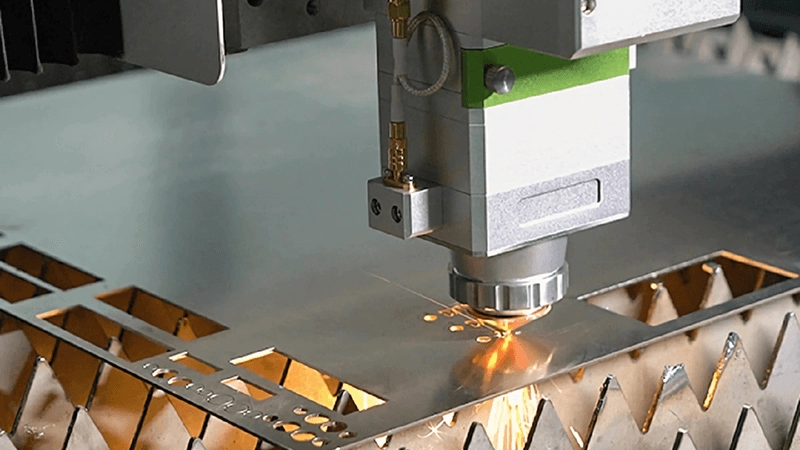
When it comes to laser cutting of metal sheets, picking the right laser matters a lot. The main types used in the United Kingdom metal fabrication scene are CO2 lasers and fibre lasers. There are a few other options too, but these two cover most jobs.
CO2 Lasers
- Use a gas mixture including carbon dioxide.
- Best for cutting thicker metals with smooth edges.
- Work well on a wide range of materials beyond metal, like wood or plastic.
- Slightly slower than fibre lasers but very reliable.
- Popular for stainless steel laser cutting thickness above 1/4 inch.
Fibre Lasers
- Use optical fibres doped with rare-earth elements.
- Faster cutting speeds and better at thin to medium metals.
- More energy-efficient and need less maintenance.
- Less heat affected zone, reducing warping risk.
- Preferred for precision work and CNC laser cutting tolerances.
Other Laser Variants
- Disc Lasers: Similar to fibre but with a disc instead of fibre, offering good power for thick metals.
- Nd:YAG LasersMostly used for micro cutting and welding, less common for sheet metal fabrication.
Laser Types Comparison Table
| Feature | CO2 Laser | Fiber Laser | Other Variants |
|---|---|---|---|
| Cutting Speed | Moderate | Fast | Varies |
| Best Sheet Thickness | Thick metals (up to 1 inch) | Thin to medium (up to 1/4 inch) | Thin or specialised |
| Maintenance | Higher | Lower | Varies |
| Energy Efficiency | Moderate | High | Moderate |
| Edge Quality | Smooth | Very smooth | Varies |
| Heat-Affected Zone | Larger | Smaller | Varies |
| Initial Cost | Moderate | Higher | Varies |
Decision Framework
- Choose CO2 lasers when working with thicker metal sheets or mixed materials.
- Opt for fiber lasers for faster throughput and high precision on thinner metals.
- Consider other types only if your work requires special micro cuts or welding.
- Factor in your budget, maintenance capacity, and the typical material thickness you handle.
This helps UK fabricators balance speed, precision, and cost effectively when laser cutting metal sheets.
Advantages and Disadvantages: Is Laser Cutting Right for Your Metal Sheets?
Laser cutting of metal sheets offers many benefits but also has some drawbacks. Here’s a straightforward look so you can judge if it fits your needs.
Key Benefits
- Precision and Accuracy: Laser cutting delivers tight CNC laser cutting tolerances, ideal for detailed designs and customised sheet metal prototyping.
- Speed: Cuts through metal sheets quickly, boosting productivity.
- Clean Cuts: Minimal heat-affected zone minimisation means less warping or damage to stainless steel laser cutting thickness.
- Flexibility: Works well with various metals, including stainless steel, aluminium, and carbon steel.
- Automation Friendly: Can integrate with laser nesting software to optimise material use.
Potential Drawbacks
| Drawback | Explanation |
|---|---|
| Initial Cost | Equipment is expensive upfront. |
| Material Thickness Limit | Thick metals may require more passes or different lasers. |
| Assist Gas Dependency | Uses gases like oxygen or nitrogen to improve cuts, adding operational costs. |
| Surface Finish Variability | Some metals may need post-processing for a smooth finish. |
Mitigation Tips
- Choose the right laser type (e.g., fibre laser metal cutting for thicker sheets) to match your material.
- Use proper assist gases for the specific metal to reduce heat effects.
- Regularly maintain the machine for consistent performance.
- Combine laser cutting with secondary finishing processes when needed.
Balanced Verdict
Laser cutting of metal sheets is a powerful tool for precision and speed in sheet metal fabrication. If your projects demand fine details and quick turnaround, it’s usually worth the investment. However, consider your material types, thickness, and budget to ensure it’s the right fit for your workshop or production needs.
Applications of Laser Cutting in Sheet Metal Fabrication
Laser cutting of metal sheets is everywhere—from small custom jobs to big industrial projects. It’s a go-to method in industries that demand precision and speed.
Industry Highlights
- Automotive: Manufacturers use laser cutting to create complex parts with tight CNC laser cutting tolerances, helping vehicles stay lightweight but strong.
- Aerospace: High precision and minimal heat-affected zone minimisation are crucial for aircraft parts, making fibre laser metal cutting a popular choice.
- Construction and HVAC: Sheet metal fabrication precision means fast production of ductwork, panels, and metal frameworks.
- Electronics: Tiny, intricate parts get trimmed to perfection using laser technology.
- Custom manufacturing: From prototyping to production, businesses rely on laser cutting to turn designs into finished metal parts quickly and accurately.
Real-World Examples
- Stainless steel laser cutting thickness capabilities allow fabrication shops in the UK to produce parts from thin sheets for appliances to thicker pieces for heavy equipment.
- Assist gas in metal laser cutting ensures clean edges on aluminium, copper, and steel, reducing post-processing time.
- Laser nesting software optimises material use for custom sheet metal prototyping, saving money and cutting waste.
Scalability
Laser cutting scales well whether you’re making a single custom part or thousands. The adaptability means businesses can start small and easily ramp up production without changing machines or sacrificing quality. Industrial metal laser services across the UK often offer flexible volumes tailored to your needs, making laser cutting ideal for both startups and established manufacturers.
Best Practices Optimising Laser Cutting for Metal Sheets
To get the most out of laser cutting for metal sheets, following some best practices makes a big difference in quality, efficiency, and safety.
Material Preparation
- Clean the metal sheets to remove oils, dirt, and rust. This ensures a smooth cut and avoids damaging the laser lens.
- Check metal thickness beforehand. Knowing your stainless steel laser cutting thickness helps set precise cutting parameters.
- Use flat, stable sheets to prevent misalignments and inconsistent cuts.
Design Guidelines
- Keep corners rounded instead of sharp angles to reduce strain on the laser.
- Use laser nesting software to optimise material usage and reduce scrap.
- Design with minimum cut widths in mind based on your CNC laser cutting tolerances.
Parameter Tuning
- Adjust power, speed, and assist gas type depending on the metal type and thickness. Fibre laser metal cutting often works better on stainless steel and reflective metals, while CO2 lasers suit thicker mild steel.
- Use assist gas like nitrogen or oxygen as recommended to improve cut quality and reduce the heat-affected zone.
- Regularly test small sections to tweak parameters before full-scale production.
Safety protocols
- Always wear proper eye protection designed for the laser wavelength in use.
- Ensure proper ventilation to remove fumes and particles generated during cutting.
- Keep fire suppression equipment nearby, especially when working with flammable materials.
Maintenance Essentials
- Clean and inspect the laser lens frequently to prevent poor beam quality.
- Regularly check the alignment of the laser path and replace worn parts.
- Schedule periodic calibration of your machine to maintain cutting precision.
Following these practices helps ensure your laser cutting of metal sheets runs smoothly, safely, and delivers the high-quality results expected by manufacturers in the United Kingdom.
Laser Cutting Services vs In-House Machines: What Makes Vast Stand Out
When it comes to laser cutting of metal sheets, deciding between in-house machines and a service provider like Vast is a significant choice. Here’s a quick look at how Vast stands out and what you get with each option.
Service Model
- Vast: You send your designs, and Vast handles the rest. No need to worry about machine upkeep, operator training, or downtime.
- In-House: You manage the entire process yourself. This means higher upfront costs, ongoing maintenance, and skilled staff.
Machine Options
| Feature | Vast | In-House Machines |
|---|---|---|
| Laser Types | CO2, Fibre, Custom technology | Usually limited |
| Material Range | Wide variety | Dependent on machine capabilities |
| Cutting Thickness | Up to industry maximum | Varies by machine specifications |
| Precision | High CNC tolerances | Depends on operator skill |
Vast’s Edge
- Cost-Effective: No need for expensive machines or upgrades.
- Expertise: Experienced operators skilled in stainless steel laser cutting thickness and heat-affected zone minimisation.
- Fast Turnaround: Advanced laser nesting software optimises cuts to save time and material.
- Scalability: Whether one-off prototyping or high volume runs, Vast adapts to your needs.
Call to Action
If you want precision without the hassle of running your own shop, Vast’s industrial metal laser services are built for you. Reach out today to get your custom sheet metal prototyping started with zero investment in equipment. Let Vast handle the laser cutting of your metal sheets, so you can focus on what matters most—your business.
Future Trends in Laser Cutting of Metal Sheets
Laser cutting of metal sheets is evolving fast, and staying ahead means keeping an eye on new technologies and industry shifts. Here’s what’s shaping the future in the United Kingdom market and how Vast is gearing up to lead.
Emerging Tech in Metal Laser Cutting
- Fiber laser advancements are continuing to boost cutting speed and precision, especially for stainless steel laser cutting thickness up to several millimetres.
- New hybrid systems combine laser cutting with other processes, like plasma or waterjet, improving flexibility.
- AI-driven CNC laser cutting tolerances and automation enhance accuracy and reduce material waste through smarter laser nesting software.
- Innovations in assist gas usage are helping minimise the heat-affected zone, preserving metal quality after cutting.
Emphasis on Sustainability
The manufacturing industry is focusing more on eco-friendly solutions, and laser cutting fits this trend well. Key sustainability efforts include:
- Energy-efficient lasers that cut power consumption while maintaining performance.
- Recycled materials and scrap reduction thanks to precision cutting and better nesting.
- Use of low-impact assist gases and environmentally safe disposal methods.
- Overall reduction in production time and waste helps lower the carbon footprint.
Vast's Vision for the Future
At Vast, we’re committed to bringing the latest laser cutting innovations to businesses. Our focus is:
- Offering cutting-edge fibre laser metal cutting and CO2 laser options customised to your needs.
- Supporting local manufacturers with industrial metal laser services designed for efficiency and reliability.
- Investing in ongoing training and technology refresh to keep your sheet metal fabrication precision on point.
- Promoting sustainability in all our processes to help customers meet green manufacturing goals.
As the laser cutting landscape changes, Vast remains your trusted partner for superior quality, technology, and service in metal sheet cutting. If you’re ready to explore what’s next, we’re here to help.
 English
  Chinese
  Spanish (Peru)
  German
  Korean
  Spanish (Spain)
  Italian