
Discover mechanical thread types, standards, design tips, and applications for engineers seeking reliable fastening and power transmission solutions.
The Anatomy of Mechanical Threads: Key Components and Terminology
Mechanical threads are more than just spirals wrapped around a cylinder—they’re a precise language of engineering. Understanding their anatomy helps you select the right thread for any task.
Key Components of Mechanical Threads:
- Crest: The top of the thread ridge that contacts the mating part.
- Root: The bottom valley between the threads.
- Flank: The angled side surfaces connecting the crest and root.
- Pitch: The distance between two corresponding points on adjacent threads, usually measured in millimetres or threads per inch.
- Thread angle: The angle between the flanks, which affects strength and fit.
- Major Diameter: The largest outside diameter of the thread.
- Minor Diameter: The smallest diameter (root area) of the thread.
Think of mechanical threads as a ramp wrapped around a cylinder. This ramp allows rotational force to be converted into linear motion, providing a mechanical advantage, similar to a screw jack lifting a car.
Common Terminology:
- Thread pitch calculation: Helps determine how fine or coarse the thread is.
- Thread tolerance classes: Define acceptable manufacturing variances for fit and strength.
- Helical thread geometry: Refers to the spiral shape forming the thread’s profile.
Mastering these terms ensures you are fluent in the language of mechanical threads. Whether you are selecting fasteners or designing machine parts, this knowledge is your foundation for success.
Historical Evolution of Mechanical Threads: From Archimedes to Modern Standardisation
Mechanical threads have a long history, beginning with Archimedes around 250 BC, who invented the first simple screw used for lifting water. This early design laid the foundation for the threaded fasteners and power screws we use today. Over centuries, thread designs evolved to enhance strength, efficiency, and ease of manufacturing.
By the Industrial Revolution, the need for interchangeable parts led to standardised thread systems. In the UK, the Unified Thread Standard (UTS) was introduced in the 1940s to create uniform screw thread types across industries. Meanwhile, international standards like ISO metric threads gained global acceptance, helping manufacturers align on dimensions and tolerances.
Today, thanks to these modern standards, thread pitch calculation and thread tolerance classes are well-defined, ensuring parts fit and perform reliably across applications—from pipe thread sealing in plumbing to power transmission with square and buttress thread designs. This evolution makes it easier for industries to source and produce fasteners without guesswork, simplifying repairs and assembly.
Types of Mechanical Threads: Detailed Classification and Applications
Mechanical threads come in several types, each designed for specific uses and performance needs. Knowing the right screw thread types can save you time and prevent failures.
Common Thread Types
- Unified Thread Standard (UTS): Widely used in the United Kingdom, these threads are common on fasteners such as bolts and nuts. They follow precise thread pitch calculation rules for strength and compatibility.
- ISO Metric Threads: Popular worldwide and increasingly in the UK, these threads use metric measurements and are known for ease of standardisation.
- Acme Threads: Ideal for power transmission and linear movement in machinery, acme thread applications benefit from their trapezoidal shape, which offers good strength and wear resistance.
- Square Threads: Mainly used where efficient power transmission is needed, such as in jacks and presses, these threads reduce friction but are harder to manufacture.
- Buttress Threads: Designed to bear heavy loads in one direction, these are common in heavy equipment and pipe thread sealing applications.
- Pipe Threads: These include tapered and straight types for sealing fluid or gas connections, critical in plumbing and oil industries.
When to Use Each Type
- Use UTS or ISO Metric Threads for general fastening—these cover most everyday needs.
- Opt for Acme or Square Threads If you require mechanical advantage screws with smooth motion.
- Choose Buttress Threads in situations with heavy axial loads.
- Select Pipe Threads for secure, leak-proof connections in plumbing.
Key Takeaway
Each thread type fits specific applications, balancing strength, ease of manufacturing, and purpose. Picking the right mechanical thread enhances durability and performance—especially important in tough industrial environments in the United Kingdom and beyond.
Standards and Specifications: Navigating Global Thread Systems
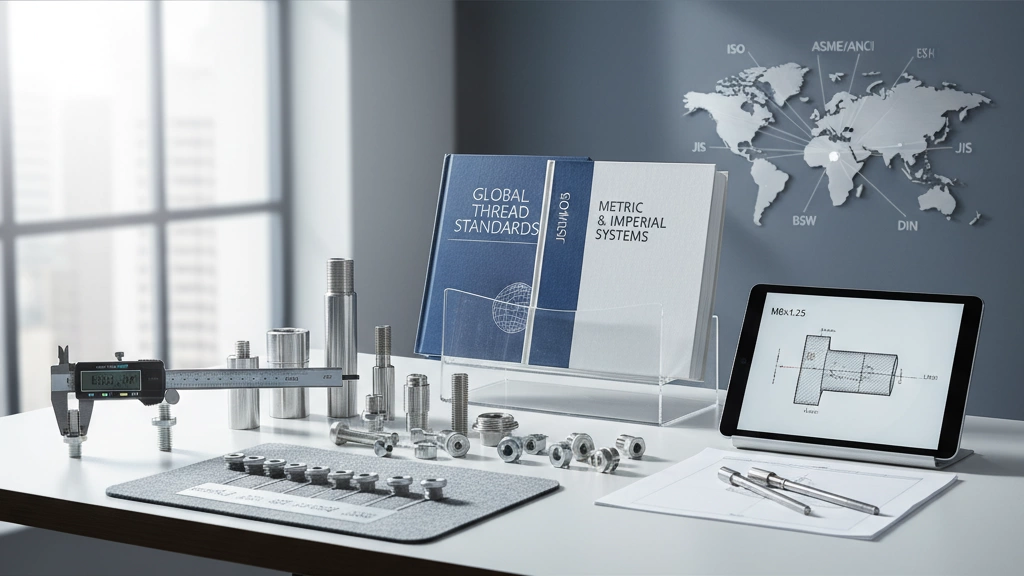
Mechanical threads come in many shapes and sizes, but knowing the right standards is key to getting things to fit and work right—especially when working with parts from different places. Here’s a quick rundown of the main global thread standards you’ll encounter in the market and beyond.
| Thread Standard | Where Common | Key Features | Typical Use |
|---|---|---|---|
| Unified Thread Standard (UTS) | United Kingdom, Canada | Inch-based, popular in fasteners | General machinery, automotive |
| ISO Metric Threads | Worldwide, incl. United Kingdom. | Metric pitch, widely accepted globally | Consumer products, manufacturing |
| Acme Threads | United Kingdom, Europe | Trapezoidal shape, strong and smooth | Lead screws, power transmission |
| National Pipe Thread (NPT) | United Kingdom. | Tapered for tight pipe sealing | Plumbing, gas fittings |
| Buttress Threads | Mostly United Kingdom, Europe | High load in one direction | Heavy machinery, jacks |
Why Standards Matter
- Interchangeability: You can swap parts without hassle if you know the thread specification.
- Performance: Proper thread fit enhances strength and durability.
- Safety: Prevents leaks or failures, especially in pipe threads and fasteners.
Thread Tolerance Classes
Thread tolerance controls how loose or tight a thread is—vital for reliable assembly. In UTS and ISO systems, classes like 2A/2B (standard fit) or tighter classes (3A/3B) adjust this precision.
Tips for Choosing the Right Standard
- Check what’s common locally or in the industry to avoid mix-ups.
- Match thread type with load and environment (e.g., pipe threads for sealing liquids).
- When in doubt, ISO metric threads are a safe global choice.
By understanding these basic standards and specifications, you ensure seamless compatibility and top performance in all your mechanical threading projects.
Design Principles and Calculations: Engineering Threads for Performance
When designing mechanical threads, the goal is to balance strength, durability, and ease of use. The helical thread geometry plays a big role here—this shape converts rotational force into linear motion, giving you the mechanical advantage screw requirements for holding or moving parts efficiently.
Key points to consider include:
- Thread pitch calculation: This determines the distance between threads. Finer pitches assist with precision and grip, while coarser pitches are better for quick assembly and higher load capacity.
- Thread tolerance classes: These define how tight or loose threads fit together, which is crucial for preventing issues such as thread stripping or leaks, especially in pipe thread sealing.
- Selecting the appropriate thread profile such as Acme threads for power transmission or buttress thread design for high axial loads ensures the thread matches the application.
- Calculating the correct thread depth and angle influences strength, wear resistance, and manufacturing ease.
Using software or simple hand calculations based on established standards like Unified Thread Standard or ISO Metric Threads can streamline the design process. In the UK market, balancing performance with manufacturing costs is key—overly complex designs can add time and expense without real benefits.
Ultimately, a well-designed mechanical thread improves fastener thread strength, reduces failure chances, and ensures smooth assembly—all vital for reliable hardware and machinery in everyday use.
Manufacturing Methods..Producing Reliable Mechanical Threads
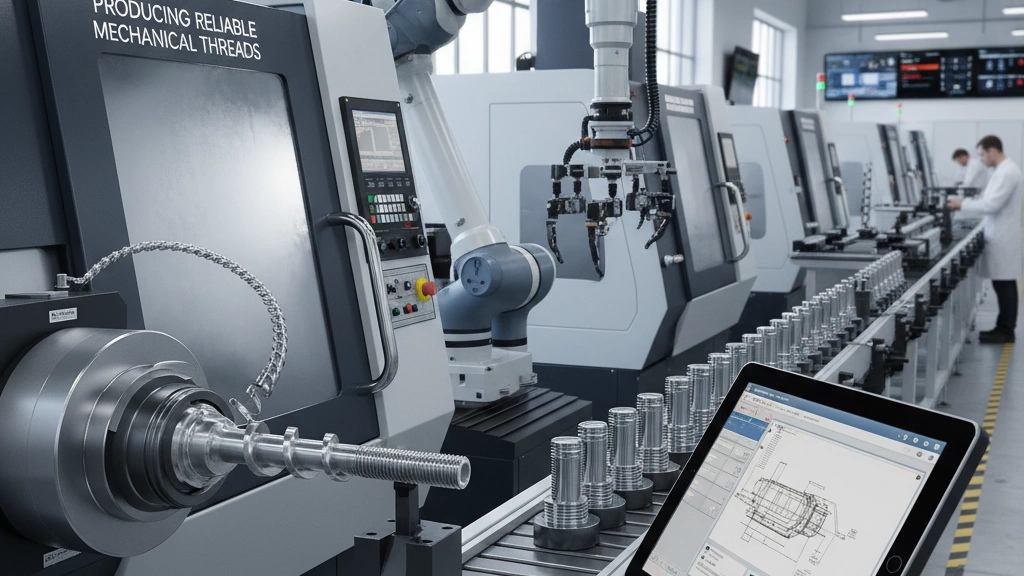
When it comes to manufacturing mechanical threads that function correctly every time, the process is crucial. There are several common methods used to produce these threads, each suited for different needs and materials.
1. Thread Cutting:
This is one of the oldest and most precise methods. Using tools like taps, dies, or a CNC lathe, the thread groove is cut directly into the material. It’s ideal for custom threads or tougher materials where accuracy matters.
2. Thread Rolling:
Instead of cutting, this method presses the threads into the surface through cold forming. It works great with ductile metals and results in stronger threads because the grain structure is compressed rather than cut. Thread rolling is common in automotive and fastener manufacturing.
3. Thread Milling:
CNC machines use thread milling to carve threads with high accuracy and flexibility. This is perfect for complex thread profiles, like trapezoidal or square threads, and allows for quick changes in thread types without swapping tools.
4. Grinding:
For super precise or hard materials, thread grinding is used. It produces smooth, fine threads often seen in aerospace parts or components requiring tight tolerances.
5. Casting and Molding:
Some mechanical threads are formed directly during casting or plastic moulding. These are often found in low-stress or lightweight applications, like plastic fasteners or housings.
What matters for UK users?
- Quality control is critical—proper thread pitch calculation and tolerance classes must be met.
- Material choice affects the method; steel fasteners usually get rolled or cut, while plastic components might be moulded.
- Equipment availability also guides decisions. CNC thread milling is popular in many UK workshops due to flexibility and precision.
No matter the method, the goal is clear: produce mechanical threads that fit perfectly, hold strong, and resist common issues like thread stripping or sealing failures. This way, your fasteners and connections stay reliable across industries, from construction to automotive repair.
Applications Across Industries: Where Mechanical Threads Excel
Mechanical threads play a crucial role in many industries across the UK, proving their value in countless everyday and high-tech applications. Here’s where they really shine:
- Automotive Industry: Threads are key for assembling engines, transmissions, and suspension parts. Standards like the unified thread standard ensure fastener strength and consistent performance on vehicles made or repaired in the UK.
- Construction: From heavy equipment to structural steel, threaded fasteners provide reliable joints. Acme thread applications often appear in lifts and jacks, thanks to their mechanical advantage and durability.
- Oil and Gas: Pipe thread sealing is vital here. Specialised threads prevent leaks in pipelines and drilling equipment, making safety and efficiency top priorities.
- Manufacturing & Machinery: The precision and repeatability of threads like ISO metric threads and square thread power transmission are essential in CNC machines, conveyors, and custom tooling.
- Aerospace: High tolerance and strength make buttress thread design popular for aerospace fasteners, where failure isn’t an option.
- Electronics: Small, precise threads help secure components without adding bulk, supporting the trend to miniaturisation.
- Household Products: From furniture to appliances, standard screw threads ensure easy assembly and maintenance.
These industries rely on solid thread design and proper manufacturing processes to avoid issues like thread stripping prevention or fastener failure. By understanding these applications and their unique demands, businesses in the United Kingdom can select the right mechanical threads that match their needs—ensuring strength, safety, and longevity.
Common Challenges and Troubleshooting Mechanical Threads: Avoiding Thread Failures
Mechanical threads can fail for several reasons, but most issues are avoidable with the right know-how. Here’s what you need to watch out for and how to fix common thread problems:
Key Problems with Mechanical Threads
- Thread Stripping: Happens when the thread teeth shear off under too much load or poor material choice. Avoid by using proper thread tolerance classes and selecting the right fastener thread strength.
- Cross-Threading: When threads aren’t aligned during assembly, causing damage. Always start threading by hand and ensure clean, aligned engagement.
- Gallings and Seizing: Metal threads can weld together under friction and pressure. This is common with stainless steel and can be prevented with lubrication or coatings.
- Thread Corrosion: Exposure to moisture or chemicals can degrade threads, especially pipe thread sealing areas. Use corrosion-resistant materials or apply protective finishes.
- Worn Threads: Repeated use can wear out threads, especially in fasteners frequently assembled and disassembled. Inspect regularly and replace if wear is apparent.
Troubleshooting Tips to Avoid Failures
- Use Correct Thread Type: Different screw thread types have different strengths. For example, buttress thread design offers better load distribution, while square thread power transmission handles heavy torque better.
- Calculate Thread Pitch Properly: Wrong thread pitch can cause poor fit and stripping. Use thread pitch calculation tools or standards like the Unified Thread Standard or ISO Metric Threads.
- Follow Manufacturing Standards: Stick to global thread standards to ensure compatibility and reliability.
- Employ CNC Thread Milling: This precision method reduces the risk of manufacturing flaws that cause thread failure.
- Proper Lubrication and Cleaning: Keep threads clean and lubricated to avoid galling and corrosion.
- Check Thread Tolerance Classes: Ensure the mating parts conform to compatible tolerance classes to avoid issues like loose fits or excessive tightness.
By understanding these common issues and troubleshooting them early, you can keep your mechanical threads working smoothly and extend their life, especially for industries across the United Kingdom that rely heavily on reliable fasteners and threaded connections.
 English
  Chinese
  Spanish (Peru)
  German
  Korean
  Spanish (Spain)
  Italian