
Explore the properties of mild steel, including mechanical strength, chemical composition, common grades, weldability, and applications in detail.
If you’re looking to understand mild steel material properties in detail, you’ve come to the right place. Whether you’re an engineer, fabricator, or procurement specialist, knowing the mechanical, physical, and chemical characteristics of mild steel—also known as low-carbon steel—is crucial for making informed decisions. This guide covers everything from tensile strength and weldability to common grades like A36, S275, and 1018, helping you choose the perfect steel for your application. Let’s get straight to the heart of why mild steel remains the industry’s go-to material.
Introduction to Mild Steel
Mild steel, also known as low-carbon steel or plain carbon steel, is a type of carbon steel that contains a relatively low carbon content, typically between 0.05% and 0.25%. This low carbon level makes it soft, ductile, and easy to shape, which is why it’s the most commonly used steel worldwide.
The balance between cost and performance makes mild steel incredibly popular across many industries. It offers good strength and formability at a much lower cost than high-carbon or alloy steels, making it ideal for applications requiring reliable structural properties without heavy expense.
Globally, mild steel is known by several names: low-carbon steel, plain carbon steel, and simply MS. These terms are used interchangeably in engineering and procurement settings. Whether you’re dealing with construction, automotive parts, or general fabrication, mild steel is usually the go-to material for its excellent versatility and affordability.
Chemical Composition of Mild Steel
Mild steel, also called low-carbon steel, typically contains between 0.05% and 0.25% carbon. This low carbon content is key—it makes the steel easy to shape and weld while keeping costs low. The small amount of carbon also keeps the steel ductile, meaning it can bend or stretch without breaking.
Besides carbon (C), mild steel usually contains a few other standard elements:
- Manganese (Mn): Adds toughness and improves hardenability.
- Phosphorus (P): Kept at low levels; too much makes steel brittle.
- Sulfur (S): Also minimised to avoid brittleness; trace amounts improve machinability.
- Silicon (Si): Used as a deoxidiser during steelmaking, enhancing strength.
Here’s a quick overview of the chemical composition (%) of some popular mild steel grades used in the UK and worldwide:
| Grade | C (%) | Mn (%) | P (%) | S (%) | Si (%) |
|---|---|---|---|---|---|
| ASTM A36 | 0.26 max | 0.60–0.90 | ≤0.04 | ≤0.05 | ≤0.40 |
| EN S235 | 0.20 max | 1.30 max | ≤0.035 | ≤0.035 | ≤0.50 |
| EN S275 | 0.22 max | 1.50 max | ≤0.035 | ≤0.035 | ≤0.50 |
| EN8 | 0.36–0.44 | 0.60–0.90 | ≤0.04 | ≤0.05 | ≤0.35 |
| SAE 1018 | 0.15–0.20 | 0.60–0.90 | ≤0.04 | ≤0.05 | ≤0.30 |
| Q235B | 0.20 max | 1.40 max | ≤0.045 | ≤0.050 | ≤0.30 |
| IS 2062 E250 | 0.20 max | 1.20 max | ≤0.050 | ≤0.050 | ≤0.30 |
Understanding the chemical composition helps you select the right steel for your project, ensuring you balance strength, weldability, and durability. If you’re working with different grades, it’s important to note slight differences—especially in carbon and manganese—that affect performance and machinability. For insights on machining processes, check out our detailed guide on choosing materials for optimal CNC performance.
Mechanical Properties of Mild Steel
The mechanical properties of mild steel make it a popular choice for many applications due to its balance of strength and ductility. Typically, mild steel exhibits a tensile strength ranging from about 400 to 550 MPa, while its yield strength usually falls between 250 to 350 MPa. This means it can stretch (elongation) roughly 20% before breaking, which is great for parts that need some flexibility without cracking.
When it comes to hardness, mild steel grades vary. Hardness is often measured by Brinell (BHN), Rockwell (HRB), or Vickers scales. For example, common grades like ASTM A36 have a Brinell hardness around 120 BHN, indicating a relatively soft but durable metal that’s easy to machine and weld.
Impact strength assessed via Charpy testing shows mild steel performs well under sudden forces, making it reliable in structural and automotive uses. The fatigue strength is moderate but generally sufficient for everyday mechanical loads, while its modulus of elasticity is consistent at roughly 200 GPa, indicating its stiffness.
For quick reference, the following table shows these mechanical properties for popular mild steel grades:
| Steel Grade | Tensile Strength (MPa) | Yield strength (MPa) | Elongation (%) | Hardness (BHN) | Charpy Impact (J) | Modulus of Elasticity (GPa) |
|---|---|---|---|---|---|---|
| ASTM A36 | 400–550 | 250 | 23 | 120 | 20–30 | 200 |
| S275JR | 410–560 | 275 | 23 | 130 | 27 | 200 |
| EN8 | 550–700 | 350–500 | 12 | 180 | 12–20 | 210 |
| 1018 | 440–570 | 370 | 15 | 140 | 18 | 205 |
| Q235B | 370–500 | 235 | 26 | 110 | 20 | 195 |
| IS 2062 E250 | 410–550 | 250 | 22 | 125 | 25 | 200 |
This range of mechanical properties offers versatility suitable for everything from domestic construction to heavy machinery. For those working with machining or welding mild steel, understanding these properties helps select the appropriate grade to balance strength and workability.
For a detailed comparison of weldability and machinability alongside mechanical properties, check out our guide on the ultimate car sheet metal repairs materials and tips, which shares practical insights relevant to mild steel fabrication.
Physical Properties of Mild Steel
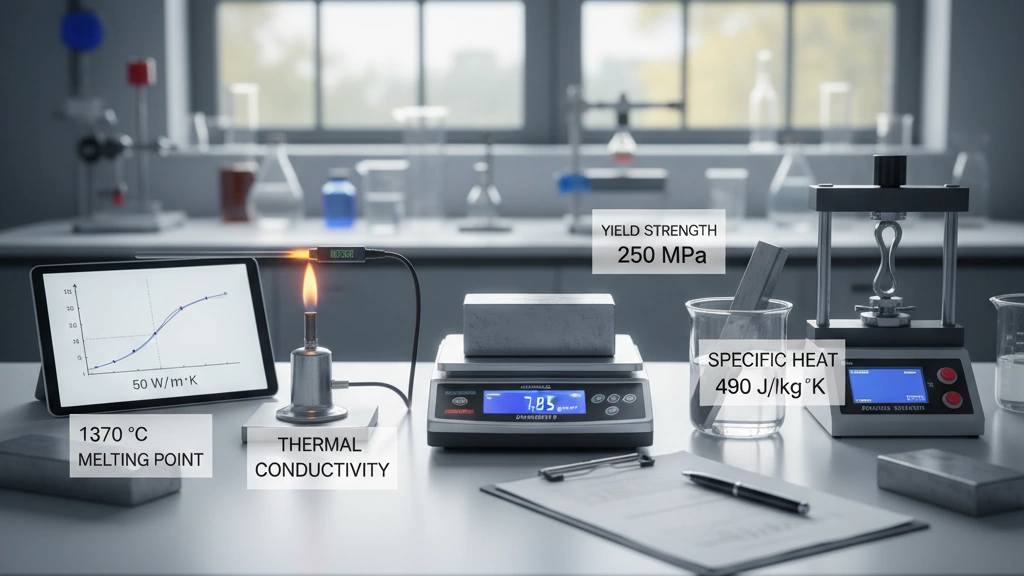
Mild steel has a density of approximately 7.85 g/cm³ (7850 kg/m³), making it a robust and dependable metal for many applications. Its thermal conductivity is moderate, around 50 W/m·K, which means it can transfer heat effectively but not as efficiently as aluminium or copper.
When heated, mild steel expands at a rate of approximately 12 x 10⁻⁶ per °C, so thermal expansion is an important consideration in design, especially for structures exposed to temperature variations.
Electrically, mild steel has a relatively high resistivity (about 10 x 10⁻⁸ Ω·m), which makes it less conductive compared to metals like copper. This limits its use in electrical applications but suits it well for structural and mechanical purposes.
One notable feature is its ferromagnetic property, meaning mild steel is strongly magnetic. This is useful in many industrial and engineering applications where magnetic behaviour is required.
Finally, mild steel melts at a temperature range of approximately 1450–1520 °C, depending on its exact composition and grade. This melting point makes it suitable for a range of manufacturing processes, including welding and casting.
For those interested in machining processes of mild steel, it’s useful to understand how these physical properties affect cutting and finishing, as covered in guides about precision drill bits and polishing. For example, combining knowledge of mild steel’s thermal properties with the correct tooling can improve machining quality and tool life.
Most Common Mild Steel Grades Worldwide
Mild steel comes in various grades globally, each with specific standards and uses. Here are some of the most widely recognised mild steel grades used in the United Kingdom and internationally:
- ASTM A36 / A36M: The go-to low-carbon structural steel in the UK, known for its good weldability, machinability, and moderate strength.
- EN 10025 S275JR / S355JR: Popular European standards defining structural steel with higher strength than A36, widely used in construction and infrastructure.
- BS 4360 Grade 43A: A British standard that has largely been replaced by EN steels but still referenced in older projects.
- JIS G3101 SS400: Japan’s standard for general structural steel, common in machinery and building frames.
- DIN 17100 St37-2: A German grade similar to ASTM A36, used in engineering and welded structures.
- IS 2062 E250: The Indian standard mild steel, frequently used in construction and general fabrication.
- SAE 1018 / 1020: Carbon steel grades popular in automotive and mechanical applications due to their balanced strength and ductility.
Quick-Reference Grade Cross-Reference Table
| ASTM | EN 10025 | JIS G3101 | IS 2062 | GB (China) |
|---|---|---|---|---|
| A36 | S275JR | SS400 | E250 | Q235B |
| A572 Grade 50 | S355JR | SS490 | E350 | Q345 |
| – | S235JR | – | – | – |
This table helps identify equivalent grades quickly between regions, aiding manufacturers and engineers working on international projects or sourcing materials globally.
For understanding welding compatibility and related mechanical properties of these grades, it’s useful to consult materials on Welded vs Riveted Metal Joints Comparing Strength, Cost, and Use.
Knowing these common mild steel grades and their equivalents ensures you select the right material for your specific structural or fabrication needs in the United Kingdom market.
Formability, Machinability & Weldability of Mild Steel

Mild steel is well-known for its excellent cold forming capabilities. It bends and shapes easily without cracking, making it a top choice for fabrication processes like bending, rolling, and stamping.
When it comes to machinability, mild steel scores moderate compared to free-cutting steels. It machines smoothly with standard tooling but doesn’t reach the ultra-high machinability of specialised free-machining alloys. Still, it’s versatile enough for turning, milling, and drilling in most machine shops.
Welding mild steel is straightforward — most grades don’t require preheating, which saves time and energy. Common welding methods include MIG (Metal Inert Gas), TIG (Tungsten Inert Gas), Stick welding, and Spot welding. These techniques work well on mild steel, offering strong welds with good penetration.
A few common welding issues include warping, especially on thin sections, and potential cracking if welds aren’t cooled properly. You can avoid these problems by:
- Using proper welding parameters
- Controlling heat input
- Employing clamping or fixtures to minimise distortion
Overall, mild steel’s good weldability combined with easy forming and decent machinability make it a favourite for a wide range of manufacturing needs, whether you’re working with structural parts or customised fabrication.
For precision metal shaping, understanding laser cutting of metal sheets can also complement your use of mild steel by offering clean, efficient cutting options.
Corrosion Resistance & Surface Treatments
Mild steel rusts easily because its low carbon content doesn’t provide much protection against oxidation. When exposed to moisture and oxygen, it forms iron oxide, which leads to corrosion. This makes it important to use protective coatings to extend the life of mild steel, especially in harsh environments.
Common surface treatments include:
- Galvanising: Applying a zinc coating that acts as a sacrificial layer, protecting the steel underneath from rust.
- Painting: Using primers and topcoats to create a barrier against air and moisture.
- Powder Coating: A durable, baked-on finish that resists chipping and corrosion better than traditional paint.
The performance of these treatments varies by environment: indoors, mild steel with just paint or powder coating can last for years; outdoors, galvanising is often preferred to handle rain and humidity. In marine settings, additional protection or special coatings are necessary due to salty air accelerating corrosion.
For projects requiring fabrication and machining before coating, mild steel’s good weldability allows surface treatments to be applied easily after welding. This makes it a versatile choice despite its natural tendency to rust. For more on machining mild steel, check out our detailed guide on low-volume CNC machining for cost efficiency and precision.
Advantages vs Disadvantages of Mild Steel
Mild steel is popular because it offers several key advantages that make it a go-to material for many projects in the UK market:
Pros:
- Low cost: Mild steel is affordable compared to many other types of steel and metals, making it ideal for budget-conscious projects.
- High ductility: It can be bent, shaped, or stretched easily without breaking, allowing for versatile fabrication.
- Easy to weld and machine: Mild steel works well with common welding methods like MIG, TIG, and stick welding, plus it’s straightforward to cut and shape using standard machining tools.
- Recyclable: Being environmentally friendly, mild steel can be recycled without losing quality, making it a sustainable option.
Despite the benefits, there are some drawbacks you should consider:
Cons:
- Lower strength compared to alloy steels: Mild steel doesn’t match the strength or hardness of medium or high-carbon steels and specialised alloys, so it’s not best suited for heavy-duty structural applications where higher performance is needed.
- Poor corrosion resistance without coating: Mild steel rusts quickly if left unprotected, especially in outdoor or marine environments. Protective coatings like galvanising or painting are necessary to prolong its lifespan.
Understanding these pros and cons can help you decide if mild steel fits your project’s needs, balancing cost, performance, and maintenance. For more details on welding and machining mild steel effectively, check out our guide on stainless steel CNC machining benefits and considerations, which also shares useful insights applicable to mild steel workflows.
Typical Applications by Industry
Mild steel is a go-to material across many industries thanks to its balance of strength, cost, and versatility. Here are some of its most common uses:
- Construction & Structural: Widely used in beams, columns, rebar, and frameworks due to its good load-bearing capacity and ease of fabrication.
- Automotive: Ideal for chassis, body panels, and mounting brackets, providing a lightweight yet durable solution.
- Machinery Parts: Popular for manufacturing bolts, nuts, gears, and other mechanical components where moderate strength and machinability are required.
- Pipelines & Storage Tanks: Often used for transporting fluids and storing liquids, especially when coated or treated for corrosion resistance.
- General Fabrication & Sheet Metal Work: Easily formed into sheets, tubes, and bars for a wide range of metalwork, from furniture to brackets and enclosures.
Its flexibility in forming and welding, combined with affordability, makes mild steel a staple in these sectors. For those working with metal fabrication, understanding the best cutting and milling practices can really optimise performance—check out our detailed cutting tools and milling guide for expert tips.
How to Select the Right Mild Steel Grade

Choosing the right mild steel grade largely depends on your project’s needs, especially whether it’s load-bearing or non-structural.
- Load-Bearing vs Non-StructuralFor structural and load-bearing applications like beams, columns, or machinery parts, opt for grades with higher yield strength and tensile strength, such as ASTM A36, EN S275JR, or IS 2062 E250. These grades ensure safety and durability under stress. For non-structural uses like sheet metal work or decorative elements, lower-strength grades like Q235B or SS400 often suffice and cost less.
- Thickness and FormConsider the steel form—plate, sheet, tube, or bar—which affects mechanical properties and machinability. Thicker plates generally need tougher grades, whereas thin sheets can use milder steels that are easier to form. Structural tubing or bars require grades with good weldability and strength balance. For example, EN8 is popular for tougher mechanical parts needing higher strength but still good machinability.
- Cost vs Strength Trade-offMild steel is praised for its balance of low cost and reliable performance. But tougher grades may cost more while providing higher strength or better weldability. Plotting your project’s strength needs against budget helps pick the best grade. If budget is tight and the application is non-critical, simpler grades work. For long-life, high-load projects, investing in higher-grade mild steel pays off.
For complex fabrication projects, knowing how different mild steel grades perform in various forms can save you time and money. For insights on advanced metal forming and machining techniques, explore our detailed guide on EDM wire cutting methods and materials.
By matching the grade to your specific application, form, and cost constraints, you ensure optimal use of mild steel’s versatile properties.
Mild Steel vs Other Steels – Quick Comparison
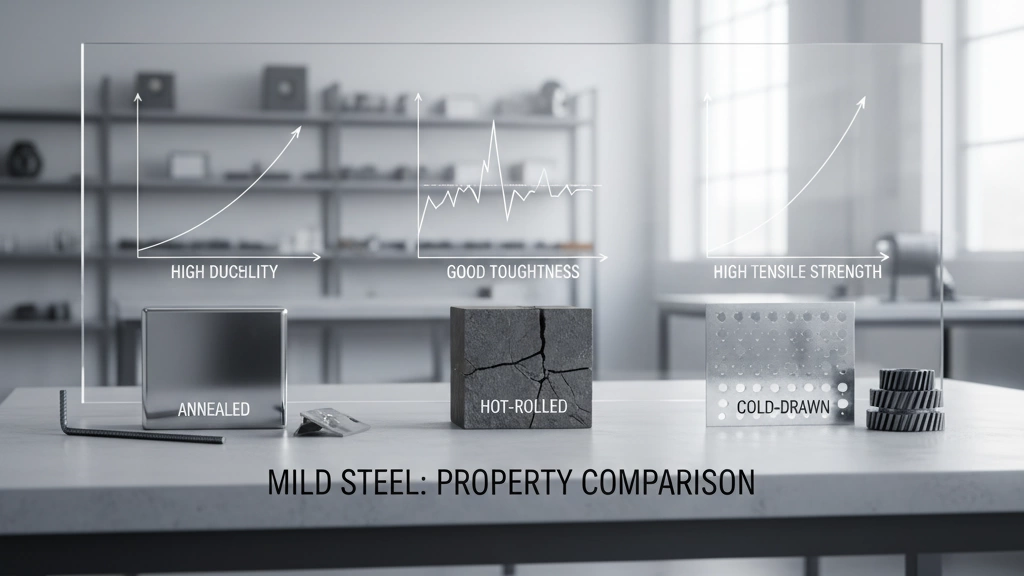
When choosing steel, understanding how mild steel compares to other types helps you select the right material quickly. Here’s a simple comparison to guide you:
| Property | Mild Steel (Low Carbon) | Medium Carbon Steel | High-Carbon Steel | Stainless Steel | HSLA Steel |
|---|---|---|---|---|---|
| Carbon Content | 0.05–0.25 TP3T | 0.25–0.60 TP3T | 0.60–1.01 TP3T | Usually <0.11 TP3T + high Cr & Ni | ~0.05–0.25 TP3T + alloying elements |
| Tensile Strength | 400–550 MPa | 600–900 MPa | 900+ MPa | 500–1200 MPa | 450–700 MPa |
| Ductility | High | Moderate | Low | Moderate to high | Moderate to high |
| Hardness | Low to moderate | Moderate | High | Moderate to high | Moderate to high |
| Corrosion Resistance | Poor (rusts easily) | Poor | Poor | Excellent | Good (better than mild steel) |
| Weldability | Excellent (easy to weld) | Good (requires care) | Difficult (may crack) | Moderate, requires preparation | Good |
| Typical Uses | Structural, automotive, general | Gears, shafts, rails | Springs, cutting tools | Food, medical, chemical gear | Structural, automotive, bridges |
Key Differences
- Mild Steel vs Medium Carbon Steel: Mild steel offers better weldability and ductility but lower strength and hardness. Medium carbon steel is tougher and used where more strength is needed but requires more careful welding.
- Mild Steel vs High-Carbon Steel: High-carbon steel is much harder and stronger but less ductile and harder to weld. It’s better suited for cutting tools and springs.
- Mild Steel vs Stainless Steel: Stainless steel excels in corrosion resistance and strength but comes at a higher cost. Mild steel is more economical for general structural use when corrosion isn’t a big concern.
- Mild Steel vs HSLA Steel: HSLA offers better strength and corrosion resistance than mild steel due to added alloys, making it suitable for heavier-duty structures while maintaining good weldability.
Choosing mild steel means balancing cost with versatility, especially in construction and manufacturing where ease of use and affordability are key. For projects needing higher strength or corrosion resistance, other steel types might fit better.
For more detailed mechanical properties, including mild steel tensile strength and yield strength comparisons, check out the thorough guide on 1018 steel yield strength and typical values.
Latest Standards & Certifications (2025)
Keeping up with the latest standards ensures that mild steel meets quality, safety, and regulatory requirements across markets—especially in the UK and globally. For 2025, the most widely recognised standards for mild steel include ASTM (American Society for Testing and Materials), EN (European Norms), JIS (Japanese Industrial Standards), GB (Chinese National Standards), and IS (Indian Standards).
- ASTM grades like A36 remain a benchmark in the UK construction and fabrication industries.
- EN standards such as S275JR and S355JR are popular in Europe and increasingly referenced worldwide.
- JIS, GB, and IS standards cover regional specifications but often align closely with ASTM and EN for international trade.
In addition to these, CE marking is mandatory for steel products sold within the European Economic Area, confirming compliance with EU safety and environmental laws. For UK customers exporting or importing steel, understanding CE marking and regional certificates is essential.
Another key document is the Mill Test Certificate (MTC). This certificate provides a detailed report on the steel’s chemical composition and mechanical properties, verified by the manufacturer before shipment. It gives assurance of product quality to engineers, fabricators, and quality control teams.
Staying updated with these standards helps you select the right mild steel grade that meets your project’s regulatory and performance needs. If you’re interested in precision machining with mild steel, check out how CNC machining for precision engineering can optimise your components while maintaining compliance.
FAQs – People Also Ask About Mild Steel
Here are quick answers to some common questions about mild steel material properties:
| Question | Answer |
|---|---|
| What is the yield strength of mild steel? | Typically between 250 MPa and 400 MPa, depending on the grade (e.g., A36 ≈ 250 MPa). |
| Is mild steel magnetic? | Yes, mild steel is ferromagnetic and responds to magnets. |
| Can mild steel be hardened? | Mild steel can be hardened slightly by cold working but not significantly by heat treatment due to low carbon content. |
| Difference between mild steel and bright mild steel? | Bright mild steel has a smooth, shiny finish from cold drawing; mild steel is more standard with an unfinished surface. |
| Is A36 the same as S275? | Both are common structural steels but differ slightly: A36 (ASTM standard) has a lower yield strength (~250 MPa); S275 (EN standard) has higher (~275 MPa). |
| Other common questions: | Mild steel is widely weldable without preheating, easy to machine, but needs coatings to resist rust. |
If you’re interested in detailed mechanical properties like A36 steel mechanical properties or want a grade comparison, the mechanical properties section has tables and further info.
For practical tips on working with mild steel, check the welding section or learn how to choose the right drill bits for mild steel machining in our drill bit types guide.
 English
  Chinese
  Spanish (Peru)
  German
  Korean
  Spanish (Spain)
  Italian