
Explore the benefits of shell moulding precision casting process, including superior surface finish, dimensional accuracy, and efficient metal mould techniques.
The Fundamentals of Shell Moulding: What It Is and Why It Matters
Shell moulding is a precise casting process that uses resin-coated sand to create thin, hard shells as moulds. This method combines the accuracy of metal pattern moulding with the versatility of sand casting, making it a popular choice for high-quality metal parts.
The process began in Germany with Johannes Croning’s innovation in the 1940s. Croning developed a way to coat fine sand with a thermosetting resin, then partially cure it on heated metal patterns. Since then, shell moulding has evolved into highly automated systems, improving consistency and efficiency in factories across the globe.
At its core, shell moulding relies on fine silica sand mixed with phenolic resin binders. When the resin-coated sand contacts a heated metal pattern, it hardens into a thin, rigid shell—typically 3 to 6 millimetres thick. This shell offers superior mould integrity compared to loose sand moulds, which tend to shift or collapse. The thin shell also ensures excellent dimensional accuracy and surface finish for cast parts.
Shell moulding works with a wide range of metals, including ferrous metals like cast iron and steel, as well as non-ferrous alloys such as aluminium and copper. The process supports complex shapes and thin walls without sacrificing strength or detail.
Today, shell moulding plays an important role in reducing post-casting machining. Its precision casting limits the need for costly secondary operations, aligning well with sustainable manufacturing trends. The process minimises material waste and energy consumption, making it a smart choice for environmentally conscious foundries serving the United Kingdom and beyond.
Step-by-Step Guide to the Shell Moulding Process
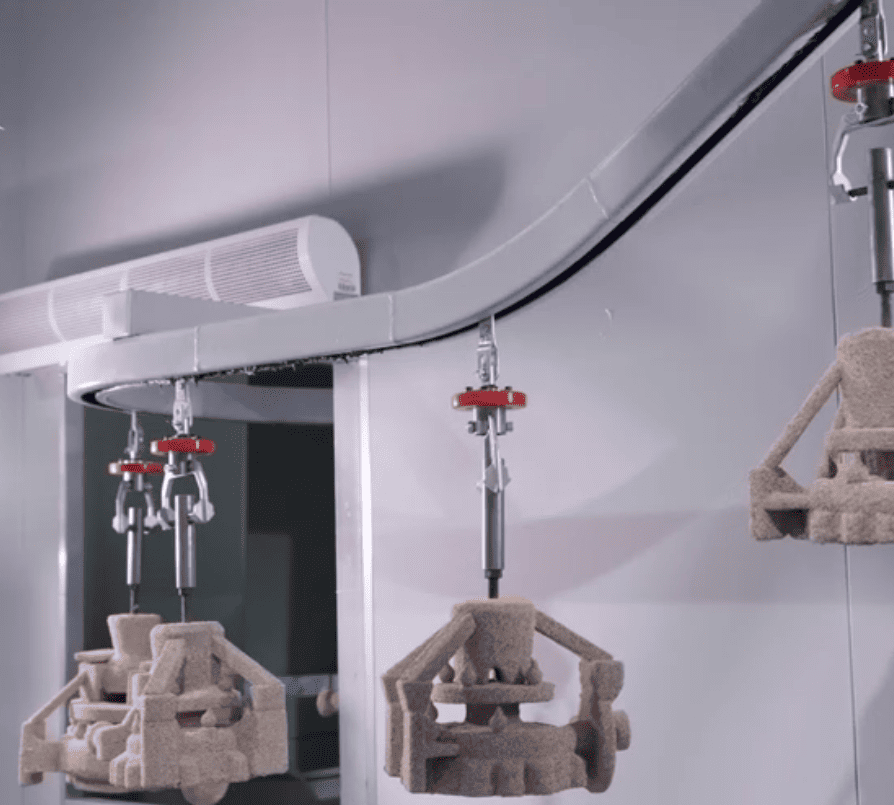
Here’s a straightforward look at how shell moulding works, step by step.
Step 1 Pattern creation
We start by machining reusable metal patterns, typically from iron or steel. These patterns come in two halves that define the exact shape of the part you want to cast.
Step 2 Sand-resin preparation and heating
Next, fine silica sand is mixed with a thermosetting phenolic resin. The metal patterns are heated to between 175°C and 370°C (about 350°F to 700°F) to prepare for shell formation.
Step 3 Shell formation
The heated pattern is inverted into a dump box containing the resin-coated sand. The sand sticks to the hot surface and partially cures through heat transfer, forming a thin, rigid shell about 3 to 6 millimetres thick.
Step 4 Curing and ejection
The formed shells are then fully cured in an oven, strengthening them to tensile strengths around 350 to 450 psi. After curing, the shells are carefully removed from the patterns.
Step 5 Mold assembly
The two shell halves—called cope and drag—are clamped together. If the part design requires, cores are inserted to create internal cavities. The assembled mould is backed with shot sand for extra support during casting.
Step 6 Pouring, cooling, and extraction
Molten metal, heated up to 1450°C (about 2640°F), is poured into the mould. Once the metal solidifies, the shell mould is broken apart, and the casting is cleaned and trimmed, ready for the next steps.
This precise process helps deliver consistent, high-quality castings with excellent surface finish and dimensional accuracy.
Advantages of Shell Moulding Elevating Precision and Efficiency
Shell moulding stands out for its superior surface finish, typically reaching Ra values between 3.2 and 6.3 μm. This smoothness significantly reduces the need for secondary machining, saving time and costs. The process also delivers dimensional accuracy within ±0.1 to 0.5mm, which means parts fit better right out of the mould.
When it comes to production, shell moulding excels in medium-volume runs from 100 up to 10,000 units, offering high productivity thanks to automation that reduces labour demands. This makes it ideal for manufacturers looking to balance volume and cost-effectiveness.
The method’s design flexibility is another major advantage. It can handle complex shapes, thin walls, and fine details without common defects seen in other casting processes. Whether it’s intricate consumer parts or tough automotive components, shell moulding can deliver.
On the cost side, reusable metal patterns and minimal scrap material mean lower waste and shorter lead times—often just days instead of weeks. This efficiency helps manufacturers in the United Kingdom keep up with fast market demands.
Lastly, shell moulding is more sustainable than traditional green sand casting. It uses less sand waste and consumes less energy, aligning well with modern environmentally conscious manufacturing trends.
By combining precision, speed, flexibility, and eco-friendliness, shell moulding remains a solid choice for many industries in the United Kingdom seeking reliable and efficient casting methods.
Disadvantages and Limitations When Shell Moulding Isn’t Ideal
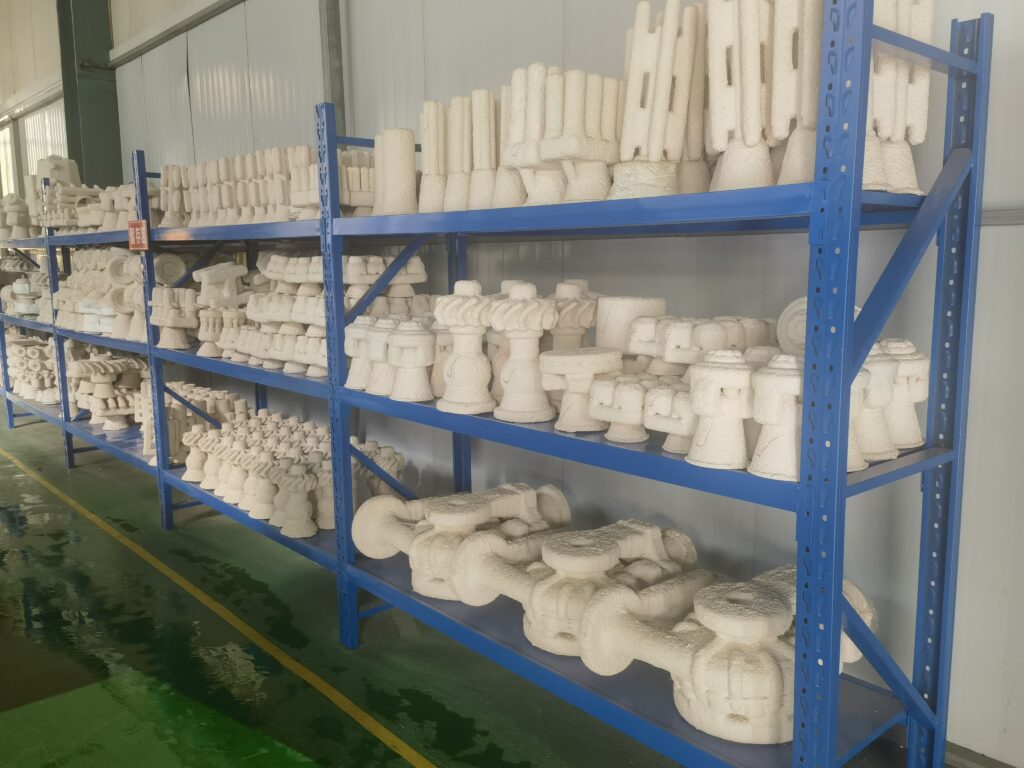
Shell moulding isn’t always the perfect choice. One major drawback is the high initial cost. Resin-coated patterns and specialised equipment can easily cost 50,000 or more just to set up. This can be challenging for smaller workshops or one-off projects.
Porosity is another concern. Gas can become trapped inside the mould, causing tiny holes in the cast part. This issue is more noticeable with larger, heavier parts over 200 pounds, where shell moulding struggles to maintain integrity.
Material-wise, shell moulding works best for small to medium-sized components. Large parts risk resin peeling or thermal cracks because the thin shell cannot withstand extreme heat or stress. Therefore, it is less suitable for large, heavy-duty components.
To overcome these limitations, many adopt hybrid approaches—combining shell moulding with other casting methods to balance cost and quality. Additionally, strict quality controls are applied to detect and address common issues early, minimising defects and rework.
Shell Moulding vs Other Casting Methods A Head-to-Head Comparison
When comparing shell moulding to other common casting methods, it is clear that each has its strengths and ideal applications depending on project requirements.
Vs Sand Casting
- Shell Moulding
- Provides a smoother surface finish and better dimensional accuracy (±0.1-0.5mm)
- Minimal machining required after casting
- Higher material and setup costs due to resin-coated sand
- Sand Casting
- Uses loose sand, making it less expensive and quicker for prototypes or low volumes
- Surface finish is rougher, so more post-casting work needed
- More wasteful and less consistent in accuracy
| Feature | Shell Moulding | Sand Casting |
|---|---|---|
| Surface Finish | Smooth (Ra 3.2-6.3 µm) | Rough |
| Dimensional Accuracy | High (±0.1-0.5 mm) | Moderate |
| Cost | Higher | Lower |
| Ideal Volume | Medium runs (100-10,000) | Short runs, prototypes |
Vs Investment Casting
- Shell Moulding
- Faster and more cost-effective for medium volume runs
- Handles a variety of alloys well
- Investment Casting
- Best for ultra-fine details and complex shapes
- More expensive and time-consuming, especially for larger parts
Vs Die Casting
- Shell Moulding
- More flexible with different metal alloys
- Does not require the high-pressure machinery die casting needs
- Better for small to medium runs and less pressure-sensitive metals
- Die Casting
- Ideal for high-volume production with very tight tolerances
- Usually limited to metals with low melting points like aluminium, zinc
How to Choose the Right Casting Method
Consider these key points when deciding which process fits your project best:
- Volume:
- Small batch or prototypes → Sand or investment casting
- Medium batches → Shell moulding strikes a strong balance
- Large high-volume → Die casting may be more cost-effective
- Detail & Finish:
- Need extreme detail → Investment casting
- Good finish with less machining → Shell moulding
- Less concern about finish → Sand casting
- Budget:
- Limited budget → Sand casting
- Moderate budget with better quality → Shell moulding
- Higher budget for complex precision → Investment or die casting
Using this framework helps align your project goals with the best casting method, balancing cost, quality, and production needs.
Real-World Applications and Case Studies with vast
Shell moulding plays a key role in making parts that demand high precision and durability. In the automotive industry, it’s used to produce gears, cylinder heads, and connecting rods that stand up to tough conditions. These components benefit from shell mould casting because of the process’s superior surface finish and tight dimensional accuracy.
In aerospace, shell moulding helps create parts like lever arms and valve bodies. These need to be strong and reliable under constant stress, which resin sand moulding and the Croning process can deliver consistently. Precision metal casting with shell moulding means fewer defects and longer-lasting parts.
For consumer goods, shell moulding is perfect for hardware fittings and pump components that require detailed shapes and consistent quality, making it an ideal choice for custom factory runs.
vast Spotlight Case Study
At vast, we put shell moulding to work producing 5,000 custom aluminium gears. By switching to this method, we cut defects by 40% and reduced lead times by 25%. Using reusable metal patterns and automated shell formation helped us scale production efficiently, meeting the high expectations of our customers while keeping costs down.
Future Trends in Shell Moulding
Looking ahead, the shell moulding process is evolving with the integration of 3D printing. This hybrid approach combines the flexibility of 3D-printed patterns with the strength and precision of resin-coated sand moulds. It offers even faster turnaround times and opens doors for more complex designs. For factories in the United Kingdom focused on custom and mid-volume runs, this means better quality parts delivered faster with less waste.
 English
  Chinese
  Spanish (Peru)
  German
  Korean
  Spanish (Spain)
  Italian