
Explore detailed types of bolt threads including coarse fine UNC UNF ISO standards and learn how to choose the right thread for your project needs.
Bolt Thread Fundamentals Key Parameters and Anatomy
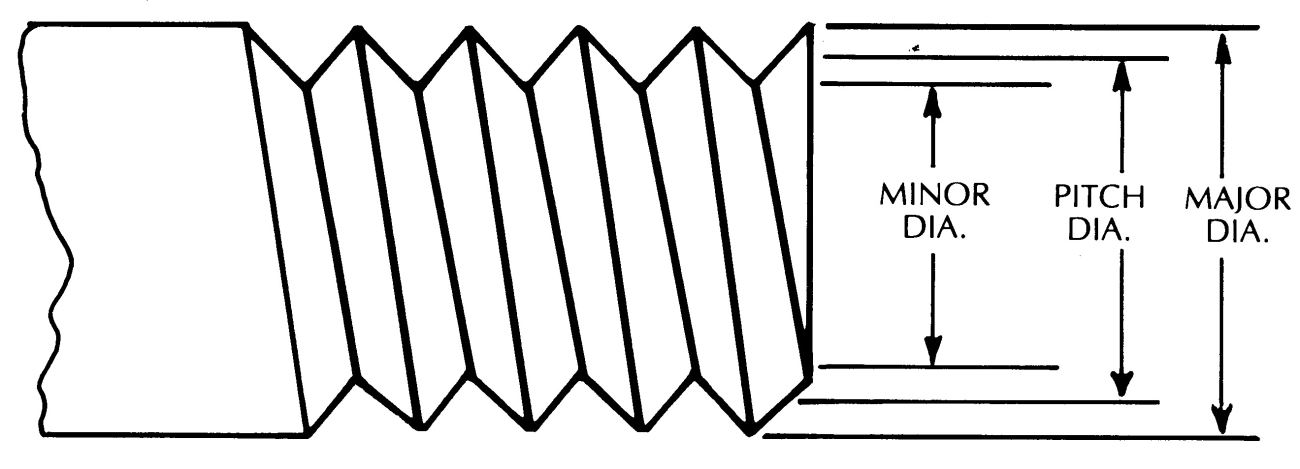
Understanding bolt threads starts with knowing their core components. The major diameter is the largest diameter of the thread, while the minor diameter is the smallest inside diameter. Between these two is the pitch, which is the distance between corresponding points on adjacent threads. Closely related is the lead, the distance a thread advances in one complete turn. The flank angle is the angle between the thread face and its axis, typically 60 degrees in standard threads. The crest is the top edge of the thread, and the root is the bottom groove between threads.
Threads come in two main directions. The most common is right-hand thread, which turns clockwise to tighten. This is the standard for most bolts. On the other hand, left-hand threads tighten counterclockwise and are often found in anti-vibration applications or specific machinery requiring reverse rotation.
Another key feature is the number of starts on a thread. Most bolts have a single start, meaning one continuous thread that spirals around the shank. Multi-start threads have two or more threads running side-by-side, allowing faster engagement and quicker assembly, commonly used in specialized fasteners.
Threads can be internal or external. Nuts feature internal threads tapped inside a hole, while bolts and screws have external threads on their shafts. This internal-external pairing is what allows fasteners to securely join parts.
Quick Reference Glossary of Key Thread Terms
| Term | Definition |
|---|---|
| Major Diameter | Largest diameter of the thread |
| Minor Diameter | Smallest diameter (root diameter) |
| Pitch | Distance between threads |
| cURL Too many subrequests. | cURL Too many subrequests. |
| cURL Too many subrequests. | cURL Too many subrequests. |
| cURL Too many subrequests. | cURL Too many subrequests. |
| cURL Too many subrequests. | cURL Too many subrequests. |
| cURL Too many subrequests. | cURL Too many subrequests. |
| cURL Too many subrequests. | cURL Too many subrequests. |
| cURL Too many subrequests. | cURL Too many subrequests. |
| cURL Too many subrequests. | cURL Too many subrequests. |
cURL Too many subrequests.
cURL Too many subrequests.
cURL Too many subrequests.
Fastening Threads
These are your standard workhorse threads, most commonly V-shaped with a 60-degree flank angle. This design handles high axial loads well and is typical for structural bolts, nuts, and general fastening. The V shape offers a good balance of strength and ease of manufacturing, making it the go-to choice on most construction and machinery projects.
Power Movement Threads
Power threads are built for motion and force transmission, not just holding parts together. The most common profile here is trapezoidal, including the well-known Acme thread. These threads have a wider, flatter profile, providing smooth linear motion and durability under heavy load. You’ll find them in jackscrews, lead screws, and other machinery where precise, strong movement is key. Round threads (Rd) are similar but rounder, focusing on high force transmission with less wear.
Other Profiles
- Square Threads: Sturdy and efficient for power transmission, but harder to machine and less common.
- Buttress Threads: Designed for one-sided load support, perfect where force acts mainly in one direction, like in heavy lifting applications.
- Knuckle Threads: Rounded crests, ideal for quick hand assembly with less risk of damage.
- Self-Locking Threads: Special shapes that resist loosening under vibration and torque.
Below is a quick comparison showing typical profiles and their load capacities, helping you decide which thread fits your project best:
| Thread Type | Profile Angle | Common Use | cURL Too many subrequests. | Special Feature |
|---|---|---|---|---|
| V-Shaped (60°) | 60 degrees | Fastening structural | High axial load | Standard, widely available |
| Acme (Trapezoidal) | ~29 degrees | Linear motion | High load & wear resistant | Smooth power transmission |
| Round (Rd) | Rounded | Heavy force transfer | High fatigue resistance | Good for shock/impact loading |
| Square | 90 degrees | Power transmission | Very efficient | Harder to cut, less common |
| Buttress | Asymmetric | One-direction load | High load on one side | cURL Too many subrequests. |
| cURL Too many subrequests. | cURL Too many subrequests. | cURL Too many subrequests. | Moderate | cURL Too many subrequests. |
cURL Too many subrequests.
cURL Too many subrequests.
cURL Too many subrequests.
cURL Too many subrequests.
- cURL Too many subrequests.cURL Too many subrequests.
- cURL Too many subrequests.cURL Too many subrequests.
- cURL Too many subrequests.cURL Too many subrequests.
- cURL Too many subrequests.cURL Too many subrequests.
cURL Too many subrequests.
- The cURL Too many subrequests. is the most popular metric thread standard worldwide. It comes in both coarse and fine pitches and is widely used across machinery and manufacturing industries. These threads meet DIN and ISO guidelines, ensuring compatibility internationally.
British and Specialty Standards
- BSW (British Standard Whitworth) and BSF (British Standard Fine): These are older imperial threads still found in vintage machinery and restoration projects in the U.S., especially in automotive and industrial heritage equipment.
- BA (British Association): These are tiny, precision threads mostly seen in instruments and electronics where space and fine control matter.
Thread Comparison at a Glance
| Thread Type | Pitch (TPI) Range | Common Use | Strength & Notes |
|---|---|---|---|
| UNC | Coarser (e.g., 13 TPI for 1/4″) | General construction | Durable, quick install |
| UNF | Finer (e.g., 28 TPI for 1/4″) | Automotive, aerospace | Precise, vibration resistant |
| UNEF | Very fine | Optics, instrumentation | Ultra precise, sensitive |
| cURL Too many subrequests. | Fine with rounded roots | Aerospace | Fatigue resistant |
| Metric M | Various (coarse/fine) | Machinery worldwide | Standardized internationally |
| BSW/BSF | Coarse/Fine | Vintage UK machinery | Legacy, less common now |
| BA | Very fine | Electronics, instruments | Precision, space-saving |
Knowing these standards helps you pick the right bolt thread for your job, whether you’re fixing a vehicle, building structures, or working on sensitive equipment.
Coarse vs Fine Bolt Threads When to Choose Each
When deciding between coarse and fine bolt threads, it really depends on what you need for the job.
Coarse Threads
- More durable and stronger in tough conditions
- Faster to assemble, which is great on large projects like wood or metal framing
- Better resistance to dirt and corrosion because the threads are deeper
- But they’re more prone to loosening from vibration
cURL Too many subrequests.
- cURL Too many subrequests.
- cURL Too many subrequests.
- cURL Too many subrequests.
- cURL Too many subrequests.
cURL Too many subrequests.
cURL Too many subrequests. cURL Too many subrequests. cURL Too many subrequests.
cURL Too many subrequests.
- cURL Too many subrequests. cURL Too many subrequests.
- cURL Too many subrequests. cURL Too many subrequests. cURL Too many subrequests. cURL Too many subrequests.. cURL Too many subrequests.
cURL Too many subrequests.
- cURL Too many subrequests. cURL Too many subrequests. cURL Too many subrequests.
- Choose fine threads for high torque engines or aerospace parts where precision and vibration resistance matter most.
Picking the right thread type saves time, prevents failures, and makes your project stronger and safer.
Applications and Selection Guide Matching Threads to Your Needs
Choosing the right bolt thread is key to getting the job done right, whether you’re in construction, automotive, aerospace, or plumbing. Here’s a quick look at common industry uses to help guide you:
- Construction: UNC coarse threads are popular because they’re durable and fast to install, perfect for wood or metal framing.
- cURL Too many subrequests.: UNF fine threads offer better vibration resistance and higher precision, ideal for engines and vehicle assemblies.
- Aerospace: UNJ threads are designed with rounded roots to reduce fatigue, meeting the demanding standards in aircraft manufacturing.
- Plumbing: NPT tapered threads create tight, leak-resistant seals used in piping and fittings.
When selecting threads, consider these factors:
- Load type: Will your application face shear, tension, or a mix?
- Material: Steel bolts differ from stainless in durability and corrosion resistance.
- Environment: Exposure to moisture or chemicals means choosing corrosion-resistant threads.
- Vibration: Fine threads generally handle vibration better, reducing loosening over time.
How to Measure Threads
Measuring bolt threads accurately is crucial before you buy or install:
- Use calipers to measure the diameter.
- Use a thread gauge to find the pitch (the distance between threads).
- Check compatibility with your existing parts to avoid issues like cross-threading.
Pro Tip
For unusual or non-standard thread sizes, consider working with custom threading services. They can create bolt threads tailored exactly to your technical specs—something especially useful in specialized equipment or repairs.
Want to find the perfect thread type faster? Try an embeddable quiz or thread selector tool to match your application needs with the right bolt threads every time.
Common Mistakes and Best Practices for Bolt Thread Installation
When working with types of bolts threads, it’s easy to make mistakes that can cost you time and money. Here are some common pitfalls to watch out for:
- Mismatched pitches: Using a bolt with a different thread pitch than the nut or tapped hole can lead to stripping or cross-threading. Always double-check thread pitch before installation.
- Over-torquing fine threads: Fine pitch threads, like UNF or UNEF, are strong but more delicate. Too much torque can strip the thread or cause failure.
- Ignoring thread direction: Don’t forget about left hand bolt threads where applicable. Installing a right-hand bolt where a left-hand is needed will ruin the connection.
Best Practices for Strong, Reliable Threads
- Use thread lockers: Apply a threadlocker to prevent loosening from vibration, especially in automotive or machinery bolts.
- Apply anti-seize compoundscURL Too many subrequests.
- cURL Too many subrequests.cURL Too many subrequests.
cURL Too many subrequests.
- cURL Too many subrequests. cURL Too many subrequests.cURL Too many subrequests.
- cURL Too many subrequests.
cURL Too many subrequests.
 Spanish (Peru)
  English
  German
  Korean
  Spanish (Spain)
  Italian