
Aprende los principales tipos de procesos de fundición con sus ventajas y desventajas, opciones de materiales, factores de coste y mejores usos para la fabricación.
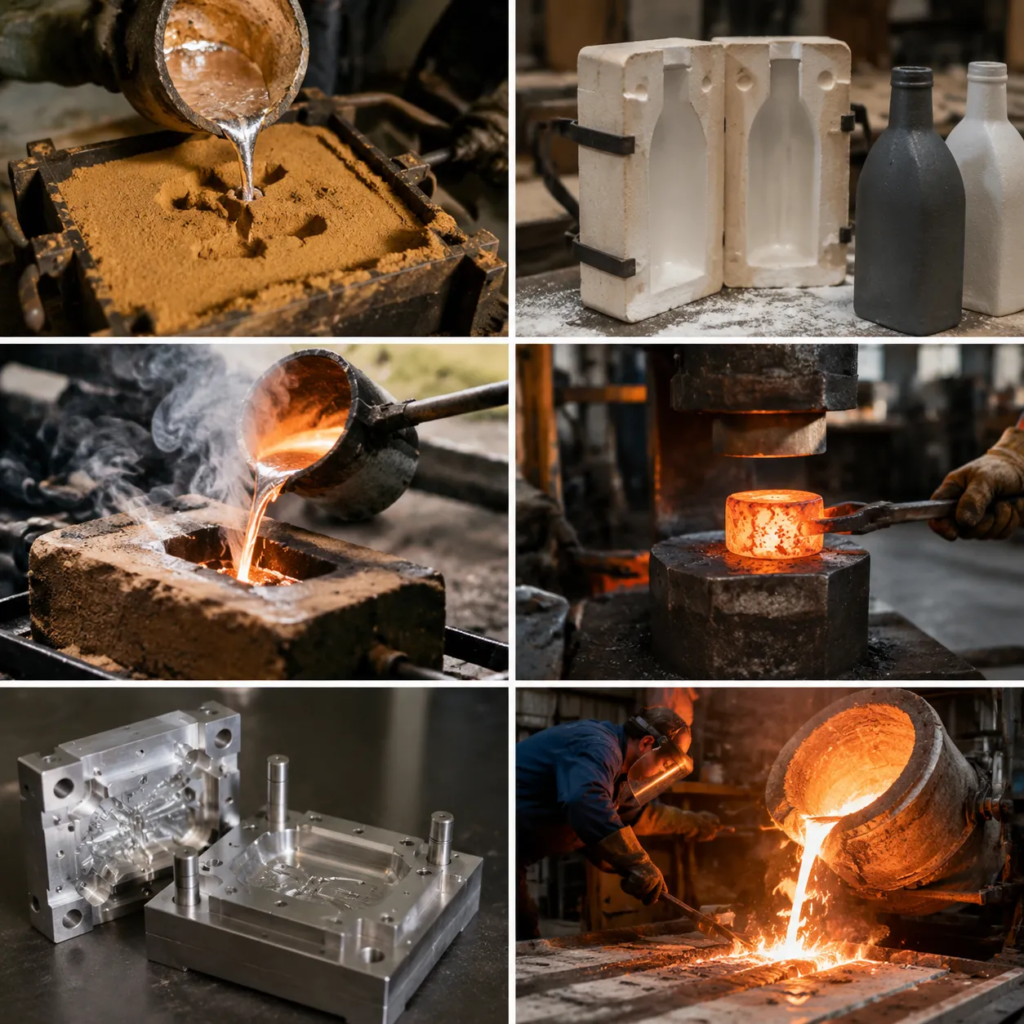
¿Qué es la fundición de metales?
La fundición de metales es un proceso de fabricación fundamental donde el metal fundido se vierte en una cavidad de molde, se deja solidificar y luego se retira para crear una pieza con forma específica. Como piedra angular de la fabricación moderna, este proceso nos permite crear geometrías complejas y diseños intrincados que serían increíblemente difíciles o costosos de lograr mediante mecanizado tradicional.
El proceso de fundición de metales sigue un flujo de trabajo sencillo y altamente eficiente en nuestra fundición:
- Modelado: Diseñamos un modelo físico de la pieza final.
- Mold Preparation: Se crea un molde alrededor del modelo, dejando una cavidad hueca en su interior.
- Fundición y Vertido: Calentamos el metal elegido hasta su estado líquido y lo vertemos en el molde de fundición.
- Enfriamiento y Solidificación: El metal fundido se enfría y adopta la forma de la cavidad.
- Finishing: La pieza de metal sólida se retira, limpia y termina para lograr la precisión dimensional y el acabado superficial requeridos.
Materiales Comunes Utilizados en la Fundición
Los diferentes tipos de fundición requieren metales específicos según la aplicación del producto final. Trabajamos regularmente con cuatro metales principales:
| Material | Key Properties | Common Applications |
|---|---|---|
| cURL Too many subrequests. | Excelente resistencia al desgaste, alta fluidez, gran capacidad de amortiguación | Bloques de motor, bases de maquinaria pesada, tuberías |
| Steel | Alta resistencia, excelente tenacidad, superior soldabilidad | Componentes estructurales, engranajes, ruedas de ferrocarril |
| Aluminum | Ligero, resistente a la corrosión, alta conductividad térmica | Piezas automotrices, componentes aeroespaciales, electrónica de consumo |
| Bronze | Baja fricción, excelente resistencia a la corrosión, muy duradero | Cojinetes, casquillos, herrajes marinos, estatuas |
Fundición en arena: La base de la conformación de metales
La fundición en arena es uno de los tipos de fundición más antiguos y fiables de la historia de la fabricación, que se remonta a miles de años. En esencia, el proceso consiste en compactar un material refractario, generalmente arena, alrededor de un modelo para formar un molde de fundición. Una vez retirado el modelo, vertemos metal fundido en la cavidad para crear la pieza final. Debido a su increíble flexibilidad y rentabilidad, sigue siendo una fuerza dominante en la fabricación moderna de fundiciones.
Moldes de arena verde vs. moldes de arena de resina
Generalmente utilizamos dos tipos principales de mezclas de arena según los requisitos del proyecto:
- Moldes de arena verde: Una mezcla tradicional de arena, arcilla y agua. El término “verde” se refiere al contenido de humedad en lugar del color. Es altamente reutilizable, ecológico y perfecto para una producción rápida.
- Moldes de arena de resina: Este método utiliza aglutinantes químicos para unir los granos de arena. Crea un molde de arena mucho más resistente y rígido, lo que se traduce en una precisión dimensional superior y un acabado superficial más limpio.
Pros y contras de los moldes de arena
| Advantages | Disadvantages |
|---|---|
| Bajos costos iniciales de herramientas y desarrollo | Acabado superficial más rugoso en comparación con la fundición a presión |
| Puede fundir componentes increíblemente grandes y pesados | Límites de tolerancia dimensional más bajos |
| Funciona con casi cualquier metal o aleación fundida | Tiempos de ciclo de producción más lentos por pieza |
Typical Applications
La fundición en arena es la opción definitiva para componentes de alta resistencia donde la integridad estructural importa más que un acabado espejo. Utilizamos habitualmente este proceso de fundición de metales para producir bloques de motor, culatas, bases de maquinaria pesada, carcasas de bombas y válvulas grandes. Cuando necesita componentes robustos de una empresa de fundición de metales fiable empresa de fundición de metales, los moldes de arena ofrecen una escalabilidad inigualable y una versatilidad de materiales.
Fundición a la cera perdida: El proceso de fundición de cera perdida
Cuando necesitamos algo excepcional dimensional accuracy y un acabado impecable surface finish, recurrimos a la fundición a la cera perdida. A menudo llamada cURL Too many subrequests., este método es uno de los más antiguos y precisos tipos de fundición utilizados en la fabricación moderna de fundiciones.
Cómo funciona la fundición a la cera perdida paso a paso
- Pattern Creation: Inyectamos cera en un molde para crear una réplica de la pieza final.
- cURL Too many subrequests. Montamos múltiples patrones de cera en una espiga central de cera (un “árbol”).
- cURL Too many subrequests. Sumergimos el árbol en una pasta cerámica y lo recubrimos con arena de estuco, repitiendo esto hasta que se forme una cáscara cerámica dura alrededor de la cera.
- Remoción de cera: Calentamos la carcasa para derretir la cera, dejando un molde cerámico hueco.
- Vertido: Vertemos metal fundido en el molde cerámico precalentado de fundición.
- cURL Too many subrequests. Una vez enfriado, rompemos la carcasa cerámica para revelar las piezas metálicas finales.
¿Por qué elegir la fundición a la cera perdida?
Este proceso ofrece una precisión inigualable para geometrías complejas. Debido a que el molde se crea alrededor de un patrón de cera sin costuras, podemos eliminar las líneas de separación comunes en moldes de arena.
Mejores metales y aplicaciones
| Característica / Detalle | Especificaciones de la fundición a la cera perdida |
|---|---|
| Mejores metales utilizados | Acero inoxidable, aluminio, bronce, acero al carbono y superaleaciones. |
| Cuándo elegirlo | Para diseños intrincados, paredes delgadas, tolerancias estrictas y piezas que requieren mínimo mecanizado. |
| Industrias comunes en España | Componentes aeroespaciales, armas de fuego, implantes médicos y piezas automotrices de alta gama. |
Aunque los costos de las herramientas para los primeros moldes de cera son más altos que algunos otros tipos de fundición, la reducción en los costos de mecanizado secundario y acabado lo hace altamente económico para producciones de alto valor y precisión.
Fundición a presión: Moldeo de metal de alta velocidad
Entre los diferentes tipos de fundición, la fundición a presión destaca por su producción en masa a alta velocidad. Utilizamos este proceso cuando los proyectos requieren lotes de gran volumen, tolerancias estrictas y excelentes acabados superficiales. En lugar de usar moldes de arena, la fundición a presión fuerza el metal fundido en moldes de acero reutilizables (moldes).
Fundición a presión por gravedad vs. por presión
Los dos métodos principales difieren en cómo el metal entra en el molde:
| Feature | Gravity Die Casting | Fundición a presión por gravedad |
|---|---|---|
| Flujo del metal | Alimentado por gravedad | Inyectado bajo alta presión |
| Production Speed | Moderate | Very high |
| Wall Thickness | Muros más gruesos | Muros delgados y complejos |
| Tooling Cost | Lower | Higher |
Máquinas de cámara caliente vs. cámara fría
Seleccionamos la maquinaria en función del punto de fusión de la aleación que se va a fundir:
- Hot-Chamber Die Casting: El mecanismo de inyección está sumergido directamente en el metal fundido. Esta configuración permite ciclos rápidos. Lo usamos para aleaciones de bajo punto de fusión como zinc, magnesio y plomo.
- Cold-Chamber Die Casting: El metal se funde en un horno separado y se vierte en la cámara de inyección. Utilizamos este método para metales de alto punto de fusión como aluminio y latón para evitar daños en el equipo de inyección.
Beneficios de la producción en masa de alta velocidad
- Piezas de forma neta: Produce piezas que requieren un mecanizado CNC mínimo después del fundido.
- Consistencia dimensional: Los troqueles de acero reutilizables aseguran que cada pieza coincida exactamente con las especificaciones.
- Acabado superficial suave: Ofrece superficies limpias directamente del molde.
Industrias comunes que confían en piezas de fundición a presión
- cURL Too many subrequests. Bloques de motor, carcasas de transmisión y soportes.
- cURL Too many subrequests. Carcasas de conectores, blindajes y disipadores de calor.
- Consumer Goods: Carcasas de herramientas eléctricas y herrajes de electrodomésticos.
Centrifugal Casting
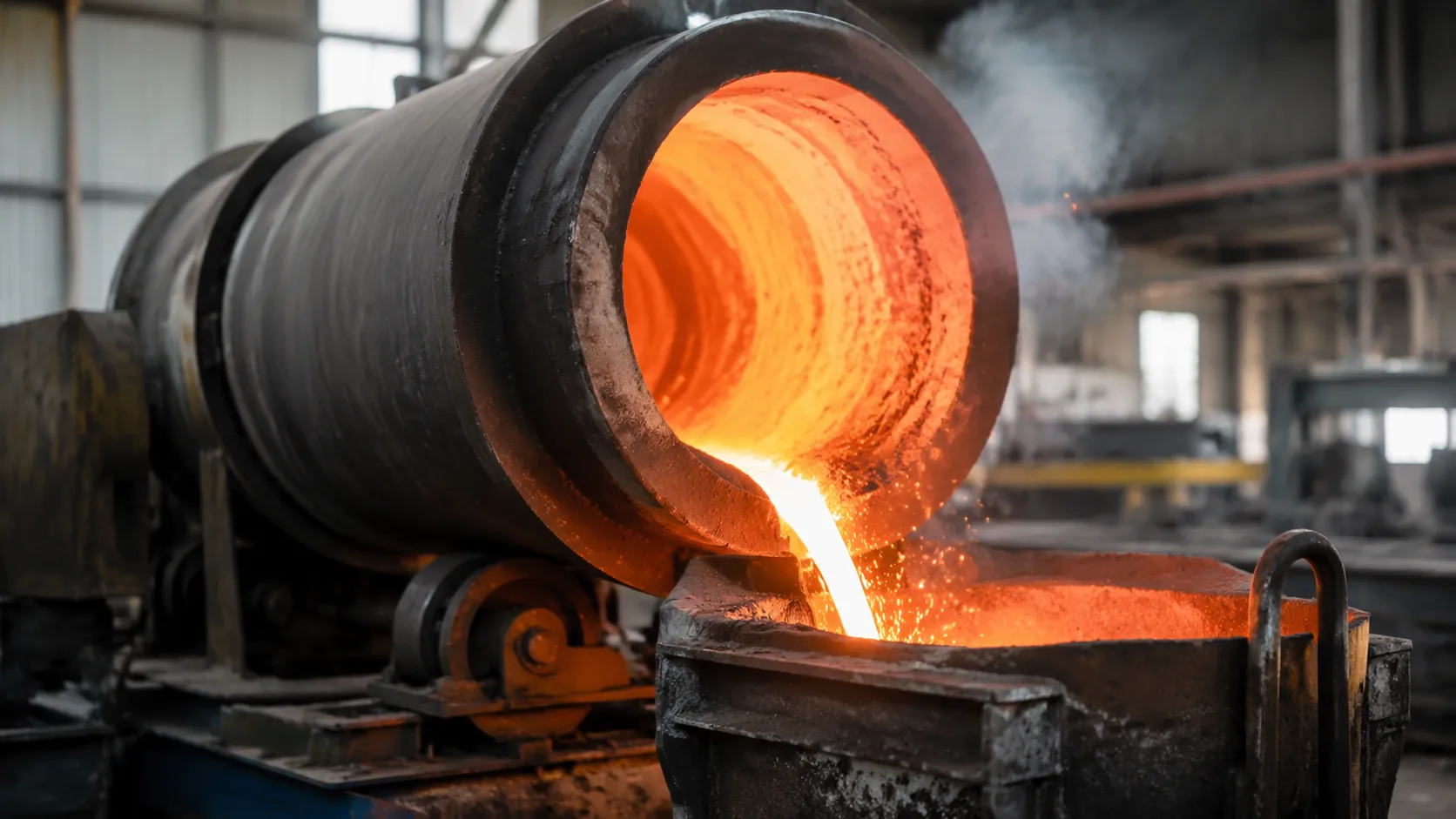
Cuando necesitamos producir piezas huecas perfectas, confiamos en fundición centrífuga. En lugar de usar moldes estáticos, este proceso de fundición de metal rota el molde a altas velocidades mientras vertemos el metal fundido. La fuerza centrífuga empuja el metal más pesado y limpio hacia las paredes exteriores, mientras que las impurezas más ligeras se dirigen al centro, donde podemos mecanizarlas fácilmente.
[Imagen del proceso de fundición centrífuga]
Fundición Verdadera vs. Semicentrífuga
Dividimos este método en dos técnicas principales según la forma del producto final:
- Fundición Centrifuga Verdadera: El molde gira sobre un eje horizontal o vertical para crear piezas perfectamente cilíndricas sin usar un núcleo central.
- Fundición Semicentrífuga: El molde gira alrededor de un eje vertical, utilizando un núcleo para crear formas internas. Usamos esta variación para piezas simétricas, similares a ruedas.
Aplicaciones ideales y beneficios del material
Este proceso es nuestra opción preferida para fabricar tuberías, tubos y anillos de alta calidad. Aprovechando la fuerza de rotación, logramos una integridad estructural superior y una excelente densidad del material que los métodos de vertido estándar no pueden igualar.
| Feature | Beneficio de la Fundición Centrifuga |
|---|---|
| cURL Too many subrequests. | Tuberías de agua, rodamientos de bujes, cilindros de línea y anillos de motores de reacción. |
| Densidad del material | Estructura de grano ultra densa con prácticamente cero aire atrapado o bolsas de gas. |
| Defect Reduction | Minimiza drásticamente defectos comunes de la fundición como porosidad y contracción. |
| Structural Integrity | Solidificación direccional excepcional, proporcionando alta resistencia mecánica para aplicaciones industriales pesadas. |
Continuous Casting
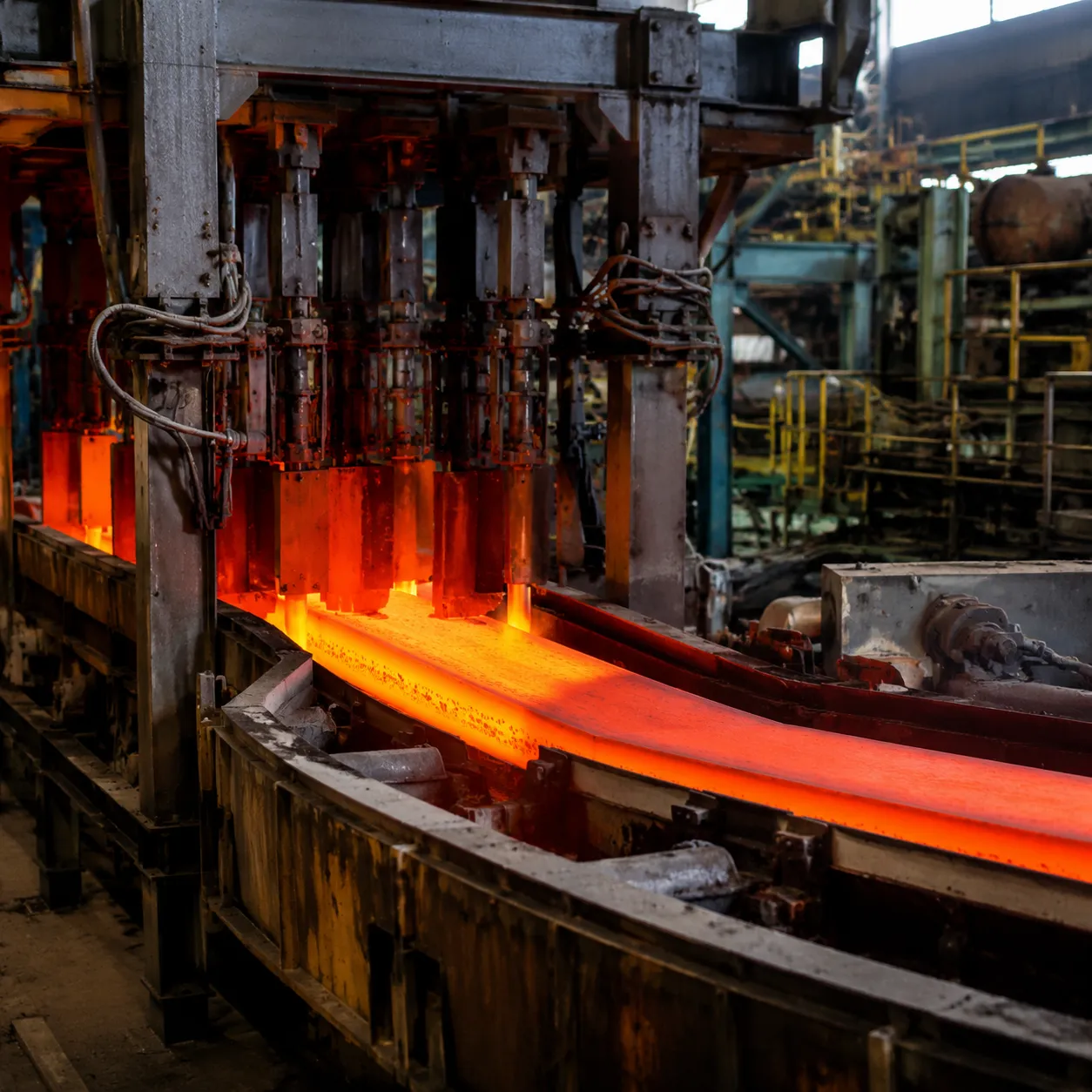
Cuando necesitamos producir volúmenes masivos de materia prima sin detenernos, recurrimos a fundición continua. A diferencia de los métodos tradicionales por lotes, este proceso de fundición de metal solidifica el metal fundido en una hebra continua de formas semiacabadas como lingotes, bloques o planchas en un flujo ininterrumpido.
Eficiencia en masa y reducción de costos
Este método transformó por completo la fabricación en fundiciones, especialmente para la producción de acero. Al saltarse el paso de verter moldes individuales y recalentar los lingotes, reducimos el consumo de energía, mano de obra y desperdicio de chatarra.
| Feature | Beneficio del Colado Continuo |
|---|---|
| Production Speed | Producción ininterrumpida y de alto volumen de losas y palanquillas |
| Rendimiento del Material | Menos chatarra metálica en comparación con los moldes tradicionales |
| Quality Control | Integridad estructural y acabado superficial altamente uniformes |
| Cost Efficiency | Menor consumo de energía y costos de manejo reducidos |
Al mantener el metal fundido en movimiento continuo a través de un molde de fundición enfriado con agua, logramos una precisión dimensional excelente y una calidad consistente a lo largo de kilómetros de metal. Es la columna vertebral definitiva para la fabricación de materias primas de alto volumen.
Otros Tipos Notables de Fundición
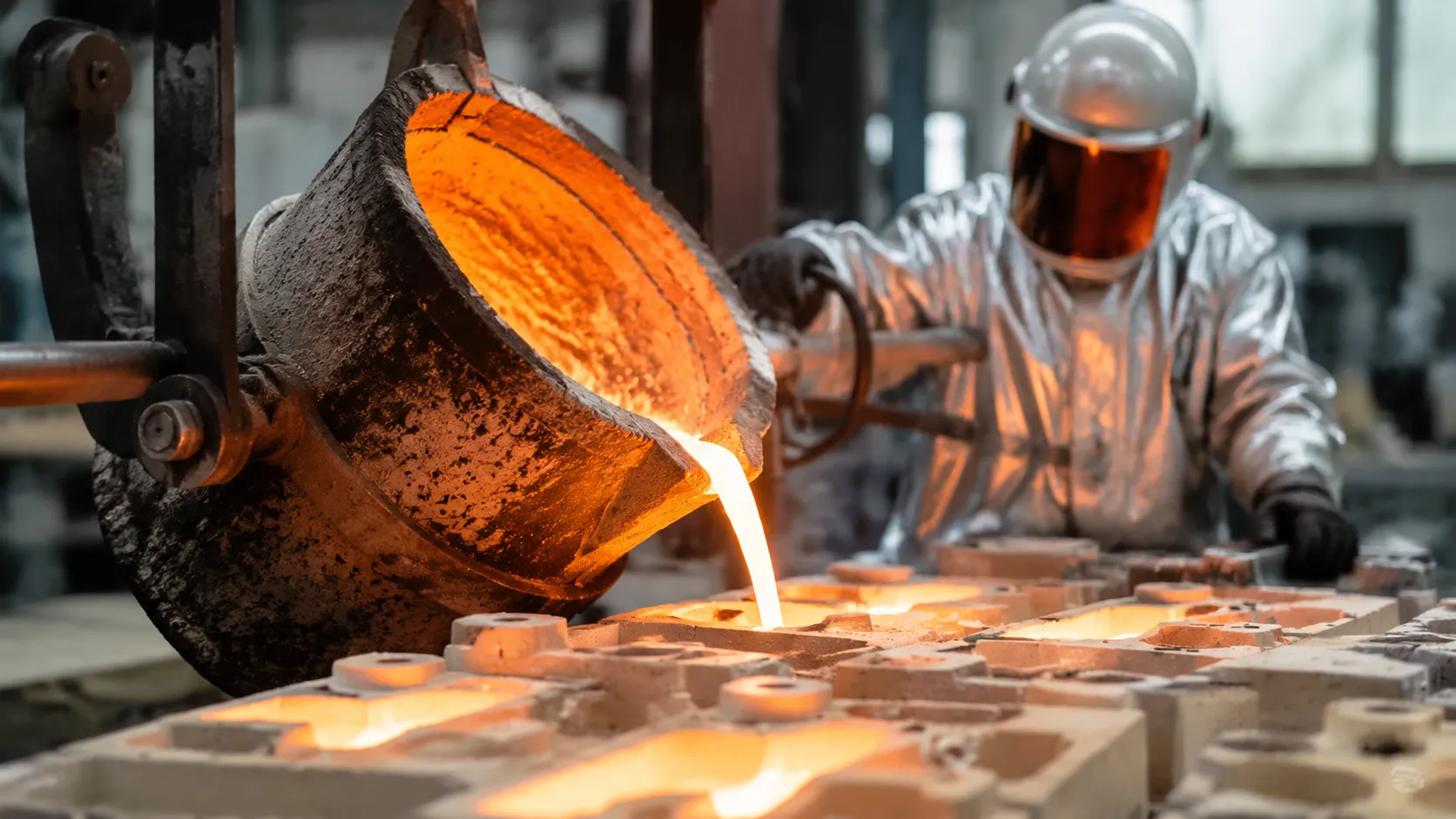
Mientras que la fundición en arena y en molde manejan la mayor parte de la producción de alto volumen, también utilizamos varios procesos especializados tipos de fundición para cumplir con requisitos de diseño únicos. Cuando los métodos estándar no pueden ofrecer la precisión surface finish o geometría compleja que necesitas, estos procesos alternativos de fabricación en fundición intervienen.
Shell Mold Casting
Este método utiliza un patrón de metal calentado recubierto con una mezcla de arena y resina para formar una cáscara delgada y endurecida. El Beneficio: Ofrece mejores dimensional accuracy y más rápidas tasas de producción que los moldes de arena tradicionales. Mejor Para: Piezas pequeñas a medianas que requieren un seguimiento preciso, como carcasas de engranajes y bielas.
Fundición en yeso
En lugar de arena, usamos una mezcla de yeso de yeso para crear el de fundición. El Beneficio: El yeso crea una superficie excepcionalmente suave surface finish y permite detalles intrincados. Mejor Para: Metales no ferrosos como aluminio o aleaciones de cobre, a menudo para componentes de cerraduras o accesorios decorativos.
Fundición en molde cerámico
Similar al yeso, pero usamos materiales cerámicos que pueden soportar temperaturas extremadamente altas. El Beneficio: Nos permite verter metales de punto de fusión alto metal fundido mientras mantenemos una precisión excepcional y un acabado impecable. Mejor Para: Impulsores, componentes de maquinaria compleja y herramientas especializadas.
cURL Too many subrequests.
Al dibujar el metal fundido dentro de la cavidad del molde usando un vacío, eliminamos completamente el aire atrapado y los gases. El Beneficio: Previene defectos comunes casting defects como la porosidad, asegurando un producto acabado altamente denso y estructuralmente sólido. Mejor Para: Componentes de alta integridad donde la falla del material no es una opción.
Cómo Elegir el Método de Fundición Adecuado
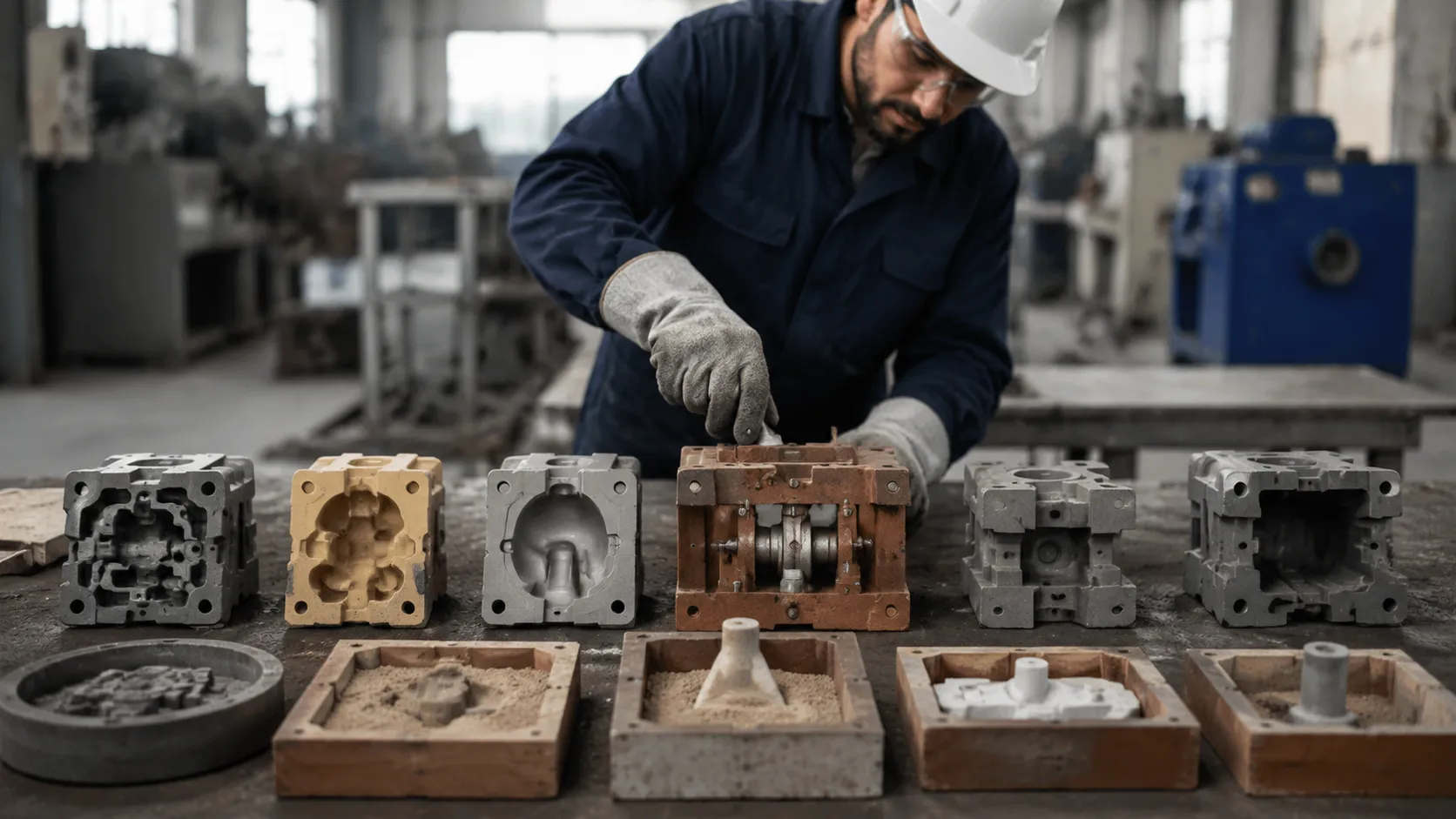
cURL Too many subrequests. tipos de fundición para tu proyecto impacta directamente en tu presupuesto de producción, cronograma y calidad del producto. Como fabricantes de fundiciones, siempre evaluamos cuatro pilares críticos para combinar tu diseño con el proceso de fundición de metal ideal proceso de fundición de metal.
Volumen y Escala de Producción
El volumen total de tu pedido dicta la configuración de las herramientas. Para producciones de alto volumen, métodos de alto costo inicial como fundición a presión reducción drástica del costo por pieza. Para prototipos de bajo volumen o componentes industriales masivos, una molde de arena ofrece la mayor flexibilidad.
Compatibilidad de Materiales y Puntos de Fusión
No todos los metal fundido se comportan de la misma manera en cada de fundición. Los metales ferrosos con altos puntos de fusión (como el acero) requieren moldes de arena o cerámica, mientras que las aleaciones no ferrosas (como aluminio, magnesio y zinc) prosperan en moldes metálicos permanentes.
Precisión dimensional y acabado superficial
Si tu pieza requiere tolerancias estrictas y un acabado surface finish suave justo al salir del molde, cURL Too many subrequests. (fundición a la inversión) minimiza la necesidad de mecanizado secundario. La fundición en arena, aunque confiable, produce una textura más áspera que a menudo requiere un acabado adicional.
Matriz de comparación de métodos de fundición
| Factor de selección | cURL Too many subrequests. | Investment Casting | cURL Too many subrequests. |
|---|---|---|---|
| Production Volume | Low to Medium | Low to Medium | Alto a ultra alto |
| Tooling Cost | Very Low | Moderate | Very High |
| Dimensional Accuracy | Low to Medium | High | Excellent |
| Surface Finish | Rough | cURL Too many subrequests. | Excellent |
| Mejor Usado Para | Partes grandes de hierro/acero | Geometrías complejas y precisas | Partes de aluminio de producción en masa |
Restricciones presupuestarias y costos de herramientas
Valoramos las inversiones iniciales en herramientas frente a los costos por pieza. Los moldes de acero permanentes requieren una gran inversión inicial, pero ofrecen el menor costo por pieza a gran escala. Por otro lado, la fundición en arena mantiene los costos iniciales cerca de cero, pero tiene costos laborales más altos por unidad. Equilibrar estas restricciones financieras asegura obtener la pieza de mayor calidad al precio de mercado adecuado.
Preguntas frecuentes sobre tipos de fundición
¿Cuál es el tipo de fundición más común?
cURL Too many subrequests. es, con diferencia, el método más popular que usamos en la fabricación en fundición. Representa la mayor parte del tonelaje total de fundición a nivel mundial porque es increíblemente rentable, puede manejar componentes enormes y funciona con casi cualquier metal fundido.
¿Qué proceso de fundición proporciona el mejor acabado superficial?
cURL Too many subrequests. (fundición a la cera perdida) y fundición a presión ofrecen el mejor acabado superficial y la mayor precisión dimensional. La fundición a la inversión es nuestra opción para geometrías complejas, mientras que la fundición en molde de presión gana para la producción en volumen de piezas lisas y no ferrosas.
¿Cuál es la diferencia entre fundición en arena y fundición en molde de presión?
Desglosamos las principales diferencias entre estos dos tipos populares de fundición a continuación:
| Feature | cURL Too many subrequests. | cURL Too many subrequests. |
|---|---|---|
| cURL Too many subrequests. | Molde de arena temporal | Molde de acero permanente |
| Production Volume | cURL Too many subrequests. | High-volume production |
| Surface Finish | Más áspero, generalmente necesita mecanizado | Excelente, acabado liso como fundido |
| Tooling Cost | Bajo coste inicial | Alta inversión en herramientas iniciales |
| cURL Too many subrequests. | Metales ferrosos y no ferrosos | Principalmente no ferrosos (aluminio, zinc) |
¿Se pueden usar todos los metales en cada método de fundición?
No. Cada proceso de fundición de metales tiene limitaciones de material basadas en puntos de fusión y durabilidad del molde. Por ejemplo, no podemos usar fácilmente metales ferrosos de alto punto de fusión como el acero en fundición a presión estándar porque el calor extremo destruiría rápidamente los moldes de acero permanentes. Por el contrario, un molde de arena puede soportar casi cualquier temperatura de metal fundido sin problema.
 Spanish (Peru)
  English
  German
  Korean
  Spanish (Spain)
  Italian