
Spotface vs counterbore explained with clear differences, uses, tooling, standards, and best practices for engineers and machinists.
If you’ve landed here, you’re likely wrestling with the spotface vs counterbore decision — a common challenge for machinists, engineers, and designers aiming to get bolted joints just right. Knowing when to specify a spotface or a counterbore isn’t just about semantics; it’s about functionality, cost, and meeting strict standards. This guide cuts through the confusion with clear definitions, critical differences, and practical tips you can rely on in the shop or on your drawings. Stick around, and you’ll learn exactly how to choose the right machining feature for your next project—saving time, material, and headaches.
Quick Comparison Table: Spotface vs Counterbore
| Feature | Spotface | Counterbore |
|---|---|---|
| Purpose | Creates a flat, clean bearing surface | Recesses a fastener head for flush fit |
| Depth | Shallow (0.010–0.060″ / 0.25–1.5 mm) | Deeper, equal to fastener head thickness |
| Diameter | Slightly larger than washer or nut face | Matches fastener head diameter |
| Geometry | Flat surface, minimal material removal | Flat-bottom hole with pilot and shoulder |
| cURL Too many subrequests. | Spotface cutter or back-spotfacer | Counterbore cutter, often with pilot |
| Common Uses | Flatten uneven castings, provide bearing surface | Socket head cap screws, cap screw clearance |
| Drawing Symbol | “SF” callout or spotface symbol | Counterbore symbol (⌴) with diameter and depth |
| Standards | ASME Y14.5, ISO 15786 | ASME B18.2.1, ISO 15065 |
| Effect on Part | Minimal material removal, preserves strength | Removes more material, may reduce thickness |
| Typical Fastener Fit | Washers, nuts needing flat support | Fastener heads recessed flush or below surface |
This table helps you quickly decide between spotfacing and counterboring when designing or machining fastener holes.
What Is a Counterbore?
A counterbore is a cylindrical flat-bottom hole that enlarges another hole to a specific diameter and depth. Its primary purpose is to allow the fastener head—usually a socket head cap screw or bolt—to sit flush or below the surface of the material. This creates a clean, flat surface for the fastener head and avoids interference with other parts.
Standard counterbore geometry consists of three features:
- cURL Too many subrequests. cURL Too many subrequests.
- cURL Too many subrequests. cURL Too many subrequests.
- A cURL Too many subrequests. cURL Too many subrequests.
cURL Too many subrequests.
- cURL Too many subrequests.
- cURL Too many subrequests.
- cURL Too many subrequests.
cURL Too many subrequests. cURL Too many subrequests. and cURL Too many subrequests., cURL Too many subrequests.
cURL Too many subrequests.
cURL Too many subrequests.
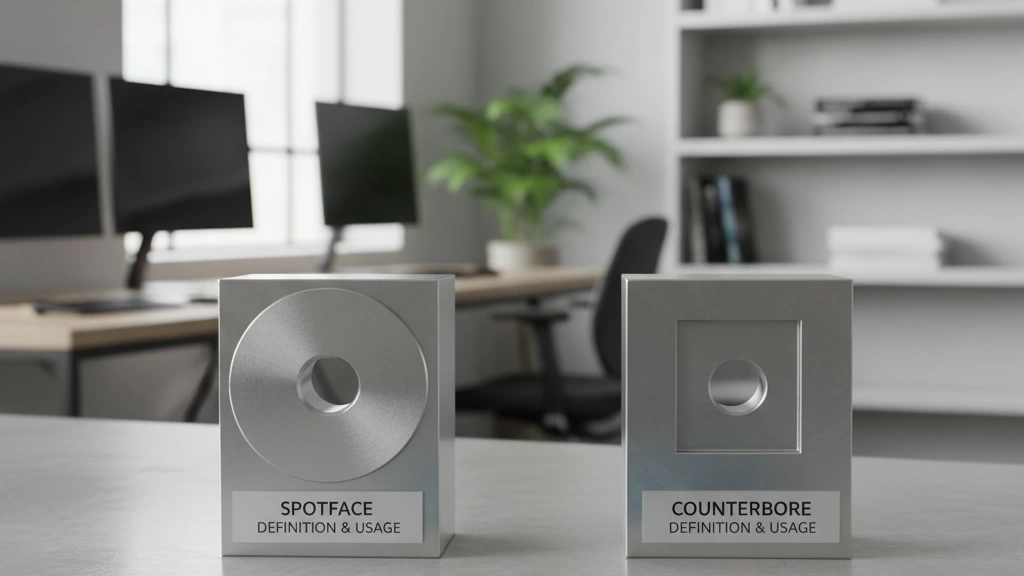
cURL Too many subrequests.
cURL Too many subrequests.
cURL Too many subrequests.
Spotface vs Counterbore – 8 Critical Differences
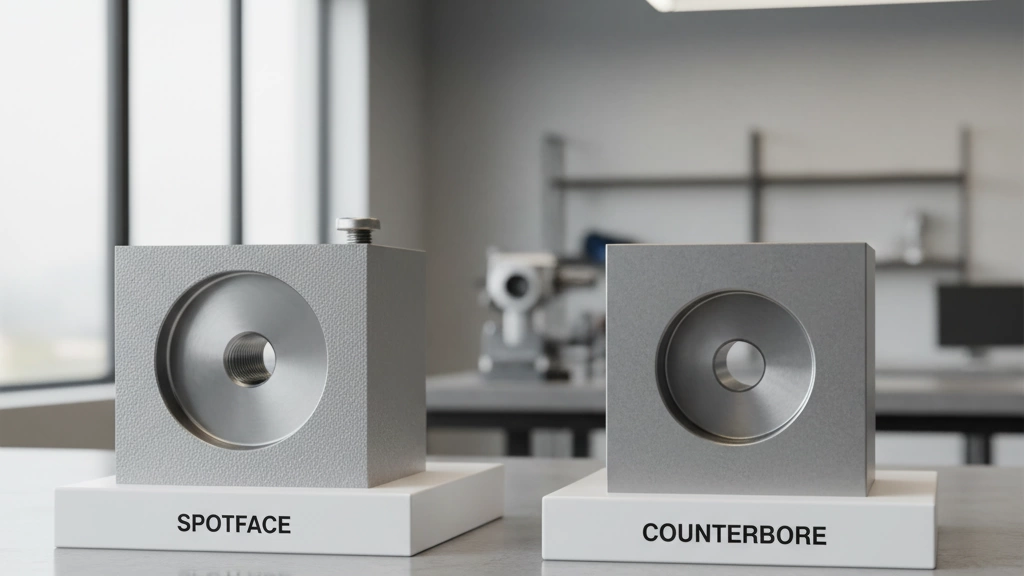
Here’s a quick look at the main differences between spotface and counterbore across eight key areas:
| Aspect | Spotface | Counterbore |
|---|---|---|
| Functional Purpose | Create a flat, clean bearing surface for bolt or nut face | Provide space for fastener head to sit flush or below surface |
| Depth of Cut | Shallow (usually 0.010–0.060″ / 0.25–1.5 mm) | Deeper, enough to fully recess fastener head |
| Diameter & Tolerance | Diameter just larger than washer or nut face; tighter tolerances for bearing | Larger diameters to fit fastener heads; tolerances vary by standard |
| Tooling Used | Spotface cutter, back-spotfacer, or small end mill | Counterbore cutter or tool specifically made for cap screws |
| Effect on Part Strength & Weight | Minimal material removal, maintains strength | More material removed, can weaken thin sections or reduce weight |
| Machining Time & Cost | Faster and cheaper to machine | Slower, with higher costs due to deeper cuts and larger tools |
| Surface Finish Requirements | Smooth, consistent flat surface for proper bolt/nut seating | Flat bottom with precise shoulder for fastener head support |
| Standards & When Required | Specified by ASME Y14.5 and ISO 15786 for bolt bearing surfaces | Required by ASME B18.2.1 or ISO 15065 when counterbore fasteners like socket head cap screws are used |
Knowing these differences helps you choose the right machining approach—spotface when you just need a clean bearing surface, and counterbore when you must recess a fastener head fully.
When to Use a Spotface (Real-World Scenarios)
Spotfaces come in handy when you need a smooth, flat bearing surface without removing too much material. Here are some typical situations where spotfacing is the right call:
- Castings and forgings with uneven surfaces: These parts often have rough or irregular faces. Spotfacing helps create a clean, level area for bolt heads or nuts to sit properly.
- Ensuring 100% contact under bolt head or nut: If the fastener needs full contact for proper clamping force, spotfacing eliminates gaps caused by surface irregularities.
- Structural steel connections (AISC requirements): Spotfaces are often required by the American Institute of Steel Construction to ensure reliable bearing and prevent fastener fatigue.
- Replacing a poorly applied counterbore: When a counterbore was overdone or unnecessary, switching to a spotface fixes the fit without weakening the part.
Using a spotface in these cases ensures a secure, level fit without excess machining or reducing part strength.
When to Use a Counterbore (Real-World Scenarios)
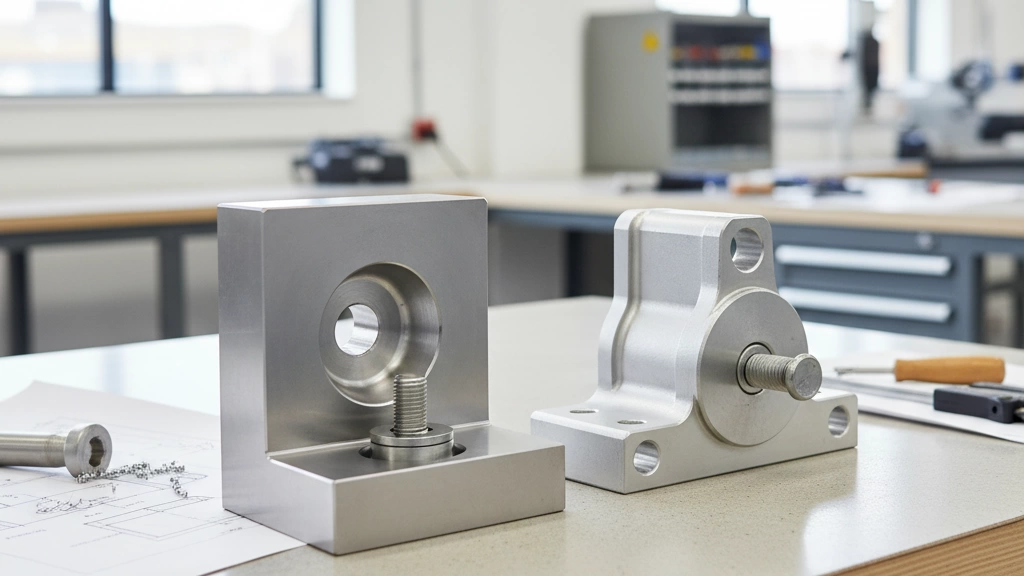
A counterbore is your go-to when you need a full fastener head recess, cURL Too many subrequests.
cURL Too many subrequests.
- cURL Too many subrequests.cURL Too many subrequests.
- cURL Too many subrequests.cURL Too many subrequests.
- cURL Too many subrequests.cURL Too many subrequests.
cURL Too many subrequests.
cURL Too many subrequests.
cURL Too many subrequests.
- cURL Too many subrequests. cURL Too many subrequests.
- cURL Too many subrequests. cURL Too many subrequests.
- cURL Too many subrequests. cURL Too many subrequests.
- cURL Too many subrequests. cURL Too many subrequests.
Avoiding these mistakes helps keep your parts strong, fasteners secure, and machining efficient.
Tooling and Machining Tips
When it comes to spotfacing, you want the right tools to get a clean, flat bearing surface without wasting time or material. The go-to tools are:
- Spotface cutters: These have a flat cutting edge perfect for quick, precise spotfaces.
- Back-spotfacers: Ideal when you can only access the back side of a hole or when the workpiece is too thick.
- Indexable spotface tools: Great for high-volume jobs since you can swap out carbide inserts quickly, saving on downtime.
cURL Too many subrequests. counterboring, the tooling is a bit different:
- Standard counterbore cutters: Designed with a pilot that fits the original hole, cutting a flat-bottom recess with a shoulder to guide the fastener.
- Cap screw counterbores: These are specific to socket head cap screws and similar fasteners, tailored for precise depth and clearance.
If you’re running CNC machines, here are a couple of G-code tips:
- Use canned cycles like G81 for spotfacing with a simple dwell at bottom for surface cleanup.
- For counterboring, a combination of peck drilling cycles and dwell or slow feed for the flat bottom works best.
- Always program the pilot depth separately from the flat-bottom cut for accuracy.
Having the right tools and knowing how to program them saves machining time and keeps your parts within spec—especially when following ASME and ISO spotface and counterbore standards.
Standards and Specifications

Here’s a quick look at the key standards covering spotface and counterbore features you’ll deal with in U.S. and global machining:
| Standard | Focus | Key Points |
|---|---|---|
| ASME Y14.5-2018 | Geometric Dimensioning & Tolerancing | Defines spotface and counterbore symbols, tolerance rules, and callouts used on drawings in the U.S. |
| ISO 15786 | Spotface Dimensions | Specifies the nominal spotface geometry, usually shallower than ISO 273 counterbore specs. |
| ISO 273 | Counterbore Dimensions | Covers the full definition of counterbore sizes, including depth and diameter tolerances, used internationally. |
| DIN 974-1 | Counterbore Tables | Provides standard counterbore tool and hole size charts, mainly used in European machining shops. |
cURL Too many subrequests.
- ASME Y14.5 cURL Too many subrequests.
- Use ISO 15786 cURL Too many subrequests.
- cURL Too many subrequests. ISO 273 cURL Too many subrequests.
- cURL Too many subrequests. DIN 974-1 cURL Too many subrequests.
cURL Too many subrequests.
cURL Too many subrequests.
cURL Too many subrequests.
- cURL Too many subrequests. spotface cURL Too many subrequests.
- cURL Too many subrequests. counterbore cURL Too many subrequests.
- cURL Too many subrequests.
- cURL Too many subrequests. cURL Too many subrequests. or cURL Too many subrequests. cURL Too many subrequests. ASME Y14.5 or ISO 15786 cURL Too many subrequests.
- cURL Too many subrequests.
- Is tooling or setup limited?Spotface cutters are simpler and faster; counterbore tools are more complex but necessary for full recess.
- Need to call it out clearly on drawings?Use the correct spotface symbol (SF) or counterbore symbol (⌀ with flat bottom indicator) to avoid confusion.
If you’re still unsure, lean toward a spotface if the goal is just a clean flat bearing surface without recessing the fastener head. Go counterbore when the fastener head must sit below or flush with the part surface for clearance or aesthetics. This checklist helps prevent over- or under-machining and keeps your build tight and functional.
 Spanish (Spain)
  English
  Spanish (Peru)
  German
  Korean
  Italian