
Discover the types of springs including compression torsion extension and leaf springs with key features applications and selection tips.
What Are Springs A Quick Primer on Mechanics and Materials
If you’ve ever wondered what makes a pen click, a car’s suspension smooth, or a watch tick, you’ve seen springs in action. At their core, springs are mechanical components designed to store and release energy through deformation. When you apply force, a spring compresses, stretches, or twists, then returns to its original shape once the force is removed.
Springs are made from various materials, typically metals like steel alloys, because they offer excellent elasticity and durability. Some are crafted from specialized materials like stainless steel or phosphor bronze to resist corrosion and provide specific mechanical properties.
Understanding the basics of spring mechanics and materials helps you appreciate why different springs excel in certain applications. Key concepts include:
- Elasticity: The ability to deform under force and return to the original shape.
- Load capacity: How much force a spring can handle before permanent deformation.
- Fatigue resistance: How long a spring lasts under repeated use.
Whether it’s a helical coil spring in your garage door or a leaf spring in a heavy-duty truck, each type works by balancing these mechanics with material strengths to achieve a precise function. Later, we’ll explore the main types of springs and their unique roles in engineering and everyday products.
The Four Main Types of Springs In-Depth Breakdown Compression Springs The Workhorses of Shock Absorption
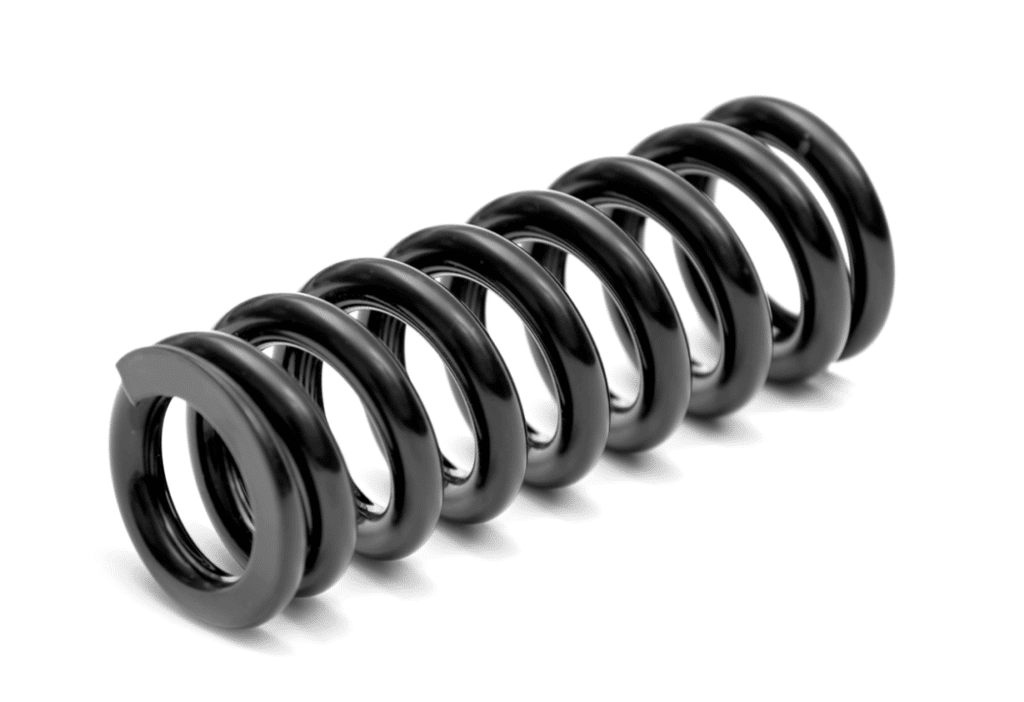
Compression springs are the most common type you’ll find in everyday items. These springs are designed to push back when compressed, making them perfect for absorbing shock and managing force. You’ll see them in everything from pens and mattresses to automotive suspensions and industrial machines.
Key features of compression springs:
- Made from helical coil springs, usually steel or other spring materials.
- They store energy by compressing under load.
- Designed to handle heavy pressure and return to their original shape.
- Common in shock absorption applications, like vehicle suspensions and mechanical seals.
If you’re dealing with situations where you need to cushion impacts or maintain pressure between parts, compression springs are the go-to choice. Their versatility and durability make them essential in many US industries, from manufacturing to automotive repair.
The Four Main Types of Springs In-Depth Breakdown Extension Springs Mastering Tension and Pull Forces
Extension springs are designed to absorb and store energy by resisting pulling forces. Unlike compression springs that push back when squeezed, extension springs pull back when stretched. You’ll often see these springs in garage doors, trampolines, and automotive applications where tension control is key.
They have hooks or loops on each end, making it easy to attach them between two components. When the parts move apart, the spring stretches and exerts a force to pull them back together. This makes extension springs essential for anything needing controlled pull or rebound.
Here’s what makes extension springs stand out:
- Designed for tension: Perfect when you need the spring to resist pulling apart rather than pushing together.
- Common uses: Garage door mechanisms, screen doors, and various tools.
- Materials: Typically made from high-quality steel or stainless steel for durability and corrosion resistance.
- Extension spring design: Can be customized with different coil diameters, wire thicknesses, and lengths depending on the pull force required.
In the U.S., extension springs are a go-to choice for industries needing reliable extension spring design and consistent performance under tension loads. Whether in agriculture, automotive, or industrial machinery, these springs balance strength and flexibility.
The Four Main Types of Springs In-Depth Breakdown Torsion Springs Precision in Rotational Control
Torsion springs are all about twisting force. Instead of compressing or stretching, these springs work by twisting around an axis to store energy. You’ll find them in things like clothespins, garage doors, and car suspension systems where precise rotational control is key.
Here’s what makes torsion springs stand out:
- Torque control: They apply force by torque, which means they’re perfect when you need to control rotation smoothly.
- Space-saving design: Because they coil around a rod or shaft, they fit well in tight spaces.
- Durability: Built often from high-quality spring materials, they handle repeated twisting without losing strength.
- cURL Too many subrequests.cURL Too many subrequests.
cURL Too many subrequests.
cURL Too many subrequests.
cURL Too many subrequests.
cURL Too many subrequests.
- cURL Too many subrequests. cURL Too many subrequests.
- cURL Too many subrequests. cURL Too many subrequests.
- Durability cURL Too many subrequests.
- cURL Too many subrequests. cURL Too many subrequests.
cURL Too many subrequests.
cURL Too many subrequests.
cURL Too many subrequests.
cURL Too many subrequests. cURL Too many subrequests., cURL Too many subrequests.
Another specialized option is the constant force spring, which provides a consistent force over its range of motion. These springs are perfect for counterbalancing, like in retractable devices, seatbelt mechanisms, and adjustable arms.
You’ll also find torsion bar springs used in vehicle suspension systems to absorb shocks while saving space. And gas springs, which use compressed gas to provide smooth, adjustable motion in applications like office chairs and hatchbacks.
These specialized springs cater to specific needs where standard compression, extension, torsion, or leaf springs aren’t the best fit. When you need something tailored for performance, durability, and space efficiency, exploring these advanced springs can be a real game-changer.
How to Select the Right Type of Spring A Step-by-Step Guide
Choosing the right type of spring can make all the difference in how well your project or repair performs. Here’s a simple guide to help you pick the best spring for your needs:
1. Identify the Purpose
- What will the spring do? Is it for shock absorption, tension, rotation, or load support?
- Match the spring type to the job: compression springs for shock, extension springs for pulling, torsion springs for twisting, and leaf springs for heavy loads.
2. Consider the Load and Force
- How much force does the spring need to handle? Knowing the load helps you pick a spring with the proper strength.
- Look at factors like torque for torsion springs or tension range for extension springs.
3. Think About Space and Size Limits
- Measure the available space carefully. Some springs like helical coil springs need room to compress or extend.
- Leaf springs, for example, take more space but offer great support for trucks and heavy equipment.
4. Choose the Right Material
- Spring materials vary based on environment and durability needs. Common materials include steel alloys and stainless steel.
- If corrosion is a concern, stainless steel or custom-coated springs might be best.
5. Check Lifespan and Fatigue Resistance
- For long-lasting use, pick springs designed to withstand repeated stress, like Belleville disc springs or constant force mechanisms.
- This is critical in automotive or industrial applications.
6. Consider Custom Spring Manufacturing
- If your application is unique or requires specific dimensions, don’t hesitate to look into custom spring manufacturing.
- Custom springs ensure you get exactly what fits your project’s demands.
7. Review Cost and Availability
- Compare costs without compromising quality—prices vary by spring type and material.
- Also, check the lead time if you need springs quickly.
By following these steps, you’ll find the right spring that fits your needs perfectly without overcomplicating the process. It’s about matching spring design and materials to what your project requires, keeping reliability and efficiency in mind.
 Spanish (Spain)
  English
  Spanish (Peru)
  German
  Korean
  Italian