
Compare 1018 vs 4140 steel strength machinability cost and best uses with our detailed alloy selection guide.
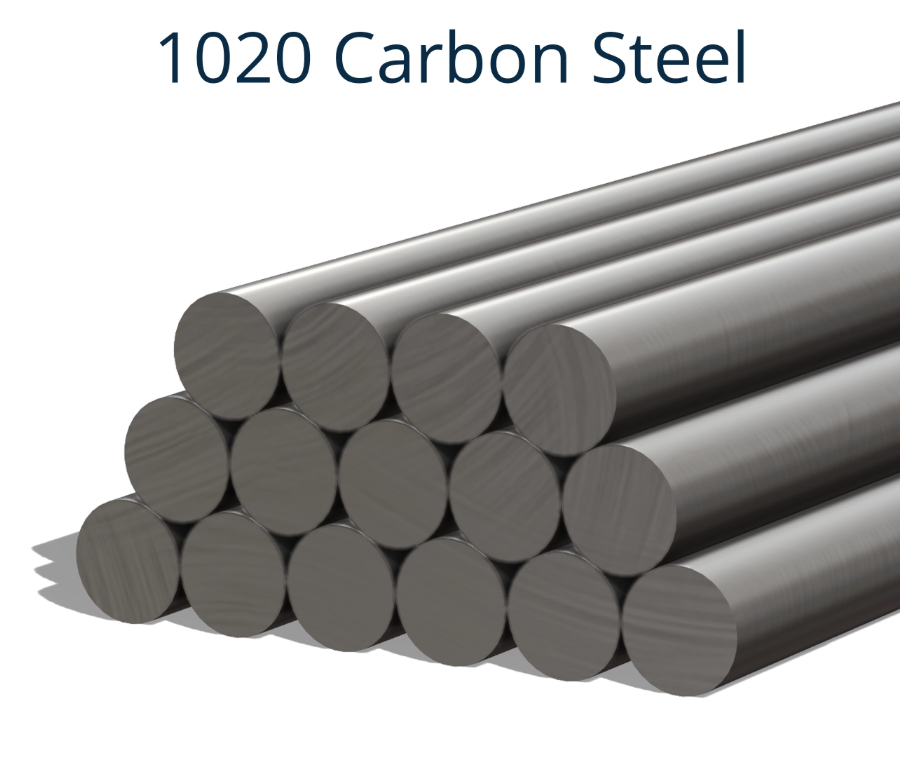
1018 Steel: What It Is and Why It Matters
When engineers compare 1018 vs 4140, 1018 is the go‑to low carbon “workhorse” mild steel: cheap, easy to machine, easy to weld, and predictable.
Chemical Composition of AISI 1018
AISI 1018 steel is a plain, low carbon steel with very limited alloying.
| Element | Typical Range (wt%) |
|---|---|
| Carbon (C) | 0.15 – 0.20 |
| Manganese (Mn) | 0.60 – 0.90 |
| Phosphorus (P) | ≤ 0.04 |
| Sulfur (S) | ≤ 0.05 |
| Iron (Fe) | Balance |
Key point: Low carbon = excellent ductility, weldability, and machinability, but limited hardenability compared with 4140 chromoly alloy.
Mechanical Properties of 1018 (Typical, As‑Rolled/Cold Drawn)
Values vary by form and condition, but typical ranges:
| Property | Typical Value |
|---|---|
| Tensile strength | ~ 440 – 500 MPa (64 – 73 ksi) |
| Yield strength | ~ 370 – 415 MPa (54 – 60 ksi) |
| Elongation | ~ 15 – 25% |
| Hardness | ~ 120 – 170 HB |
| Modulus of Elasticity | ~ 205 GPa (29,700 ksi) |
Performance profile:
- Moderate strength vs alloy steels
- High ductility and good impact toughness
- cURL Too many subrequests. cURL Too many subrequests.
cURL Too many subrequests.
cURL Too many subrequests. cURL Too many subrequests., cURL Too many subrequests.
- cURL Too many subrequests. cURL Too many subrequests.
- cURL Too many subrequests.
- cURL Too many subrequests.
- cURL Too many subrequests.
- cURL Too many subrequests. cURL Too many subrequests.
- cURL Too many subrequests.
- cURL Too many subrequests.
- cURL Too many subrequests.
- cURL Too many subrequests.
- cURL Too many subrequests.
cURL Too many subrequests.
I stock and source 1018 mild steel globally in standard and custom formats:
- Bars: rounds, squares, flats, hex (hot rolled & cold drawn)
- Plates & sheets: hot rolled, pickled & oiled, cold rolled
- Structural shapes: limited; for pure structural we often move to other structural grades
- Condition options:
- Hot rolled
- Cold finished (better surface and tighter tolerance)
- Peeled/turned and ground for shafting
We support:
- Cut‑to‑length
- Saw cutting, precision cutting
- Mill certs and full traceability on request
When 1018 Mild Steel Is the Right Choice
Choose 1018 over 4140 alloy steel when:
- Loads are low to moderate and not fatigue‑critical
- Cost and availability matter more than maximum strength
- You need easy machining and welding with minimal fuss
- Parts will be case hardened rather than through‑hardened
- You want tight dimensional control via cold‑finished bar
Typical 1018 steel applications include:
- Brackets, plates, base frames
- Light shafts, pins, bushings (non‑critical)
- Welded fabrications and structural components
- Machined fittings, spacers, jigs, and fixtures
If you’re unsure whether 1018 vs 4140 is safer for your load and duty cycle, I usually start with your cURL Too many subrequests. cURL Too many subrequests.
cURL Too many subrequests.
cURL Too many subrequests. cURL Too many subrequests.. cURL Too many subrequests. cURL Too many subrequests. cURL Too many subrequests.
cURL Too many subrequests.
cURL Too many subrequests.
| Element | cURL Too many subrequests. | cURL Too many subrequests. |
|---|---|---|
| C | cURL Too many subrequests. | cURL Too many subrequests. |
| Mn | cURL Too many subrequests. | cURL Too many subrequests. |
| Cr | cURL Too many subrequests. | cURL Too many subrequests. |
| Mo | 0.15 – 0.25% | High‑temperature strength, toughness |
| Si | 0.15 – 0.35% | Strength, deoxidation |
| P, S | ≤ 0.035% | Kept low for toughness |
Those Cr-Mo additions are the big difference vs 1018 and are why we call 4140 a chromium molybdenum alloy (chromoly) steel.
Mechanical Properties & Strength Profile of 4140
Properties vary a lot with heat treatment. Typical ranges:
| Condition | Yield Strength (MPa) | Tensile Strength (MPa) | Hardness (HB) |
|---|---|---|---|
| Annealed | 415 – 655 | 655 – 895 | ~ 187 – 217 |
| Quenched & Tempered | 655 – 1030+ | 850 – 1250+ | ~ 248 – 320 |
Key points:
- Much stronger than 1018 at the same size
- Can be tailored from tough/ductile to very high strength with proper tempering
- Good cURL Too many subrequests. for shafts, gears, and high‑load parts
If you care about how strength connects to machining accuracy, it pairs well with tight‑tolerance processes like milled steel machining where precision and stability really matter (see our guide on what milled steel is and how it’s machined).
Hardenability, Toughness & Fatigue Resistance
Why 4140 is a “go‑to” high‑strength alloy:
- Excellent hardenability
- Through‑hardens in thicker sections vs simple carbon steels
- cURL Too many subrequests.
- cURL Too many subrequests.
- cURL Too many subrequests.
- cURL Too many subrequests.
- cURL Too many subrequests.
- Ideal for cURL Too many subrequests.
- cURL Too many subrequests.
cURL Too many subrequests.
cURL Too many subrequests.
- cURL Too many subrequests.
- cURL Too many subrequests.
- cURL Too many subrequests.
- cURL Too many subrequests.
- Annealed cURL Too many subrequests.
- cURL Too many subrequests.
- cURL Too many subrequests. cURL Too many subrequests.
- Typical treatments
- Quench & temper for strength
- Induction hardening on surfaces (e.g. bearing journals)
- Nitriding for wear and fatigue resistance
When 4140 Alloy Steel Is the Better Choice
Choose 4140 vs 1018 when:
- The part sees high loads, torque, or shock
(shafts, gears, couplings, spindles, tool holders) - You need higher fatigue life and long‑term durability
- You need hard, wear‑resistant surfaces but still want a tough core
- The cost of failure is high (downtime, safety, warranty risk)
- You want to reduce section size/weight without sacrificing strength
In short:
Use 1018 for low‑stress, general fabrication.
Step up to 4140 when strength, hardenability, and fatigue resistance are critical to your design or your customer’s uptime.
1018 vs 4140: Side‑by‑Side Comparison
Both grades are solid choices, but they solve different problems. Here’s the quick, practical breakdown.
Tensile Strength & Yield Strength: 1018 vs 4140
Typical room‑temperature values (round bar, approximate):
| Property | 1018 (as‑rolled) | 4140 Annealed | 4140 Q&T ~28–32 HRC | 4140 Q&T ~38–42 HRC |
|---|---|---|---|---|
| Tensile strength (MPa) | ~440–480 | ~655–745 | ~930–1030 | ~1100–1250 |
| Yield strength (MPa) | ~320–350 | ~415–450 | ~760–860 | ~900–1050 |
- If you’re under cURL Too many subrequests., cURL Too many subrequests.
- cURL Too many subrequests. cURL Too many subrequests., cURL Too many subrequests.
cURL Too many subrequests.
| cURL Too many subrequests. | cURL Too many subrequests. | cURL Too many subrequests. |
|---|---|---|
| cURL Too many subrequests. | cURL Too many subrequests. | Low |
| cURL Too many subrequests. | cURL Too many subrequests. | cURL Too many subrequests. |
| cURL Too many subrequests. | cURL Too many subrequests. | cURL Too many subrequests. |
| cURL Too many subrequests. | cURL Too many subrequests. | High |
| cURL Too many subrequests. | cURL Too many subrequests. | cURL Too many subrequests. |
- Use 1018 where wear is low or you plan cheap surface hardening only.
- Use 4140 where continuous wear, impact, and fatigue matter.
Machinability & Weldability: 1018 vs 4140
Machinability (relative to free‑cutting steel = 100):
| Grade | Machinability Rating | cURL Too many subrequests. |
|---|---|---|
| 1018 | ~70–78 | Very easy to machine |
| 4140 Annealed | ~65 | OK with correct tooling |
| 4140 Q&T | 40–60 (drops as HRC rises) | Needs rigid setup, sharp tools |
cURL Too many subrequests.
- 1018:
- Excellent weldability with MIG, TIG, stick.
- No preheat for most thicknesses.
- 4140:
- Preheat (typically 150–300°C) and controlled cooling required.
- Higher risk of cracking, needs low‑hydrogen process and proper filler.
If your process is weld‑heavy and shop skills vary, 1018 is lower risk. For cURL Too many subrequests. of hard parts, 4140 works fine if you control tools, speeds, and coolant—similar to what’s needed in precision CNC machining of hard materials as discussed in our ceramic CNC machining guide.
Heat Treatment Response & Hardenability: 1018 vs 4140
- 1018 steel (AISI 1018):
- Very low carbon (~0.18% C) = not through‑hardening.
- Only useful heat treatment: carburizing / case hardening + quench.
- 4140 chromoly alloy (chromium molybdenum steel 4140):
- Medium carbon (~0.40% C) + Cr + Mo = high hardenability.
- Responds extremely well to:
- Normalizing
- Quench and temper (Q&T)
- cURL Too many subrequests.
- Can achieve a wide range of strength and hardness profiles.
If you need through‑hardened shafts, gears, or bolts, cURL Too many subrequests..
cURL Too many subrequests.
| Factor | cURL Too many subrequests. | cURL Too many subrequests. |
|---|---|---|
| cURL Too many subrequests. | cURL Too many subrequests. | cURL Too many subrequests. |
| Availability | cURL Too many subrequests. | cURL Too many subrequests. |
| cURL Too many subrequests. | cURL Too many subrequests. | cURL Too many subrequests. |
- 1018 cURL Too many subrequests. cURL Too many subrequests. cURL Too many subrequests.
- 4140 cURL Too many subrequests. cURL Too many subrequests., cURL Too many subrequests.
cURL Too many subrequests.
cURL Too many subrequests. cURL Too many subrequests. with poor corrosion resistance:
- Neither is “stainless”; both will rust without protection.
- Typical protection methods:
- Painting or powder coating
- Zinc plating, phosphating, black oxide
- Oil / grease for internal or temporary protection
For parts that must survive harsh environments, plan surface treatment regardless of 1018 vs 4140.
Weight, Tolerance & Dimensional Stability
Density is almost identical:
| Property | 1018 | 4140 |
|---|---|---|
| Density (g/cm³) | ~7.87 | ~7.85 |
Weight difference is negligible at part level.
Main differences:
- 1018:
- More ductile, more forgiving during forming.
- Less distortion during welding.
- 4140:
- More prone to movement during heavy machining and heat treatment.
- Needs stress‑relieving to maintain tight tolerances on long shafts or thick sections.
cURL Too many subrequests. tight tolerance, heat‑treated parts, it’s critical to combine proper heat‑treat control with reliable material testing and traceability—exactly the type of support we bundle with our projects, aligned with the best practices outlined in our comprehensive material testing guide.
In simple terms:
- 1018 = easy to machine, easy to weld, cheap, for low–medium stress.
- 4140 = strong, hard, fatigue‑resistant, but needs more process control.
Applications: Where 1018 Shines vs Where 4140 Excels (1018 vs 4140 / 1018 与 4140)
Best applications for 1018 mild steel in general fabrication
AISI 1018 mild steel is my go‑to when you need easy machining, easy welding, and low cost:
- Brackets, frames, base plates, and fixtures
- Jigs, simple tooling blocks, alignment plates
- cURL Too many subrequests.
- cURL Too many subrequests.
- cURL Too many subrequests.
cURL Too many subrequests. cURL Too many subrequests., cURL Too many subrequests.
cURL Too many subrequests.
cURL Too many subrequests. cURL Too many subrequests. cURL Too many subrequests.
- cURL Too many subrequests.
- cURL Too many subrequests.
- cURL Too many subrequests.
- cURL Too many subrequests.
cURL Too many subrequests.
cURL Too many subrequests.
cURL Too many subrequests. cURL Too many subrequests. cURL Too many subrequests.
- 1018: brackets, tabs, light mounts, non‑critical weldments, interior structure, low‑load linkages
- 4140: steering and suspension links, drive shafts, yokes, gear components, hubs, high‑load pins, performance parts
If the part carries motion, torque, or impact, 4140 usually wins. If it just needs shape and stiffness, 1018 keeps cost down.
Industrial machinery, tooling, and oilfield: 4140‑first applications
Industrial and oilfield users lean hard on 4140 because of its strength and fatigue life:
- Hydraulic cylinder rods, tie rods, press rams
- Tool holders, collets, and spindle components (often machined on a vertical machining center)
- Drill collars, subs, rotary components, and downhole tools
- Heavy machine shafts, couplings, gear blanks, and flanges
If your machine runs long hours under cyclic load, 4140 quenched and tempered is usually the starting point.
Structural, brackets, and low‑load parts: 1018‑first applications
cURL Too many subrequests. general structural work and light duty parts, I default to 1018:
- Welded frames, racks, tables, and guards
- Bracketry, mounting plates, hinge plates, and tabs
- Light supports, housings, covers, and non‑pressurized manifolds
It welds clean, distorts less than higher‑carbon steels, and keeps material cost under control.
Hybrid strategies: mixing 1018 and 4140 in the same system
A practical, cost‑driven approach is to mix 1018 and 4140 in one assembly:
- Use 4140 for high‑stress components (shafts, gears, load‑bearing pins, wear points)
- Use 1018 for support, alignment, and mounting (frames, brackets, plates, non‑critical spacers)
This way you pay for 4140 only where its strength, wear resistance, and fatigue performance actually matter, while 1018 keeps project budgets and lead times in check.
Fabrication Guide for 1018 vs 4140
Machining 1018: Speeds, Feeds, Tooling
AISI 1018 mild steel is very forgiving to machine. It cuts cleanly, holds size well, and is ideal for CNC prototypes and general production.
Basic tips for machining 1018:
- Tooling:
- HSS works for low‑volume; carbide cURL Too many subrequests.
- cURL Too many subrequests.
- cURL Too many subrequests.
- cURL Too many subrequests. cURL Too many subrequests.
- Carbide: cURL Too many subrequests.
- cURL Too many subrequests.
- Roughing: cURL Too many subrequests. cURL Too many subrequests., cURL Too many subrequests. cURL Too many subrequests.
- Finishing: cURL Too many subrequests., cURL Too many subrequests. cURL Too many subrequests.
- cURL Too many subrequests.
- cURL Too many subrequests.
- cURL Too many subrequests.
cURL Too many subrequests. cURL Too many subrequests., just with more aggressive feeds.
Machining 4140: Annealed vs Quenched & Tempered
4140 chromoly alloy (chromium molybdenum steel 4140) machines very differently depending on condition.
4140 annealed (~HB 197):
- Easier to machine than hardened, but still tougher than 1018.
- Cutting speeds:
- cURL Too many subrequests. 15–25 m/min (50–80 SFM)
- Carbide: 90–150 m/min (300–500 SFM)
- Use rigid setups, sharp carbide, and constant coolant.
4140 quenched & tempered (QT, HB 248–302+):
- Much harder, higher tool wear, needs more control.
- Cutting speeds (carbide): 60–110 m/min (200–360 SFM)
- Use:
- Strong, negative‑rake carbide inserts
- Small DOC and moderate feeds
- Plenty of coolant or high‑pressure through‑tool coolant
- Avoid chatter: maximize rigidity, minimize tool overhang.
If you’re new to machining 4140 QT, start conservative on speed, then tune for tool life and surface finish.
Welding 1018: Processes and Filler Choices
1018 welding is straightforward and very forgiving.
Best processes:
- MIG (GMAW): Fast, easy, great for structural and brackets.
- TIG (GTAW): For cleaner, cosmetic, or precision welds.
- Stick (SMAW): Good for field work and thicker sections.
Fillers:
- MIG: ER70S‑6 solid wire
- TIG: ER70S‑2 / ER70S‑6 rod
- Stick: E6010/E6011 for root, E7018 for structural work
No preheat needed for typical thicknesses. Just keep:
- Clean base metal (remove mill scale, oil, rust)
- Reasonable interpass temperatures to avoid distortion.
Welding 4140: Preheat, Post‑Heat, Cracking Control
4140 alloy steel is not weld‑like‑1018 material. It’s hardenable and prone to cracking if you treat it like mild steel.
Key rules:
- Preheat:
- cURL Too many subrequests. cURL Too many subrequests. cURL Too many subrequests.
- cURL Too many subrequests.
- cURL Too many subrequests.
- cURL Too many subrequests. cURL Too many subrequests. cURL Too many subrequests.
- cURL Too many subrequests.
- cURL Too many subrequests.
- cURL Too many subrequests. cURL Too many subrequests..
cURL Too many subrequests.
- cURL Too many subrequests. cURL Too many subrequests., cURL Too many subrequests., cURL Too many subrequests.
- cURL Too many subrequests.
cURL Too many subrequests.
Heat Treatment of 4140: Quench & Temper Basics
4140 is a classic heat treatable alloy steel. You use quench‑and‑temper to tune strength vs toughness.
Typical Q&T workflow:
- Normalize (optional): 870–925°C (1600–1700°F), air cool to refine grain.
- Austenitize: ~830–870°C (1525–1600°F).
- Quench: Oil quench (common). For small sections, polymer or water can be used with care.
- Temper:
- 200–300°C (390–570°F): very high hardness, lower toughness.
- 400–600°C (750–1110°F): balanced strength/toughness, common for shafts and gears.
- 600–675°C (1110–1250°F): lower strength, high toughness.
Always match hardness/strength level to real loads; over‑hardening 4140 is a common fatigue failure trap.
Case Hardening 1018: Carburizing Options
1018 has low carbon, so through‑hardening is weak – but it excels at case hardening.
Carburizing options:
- Pack or gas carburizing:
- 900–950°C (1650–1750°F), carbon‑rich atmosphere.
- Case depth usually cURL Too many subrequests., depending on time.
- Follow with oil quench + temper for a hard shell with a tough core.
- Carbonitriding (for smaller parts):
- Adds nitrogen + carbon; useful for wear‑resistant small components.
Use case‑hardened 1018 for pins, bushings, low‑load gears, and wear faces that need a hard skin but not full‑section strength.
Forming, Bending, and Cutting: 1018 vs 4140
Forming & bending:
- 1018:
- Excellent formability.
- Cold bending, rolling, and forming are easy with minimal cracking.
- Great for brackets, frames, and formed sections.
- 4140:
- Annealed: formable, but needs higher force than 1018.
- QT: limited cold forming; cracking risk. Hot forming is safer.
Cutting:
- 1018:
- Saws, laser, plasma, and waterjet cut cleanly.
- CO₂ lasers work well for standard plate and sheet.
- Ideal for custom sheet parts and car sheet metal repair components.
- 4140:
- Tougher on blades; use quality bandsaw blades and slower speed.
- For QT 4140, waterjet or high‑power laser is preferred to reduce HAZ hardness.
cURL Too many subrequests.
cURL Too many subrequests.
cURL Too many subrequests. AISI 1018 steel and 4140 chromoly alloy, cURL Too many subrequests.
cURL Too many subrequests.
cURL Too many subrequests.
- cURL Too many subrequests. cURL Too many subrequests. cURL Too many subrequests., cURL Too many subrequests.
- cURL Too many subrequests. cURL Too many subrequests.
- cURL Too many subrequests. cURL Too many subrequests.
- cURL Too many subrequests. cURL Too many subrequests. cURL Too many subrequests. cURL Too many subrequests.
- cURL Too many subrequests. – low carbon means low risk of cracking and residual stress.
Cons of 1018 steel
- Low strength and hardness – lower steel tensile strength 1018 and yield strength than 4140.
- Limited heat treatment response – you can case harden 1018, but not through‑harden like 4140.
- Poor wear resistance – not ideal for sliding, rotating, or impact‑loaded wear surfaces.
- Lower fatigue resistance – not suited for highly cyclic or shock‑loaded parts without oversizing.
Use 1018 when your part is simple, lightly loaded, or when cost and ease of fabrication matter more than maximum strength.
Advantages and Disadvantages of 4140 Steel
Pros of 4140 alloy steel
- High strength – significantly higher mechanical properties of 4140 steel (tensile and yield) than 1018.
- Great hardenability – responds very well to quenched and tempered 4140 bar and induction hardening.
- High wear resistance – especially in 4140 normalized vs quenched and tempered conditions.
- Good fatigue resistance – ideal for alloy steel for gears and shafts, spindles, axles, and tools.
- Better toughness when treated correctly – strong yet not brittle if heat treated right.
Cons of 4140 steel
- Harder to machine – especially in higher hardness; needs good tooling and cutting strategy.
- More demanding to weld – requires preheat, controlled cooling, and often post‑weld heat treatment.
- Higher material cost – more expensive than 1018, plus added cost for heat treatment.
- cURL Too many subrequests. cURL Too many subrequests.
cURL Too many subrequests.
cURL Too many subrequests.
cURL Too many subrequests.
- cURL Too many subrequests.
- cURL Too many subrequests. 1018 mild steel cURL Too many subrequests.
- cURL Too many subrequests.
- cURL Too many subrequests.
- cURL Too many subrequests. cURL Too many subrequests. cURL Too many subrequests.
- cURL Too many subrequests.
- cURL Too many subrequests.
- cURL Too many subrequests.
- cURL Too many subrequests. cURL Too many subrequests. cURL Too many subrequests.
cURL Too many subrequests. cURL Too many subrequests., cURL Too many subrequests. aluminium vs titanium weight comparison.
How Load, Fatigue, and Budget Drive the Choice
When I select between 1018 vs 4140, I look at four things:
- Static load
- Low to moderate load, lots of safety margin → 1018 steel is usually enough.
- High load, torque, or bending stress → lean toward 4140 chromoly alloy.
- Fatigue and shock
- Rare or low‑cycle loading → 1018 can work.
- Continuous cyclic loading, impact, or vibration → 4140 is safer.
- Wear conditions
- Little to no wear, or sacrificial parts → 1018 is fine.
- Sliding contact, gear meshing, or rotating shafts → 4140 wear resistance wins.
- Budget and process capability
- Tight cost targets, basic shop equipment, simple welds → 1018.
- Higher budget, access to heat treatment and better machining → 4140.
Quick Decision Checklist: 1018 or 4140?
Use this as a fast filter when deciding 1018 vs 4140(1018 与 4140):
Choose 1018 if:
- The part is mainly structural, bracket, fixture, or low‑load.
- You need easy machining and welding.
- You’re working to a strict budget and high volume.
- Little or no heat treatment is planned.
Choose 4140 if:
- The part is a shaft, gear, spindle, axle, coupler, or high‑stress pin.
- You need high tensile strength and yield strength, with good fatigue life.
- You require heat treatable 4140 steel for hardness and wear resistance.
- Safety, long life, and reliability matter more than lowest cost.
If you’re between the two, I usually start with 1018 for low‑risk parts and step up to 4140 once the design moves into critical, rotating, or high‑load territory.
Frequently Asked Questions About 1018 vs 4140 (1018 与 4140)
Is 4140 stronger than 1018 in typical applications?
cURL Too many subrequests.
- 1018 cURL Too many subrequests.
- 4140 cURL Too many subrequests.
cURL Too many subrequests.
cURL Too many subrequests.
cURL Too many subrequests. cURL Too many subrequests. cURL Too many subrequests.
- cURL Too many subrequests. cURL Too many subrequests. cURL Too many subrequests.
- cURL Too many subrequests. through‑hardened cURL Too many subrequests.
cURL Too many subrequests.
cURL Too many subrequests.
cURL Too many subrequests. 1018 vs 4140 cURL Too many subrequests.
cURL Too many subrequests.
cURL Too many subrequests. AISI 1018 steel and 4140 alloy steel, I lock in:
- Full mill certs (MTCs) with heat numbers and chemical composition
- Mechanical property reports (tensile strength, yield strength, hardness)
- Clear traceability from mill → warehouse → your PO
- Material that meets ASTM, AISI, SAE and EN specs where required
That means when you compare 1018 vs 4140 mechanical properties, you’re working with certified data, not guesswork.
Stock Range, Cutting & Heat‑Treat Services
I keep a wide range of:
- 1018 and 4140 in round bar, flat bar, plate, block, tube
- Standard and close‑tolerance sizes for CNC and machining shops
On top of that, we can:
- Cut‑to‑size for quick production
- Supply 4140 in annealed, normalized, or quenched and tempered (QT)
- Arrange heat treatment (quench & temper, stress relief, or case hardening for 1018) so parts go straight to machining
If you’re running a tight machining workflow, you’ll likely benefit from our experience with CNC precision engineering and tolerance control, similar to what’s covered in this practical CNC precision engineering guide with processes and applications.
Technical Support from Metallurgists & Engineers
Choosing between 1018 vs 4140 isn’t just about strength charts. My team can help you:
- Pick the right grade based on load, fatigue, and budget
- Decide between 4140 normalized vs quenched and tempered
- Tune machinability, weldability, and heat treatment to your process
- Avoid over‑engineering with 4140 or under‑spec’ing with 1018
cURL Too many subrequests. alloy steel for gears and shafts, cURL Too many subrequests.
cURL Too many subrequests.
cURL Too many subrequests. 1018 vs 4140:
- cURL Too many subrequests. cURL Too many subrequests. cURL Too many subrequests.
- cURL Too many subrequests. cURL Too many subrequests. cURL Too many subrequests.
- cURL Too many subrequests.
- cURL Too many subrequests.
- cURL Too many subrequests. cURL Too many subrequests.
- cURL Too many subrequests. cURL Too many subrequests.
cURL Too many subrequests. cURL Too many subrequests. cURL Too many subrequests.
Related Steel Comparisons and Resources – 1018 vs 4140
If you’re choosing between 1018 vs 4140, you’ll usually want to compare them against a few other core grades and have quick reference data on hand. I keep it simple and practical.
1018 vs 1045 and Other Carbon Steel Grade Comparisons
For general fabrication and turned parts, most shops are really comparing these three:
| Grade | Type | Typical Use Case |
|---|---|---|
| 1018 | Low carbon / mild steel | Brackets, fixtures, shafts, weldments |
| 1045 | Medium carbon | Stronger pins, axles, basic shafts |
| 4140 | Alloy steel (Cr‑Mo) | High‑load shafts, gears, tooling |
Quick rule of thumb:
- 1018 – easiest to weld and machine, lowest strength.
- 1045 – middle ground, can be heat treated, more strength.
- 4140 – highest strength and hardenability in this group, for demanding parts.
4140 vs Other Alloy Steels for Gears and Shafts
For gears, spindle shafts, and drive components, the real battle is 4140 vs other alloy steels like 4130, 4340, or case‑hardening grades.
| Grade | Key Benefit | Typical Part |
|---|---|---|
| 4140 | Good mix of strength + toughness | Transmission shafts, couplings |
| 4340 | Higher toughness, deeper hardening | Heavy‑duty gears, axles |
| 4130 | Easier to weld, slightly lower strength | Roll cages, frames |
If you’re running precision CNC machining on these alloys, a strong process setup like in a dedicated CNC machine operations workflow helps you hold tight tolerances, especially on hardened 4140.
Reference Charts for Steel Tensile and Yield Strength
You should always have quick tensile and yield strength charts available for design checks and customer quotes.
Typical design‑level values (approximate, for quick comparison):
| cURL Too many subrequests. | Yield Strength (MPa) | Tensile Strength (MPa) |
|---|---|---|
| 1018 (cold drawn) | ~370–420 | ~440–480 |
| 1045 (normalized) | ~380–415 | cURL Too many subrequests. |
| cURL Too many subrequests. | cURL Too many subrequests. | cURL Too many subrequests. |
| cURL Too many subrequests. | cURL Too many subrequests. | cURL Too many subrequests. |
cURL Too many subrequests. cURL Too many subrequests.; cURL Too many subrequests.
cURL Too many subrequests.
cURL Too many subrequests.
- cURL Too many subrequests.
- cURL Too many subrequests.
- cURL Too many subrequests.
- cURL Too many subrequests.
- cURL Too many subrequests.
- cURL Too many subrequests.
- cURL Too many subrequests.
- Case‑hardening notes for 1018
Bundle these as downloadable PDFs so your team can check material selection, machining strategy, and heat‑treat decisions in seconds instead of hunting through specs.
For more advanced alloys or high‑temp environments (aerospace, energy), it also helps to cross‑reference our high‑temperature alloy insights so you know when standard steels like 1018/4140 are no longer enough: high‑temperature alloy insights and applications.
 Italian
  English
  Spanish (Peru)
  German
  Korean
  Spanish (Spain)