
Explore expert insights on 5-axis CNC machining precision efficiency and applications in aerospace automotive and electronics manufacturing in China.
Fundamentals of 5-Axis CNC Machining
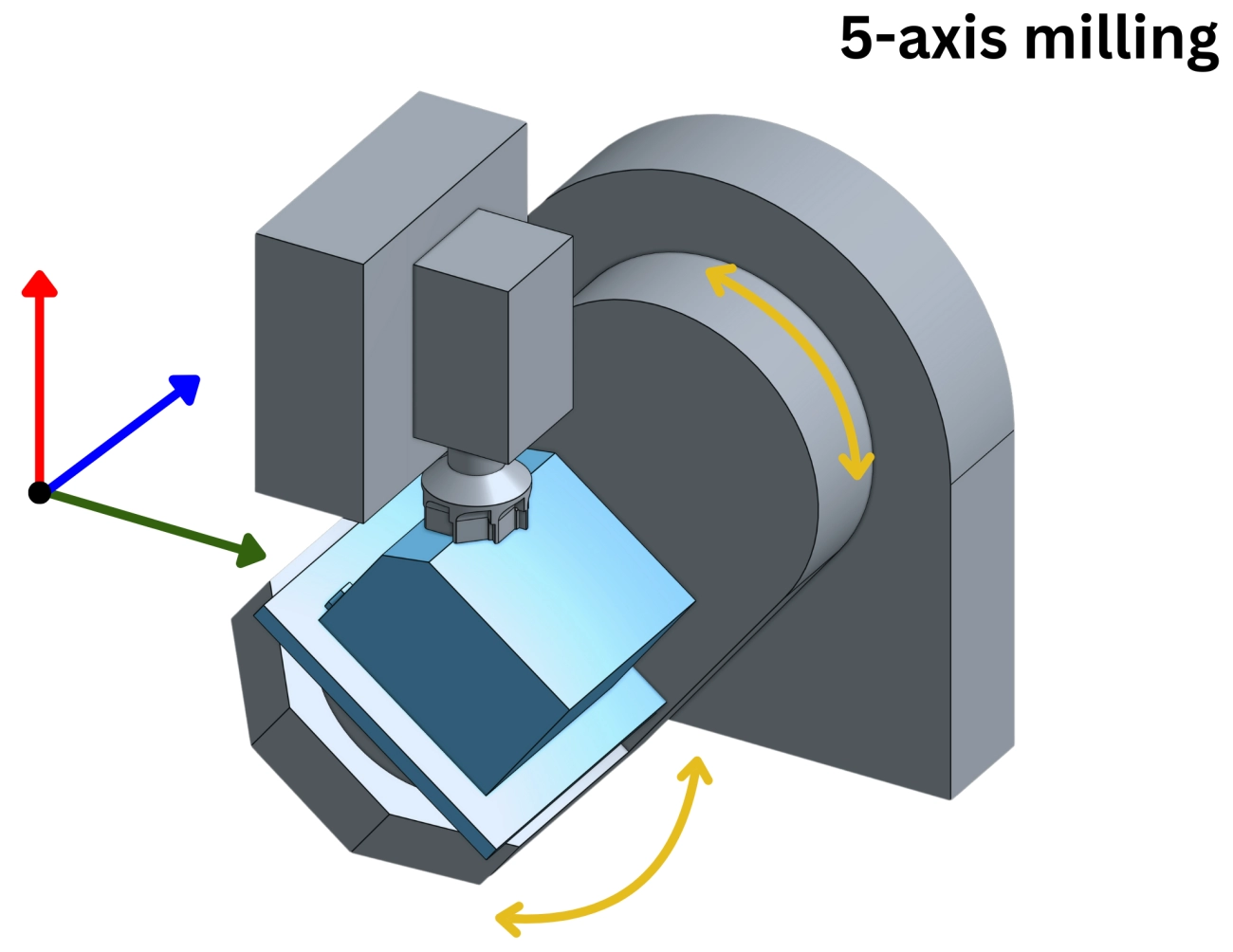
Understanding 5-axis CNC machining starts with grasping its core mechanics and components. Unlike traditional 3-axis machines that move only along the X, Y, and Z linear axes, 5-axis CNC milling adds two additional rotational axes—commonly labeled A, B, and sometimes C. These extra axes allow the cutting tool or the workpiece to rotate, enabling complex shapes and angles to be machined in a single setup.
Breaking Down the Axes
- Linear Axes (X, Y, Z): These control movement left-right, front-back, and up-down, forming the basic foundation of CNC motion.
- Rotational Axes (A, B, C): These allow the tool or table to rotate around one or more linear axes, offering the ability to approach the workpiece from virtually any angle.
Core Components
A 5-axis CNC machine consists of the following key parts:
- Spindle: Holds and rotates the cutting tool.
- Table: The platform where the workpiece is mounted.
- Linear guides and rails: Facilitate smooth movement along X, Y, Z.
- Rotary tables or heads: Provide the additional rotational motions (A, B, or C axes).
- Control system: Converts CAD designs into G-code instructions for precise motion.
Machine Types
5-axis CNC machines come in various styles tailored to different manufacturing needs:
- Vertical Machining Centers: The spindle is vertical; ideal for many aerospace and automotive parts.
- Horizontal Machining Centers: The spindle is horizontal; great for heavy or large workpieces.
- Gantry Style: Large-scale machines where the cutting head moves over a fixed table, suited for very big parts like aerospace turbine blades.
- Bridge Style: A hybrid that offers stability and accessibility, often used in high-precision industries.
How 5-Axis CNC Works
The machining process typically follows these steps:
- Design in CAD Software: Engineers create detailed 3D models using CAD tools.
- Convert to CAM: Computer-Aided Manufacturing software converts designs into toolpaths.
- Generate G-code: The CAM software outputs G-code, guiding every machine movement.
- cURL Too many subrequests. Operators load the workpiece and tools, calibrate the machine, and verify zero points.
- Machining: The CNC controller drives all five axes simultaneously, creating complex geometries with high precision.
- Inspection: Finished parts are inspected to ensure they meet exacting standards.
Mastering these fundamentals of 5-axis CNC machining opens doors to manufacturing complex components with exceptional precision and efficiency. Are you ready to explore how this technology can transform your production line?
Advantages of 5-Axis CNC Over Traditional 3 and 4 Axis Machining
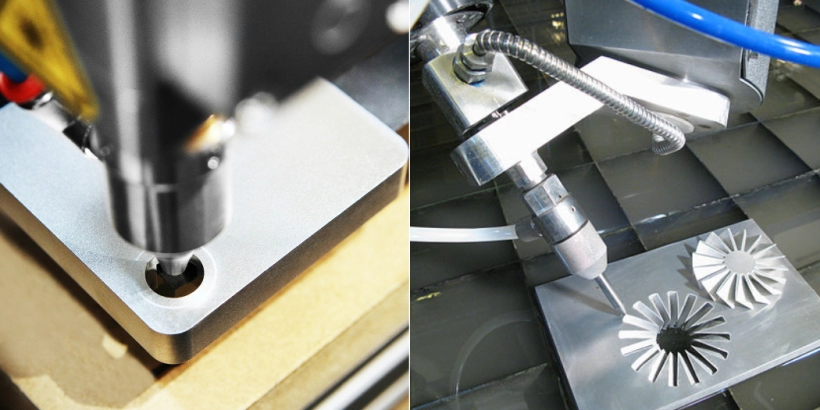
When you compare 5-Axis CNC (5-axis CNC machining) with traditional 3 and 4-axis machining, the differences are clear and impactful. Here’s a quick look at how they stack up:
| Feature | 3-Axis | cURL Too many subrequests. | cURL Too many subrequests. |
|---|---|---|---|
| cURL Too many subrequests. | cURL Too many subrequests. | cURL Too many subrequests. | cURL Too many subrequests. |
| Setup Time | cURL Too many subrequests. | cURL Too many subrequests. | cURL Too many subrequests. |
| cURL Too many subrequests. | cURL Too many subrequests. | cURL Too many subrequests. | cURL Too many subrequests. |
| Material Waste | cURL Too many subrequests. | cURL Too many subrequests. | cURL Too many subrequests. |
cURL Too many subrequests.
- cURL Too many subrequests.
- cURL Too many subrequests.
- cURL Too many subrequests.
- cURL Too many subrequests.
Potential Drawbacks
- Higher Upfront CostsInvesting in 5-axis CNC machines and software is pricier upfront compared to 3 or 4-axis setups.
- Programming ComplexityCreating toolpaths for 5-axis machining demands more skill and advanced CAM software, which can slow down initial programming stages for those new to it.
Overall, the benefits in accuracy, efficiency, and versatility make 5-Axis CNC a strong choice for businesses looking to stay competitive, especially in industries demanding high precision and consistency.
Real World Applications Industries Thriving with 5 Axis CNC
5-axis CNC machining is a game-changer across many industries in the U.S., especially where precision and complex geometries are crucial. Here’s a quick look at the sectors benefiting the most:
- Aerospace: Manufacturing turbine blades, impellers, and other critical components that require tight tolerances and complex shapes.
- Automotive: Producing aluminum alloy engine parts, dies, and other high-performance components for lighter, stronger vehicles.
- cURL Too many subrequests.: Creating implants and prosthetics with precise fits, often tailored to individual patients.
- Consumer Electronics: Crafting phone casings and intricate molds for durable, sleek products.
- Industrial Molds: Building molds for various industries with complex undercuts and fine details.
Emerging Trends
The future of 5-axis CNC is closely tied to smart tech and new manufacturing methods. Here’s what’s on the rise:
- AI Integration: Smarter machines that predict maintenance needs, reducing downtime.
- Predictive Maintenance: Sensors monitor machine health for proactive repairs.
- Hybrid Manufacturing: Combining additive (3D printing) and subtractive (milling) processes for better flexibility and faster turnaround.
These trends are helping U.S. manufacturers stay competitive by improving efficiency and expanding what’s possible with 5-axis CNC machining.
Step by Step Guide Implementing 5 Axis CNC in Your Workflow
Getting started with CNC five-axis machining can feel complex, but breaking it down makes it manageable. Here’s a straightforward guide to help you implement 5-axis CNC into your workflow efficiently.
Preparation Phase
- Software: Choose CAD/CAM software that supports simultaneous 5-axis machining. Popular options include Fusion 360, Mastercam, and SolidWorks CAM. These help you design complex parts and generate accurate 5-axis toolpaths.
- Materials Selection: Consider the material’s machinability—for example, aluminum alloys used in automotive parts are easier to machine compared to tough aerospace-grade titanium. Knowing your material helps you set the right speeds and feeds.
Programming Essentials
- Collision Avoidance: This is critical in 5-axis CNC milling. Use software features that simulate tool movement to prevent crashes and tool damage.
- Toolpath Strategies: Focus on smooth transitions and simultaneous axis control to ensure a quality finish. Common toolpath types include swarf milling and contouring.
- Tips for Beginners: Start with simpler shapes before moving to complex geometries. Double-check your G-code for accuracy and run simulations whenever possible.
Setup and Operation
- Fixturing Best Practices: Secure the workpiece firmly but avoid over-tightening. Use fixtures that allow access from multiple angles, essential for 5-axis operations.
- Calibration Checklist: Regularly calibrate your machine’s linear and rotational axes (X, Y, Z, A, B, C) to maintain precision. Check tool length offsets and probe accuracy before starting.
cURL Too many subrequests.
- Tool Selection: Use specialized 5-axis tools like ball-end mills and tapered cutters for better surface finishes and complex profiles.
- cURL Too many subrequests.cURL Too many subrequests.
- cURL Too many subrequests.cURL Too many subrequests.
cURL Too many subrequests.
cURL Too many subrequests.
cURL Too many subrequests.
cURL Too many subrequests.
cURL Too many subrequests.
cURL Too many subrequests.
- cURL Too many subrequests.
- cURL Too many subrequests.
- cURL Too many subrequests.
cURL Too many subrequests.
cURL Too many subrequests.
cURL Too many subrequests.
cURL Too many subrequests.
cURL Too many subrequests.
cURL Too many subrequests.
- Certifications: Verify that the company holds relevant industry certifications. This ensures quality and consistent standards.
- Machine Specs: Check if their equipment supports advanced 5-axis CNC milling and simultaneous 5-axis machining. The precision and capacity of their machines matter.
- Lead Times: Fast turnaround can be key, especially for tight schedules. Ask about their typical delivery times.
- Experience: Look for partners with a proven track record in precision CNC prototyping and complex geometries.
Quick Comparison Table
| Feature | What to Check | Why It Matters |
|---|---|---|
| Certifications | ISO, AS9100, or other standards | Assures manufacturing quality |
| cURL Too many subrequests. | 5-axis capability, tool capacity | Enables complex parts and precision |
| Lead Times | Average project turnaround | Meets your project deadlines |
| cURL Too many subrequests. | Availability and technical help | Smooth communication, problem-solving |
cURL Too many subrequests.
Vast stands out by combining state-of-the-art equipment with tailored 5-axis CNC services for the U.S. market. Their strong brand reputation means you get reliability and expertise—essential for aerospace, automotive aluminum parts, and medical implants.
- Cutting-edge machines for flawless performance
- Customized solutions to fit your exact needs
- Experienced engineers for seamless 5-axis toolpath programming
Take Action Now
Ready to improve your manufacturing with reliable 5-axis CNC ? Request a quote from Vast today or download our free e-guide to learn how to get started.
 Italian
  English
  Spanish (Peru)
  German
  Korean
  Spanish (Spain)