
Compare aluminum 6061 T6 vs T651 tempers to find the best choice for strength, stability, machining, and cost in your next project.
Understanding Aluminum 6061: The Foundation of T6 and T651 Tempers
Aluminum 6061 is a versatile, heat-treatable alloy widely used across various industries in the U.S. It is composed primarily of aluminum, magnesium, and silicon, forming a strong and corrosion-resistant base. This alloy owes its strength and durability to specific heat treatment processes known as tempers, with T6 and T651 being two of the most common.
The heat treatment of 6061 aluminum typically involves solution heat treating followed by aging. This process enhances the alloy’s mechanical properties by dissolving and then re-precipitating alloying elements in a controlled manner. The “T” in the temper designation refers to this heat treatment, while the numbers indicate specific variations.
- T6 temper means the 6061 aluminum has been solution heat-treated and artificially aged for improved strength.
- T651 temper includes the same heat treatment as T6 but adds a controlled stretching step to relieve internal stresses.
Understanding the base composition and the heat treatment basics is key to appreciating how T6 and T651 differ, especially in mechanical performance, dimensional stability, and suitability for demanding applications. This foundation sets the stage for choosing the right temper based on project needs and industry standards.
The T6 Temper: Process, Properties, and Ideal Use Cases
The 6061-T6 temper comes from a specific heat treatment process that boosts the aluminum’s strength and hardness. First, the aluminum is solution heat treated—heated to a high temperature to dissolve alloying elements. Then, it’s rapidly cooled (quenched) to lock those elements in place. Finally, it’s artificially aged at a moderate temperature to allow those elements to form tiny particles inside the metal, making it stronger.
Mechanical Properties of 6061-T6
- Tensile strength: Around 45,000 psi
- Yield strength: About 40,000 psi
- Good corrosion resistance and decent machinability
- Moderate formability but can be tougher to bend or shape because of its hardness
cURL Too many subrequests.
Pros:
- High strength-to-weight ratio
- Good corrosion resistance, especially with anodizing
- Reliable performance in most structural applications
Cons:
- Dimensional changes can occur due to residual stresses from quenching
- Can be prone to distortion when machined or welded
- Less stress relief compared to T651 temper
Typical Applications
6061-T6 is popular where strength and durability matter without adding extra weight. You’ll find it in aerospace parts, automotive components, bike frames, structural supports, and marine equipment. It’s a go-to for precision CNC aluminum fabrication where consistency and strength are key.
In short, T6 provides excellent mechanical properties but might need more care to avoid distortion in precision or heavy machining projects.
The T651 Temper: Enhanced Stability Through Stress Relief

The T651 temper on aluminum 6061 takes the T6 process a step further by adding a stress-relieving stretching step after heat treatment. This additional stretching reduces residual stresses in the metal, which helps prevent distortion during machining or in-service use.
What Makes T651 Different?
- Stress Relief Stretching: After solution heat treating and quenching (like T6), the aluminum is stretched slightly to release internal stresses.
- Improved Stability: This means T651 aluminum has better dimensional stability, making it ideal for precision CNC aluminum fabrication where tight tolerances matter.
- Mechanical Strength: T651 keeps similar tensile strength and yield strength to T6 but with enhanced resistance to warping or twisting over time.
Advantages of 6061-T651
- Great for jobs that need cURL Too many subrequests. cURL Too many subrequests.
- cURL Too many subrequests.
- cURL Too many subrequests.
- Excellent corrosion resistance cURL Too many subrequests.
cURL Too many subrequests.
- cURL Too many subrequests.
- cURL Too many subrequests.
- cURL Too many subrequests.
cURL Too many subrequests.
- cURL Too many subrequests.
- cURL Too many subrequests.
- cURL Too many subrequests.
- cURL Too many subrequests. cURL Too many subrequests. cURL Too many subrequests.
cURL Too many subrequests.
cURL Too many subrequests.
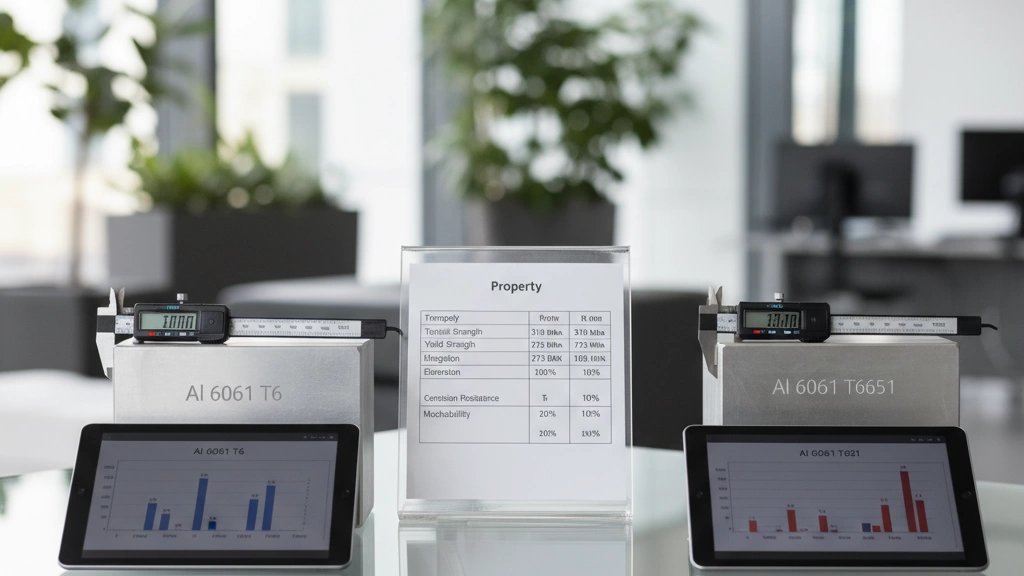
cURL Too many subrequests.
| Metric | 6061-T6 | 6061-T651 |
|---|---|---|
| Mechanical Strength | High tensile strength (~45,000 psi) | Slightly higher strength due to stress relief |
| Dimensional Stability | Moderate – can deform under stress | Better stability thanks to stretching (stress-relieved) |
| cURL Too many subrequests. | Excellent – easy to machine consistently | Equally good; slight edge in precision work |
| Formability | Good | Similar, but slightly less due to residual stresses |
| Corrosion Resistance | Strong resistance in typical environments | Same corrosion resistance as T6 |
| Cost | Generally less expensive | Slightly higher price due to extra processing |
| Availability | Widely available in plates and sheets | Available but less common; mostly in plates |
Key Points:
- Mechanical Strength: Both offer solid strength, but T651’s stress relief improves resistance to cracking.
- Dimensional Stability: T651 is preferred when tight tolerances matter—important in aerospace and precision CNC aluminum fabrication.
- Machinability: Both are easy to machine, but T651 stands out for projects demanding better control and less warping.
- Corrosion Resistance: No difference here; both resist corrosion well.
- Cost and Availability: T651 usually costs more and can be less available compared to widely stocked T6.
For most local US projects, if you need reliable strength and machining ease without tight dimensional demands, 6061-T6 is a solid pick. But if your work calls for precision plus less distortion, T651 is worth the extra cost.
Real-World Applications: Where T6 Shines vs. When T651 Takes Over
When it comes to real-world use, both Aluminum 6061 T6 and T651 have their stand-out spots depending on the job.
Where T6 Shines
- Automotive Parts: T6’s strong tensile strength and good machinability make it popular for things like engine components and brackets.
- General Fabrication: Because it’s widely available and cost-effective, T6 fits well in projects where standard strength and corrosion resistance are enough.
- Marine Equipment: Thanks to decent corrosion resistance, T6 works in boat fittings and outdoor gear that don’t see extreme stresses.
When T651 Takes Over
- Aerospace Components: The added stress relief from T651’s stretching process means better dimensional stability—critical in aerospace for parts like fuselage panels and wing supports.
- Precision CNC Aluminum Fabrication: If your project needs tight tolerances and minimal warping during machining, T651 outperforms T6.
- Heavy-Duty Structural Use: cURL Too many subrequests.
Emerging Trends
- cURL Too many subrequests. cURL Too many subrequests.
- cURL Too many subrequests. cURL Too many subrequests.
cURL Too many subrequests.
cURL Too many subrequests.
cURL Too many subrequests.
cURL Too many subrequests.
cURL Too many subrequests.
cURL Too many subrequests.
cURL Too many subrequests.
cURL Too many subrequests.
cURL Too many subrequests.
cURL Too many subrequests.
cURL Too many subrequests.
cURL Too many subrequests.
cURL Too many subrequests.
cURL Too many subrequests.
Look for suppliers offering certified aluminum that meets ASTM B209 or AMS 4045 standards, especially for aerospace or automotive projects. Certified T651 is often required where precise mechanical properties and traceability are crucial.
Quick Tips to Avoid Common Pitfalls:
- Don’t choose T6 if long-term dimensional accuracy is critical after machining.
- Avoid T651 if you need more flexible forming before machining.
- Always confirm heat treatment certifications, especially for aerospace or military use.
By matching these factors—strength, stability, cost, and certification—you can confidently pick the right 6061 temper that fits your local project’s requirements and keeps your budget in check.
 Italian
  English
  Spanish (Peru)
  German
  Korean
  Spanish (Spain)