
Discover the best coolant for CNC machines with expert tips on types, maintenance, and boosting tool life for aluminum steel and exotic metals.
Understanding CNC Coolant Fundamentals
CNC coolant plays a vital role in the machining process, serving multiple core functions that directly impact the quality and efficiency of your operations. At its simplest, coolant is designed to reduce heat generated during cutting, which protects both the tool and the workpiece from thermal damage. Beyond cooling, it also helps with:
- Lubrication: Reducing friction between the tool and material, which extends tool life and improves surface finish.
- Chip Evacuation: Flushing away metal chips and debris to prevent re-cutting and maintain clear visibility during machining.
- Rust Prevention: Protecting machine components and workpieces from corrosion, especially in environments where moisture is present.
- Maintaining Machine Performance: By controlling temperature and cleanliness, coolant helps keep your CNC machine running smoothly and consistently.
Using the right CNC cutting fluid type can significantly improve tool longevity, reduce downtime, and enhance overall productivity. Understanding these fundamental roles highlights why selecting the best coolant is essential for any CNC operation.
Types of CNC Coolants
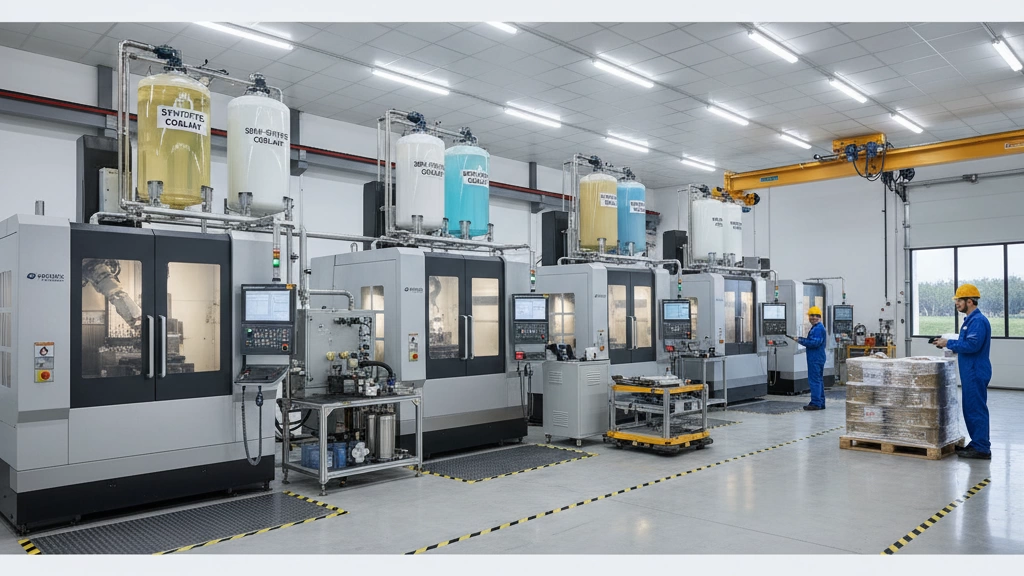
When choosing the best coolant for CNC machines, it helps to know your options. Here’s a quick rundown of the common types:
Straight Oils
- Made from petroleum or vegetable oils
- Pros: Great lubrication and tool life, excellent for heavy-duty cutting
- Cons: Poor cooling, can be messy, and harder to clean up
Soluble Oils
- Oil mixed with water to create a milky fluid
- Pros: Good balance of cooling and lubrication, cost-effective
- Cons: Can promote rust if not maintained, prone to bacterial growth
Semi-Synthetics
- Blend of synthetic fluids and oils
- Pros: Better cooling than straight oils, good lubrication, less odor
- Cons: More expensive than soluble oils, requires close monitoring
Full Synthetics
- Water-based with no mineral oil content
- Pros: Superior cooling, cleaner operation, longer fluid life, eco-friendlier
- Cons: Higher upfront cost, may not provide as much lubrication for tough metals
Emerging Alternatives
- MQL (Minimum Quantity Lubrication): Uses minimal oil, reducing waste and improving chip evacuation
- Bio-based Fluids: Made from renewable resources, focused on sustainability and less environmental impact
Each type has its sweet spot depending on your machining needs—whether you’re cutting aluminum, steel, or exotic metals—and what matters most, like cooling, lubrication, or eco-friendliness.
Key Factors for Selecting the Best CNC Coolant
Choosing the best coolant for CNC machines means balancing several important factors to fit your specific needs:
- Material Compatibility: Different metals need different coolants. Aluminum machining coolant, for example, usually requires water-soluble fluids that prevent corrosion and support chip evacuation. Exotic metals like titanium or Inconel might need synthetic or semi-synthetic coolants for better lubrication and tool life extension.
- Operation-Specific Demands: What you’re cutting and how matters. High-speed or high-pressure coolant delivery calls for fluids that won’t break down under stress. For heavy-duty cutting, straight oils or full synthetics often do better, while for lighter operations, soluble or bio-based machining lubricants can keep things clean and efficient.
- Machine and Environment Considerations: Each CNC machine and workspace is unique. If you deal with strict rust prevention standards and want to avoid clogging, select coolants with anti-microbial properties and the right CNC coolant concentration ratio. Also, factor in local environmental rules—eco-friendly CNC coolants or MQL (minimum quantity lubrication) systems might be better if you want to keep your shop green.
- Budget and Sustainability: Cost matters, but long-term savings from extended tool life and reduced maintenance are key. Semi-synthetic coolants usually hit a good balance between price and performance. If sustainability is a priority, consider bio-based fluids that cut down on waste and disposal fees.
- Vendor Vetting Tips: Work with reputable suppliers who offer technical support and clear guidelines on mixing, sump cleaning, and CNC coolant maintenance tips. Check for warranties and user feedback from local shops to make sure the product matches your operation’s scale and complexity.
cURL Too many subrequests.
cURL Too many subrequests.
cURL Too many subrequests. best coolant for CNC machines cURL Too many subrequests. cURL Too many subrequests., cURL Too many subrequests.
cURL Too many subrequests.
| Brand | Product | Best For | cURL Too many subrequests. |
|---|---|---|---|
| cURL Too many subrequests. | cURL Too many subrequests. | cURL Too many subrequests. | cURL Too many subrequests. |
| cURL Too many subrequests. | cURL Too many subrequests. | cURL Too many subrequests. | cURL Too many subrequests. |
| cURL Too many subrequests. | cURL Too many subrequests. | General machining | cURL Too many subrequests. |
| cURL Too many subrequests. | Master ST Cut 320 | Semi-synthetic users | Low maintenance, versatile |
| Quaker Houghton | Quakercut 2060 | Heavy-duty steel cutting | High corrosion resistance |
Vast’s Flagship Coolant Overview
- cURL Too many subrequests.: Designed for tough U.S. manufacturing settings, it offers outstanding cooling and lubrication. This product is perfect if you’re working with hard-to-machine materials like stainless steel or nickel alloys. Its water-soluble formula ensures excellent chip evacuation and tool life extension with coolant.
- Vast UltraSemi: A semi-synthetic coolant balancing natural oils and synthetic lubricants, ideal for mixed-material shops looking for rust prevention and easier sump cleaning.
Comparison Chart of Coolant Specs
| Feature | cURL Too many subrequests. | cURL Too many subrequests. | Castrol Hysol 8300 | Master ST Cut 320 | Quakercut 2060 |
|---|---|---|---|---|---|
| Coolant Type | Full Synthetic | Semi-Synthetic | Soluble Oil | Semi-Synthetic | Straight Oil |
| Mix Ratio (Water Soluble) | 5-7% | 4-6% | 3-5% | 5-7% | cURL Too many subrequests. |
| Tool Life Extension | High | High | cURL Too many subrequests. | cURL Too many subrequests. | High |
| Rust Prevention | Excellent | Very Good | Good | Good | Excellent |
| Environmentally Friendly | cURL Too many subrequests. | cURL Too many subrequests. | cURL Too many subrequests. | cURL Too many subrequests. | No |
| Cost Efficiency | cURL Too many subrequests. | cURL Too many subrequests. | Low | cURL Too many subrequests. | cURL Too many subrequests. |
Selecting top coolants depends on your specific machining needs, but Vast’s range especially balances performance and eco-friendliness for local U.S. shops optimizing both cost and output quality.
Implementing and Maintaining Your CNC Coolant System

Setting up your CNC coolant system right from the start is key to getting the best results. Begin by following the manufacturer’s recommended coolant concentration ratio. Too strong, and it can cause build-up or corrosion; too weak, and it won’t cool or lubricate properly. Use clean, soft water for mixing to avoid deposits that clog nozzles and pumps.
Daily and Weekly Maintenance
- Check coolant levels daily to keep the system topped off and avoid overheating.
- Test coolant concentration regularly using a refractometer to maintain optimum performance.
- Inspect filters and strainers, cleaning or replacing them weekly to prevent chips and debris from damaging the system.
- Clean the sump monthly to remove sludge and bacteria that can cause foul odors or rust.
Troubleshooting Common Issues
- Poor chip evacuation? Check coolant flow and pressure—sometimes the nozzles need adjusting or cleaning.
- Rust spots appearing? Confirm that your coolant has proper rust prevention additives and that the mix is balanced.
- cURL Too many subrequests. cURL Too many subrequests.
- cURL Too many subrequests. cURL Too many subrequests.
cURL Too many subrequests.
cURL Too many subrequests., cURL Too many subrequests. cURL Too many subrequests.
cURL Too many subrequests.
Real-World Case Studies
cURL Too many subrequests.
cURL Too many subrequests.
cURL Too many subrequests.
cURL Too many subrequests.
cURL Too many subrequests.
- “cURL Too many subrequests.
- “cURL Too many subrequests.
- cURL Too many subrequests.
- cURL Too many subrequests.
cURL Too many subrequests.
 Italian
  English
  Spanish (Peru)
  German
  Korean
  Spanish (Spain)