
Explore comprehensive guides on screw thread forms types standards and applications with detailed profiles geometry and expert tips for precision fastening.
Fundamentals of Screw Threads
Understanding screw thread forms starts with grasping the basic geometry and terminology. A screw thread is a helical ridge wrapped around a cylinder or cone, designed to convert rotational motion into linear motion or hold parts together.
Key Terminology
- Helix: The spiral path the thread follows around the cylinder.
- Pitch: The distance between corresponding points on adjacent threads.
- Lead: The distance the screw advances in one full turn (equal to pitch for single-start threads).
- Major Diameter: The largest diameter of the thread (crest diameter on external threads).
- Minor Diameter: The smallest diameter (root diameter on external threads).
- Crest: The top surface or peak of the thread.
- Root: The bottom surface between thread peaks.
- Flanks: The sides of the thread profile connecting the crest and root.
Thread Classes
- External vs Internal ThreadsExternal threads are on bolts or screws; internal threads are inside nuts or tapped holes. They must fit precisely to ensure secure fastening.
- Straight vs Tapered ThreadsStraight threads have a constant diameter and are common for fastening.
Tapered threads reduce in diameter along their length, often used for sealing in piping.
Comparison Table of Select Parameters
| Parameter | Description | Example Value |
|---|---|---|
| Pitch | Distance between threads | 1.25 mm (Metric) |
| Lead | Distance advanced in one full revolution | 1.25 mm (single start) |
| Helix Angle | Angle between the thread helix and axis | 30° (typical) |
| Major Diameter | Largest thread diameter | 10 mm |
| Minor Diameter | Smallest thread diameter | 8.5 mm |
Vast’s Tolerance Control
Vast prioritizes precision by delivering custom threads with strict tolerance control. This ensures better fit, performance, and durability across all applications—whether standard or custom screw thread forms.
By mastering these fundamentals, you create a solid foundation for choosing the right thread type and ensuring optimal assembly performance.
Common Types of Screw Thread Forms
Screw thread forms come in a variety of profiles, each designed for specific uses and performance requirements. Let’s break down the most common types you’ll encounter.
Unified National Threads (UN)
- Profile: 60-degree V-shape
- Pros: Strong, versatile, widely used in the U.S. for fasteners
- Cons: Less efficient for power transmission due to thread friction
- cURL Too many subrequests. General fastening in automotive, aerospace, construction
Metric ISO Threads
- Profile: Also 60-degree V-shape, similar to Unified
- cURL Too many subrequests. cURL Too many subrequests.
- Comparison: cURL Too many subrequests.
- cURL Too many subrequests. cURL Too many subrequests.
Acme Threads
- Profile: cURL Too many subrequests.
- cURL Too many subrequests. cURL Too many subrequests.
- cURL Too many subrequests. cURL Too many subrequests.
cURL Too many subrequests.
- Profile: cURL Too many subrequests.
- Efficiency: cURL Too many subrequests.
- Drawbacks: cURL Too many subrequests.
- cURL Too many subrequests. cURL Too many subrequests.
cURL Too many subrequests.
- Profile: cURL Too many subrequests.
- cURL Too many subrequests. cURL Too many subrequests.
- cURL Too many subrequests. cURL Too many subrequests.
cURL Too many subrequests.
- cURL Too many subrequests. cURL Too many subrequests.
- cURL Too many subrequests. cURL Too many subrequests.
- cURL Too many subrequests. Where durability under cyclic loading is critical
Quick View: Thread Profile Comparison
| cURL Too many subrequests. | Flank Angle | cURL Too many subrequests. | Common Use |
|---|---|---|---|
| Unified (UN) | 60° V | cURL Too many subrequests. | cURL Too many subrequests. |
| Metric ISO | 60° V | cURL Too many subrequests. | Global fastening |
| cURL Too many subrequests. | 29° Trapezoidal | High | Power transmission, leadscrews |
| Square | 0° | cURL Too many subrequests. | Heavy-duty power transmission |
| Buttress | Asymmetrical | High in one direction | Hydraulic, heavy load applications |
These thread forms cover most industrial needs, from everyday fasteners to specialized power transmission and high-strength applications.
For those looking for precision and custom solutions, Vast offers tight tolerance control across most thread forms—including custom Acme and UNJ threads—ensuring your project meets exact specifications.
Standards and Specifications Ensuring Compatibility and Precision
When it comes to screw thread forms, sticking to standards is key for compatibility and performance. The main players in creating these standards are ASME B1.1, ISO 68, and historically, the Whitworth form which paved the way for modern threads.
Key Thread Series
Threads come in different series based on their pitch:
- cURL Too many subrequests.: More common, quick assembly, better for dirty or damaged parts.
- Fine and extra-fine threads: Higher strength, better for precision fits and thin materials.
Tolerance Classes and What They Mean
Tolerances define how tight or loose the thread fit is. Here’s a quick overview of common classes:
| Tolerance Class | Description | Fit Type | Common Use |
|---|---|---|---|
| 1A / 1B | Loose fit | Easy assembly | Quick installs, less precise |
| 2A / 2B | Standard fit | Balanced fit | General-purpose fasteners |
| 3A / 3B | Tight, precise | High precision | Aerospace, high-stress applications |
Tighter tolerances reduce stripping risk and improve reliability, especially in demanding uses.
Measuring Threads Like a Pro
Use calipers to check these thread features:
- Pitch: Distance between threads.
- Major diameter: Largest outer diameter.
- Minor diameter: Smallest root diameter.
- Thread angle: Flank angle between sides.
cURL Too many subrequests.
cURL Too many subrequests.
cURL Too many subrequests. Unified (UN) and cURL Too many subrequests. cURL Too many subrequests.
cURL Too many subrequests.
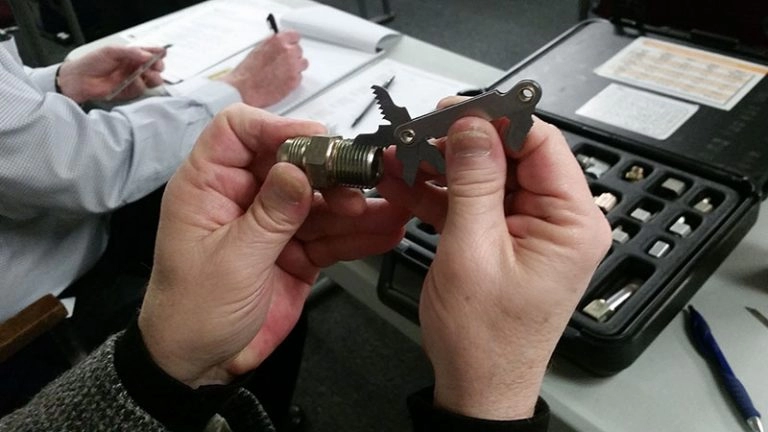
cURL Too many subrequests.
Industry Breakdown
- cURL Too many subrequests. cURL Too many subrequests.
- cURL Too many subrequests. cURL Too many subrequests.
- cURL Too many subrequests. cURL Too many subrequests.
cURL Too many subrequests.
- Load Type: cURL Too many subrequests.
- cURL Too many subrequests. cURL Too many subrequests.
- cURL Too many subrequests. cURL Too many subrequests.
Pros and Cons Matrix
| cURL Too many subrequests. | cURL Too many subrequests. | cURL Too many subrequests. | Cost | cURL Too many subrequests. |
|---|---|---|---|---|
| Unified/Metric | cURL Too many subrequests. | cURL Too many subrequests. | Low | cURL Too many subrequests. |
| cURL Too many subrequests. | High | High | cURL Too many subrequests. | cURL Too many subrequests. |
| Square | Very High | High | High | Difficult |
| Buttress | cURL Too many subrequests. | Very High | cURL Too many subrequests. | cURL Too many subrequests. |
| UNJ (Aerospace) | cURL Too many subrequests. | Very High | High | Difficult |
Case Study: Vast’s Acme Thread Optimization
At Vast, we revamped Acme thread designs for linear motion systems used in manufacturing equipment. By optimizing thread dimensions and tolerances, we cut wear by 30%, significantly extending service life and reducing maintenance costs. This shows how matching the right thread form and precise manufacturing can unlock real benefits for U.S. industries.
Selecting the perfect screw thread form isn’t just about specs—it’s about matching thread profiles to your actual application needs. That’s where Vast’s expertise in tolerance control and customized thread solutions comes in.
Manufacturing and Maintenance Tips from Vast Experts
When it comes to manufacturing screw thread forms, choosing the right method is key. You can cut threads with a lathe for small runs or complex shapes, but rolling threads is faster and stronger for high-volume production. Proper tooling matters too — using the correct threading tools ensures clean, precise threads that fit well and last longer.
Watch out for common pitfalls like over-torquing, which can strip threads or cause damage. Mismatched thread forms or sizes are another big problem, leading to poor fits and early failure. Aluminum threads are especially prone to galling (material sticking and tearing), so lubrication during assembly is critical.
For ongoing maintenance:
- Inspect threads regularly for wear or damage
- Keep threads clean and lubricated to reduce friction and corrosion
- Replace worn parts before they cause bigger issues
Quick FAQ on Acme vs Square Threads
- cURL Too many subrequests. have a 29-degree flank angle, making them easier to machine and stronger under load, good for power transmission with some side loading.
- Square threads have almost zero flank angle, which means less friction and higher efficiency but are tougher to make and handle mostly pure axial loads.
Following these tips helps keep your screw threads operating smoothly and extends their lifespan, whether you’re using common Unified threads or specialized forms like Acme and square threads. At Vast, we leverage these methods and insights to deliver custom threads with precise tolerance and performance.
 Italian
  English
  Spanish (Peru)
  German
  Korean
  Spanish (Spain)