
Explore our expert guide on tapped holes covering definitions, tapping processes, comparisons, and pro tips for precision machining success.
What Are Tapped Holes Core Definitions and Terminology Clarified
Tapped holes are pre-drilled holes that have internal threads cut into them to accept screws or bolts. Think of them as ready-made spots where fasteners can securely grip and hold parts together. Unlike simple drilled holes, tapped holes provide the necessary threading so a screw or bolt can twist in and create a tight fit.
Tapped holes differ from other types of threaded holes—like those with rolled or formed threads—because tapping cuts the threads directly into the material rather than reshaping it. Rolled threads are formed by pushing the metal to create thread patterns, which can add strength but require different tooling and materials.
Let’s break down the anatomy of a tapped hole:
- Major diameter – the largest diameter of the external thread
- Minor diameter – the smallest diameter inside the hole (bottom of the threads)
- Pitch – the distance between threads (often noted in threads per inch or millimeters)
- Profondità – how deep the threads run inside the hole
[Diagram showing these dimensions here]
Tapped holes follow industry standards to ensure parts meet tight fitting needs. The most common tolerance class is ANSI/ISO 6H, which balances ease of assembly with reliable thread fit and strength. This standard helps keep tapped holes consistent regardless of who makes them.
At Vast, we take special care to ensure every custom part meets these strict tolerances. Our precision machining processes guarantee tapped holes are accurately sized and threaded for the exact screw or bolt type your project requires. This commitment helps avoid common issues like thread stripping or misfit fasteners.
Curious how tapped holes compare to other threaded holes or want to know the best way to create them? Keep reading to get all the details on tapping vs rolling and tips for perfect threads.
Tapped Holes vs Threaded Holes Key Differences and When to Use Each
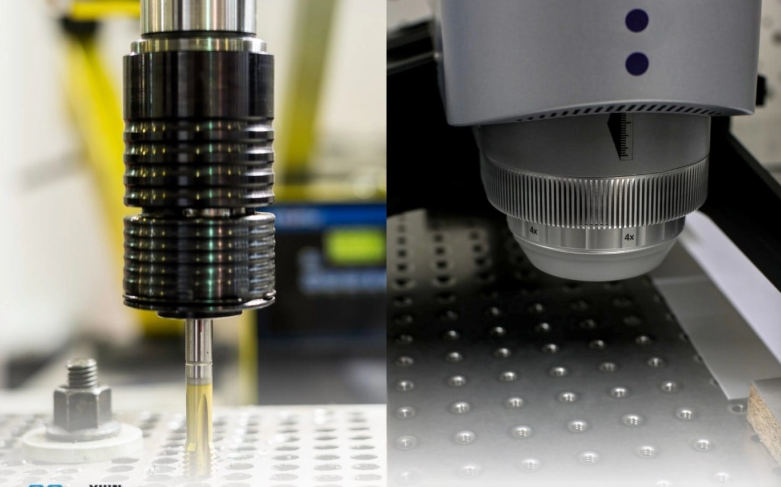
Tapped holes are made by cutting internal threads into a pre-drilled hole, while threaded holes can also be created by rolling or forming the threads without removing material. Here’s a quick breakdown:
| Caratteristica | Tapped Holes | Rolled/Formed Threaded Holes |
|---|---|---|
| Processo | Cutting threads with taps | Deforming material to form threads |
| Costo | Moderato | Usually lower for high volumes |
| Resistenza | Good for precision fits | Stronger threads due to work hardening |
| Suitable Materials | Softer metals like aluminum, plastics | Harder metals like steel, stainless steel |
| Volume | Best for low to mid volumes | Ideal for high-volume production |
| Thread Quality | Precise, standard threads | Superior thread fatigue life |
When to use which? Choose tapped holes if you need precise, subtractive threading and work with softer materials like aluminum or plastic. They’re perfect for custom, low-volume parts where tight tolerances matter.
For high-strength, high-volume needs—like automotive chassis or aerospace components—rolled or formed threads offer better fatigue resistance and durability due to the cold-working process. These threads are typically found in steel or other hard metals where strength is critical.
Case in Point:
- Automotive Quick Assembly: Tapped holes are common in engine blocks and interior fixtures where precision and moderate strength suffice.
- Aerospace Applications: Rolled threads win here for fatigue resistance and assembly reliability under stress.
Using the right threading method saves time, cost, and ensures your parts perform as expected.
The Tapping Process Step by Step Guide to Creating Tapped Holes
Creating tapped holes starts with selecting the right tap drill size. The basic formula is: Tap Drill Size = Major Diameter – Pitch. For common sizes like M6 to M12, you can also refer to standard US customary drill size charts to find the perfect match that ensures clean, strong threads.
Next, choosing the right type of tap is important:
- Taper tap: Has a gentle thread start, great for easy entry and starting a thread.
- Plug tap: More threads at the tip, good for general purpose tapping.
- Bottoming tap: Cuts threads all the way to the bottom of a blind hole.
Each has its pros and cons, depending on the hole and material. For example, taper taps reduce the chance of tap breakage but take longer, while bottoming taps are necessary for full-depth threads in blind holes.
You also need to decide between hand tapping and CNC tapping:
- Hand tapping is flexible and lower cost but requires steady control and careful alignment.
- CNC tapping delivers precision and speed, especially in high-volume or complex parts, and reduces the risk of misalignment or damaging the tap.
Here’s a simple step-by-step for the tapping process:
- Drill the pilot hole at the right diameter.
- Align the tap carefully with the hole to avoid cross-threading.
- Start the tap slowly, turning it steadily to cut internal threads.
- Use proper lubrication to reduce friction and extend tap life.
- Cut threads fully, frequently reversing the tap to break chips.
- Clean the hole and tap to remove metal shavings.
- Inspect the threads for consistent depth and quality.
Chip evacuation is critical—especially with blind holes—to avoid clogging that can cause tap breakage. Using spiral flute taps or periodically backing out the tap helps clear chips efficiently.
For a clear demonstration on tapping techniques and best practices, check out Vast’s expert demo video on tapped hole creation.
Design and Specification Essentials for Tapped Holes
When designing tapped holes, getting the details right is crucial for fit and function. Use standard GD&T symbols and clear callouts to specify hole depth and whether the hole is blind (doesn’t go all the way through) or through (goes completely through the material). This helps avoid confusion during production.
Consider the material carefully. Alluminio, for example, is softer and more prone to strappo del filetto, so use coarser threads that are less likely to wear out quickly. In contrast, steel can handle finer threads, offering better strength and durability.
To optimize tapped holes for performance and reliability, follow these tips:
- Chamfer the hole edge before tapping to guide the tap smoothly
- Consider countersinking for flush or recessed fastener heads
- Aim for thread engagement of about 1.5 to 2 times the screw diameter to ensure secure hold
For parts made in the U.S., especially in Midwest manufacturing hubs, stick to ASME B1.1 standards to meet imperial thread codes. This ensures your tapped holes comply with industry norms and fit with common fasteners.
Following these specs helps avoid costly mistakes and keeps your tapped holes strong, precise, and ready for assembly.
Applications and Strength Analysis Real World Uses of Tapped Holes
Tapped holes show up in a wide range of industries here in the U.S., including automotive engine blocks, electronics for PCB mounting, and even DIY furniture assembly. They’re essential wherever screws or bolts need to secure components without extra hardware like nuts.
When it comes to strength, the tapped hole vs. nut and bolt debate is common. Tapped holes tend to be stronger in shear (side-to-side forces) but can be weaker in tension (pulling forces), especially in softer materials like aluminum. Fatigue testing supports this, showing tapped threads hold up well under repeated load but may wear faster if overloaded in tension.
Tapped holes also bring several pros:
- Cleaner aesthetics with no external nuts visible
- Reduced parts count which lowers cost and assembly time
- Improved vibration resistance since threads are fixed directly in the material
On the flip side, stripped threads are a top concern. To prevent this, Vast recommends using thread lockers like Loctite and following careful installation protocols to maintain strong, lasting threads.
Overall, tapped holes provide a solid, space-saving fastening solution when designed and maintained properly.
Common Mistakes and Troubleshooting for Flawless Tapped Holes
When working with tapped holes, a few common mistakes can cause headaches and slow down your project. Watch out for these pitfalls:
- Misaligned taps: If your tap isn’t straight, threads can be uneven or damaged.
- Binding or getting stuck: This usually happens when you use the wrong speed or skip lubrication.
- Wrong speeds: Too fast or too slow can cause tap breakage or poor thread quality.
- Poor lubrication: Without proper cutting fluid, the tap gets hot and wears out quickly.
- Galling: This is when metal sticks to the tap, ruining threads and the tool.
How to Fix These Issues
- Use an oversized tap for damaged holes or rough metal.
- Install Helicoil inserts when threads are stripped or weak, especially in soft materials like aluminum.
- Per blind holes, use spiral flute taps to help clear chips effectively.
- Watch out for chip buildup that can jam the tap—clear chips regularly.
- Scegli spiral point taps for through holes since they push chips forward, reducing clogging.
Pro Tip for Hand Tapping
- Rotate the workpiece instead of the tap when possible. This gives you better control and reduces the risk of breaking the tap.
- Use steady, even pressure and back off occasionally to break chips free.
Getting tapped holes right takes practice, but avoiding these common mistakes will save you time and costs.
Advanced Tips Enhancing Tapped Holes with Vast Expertise
When it comes to tapped holes, Vast takes precision and efficiency to the next level. For large-scale production, we integrate advanced CNC tapping with multi-axis machines. This lets us handle high volumes without compromising quality or accuracy. Whether you need hundreds or thousands of tapped holes, our setup ensures each one meets strict machining tolerances and your exact specifications.
Looking ahead, hybrid forming and tapping techniques are gaining traction. These methods reduce material waste and improve thread strength, making them ideal for sustainable manufacturing. Vast is actively exploring these trends to offer greener, cost-effective solutions that don’t sacrifice performance.
If you’re ready to prototype or optimize tapped holes for your project, reach out to us. Our experts are here to consult on the best tap drill size, thread pitch, and tapping process for your application. Contact Vast today and get started on flawless internal threading with confidence.
 Italian
  Chinese
  English
  Spanish (Peru)
  German
  Korean
  Spanish (Spain)