
Fast and affordable vacuum casting service delivering precise low-volume urethane prototypes with quick turnaround and custom material options.
Struggling to get high-quality prototypes fast without breaking the bank? Vacuum casting service might be exactly what you need. This proven technique lets you produce precision low-volume plastic parts—think razor-sharp details and production-grade materials—in a fraction of the time and cost of traditional methods like injection molding. Whether you’re an engineer, product designer, or small manufacturer, mastering vacuum casting can shave weeks off your development cycle while delivering parts that look and behave like the real deal. Ready to unlock rapid, affordable prototyping? Keep reading to discover how Vast’s vacuum casting services can power your next breakthrough.
What is Vacuum Casting A Step-by-Step Breakdown
Vacuum casting is a precise and efficient method for producing high-quality plastic parts, especially useful for prototypes and low-volume production. Here’s how the process works step-by-step:
1. Master Pattern Creation
The process begins with creating a master pattern, often made using 3D printing or CNC machining. This pattern captures the exact shape and details of the final part, serving as the template for the mold.
2. Silicone Mold Fabrication
Next, the master pattern is encased in a silicone mold. This mold is made with RTV (Room Temperature Vulcanizing) silicone, which cures at room temperature, forming a flexible but durable mold that can capture fine surface details.
3. Vacuum-Assisted Resin Pouring
The silicone mold is then placed in a vacuum chamber. Liquid urethane resin is poured into the mold under vacuum conditions. This step removes air bubbles and ensures the resin fills every cavity for a flawless cast.
4. Resin Curing and Demolding
After the resin cures, the cast part is carefully removed from the silicone mold. Vacuum casting typically achieves tight dimensional tolerances of ±0.1mm, making it suitable for precise functional prototypes and parts.
5. Fast Delivery Through US Domestic Partners
Many vacuum casting services partner with US-based facilities to offer quick turnaround times, usually between 3 to 5 days. This helps manufacturers speed up development without sacrificing quality.
Vacuum casting is a reliable option when you need accurate, high-quality plastic parts quickly and at a fraction of the cost of traditional tooling methods.
Key Benefits of Vacuum Casting Services for Modern Manufacturers
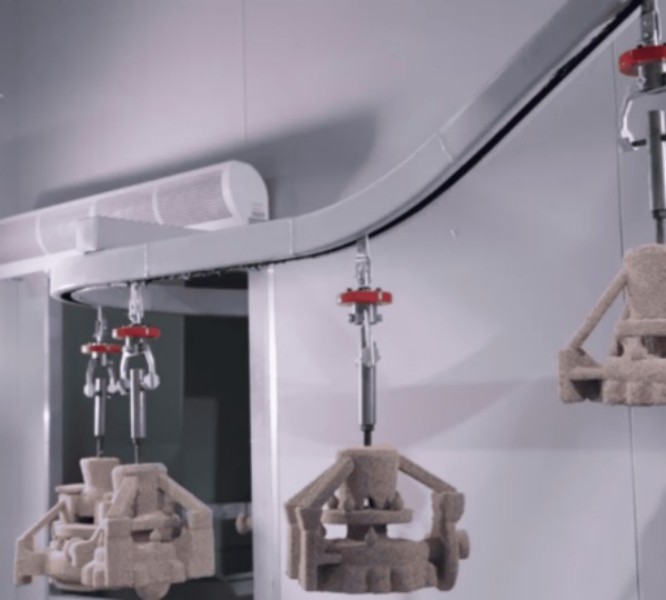
Vacuum casting offers clear advantages for manufacturers looking to save time and money without sacrificing quality. Here’s why it stands out:
- Cost Savings: No need for expensive steel tooling means lower upfront costs. You can produce parts without the big investment injection molding requires.
- Fast Turnaround: You get prototypes and low-volume runs in just 1-2 weeks, compared to several months with traditional methods.
- Material Versatility: Choose from 26+ urethane types that closely mimic common plastics like ABS, polypropylene (PP), polycarbonate (PC), and even rubber.
- Eco-Friendly: Less material waste than machining helps reduce environmental impact and keeps production cleaner.
- Strong ROI: Saves $5,000 to $10,000 per run compared to injection molding, making it ideal for budgets tight on initial investment.
- Complex Designs: Perfect for parts with undercuts, detailed textures, and multiple colors in low-stress applications.
- Accurate Material Matching: Vast’s range of Shore A-D hardness options lets you match final production properties closely for a true functional prototype or small batch.
Using vacuum casting service is a practical choice for US manufacturers needing quick, reliable, and cost-effective prototypes or small runs.
When to Choose Vacuum Casting Ideal Applications and Use Cases
Vacuum casting is a smart choice when you need quality parts fast, especially for volumes under 500 units or designs with complex shapes like undercuts and textures. It fits perfectly across several industries:
- Automotive: bumpers, interior panels, and small lightweight parts
- Medical devices: durable housings and ergonomic components
- Consumer gadgets and wearables: custom enclosures and flexible parts
- Aerospace: lightweight components needing precision and reliability
For example, Vast recently helped a Chicago startup prototype 50 electric vehicle parts in just 7 days using vacuum casting — speeding up development while keeping costs low.
When deciding between vacuum casting, 3D printing, and injection molding, consider:
- Volume: vacuum casting works best for low to medium runs below 500 pieces
- ComplexitycURL Too many subrequests.
- SpeedcURL Too many subrequests.
- CostcURL Too many subrequests.
cURL Too many subrequests.
cURL Too many subrequests.
cURL Too many subrequests. cURL Too many subrequests. cURL Too many subrequests., cURL Too many subrequests. cURL Too many subrequests. cURL Too many subrequests. cURL Too many subrequests.
cURL Too many subrequests. cURL Too many subrequests. cURL Too many subrequests. cURL Too many subrequests. cURL Too many subrequests.
cURL Too many subrequests. tensile strength and cURL Too many subrequests., often enhanced by Vast-exclusive resin blends. That means your parts don’t just look good—they hold up in the real world. This flexibility makes vacuum casting ideal for diverse applications, from clear medical device housings to flexible electronic seals.
How Vast’s Vacuum Casting Services Stand Out in 2025
At Vast, we make vacuum casting easy and flexible for US manufacturers. There’s no minimum order quantity (MOQ), so whether you need a single prototype or a small batch, we’ve got you covered. You can get an instant online quote and benefit from our in-house Design for Manufacturing (DFM) reviews to catch any issues early and keep your project on track.
cURL Too many subrequests. global network, with trusted partners in both the US and China, gives you the best mix of speed and cost efficiency. We combine local support with overseas resources to deliver parts fast without breaking your budget. Plus, all our parts go through ISO-certified quality checks, including detailed video production logs and thorough post-casting testing, so you get consistent, reliable results every time.
Vast is built to scale with you—from one prototype to bridge production runs—and we support a smooth transition to injection molding when you’re ready for higher volumes. Our user-friendly order tracking portal keeps your team connected no matter where you are, making it simple to manage projects remotely.
With Vast’s vacuum casting service, you get fast, quality parts backed by transparency and support tailored to modern manufacturers in the US.
Cost Factors Lead Times and Tips for Success
When budgeting for vacuum casting service, several factors drive the final price:
- Part size and complexity: Larger, detailed parts need more material and time.
- Volume: Small batches cost more per piece; for example, a quote for 20 ABS-like parts might come around $500.
- Material choice: Some urethane blends or special finishes add to cost.
Lead times usually range from 3 to 7 days for simple runs. Keep in mind, mold curing and resin setting can affect timing. More complex designs or multiple colors may add a few days.
Here are some tips to avoid delays and extra costs:
- Avoid sharp undercuts that complicate mold release.
- Prepare files correctly—STL and STEP formats work best.
- Don’t over-specify finishes if they’re not needed; it can slow production.
- Check your design for potential pitfalls early.
Vast helps speed things up by reducing US import delays through Midwest fulfillment centers. This keeps your parts moving fast and your project on track.
 Italian
  English
  Spanish (Peru)
  German
  Korean
  Spanish (Spain)