
Discover the essentials of mechanical gears including types functions and real-world applications for efficient power transmission and design choices.
From the silent tick of a clock to the relentless torque of an engine, mechanical gears are the hidden champions driving motion and power in countless machines around us. Understanding these toothed wheels isn’t just for engineers—it’s essential for anyone curious about how things work, from DIY hobbyists to industry pros. In this post, you’ll discover how mechanical gears transform speed and force, the different types shaping modern technology, and why mastering their function can unlock new possibilities for your projects or business. Ready to dive into the mechanics behind the motion? Let’s get started.
A Brief History From Ancient Ingenuity to Industrial Revolution
Mechanical gears have a fascinating history that stretches back thousands of years. Their story begins with ancient inventors like Archimedes, who laid the groundwork for gear technology. One of the most remarkable early examples is the Antikythera mechanism, an ancient Greek device that used complex gears to track astronomical positions, showcasing early mastery of gear-driven precision.
During the medieval period, gear technology evolved further. Byzantine engineers developed intricate calendrical gears to measure time accurately, while Hero of Alexandria expanded the understanding of mechanical principles through his pioneering works on automata and water-powered devices. These advancements kept the gears turning through centuries of innovation.
The modern era of gears truly accelerated with the Industrial Revolution. The introduction of standardized involute gear profiles revolutionized gear efficiency. These profiles allowed for smoother tooth contact and greater durability, which became essential for the growing demands of factories and machinery.
Today, this long history of improving gear efficiency connects directly to the precision engineering work at Vast. By building on centuries of mechanical insight, Vast creates custom gears that meet the exacting requirements of modern industries, delivering smooth, reliable, and high-performance solutions across countless applications.
How Mechanical Gears Work The Fundamentals of Motion and Power
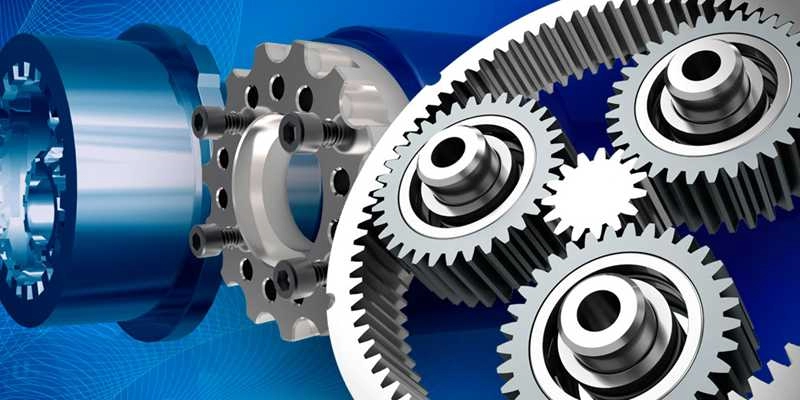
Mechanical gears transfer motion and power by meshing teeth on two or more wheels. When the teeth mesh, they convert input speed and torque into a different output, allowing machines to move efficiently and with control. This basic operation is the heart of many mechanical systems, from simple tools to complex gearboxes.
Gear Ratio Explained
The gear ratio compares the number of teeth on two meshing gears. For example, if a smaller gear with 10 teeth drives a larger gear with 40 teeth, the gear ratio is 4:1. This means the larger gear turns slower but with more torque. In everyday life, bike gears work the same way—shifting gears changes your pedaling speed and force based on terrain.
Key Components of Gears
- Pitch Circle: The imaginary circle where gear teeth effectively mesh.
- Addendum: The part of the tooth above the pitch circle.
- Dedendum: The part below the pitch circle.
- Pressure Angle: The angle at which teeth contact affects smoothness and load capacity.
A simple diagram helps understand these terms, showing how gears fit and transfer force precisely.
Mechanical Advantage
Gears provide mechanical advantage by multiplying force or speed. The formula is straightforward:
Mechanical Advantage = Output Torque / Input Torque
For example, on a bike, lower gears multiply pedal force to climb hills easier, while higher gears increase speed on flat roads.
Common Pitfalls
- Backlash: The small gap between meshing teeth can cause noise or wear.
- Lubrication: Proper lubrication prevents heat buildup and reduces friction, extending gear life.
Vast Integration of Advanced Simulations
Today, manufacturers use advanced computer simulations to optimize gear ratios and design. These tools help predict performance, reduce wear, and tailor gears to specific custom needs, especially for precision industries within the United States market. This means better, more reliable mechanical gears in everything from automotive to industrial gear systems.
Types of Mechanical Gears A Comprehensive Breakdown
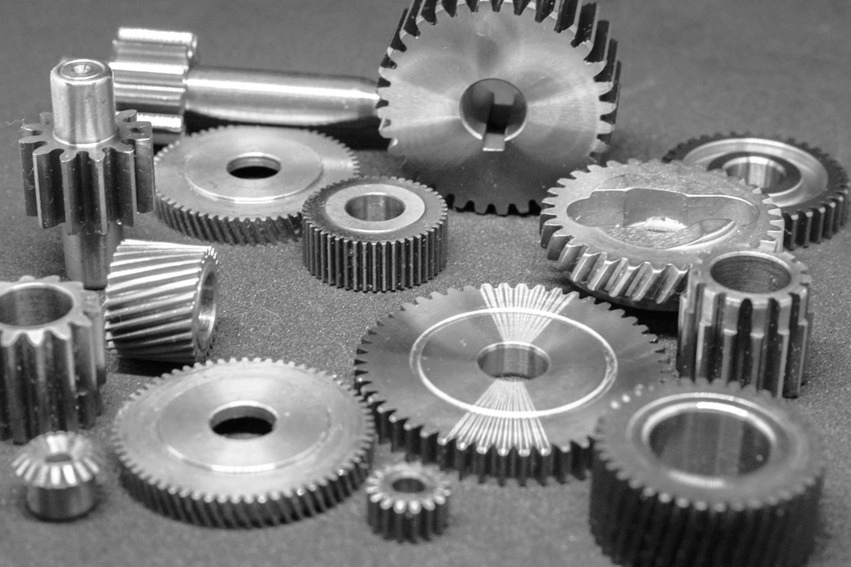
Mechanical gears come in different types, each designed to fit specific needs and applications. Here’s a straightforward look at the most common ones:
Spur Gears
- Teeth: Straight and parallel to the shaft
- Shafts: Parallel shafts
- Pros: Simple design, cost-effective, easy to manufacture
- Cons: Noisy at high speeds
- Applications: Clocks, simple machinery, conveyor systems
Helical Gears
- Teeth: Angled, which lets them mesh gradually
- Operation: Smoother and quieter than spur gears
- Applications: Automotive transmissions, industrial machines needing quieter performance
Bevel Gears
- Shape: Cone-shaped for shafts that intersect
- Variants: Straight bevel (simpler, noisier) and spiral bevel (quieter, handles more load)
- Use: Different axes power transfer in cars and heavy equipment
Worm Gears
- Design: Screw-like gear meshing with a worm wheel
- Features: High reduction ratios and self-locking ability
- Uses: Elevators, lifts, conveyors where security and load control matter
- Trade-offs: Lower efficiency, generate heat
Rack and Pinion
- Function: Converts rotational motion into linear motion
- Applications: Steering systems, CNC machines, railways
Emerging Gear Types
- Hypoid Gears: Like bevel gears but shafts don’t intersect; common in car differentials for smoother power transfer
- Planetary Gears: Compact sets for high torque and speed variation; often in robotics and automatic gearboxes
Comparison Table
| Gear Type | Shaft Configuration | Load Capacity | Noise Level | Common Uses |
|---|---|---|---|---|
| Spur | Parallel | Moderate | High | Simple machines, conveyors |
| Helical | Parallel | High | Low | Automotive, industrial |
| Bevel (Spiral) | Intersecting | High | Medium | Heavy machinery, vehicles |
| Worm | Perpendicular | Moderate | Low to Medium | Elevators, conveyors |
| Rack & Pinion | Linear & Rotational | Moderate | Low | Steering, CNC equipment |
| Hypoid | Intersecting, offset | High | Low | Car differentials |
| Planetary | Coaxial | Very high | Low | Robotics, gearboxes |
Custom Integration
For industries demanding precision, custom helical and bevel gears are essential. They offer tailored solutions for everything from aerospace to medical devices, ensuring efficiency and durability that fit your specific gear needs.
Applications of Mechanical Gears Powering Industries and Everyday Life
Mechanical gears are everywhere, making machines work smoothly across many industries and daily products. Here’s how they play a key role:
Automotive and Marine Transmissions
Gears like differentials and transmission sets help distribute torque efficiently in cars and boats. They allow engines to deliver power smoothly to wheels and propellers, boosting performance and fuel economy. Custom gears are often used in marine engines to reduce vibration, improving durability and ride comfort.
Aerospace
In aircraft, lightweight helical gears are common in engines and landing gear systems. Their smooth operation and high strength help improve fuel efficiency and reliability, which is critical for flight safety and performance.
Consumer Goods
Mechanical gears power everything from clocks and bicycles to tools and printers. Rack and pinion gears, for example, are essential in steering systems and printer mechanisms, ensuring precise movement and control.
Industrial
Worm gears are widely used in conveyors and heavy machinery, providing high torque in compact spaces. Planetary gears offer high efficiency and compact designs, perfect for robotics and manufacturing automation where space and power are limited.
Emerging Technologies
In renewable energy, gears are vital in wind turbines, helping convert slow blade rotation into faster generator speeds. Medical devices and prosthetics also rely on precision gears to deliver smooth, reliable motion in tight spaces.
Case Study
In a recent vast project, custom-engineered gears helped reduce marine engine vibration, significantly extending engine life and lowering maintenance costs. This shows how tailored gear solutions make a big difference in demanding environments.
Whether it’s daily use or high-tech industries, mechanical gears keep things running efficiently and reliably, often behind the scenes but always essential.
Design and Selection Essentials Choosing the Right Gear for Your Needs
Picking the right mechanical gears for your project isn’t complicated if you focus on a few key factors. Here’s what matters most:
Key Factors to Consider
- Module and Pitch: These define the size and spacing of gear teeth. Matching these correctly ensures your gears mesh smoothly.
- Material Choice: Steel gears work great for heavy-duty, high-speed uses. Plastic gears fit lighter loads and quieter operation, saving weight and cost.
- Load and Speed: Know the torque (twisting force) and speed your gear will handle. Higher loads need stronger materials and designs.
- Environmental Conditions: Consider temperature, moisture, and exposure to dust or chemicals — these impact your gear’s durability.
Simple Gear Ratio Calculations
Understanding gear ratio helps you design the system to amplify or reduce speed and torque:
- Gear Ratio = Number of Teeth on Output Gear ÷ Number of Teeth on Input Gear
- For example, if your input gear has 20 teeth and the output gear has 60, your ratio is 3:1. This means the output turns slower but with triple the torque.
Maintenance Tips for Longevity
- Lubrication: Keep gears well-oiled to reduce wear and heat. Check oil levels and quality regularly.
- Alignment: Proper gear alignment prevents uneven wear and noise.
- Watch for Wear: Look out for pitting, tooth breakage, or backlash (excess play between teeth). Early repair can save costly downtime.
Vast Integration for Better Results
Leverage advanced modeling tools and simulations to customize gear design perfectly for your needs. We offer free gear design consultations tailored to your application, ensuring you get the right fit every time. Whether you need custom steel or plastic gears, our expertise helps optimize performance and lifespan.
If you’re ready to improve your mechanical gear setup, reach out for a free consultation and see how modern design tools can work for you.
 English
  Spanish (Peru)
  German
  Korean
  Spanish (Spain)
  Italian