
Compare AISI 4130 vs 4140 chromoly steels with detailed chemical, mechanical, weldability, and cost insights for optimal material selection.
If you’re torn between AISI 4130 vs 4140 for your next build, you’re not alone. Both are go-to chromoly steels, but each shines in different corners of the shop. Choosing wrong could mean overpaying or worse—component failure. Here’s the bottom line: 4130 is the champ when welding and moderate strength matter most, while 4140 takes the crown for thick sections and maxed-out toughness. In this post, you’ll get the no-fluff breakdown of their chemical and mechanical differences, heat treatment quirks, and real-world applications—so you pick the right steel, right now.
Chemical Composition Breakdown: AISI 4130 vs 4140
Understanding the chemical makeup is the first step in comparing AISI 4130 vs 4140 steel grades. Both belong to the chromium-molybdenum (Cr-Mo) family, but subtle differences in alloying elements lead to distinct mechanical behaviors and heat treatment responses.
| Element | 4130 (Wt. %) | 4140 (Wt. %) | Key Notes |
|---|---|---|---|
| Carbon (C) | 0.28 – 0.33 | 0.38 – 0.43 | 4140 carries ~0.10% more—critical for harder steel and better hardenability. |
| Chromium (Cr) | 0.80 – 1.10 | 0.95 – 1.40 | 4140 has ~0.15% more, boosting strength and hardenability. |
| Molybdenum (Mo) | 0.15 – 0.25 | 0.15 – 0.25 | Similar levels; adds toughness and wear resistance. |
| Manganese (Mn) | 0.40 – 0.60 | 0.40 – 0.60 | Nearly identical; aids hardenability and tensile strength. |
| Silicon (Si) | 0.15 – 0.35 | 0.15 – 0.35 | Acts as a deoxidizer in both grades. |
| Phosphorus (P) | ≤ 0.035 | ≤ 0.035 | Kept low to minimize brittleness. |
| Sulfur (S) | ≤ 0.040 | ≤ 0.040 | Low content to improve machinability and toughness. |
Key takeaway: The higher carbon (~0.10%) and chromium (~0.15%) content in 4140 makes it inherently more hardenable. This difference helps 4140 maintain higher strength and hardness in thicker sections after heat treatment, compared to 4130.
Visual: Alloy Content Comparison

- The chart clearly shows the incremental increase in carbon and chromium from 4130 to 4140.
- Molybdenum and manganese content remain consistent, emphasizing the impact of carbon and chromium on performance.
In , the chemical tweaks between 4130 and 4140 primarily drive 4140’s enhanced hardenability and strength, making it ideal for heavy-duty parts requiring deep hardening. In contrast, 4130’s slightly lower carbon content favors better weldability and fine grain structure.
Mechanical Properties Comparison of AISI 4130 vs 4140
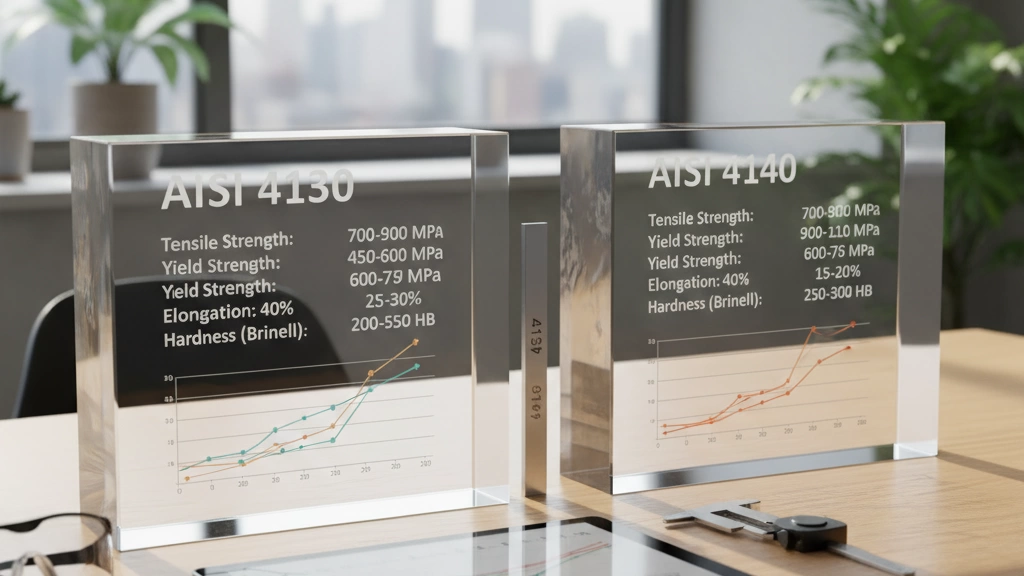
Here’s a quick look at how 4130 and 4140 stack up in mechanical properties under common conditions like as-rolled, normalized, and quenched & tempered (Q&T) at 400°F, 800°F, and 1150°F.
| Property | Condition | AISI 4130 | AISI 4140 | Notes |
|---|---|---|---|---|
| Yield Strength (ksi) | As-Rolled | ~63 | ~75 | 4140 is stronger even before heat treatment |
| Ultimate Tensile Strength (ksi) | As-Rolled | ~90 | ~95 | |
| Elongation (%) | As-Rolled | 22 | 18 | 4130 is more ductile |
| Hardness (HRC) | As-Rolled | 22 | 25 | |
| Yield Strength (ksi) | Q&T @ 400°F | ~95 | ~115 | 4140 shows ~20%+ higher strength |
| Ultimate Tensile (ksi) | Q&T @ 400°F | ~110 | ~130 | |
| Charpy Impact (ft-lbs) | Q&T @ 400°F | 25 | 20 | 4130 offers better toughness |
| Yield Strength (ksi) | Q&T @ 800°F | ~70 | ~85 | 4140 retains strength better |
| Ultimate Tensile (ksi) | Q&T @ 800°F | ~85 | ~95 | |
| Hardness (HRC) | Q&T @ 1150°F | 18 | 20 | Strength drops as tempering rises |
| Elongation (%) | Q&T @ 1150°F | 25 | 22 | 4130 regains ductility here |
Key Takeaway:
- 4140 shows over 20% higher strength in thick sections (>3”) because it hardens deeper due to more carbon and chromium.
- 4130 is generally more ductile and tougher, especially in impact resistance.
- Both steels lose strength with high tempering, but 4140 holds better at temperatures above 900°F.
These mechanical differences make 4140 preferable for heavy-duty applications needing high strength in larger parts, while 4130 fits well where toughness and weldability matter more.
Heat Treatment Response: Hardenability and Microstructure
When it comes to heat treatment, AISI 4130 and 4140 show some clear differences—especially in hardenability and tempering resistance.
Hardenability (Jominy Curves):
- 4140 has noticeably higher hardenability because of its extra carbon and chromium. This means it can harden deeper into thicker sections, making it ideal for parts over 3 inches thick.
- 4130, with lower alloy content, hardens mainly near the surface, which works well for thinner sections but limits toughness deeper inside.
Tempering Resistance:
- 4140 holds up better during tempering, especially above 900°F. It resists softening more than 4130, which means parts maintain strength after high-temp treatments.
- 4130 tends to soften faster at high tempering temperatures, limiting its use where strength retention after heat is critical.
Microstructure Differences:
- 4130 forms a finer grain structure during heat treatment, contributing to good toughness and fatigue resistance in thinner sections.
- In thicker sections, 4140 develops more bainite, a tougher microstructural phase that helps it retain strength and hardness deeper inside.
In short, 4140 is your go-to when you need deeper hardness and better tempering resistance, especially for thicker parts. 4130 shines with finer grain and toughness in thinner, more easily heat-treated components.
Weldability & Fabrication of AISI 4130 vs 4140
When it comes to welding, 4130 chromoly is easier to work with. It typically requires a pre-heat of about 300°F and a post-weld heat treatment (PWHT) at 1150°F to keep cracking risks low. This makes 4130 popular for projects where welding quality is critical, like roll cages and aerospace parts.
On the other hand, 4140 steel needs a higher pre-heat between 500 and 600°F and a mandatory PWHT after welding to reduce stresses. This extra step leads to more distortion during fabrication, so you have to plan carefully, especially for bigger or thicker parts.
For filler metals, ER80S-D2 wire works well for 4130, while 4140 typically uses the stronger ER100S-1 to match its hardness and toughness.
Machinability also differs: 4130 machines easier, with a machinability index about 70% of standard B1112 steel. In contrast, 4140 is tougher, scoring around 55%, which means slower tool wear and more attention needed in fabrication shops.
Overall, 4130 is more weld-friendly with less distortion risk, while 4140 demands more care but offers higher strength after welding—perfect for heavy-duty applications like oil and gas components.
Fatigue & Toughness
When it comes to fatigue strength, both AISI 4130 and 4140 perform well, but their behavior differs based on surface treatment. S-N curves (R = -1) show that shot-peened specimens of both steels have improved fatigue life compared to polished ones. Shot peening introduces compressive stress on the surface, which helps resist crack initiation—a big plus for parts under cyclic loading.
In terms of fracture toughness (K1C), 4140 steel generally has the edge, especially when quenched and tempered (Q&T). It offers higher resistance to crack propagation, making it a better choice for demanding applications where toughness is critical.
Here’s how this plays out in real-world use:
- NASCAR Roll Cages (4130): 4130 chromoly is popular because of its excellent toughness and fatigue performance paired with lighter weight. Its fine microstructure and weldability suit the complex shapes and high-stress scenarios in race car frames.
- Drag Axle Housings (4140): 4140 is favored in drag racing axle housings and heavy-duty shafts where maximum strength and toughness at thick sections are essential. Its superior hardenability means it retains strength better in larger parts.
In short, if fatigue toughness is your main concern and the sections are smaller with complex shapes, 4130 is a solid pick. For thick, high-strength components that take heavy impacts, 4140’s fatigue toughness and fracture resistance win out.
Cost & Availability
When it comes to cost, AISI 4140 tends to be about 12–18% more expensive than 4130, based on prices in Q3 2025 across the U.S. Midwest. This price difference reflects 4140’s higher alloy content and tougher heat treatment needs.
As for availability, 4130 is the go-to steel for tubing and is widely stocked in that form. On the other hand, 4140 is most commonly found in plate and bar stock, especially sizes above 2 inches thick.
If you’re scouting for 4130 tubing or want to compare stock levels, check vast’s real-time inventory to get the freshest data and current pricing. This helps you source exactly what your project needs without delay.
Industry-Specific Recommendations
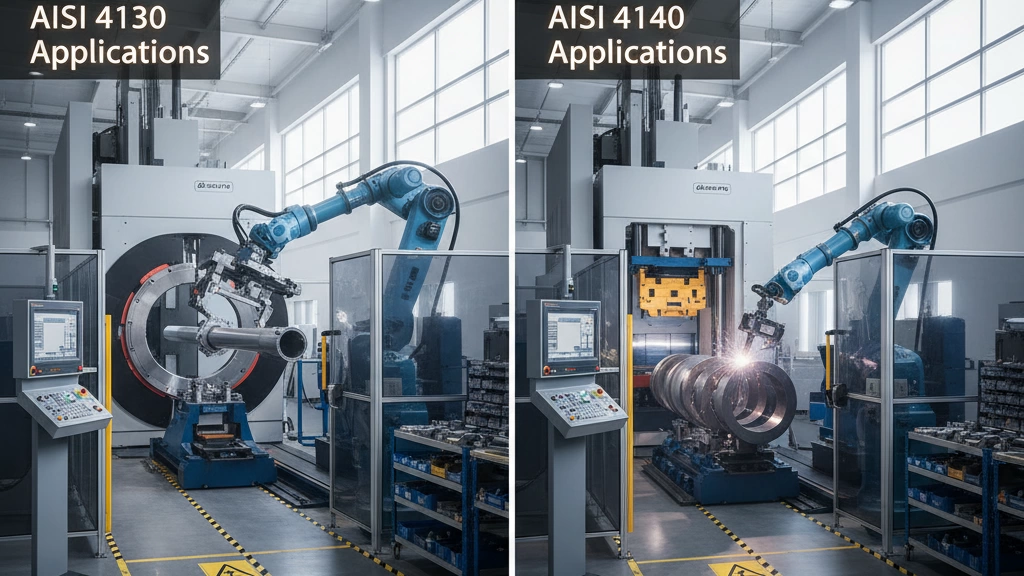
Here’s a quick guide on where AISI 4130 and 4140 steels really shine in different industries across the U.S.:
- Aerospace: 4130 is the go-to, especially in aerospace-grade forms like AMS 6350 and vacuum arc remelt (VAR) finishes. Its fine grain and solid weldability make it ideal for critical airframe parts.
- Oil & Gas: 4140 takes the lead here due to its superior hardenability and resistance to sour environments, meeting tough specs like API 6A and NACE MR0175 for sour service applications.
- Motorsports: Seamless 4130 tubing, especially in 1.5–2.5” outer diameter sizes, is the choice for roll cages and chassis components. It’s lightweight yet strong, perfect for racing frames.
- Firearms: For barrels and components that need pre-hardened strength and wear resistance, 4140 is preferred. Its high hardness and toughness after heat treatment make it ideal for firearm barrel blanks.
Each grade serves a unique purpose—pick 4130 when weldability and toughness are key, and 4140 when hardening depth and wear resistance matter most.
Common Myths Debunked
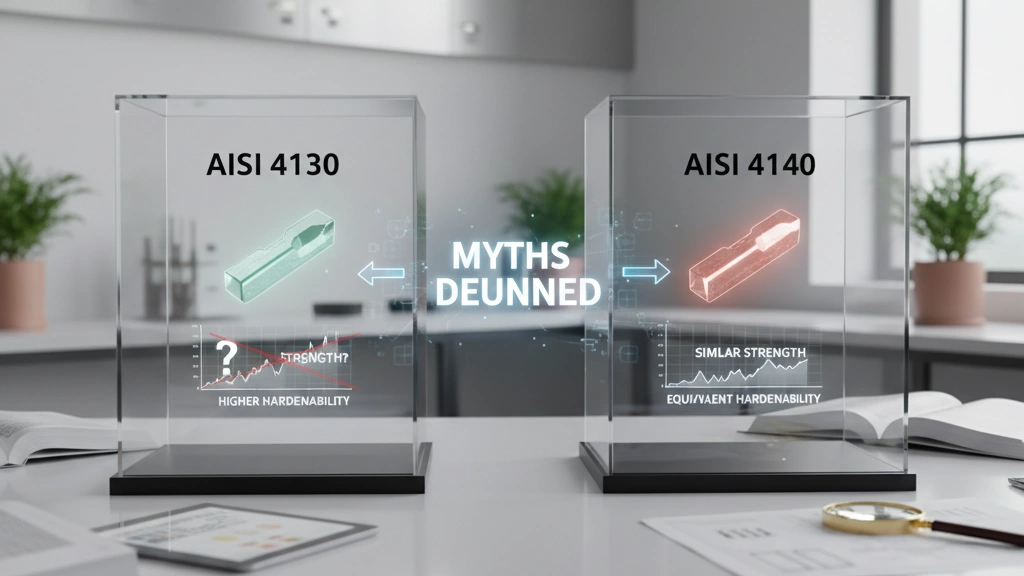
There’s a lot of talk about AISI 4130 vs 4140, and some myths keep popping up. Let’s clear them up:
- “4140 is always stronger.” That’s not true, especially in thin sections under 1 inch. In those cases, 4130 can match or even outperform 4140 because the extra carbon and chromium in 4140 don’t fully kick in without enough volume for deep hardening.
- “4130 can’t be hardened.” Actually, 4130 can be hardened quite well. With proper oil quenching and tempering, it’s possible to reach 38 to 42 HRC. So don’t count 4130 out if you need decent hardness and toughness.
These points matter a lot for local fabricators and engineers here in the U.S. who need the right balance of strength, weldability, and cost for their projects. Knowing the facts helps you pick the right steel without paying extra or over-engineering your part.
Decision Matrix: Pick Between AISI 4130 vs 4140
Choosing between AISI 4130 and 4140 steel isn’t one-size-fits-all. It depends on your project’s section size, expected stress, welding percentage, and budget. To make it simple, vast offers a handy interactive 4130 vs 4140 Selector tool.
How It Works
- Section Size: Thin tubing or thick bar? Different strengths matter.
- Stress Levels: Will your part see heavy loads or light use?
- Welding Percentage: More welds usually mean a stronger weldable steel is better.
- Budget: 4140 typically costs 12–18% more; factor in your budget.
Plug these details into vast’s selector, and it’ll recommend the best steel for your needs. This takes out the guesswork, helping U.S. fabricators, engineers, and buyers pick exactly what fits their application—whether it’s motorsports tubing or oilfield components.
Want to try it now? Check vast’s real-time 4130 vs 4140 Selector for personalized advice on your next purchase.
 English
  Spanish (Peru)
  German
  Korean
  Spanish (Spain)
  Italian