
Lernen Sie die wichtigsten Arten von Gießverfahren mit Vor- und Nachteilen, Materialoptionen, Kostenfaktoren und besten Einsatzmöglichkeiten für die Fertigung.
Was ist Metallguss?
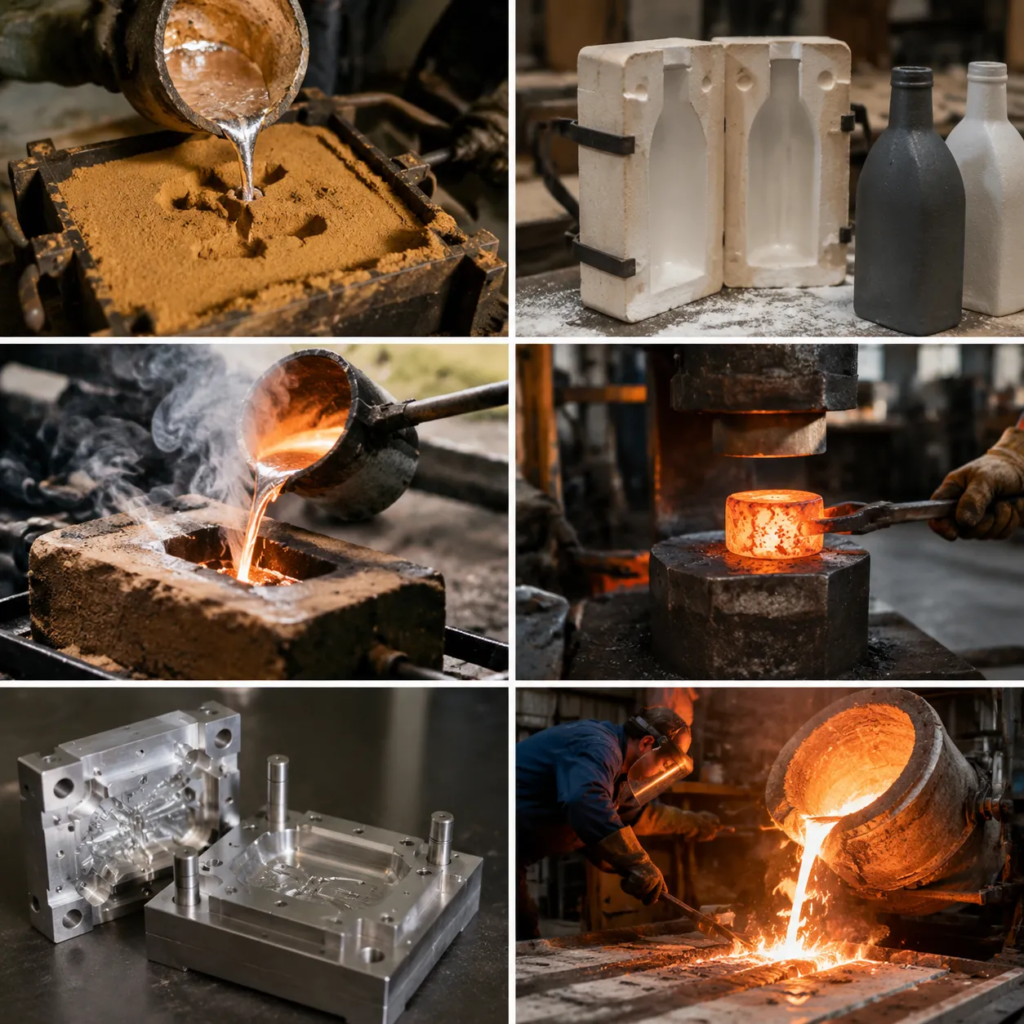
Metallguss ist ein grundlegender Herstellungsprozess, bei dem geschmolzenes Metall in eine Gussform gegossen, zum Erstarren gebracht und anschließend entfernt wird, um ein speziell geformtes Bauteil zu erstellen. Als Eckpfeiler der modernen Fertigung ermöglicht dieser Prozess die Herstellung komplexer Geometrien und filigraner Designs, die durch traditionelle Bearbeitung äußerst schwierig oder teuer wären.
Der Metallgussprozess folgt in unserer Gießerei einem einfachen, hoch effizienten Arbeitsablauf:
- Mustergestaltung: Wir entwerfen ein physisches Modell des Endteils.
- Mold Preparation: Eine Form wird um das Muster herum erstellt, wobei eine hohle Kavität im Inneren verbleibt.
- Schmelzen & Gießen: Wir erhitzen das gewählte Metall auf seinen flüssigen Zustand und gießen es in die Gussform.
- Abkühlen & Erstarren: Das geschmolzene Metall kühlt ab und nimmt die Form der Kavität an.
- Finishing: Das feste Metallteil wird entfernt, gereinigt und fertiggestellt, um die erforderliche Maßgenauigkeit und Oberflächenqualität zu erreichen.
Häufig verwendete Materialien im Guss
Verschiedene Gussarten erfordern spezifische Metalle, abhängig von der Anwendung des Endprodukts. Wir arbeiten regelmäßig mit vier Hauptmetallen:
| Material | Key Properties | cURL Too many subrequests. |
|---|---|---|
| Iron | Ausgezeichnete Verschleißfestigkeit, hohe Fließfähigkeit, große Dämpfungsfähigkeit | Motorblöcke, Schwermaschinenfundamente, Rohre |
| Steel | Hohe Festigkeit, ausgezeichnete Zähigkeit, überlegene Schweißbarkeit | Strukturkomponenten, Zahnräder, Eisenbahnräder |
| cURL Too many subrequests. | Leichtgewicht, korrosionsbeständig, hohe Wärmeleitfähigkeit | Automobilteile, Luft- und Raumfahrtkomponenten, Unterhaltungselektronik |
| cURL Too many subrequests. | Geringe Reibung, hervorragende Korrosionsbeständigkeit, äußerst langlebig | Lager, Buchsen, Marinehardware, Statuen |
Sandguss: Die Grundlage der Metallformgebung
Sandguss ist eine der ältesten und zuverlässigsten Gießarten in der Fertigungsgeschichte und reicht Tausende von Jahren zurück. Im Kern besteht der Prozess darin, ein feuerfestes Material—meist Sand—um eine Form zu packen, um eine Gießform zu erstellen. Sobald die Form entfernt ist, gießen wir geschmolzenes Metall in die Kavität, um das Endteil zu erzeugen. Aufgrund seiner unglaublichen Flexibilität und Kosteneffizienz bleibt es eine dominierende Kraft in der modernen Gießereiherstellung.
Grüner Sand vs. Harz-Sand-Formen
Wir verwenden im Allgemeinen zwei Haupttypen von Sandmischungen, abhängig von den Projektanforderungen:
- Grüne Sandformen: Eine traditionelle Mischung aus Sand, Ton und Wasser. Der Begriff “grün” bezieht sich auf den Feuchtigkeitsgehalt und nicht auf die Farbe. Es ist hoch wiederverwendbar, umweltfreundlich und perfekt für die schnelle Produktion.
- Harz-Sand-Formen: Diese Methode verwendet chemische Bindemittel, um die Sandkörner zusammenzuhalten. Es erzeugt eine viel stärkere, steifere Sandform, was zu überlegener Maßgenauigkeit und einer saubereren Oberflächenbeschaffenheit führt.
Vorteile und Nachteile von Sandformen
| Advantages | Disadvantages |
|---|---|
| Niedrige Anfangskosten für Werkzeuge und Entwicklung | Rauere Oberflächenbeschaffenheit im Vergleich zum Druckguss |
| Kann unglaublich große und schwere Komponenten gießen | Geringere Maßtoleranzgrenzen |
| Funktioniert mit fast jedem geschmolzenen Metall oder Legierung | Langsamere Produktionszyklen pro Teil |
Typical Applications
Sandguss ist die ultimative Wahl für schwere Komponenten, bei denen die strukturelle Integrität wichtiger ist als ein spiegelglänzendes Finish. Wir verwenden dieses Metallgussverfahren routinemäßig zur Herstellung von Motorblöcken, Zylinderköpfen, schweren Maschinenfundamenten, Pumpengehäusen und großen Ventilen. Wenn Sie robuste Komponenten von einem zuverlässigen Metallgussunternehmen, Sandformen bieten unvergleichliche Skalierbarkeit und Materialvielfalt.
Gießerei-Investition: Das Wachsausschmelzverfahren
Wenn wir außergewöhnliches benötigen dimensional accuracy und eine makellose surface finish, wenden wir uns an das Investitionsgießen. Oft als cURL Too many subrequests., bezeichnet, ist diese Methode eine der ältesten und präzisesten Gießarten in der modernen Gießereitechnik.
Wie das Wachsausschmelzverfahren Schritt für Schritt funktioniert
- Pattern Creation: Wir injizieren Wachs in eine Form, um eine Replik des Endteils zu erstellen.
- cURL Too many subrequests. Wir montieren mehrere Wachsmodelle auf einen zentralen Wachs-Kanal (ein “Baum”).
- cURL Too many subrequests. Wir tauchen den Baum in eine keramische Suspension und bedecken ihn mit Stucksand, wobei wir dies wiederholen, bis eine harte keramische Schale um das Wachs entsteht.
- Wachsentfernung: Wir erhitzen die Schale, um das Wachs zu schmelzen, wodurch eine hohle keramische Form entsteht.
- Gießen: Wir gießen geschmolzenes Metall in die vorgeheizte keramische Gießform.
- cURL Too many subrequests. Sobald sie abgekühlt ist, brechen wir die keramische Schale auf, um die endgültigen Metallteile freizulegen.
Warum Gießerei mit Investitionsverfahren wählen?
Dieses Verfahren bietet unvergleichliche Präzision für komplexe Geometrien. Da die Form um ein nahtloses Wachsmodell erstellt wird, können wir die in Sandformen üblichen Teilungslinien eliminieren.
Beste Metalle und Anwendungen
| Merkmal / Detail | Spezifikationen der Investitionsgussverfahren |
|---|---|
| Verwendete beste Metalle | Edelstahl, Aluminium, Bronze, Baustahl und Superlegierungen. |
| Wann sollte man es wählen? | Für filigrane Designs, dünne Wände, enge Toleranzen und Teile, die minimal bearbeitet werden müssen. |
| Häufige Branchen in Deutschland | Luft- und Raumfahrtkomponenten, Feuerwaffen, medizinische Implantate und hochwertige Automobilteile. |
Während die Werkzeugkosten für die anfänglichen Wachsmodelle höher sind als bei einigen anderen Gießarten, führt die Reduzierung der Sekundärbearbeitungs- und Veredelungskosten dazu, dass es für hochwertige, präzise Produktionsläufe äußerst wirtschaftlich ist.
Druckguss: Hochgeschwindigkeits-Metallformen
Unter den verschiedenen Gießarten hebt sich der Druckguss durch die Hochgeschwindigkeits-Massenproduktion hervor. Wir verwenden dieses Verfahren, wenn Projekte große Stückzahlen, enge Toleranzen und hervorragende Oberflächenfinishs erfordern. Anstelle von Sandformen drückt der Druckguss geschmolzenes Metall in wiederverwendbare Stahlformen (Werkzeuge).
Schwerkraft- vs. Druckguss
Die beiden Hauptmethoden unterscheiden sich darin, wie das Metall in die Form gelangt:
| cURL Too many subrequests. | Gravity Die Casting | Druckguss |
|---|---|---|
| Metallfluss | Durch Schwerkraft gespeist | Unter Hochdruck eingespritzt |
| cURL Too many subrequests. | cURL Too many subrequests. | Very high |
| Wall Thickness | Dickwandige | Dünne, komplexe Wände |
| cURL Too many subrequests. | Lower | cURL Too many subrequests. |
Heißkammer- vs. Kaltkammermaschinen
Wir wählen die Maschinen basierend auf dem Schmelzpunkt des gegossenen Legierungsmaterials:
- Hot-Chamber Die Casting: Der Einspritzmechanismus ist direkt im geschmolzenen Metall eingetaucht. Dieses Setup ermöglicht schnelle Zykluszeiten. Wir verwenden es für Legierungen mit niedrigem Schmelzpunkt wie Zink, Magnesium und Blei.
- Cold-Chamber Die Casting: Das Metall wird in einem separaten Ofen geschmolzen und mit einem Schöpflöffel in die Einspritzkammer gefüllt. Wir verwenden diese Methode für Metalle mit hohem Schmelzpunkt wie Aluminium und Messing, um Schäden an der Einspritzanlage zu vermeiden.
Vorteile der Hochgeschwindigkeits-Massenproduktion
- Net-Shape-Teile: Erzeugt Teile, die nur minimale Nachbearbeitung durch CNC-Bearbeitung erfordern.
- Dimensionalitätskonformität: Wiederverwendbare Stahldie sind dafür sorgen, dass jedes Teil genau den Spezifikationen entspricht.
- Glatte Oberflächenbeschaffenheit: Erzielt saubere Oberflächen direkt aus der Form.
Häufige Branchen, die auf Druckgussteile angewiesen sind
- cURL Too many subrequests. Motorblöcke, Getriebegehäuse und Halterungen.
- cURL Too many subrequests. Steckverbindergehäuse, Abschirmungen und Kühlkörper.
- cURL Too many subrequests. Gehäuse für Elektrowerkzeuge und Gerätehardware.
Centrifugal Casting
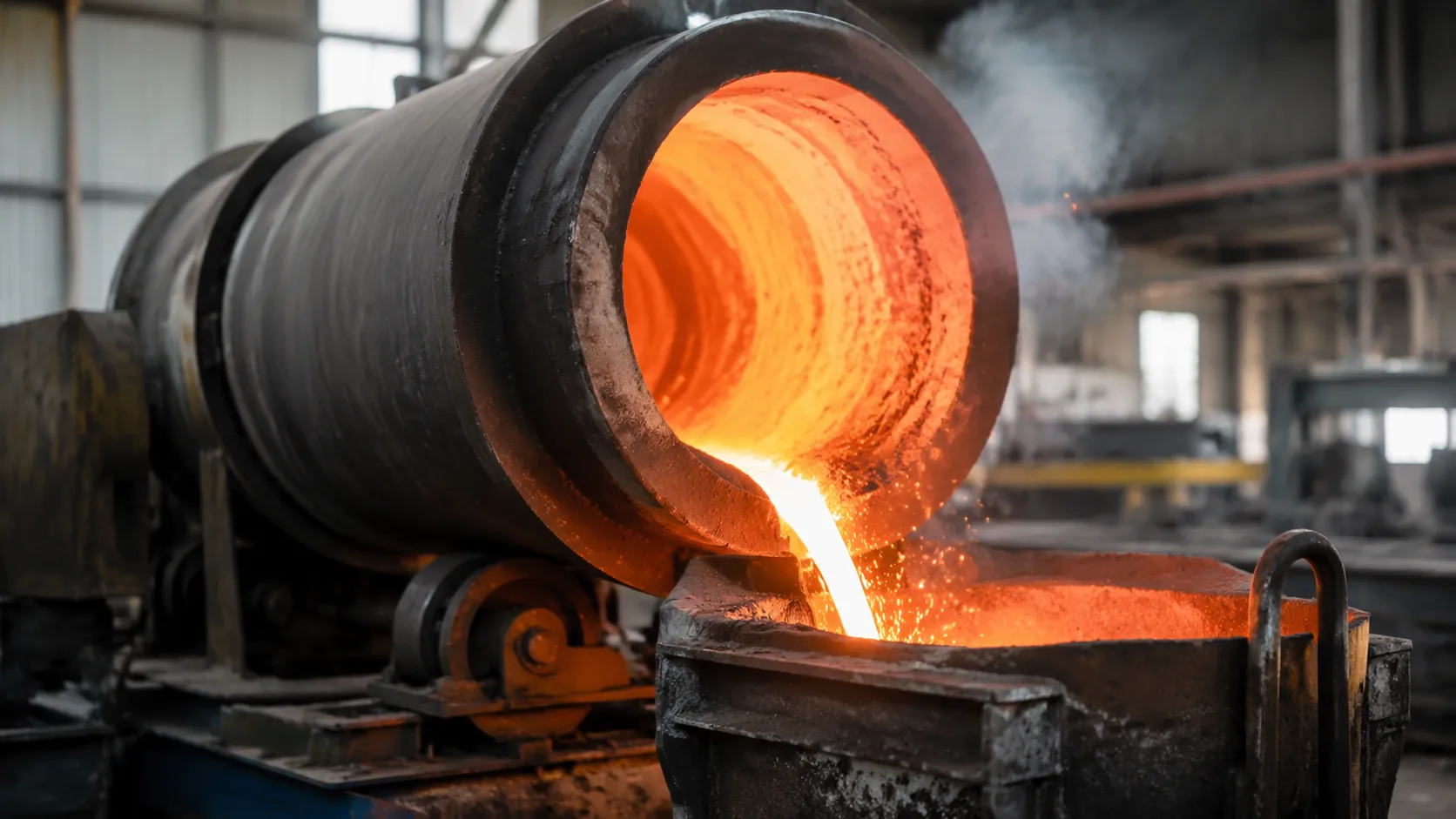
Wenn wir fehlerfreie Hohlteile herstellen müssen, verlassen wir uns auf Zentrifugalschmelzen. Anstatt statischer Formen zu verwenden, rotiert dieses Metallgussverfahren die Form mit hoher Geschwindigkeit, während wir das geschmolzene Metall eingießen. Zentrifugalkraft drückt das schwerere, saubere Metall an die Außenwände, während leichtere Verunreinigungen in die Mitte gedrückt werden, wo wir sie leicht maschinell entfernen können.
[Bild des Zentrifugalschmelzprozesses]
Wahre vs. Semi-Zentrifugalschmelzen
Wir unterteilen diese Methode in zwei Haupttechniken basierend auf der Form des Endprodukts:
- Wahre Zentrifugalschmelzen: Die Form wird auf einer horizontalen oder vertikalen Achse gedreht, um perfekt zylindrische Teile ohne Verwendung eines zentralen Kerns zu erzeugen.
- Semi-Zentrifugalschmelzen: Die Form rotiert um eine vertikale Achse und verwendet einen Kern, um innere Formen zu erstellen. Wir verwenden diese Variante für symmetrische, radähnliche Teile.
Ideale Anwendungen und Materialvorteile
Dieses Verfahren ist unsere bevorzugte Wahl für die Herstellung hochwertiger Rohre, Schläuche und Ringe. Durch die Nutzung der Rotationskraft erzielen wir eine überlegene strukturelle Integrität und eine ausgezeichnete Materialdichte, die herkömmliche Gießverfahren nicht erreichen können.
| cURL Too many subrequests. | Vorteil des Zentrifugalschmelzens |
|---|---|
| cURL Too many subrequests. | Wasserrohre, Gleitlager, Zylinderlaufbuchsen und Triebwerksringe. |
| Materialdichte | Ultradichte Kornstruktur mit nahezu null eingeschlossenen Luft- oder Gasblasen. |
| Defect Reduction | Minimiert drastisch typische Gussfehler wie Porosität und Schrumpfung. |
| Structural Integrity | Außergewöhnliche gerichtete Erstarrung, die hohe mechanische Festigkeit für schwere industrielle Anwendungen in Deutschland bietet. |
Continuous Casting
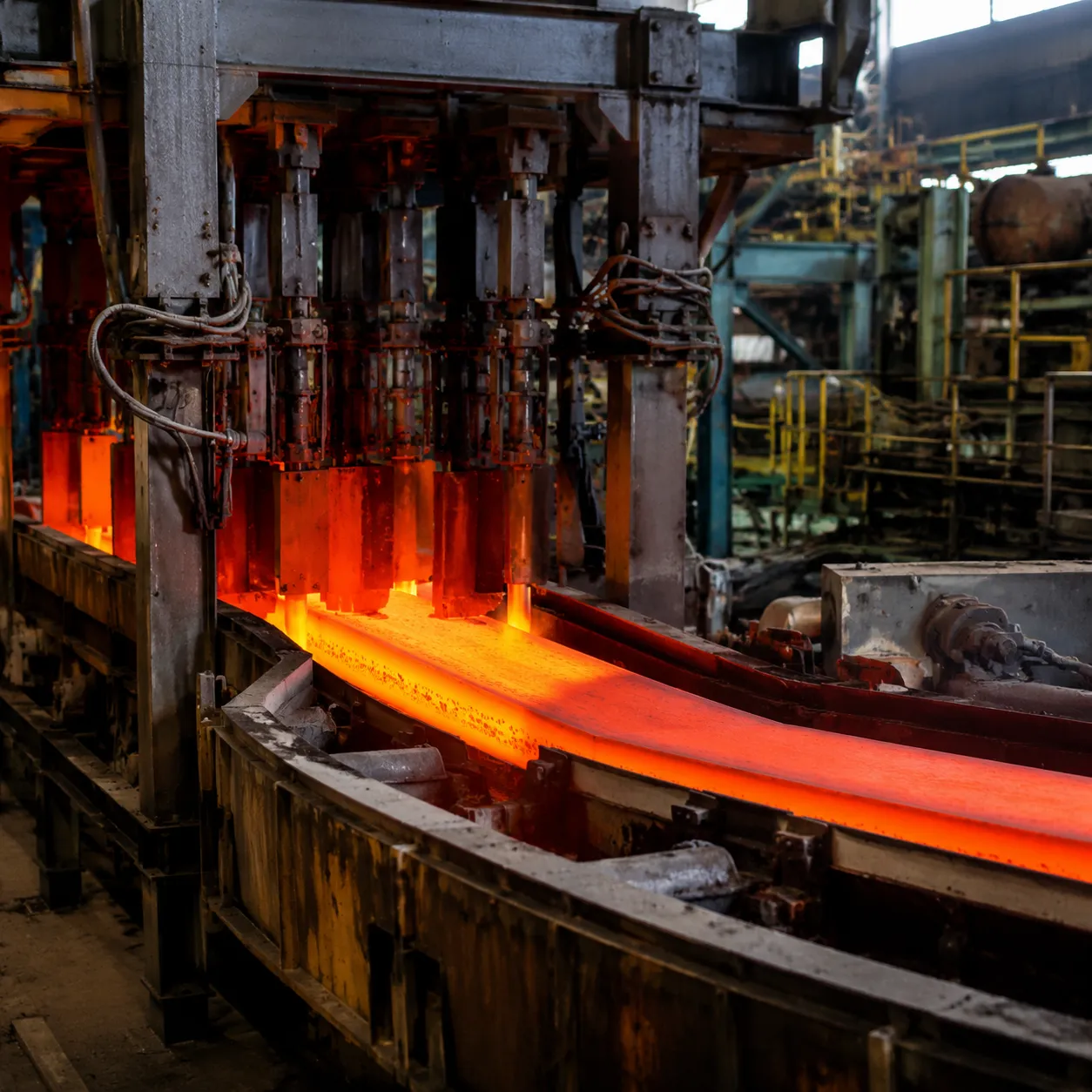
Wenn wir große Mengen Rohmaterial ohne Unterbrechung produzieren müssen, greifen wir zu kontinuierlichem Gießen. Im Gegensatz zu herkömmlichen Batch-Verfahren erstarrt dieses Metallgussverfahren geschmolzenes Metall zu einem kontinuierlichen Strang aus Halbfertigteilen wie Brammen, Barren oder Platten in einem ununterbrochenen Fluss.
Massenproduktivität und Kostensenkung
Dieses Verfahren hat die Gießereiherstellung revolutioniert, insbesondere für die Stahlproduktion. Durch das Überspringen des Schritts des Gießens einzelner Formen und des Wiedererhitzens von Brammen sparen wir Energie, Arbeitskraft und Abfallmengen.
| cURL Too many subrequests. | Vorteile des Kontinuusgusses |
|---|---|
| cURL Too many subrequests. | Ununterbrochene, hochvolumige Produktion von Platten und Barren |
| Materialausbeute | Deutlich weniger Schrott im Vergleich zu herkömmlichen Formen |
| cURL Too many subrequests. | Hochgradig einheitliche strukturelle Integrität und Oberflächenfinish |
| cURL Too many subrequests. | Geringerer Energieverbrauch und reduzierte Handhabungskosten |
Durch das kontinuierliche Bewegen des geschmolzenen Metalls durch eine wassergekühlte Gießform erzielen wir eine hervorragende Maßgenauigkeit und gleichbleibende Qualität über Meilen von Metall. Es ist das ultimative Rückgrat für die Hochvolumen-Rohstoffherstellung.
Andere bemerkenswerte Gießarten
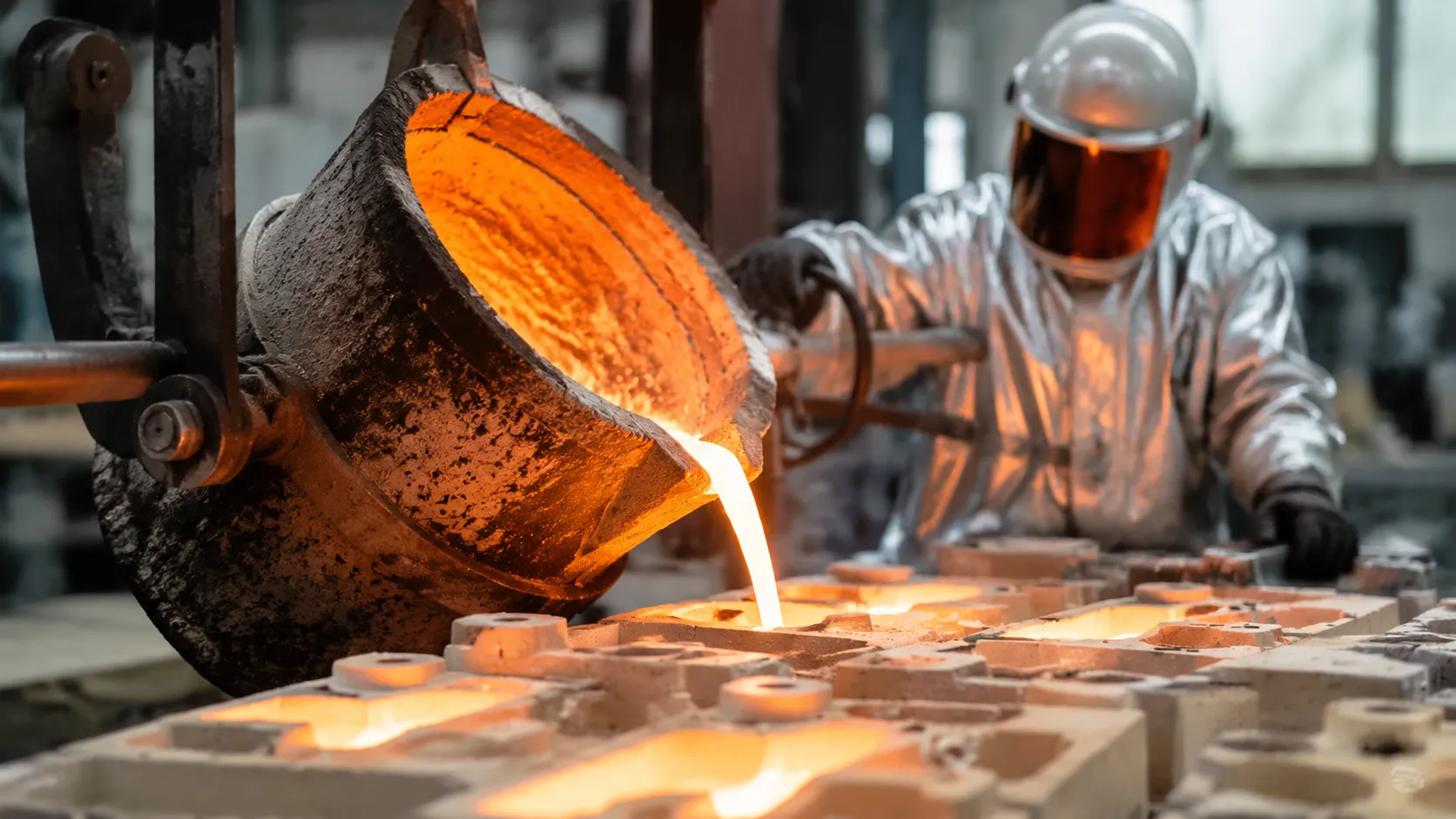
Während Sand- und Druckguss den Großteil der Hochvolumenproduktion abdecken, nutzen wir auch mehrere spezialisierte Gießarten um einzigartige Designanforderungen zu erfüllen. Wenn Standardmethoden nicht die genauen surface finish oder komplexen Geometrien liefern können, kommen diese alternativen Gießereiherstellungsverfahren zum Einsatz.
Shell Mold Casting
Diese Methode verwendet ein erhitztes Metallmuster, das mit einer Harz-Sand-Mischung beschichtet ist, um eine dünne, gehärtete Schale zu bilden. Der Vorteil: Bietet bessere dimensional accuracy und schnellere Produktionsraten als herkömmliche Sandformen. Am besten geeignet für: Kleine bis mittelgroße Teile, die eine präzise Nachverfolgung erfordern, wie Getriebegehäuse und Pleuelstangen.
Gipsformerei
Anstelle von Sand verwenden wir eine Gipsmischung, um die Gießform. Der Vorteil: Der Gips erzeugt eine außergewöhnlich glatte surface finish und ermöglicht feine Details. Am besten geeignet für: Nicht-Eisenmetalle wie Aluminium oder Kupferlegierungen, oft für Schließteile oder dekorative Beschläge.
Keramikformgießverfahren
Ähnlich wie Gips, aber wir verwenden keramische Materialien, die extrem hohen Temperaturen standhalten können. Der Vorteil: Ermöglicht es uns, hochschmelzende geschmolzenes Metall zu gießen, während wir eine außergewöhnliche Präzision und ein makelloses Finish beibehalten. Am besten geeignet für: Impeller, komplexe Maschinenteile und spezielle Werkzeuge.
Vacuum Casting
Durch das geschmolzenes Metall in die Formhohlraum mit Hilfe eines Vakuums ziehen, eliminieren wir vollständig eingeschlossene Luft und Gase. Der Vorteil: Verhindert häufige casting defects wie Porosität, und sorgt für ein hochdichtes, strukturell solides Endprodukt. Am besten geeignet für: Hochintegritätskomponenten, bei denen Materialversagen keine Option ist.
So wählen Sie die richtige Gießmethode aus
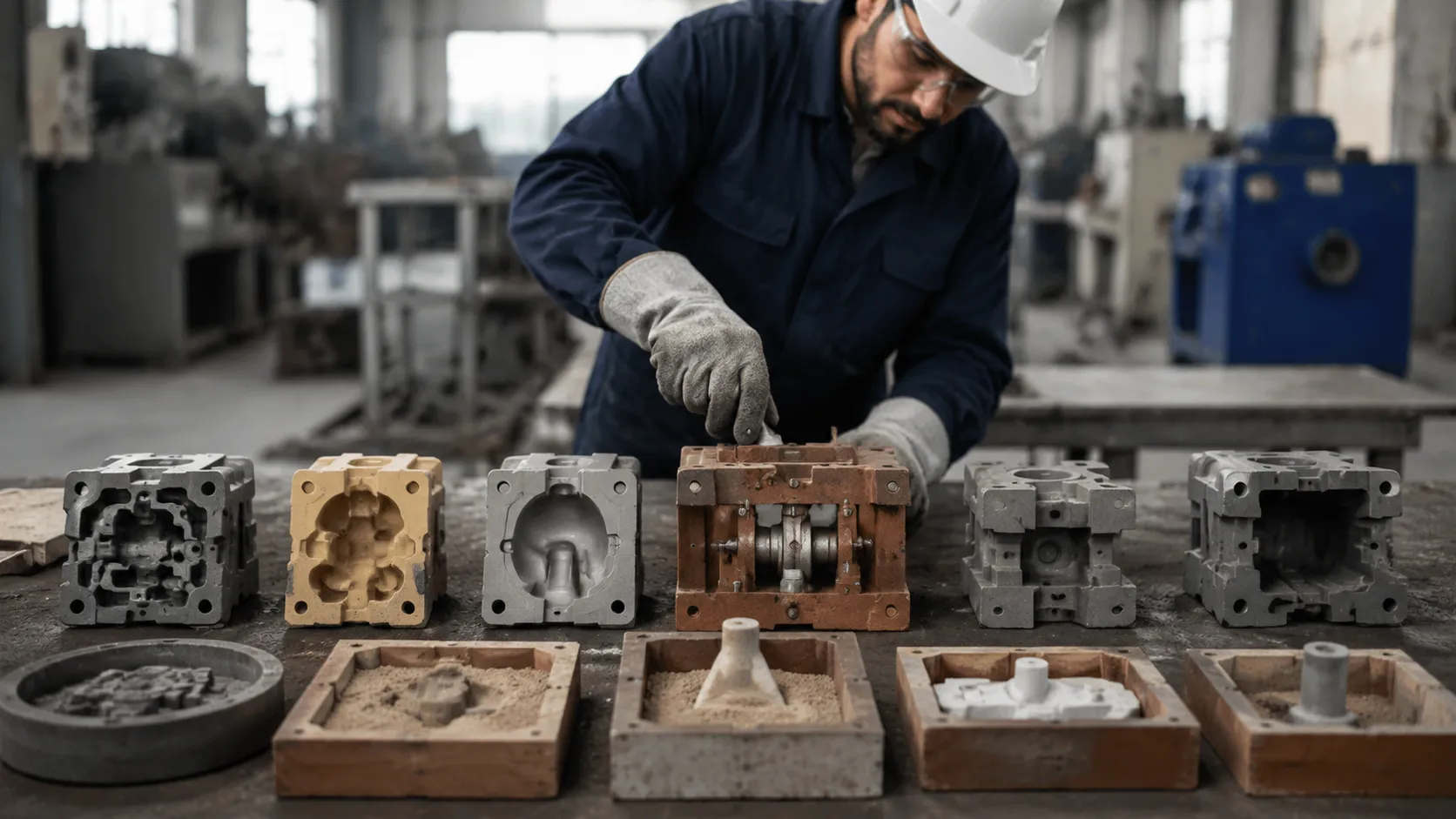
Choosing the right Gießarten für Ihr Projekt wirkt sich direkt auf Ihr Produktionsbudget, Ihren Zeitplan und die Produktqualität aus. Als Gießereienhersteller bewerten wir stets vier kritische Säulen, um Ihr Design mit dem idealen Metallgießprozess.
Produktionsmenge und -umfang
Ihr gesamtes Bestellvolumen bestimmt die Werkzeugvorbereitung. Für die Massenproduktion senken hochinitialkostenintensive Methoden wie Druckguss die Stückkosten erheblich. Für Prototypen in geringer Stückzahl oder massive Industriekomponenten bietet ein Sandform die beste Flexibilität.
Materialkompatibilität und Schmelzpunkte
Nicht jedes geschmolzenes Metall verhält sich in jedem Gießform. gleich. Eisenmetalle mit hohen Schmelzpunkten (wie Stahl) benötigen Sand- oder Keramikformen, während Nichteisenlegierungen (wie Aluminium, Magnesium und Zink) in dauerhaften Metallformen gedeihen.
Maßgenauigkeit und Oberflächenfinish
Wenn Ihr Bauteil strenge Toleranzen und eine glatte surface finish direkt aus der Form, cURL Too many subrequests. (Gießerei) minimiert den Bedarf an Nachbearbeitung. Sandguss, obwohl zuverlässig, ergibt eine rauere Oberfläche, die oft zusätzliche Nachbearbeitung erfordert.
Vergleichsmatrix der Gießverfahren
| Auswahlfaktor | Sand Casting | Investment Casting | cURL Too many subrequests. |
|---|---|---|---|
| Production Volume | cURL Too many subrequests. | cURL Too many subrequests. | Hoch bis Ultra-Hoch |
| cURL Too many subrequests. | Very Low | cURL Too many subrequests. | Very High |
| Dimensional Accuracy | cURL Too many subrequests. | High | Excellent |
| Surface Finish | cURL Too many subrequests. | Smooth | Excellent |
| Am besten geeignet für | Große Eisen-/Stahlteile | Komplexe, präzise Geometrien | Massenproduzierte Aluminiumteile |
Budgetbeschränkungen und Werkzeugkosten
Wir wägen die anfänglichen Werkzeuginvestitionen gegen die Stückkosten ab. Dauerhafte Stahlformen erfordern hohe Anfangsinvestitionen, bieten jedoch die niedrigsten Kosten pro Teil bei großem Produktionsvolumen. Im Gegensatz dazu hält der Sandguss die Anfangskosten nahezu bei null, verursacht jedoch höhere Arbeitskosten pro Einheit. Das Abwägen dieser finanziellen Rahmenbedingungen stellt sicher, dass Sie das qualitativ hochwertigste Teil zum richtigen Marktpreis erhalten.
Häufig gestellte Fragen zu Gießarten
Was ist die häufigste Art des Gießens?
Sand casting ist bei weitem die beliebteste Methode, die wir in der Gießereiherstellung verwenden. Sie macht den Großteil des weltweiten Gießvolumens aus, weil sie äußerst kosteneffizient ist, große Komponenten verarbeitet und mit fast jedem geschmolzenen Metall funktioniert.
Welcher Gießprozess bietet die beste Oberflächenqualität?
cURL Too many subrequests. (Wachsaushärtung) und Druckguss bieten die feinste Oberflächenqualität und höchste Maßgenauigkeit. Investitionsguss ist unsere Wahl für komplexe Geometrien, während Druckguss bei der Massenproduktion glatter, nicht-edler Teile gewinnt.
Was ist der Unterschied zwischen Sandguss und Druckguss?
Wir erklären die wichtigsten Unterschiede zwischen diesen beiden beliebten Gießarten unten:
| cURL Too many subrequests. | Sand Casting | cURL Too many subrequests. |
|---|---|---|
| cURL Too many subrequests. | Temporäre Sandform | Dauerhafte Stahlform |
| Production Volume | cURL Too many subrequests. | High-volume production |
| Surface Finish | Rauer, benötigt in der Regel Bearbeitung | Ausgezeichnet, glatte Gussoberfläche |
| cURL Too many subrequests. | Geringe Anfangskosten | Hohe anfängliche Werkzeuginvestition |
| Material Choice | Eisen- und Nichteisenmetalle | Überwiegend Nichteisenmetalle (Aluminium, Zink) |
Können alle Metalle in jeder Gießmethode verwendet werden?
Nein. Jeder Metallgießprozess hat Materialbeschränkungen basierend auf Schmelzpunkten und Formbeständigkeit. Zum Beispiel können wir hochschmelzende eisenhaltige Metalle wie Stahl in Standard-Druckgussverfahren nicht leicht verwenden, da die extreme Hitze die dauerhaften Stahlformen schnell zerstören würde. Im Gegensatz dazu kann eine Sandform fast jede Temperatur des geschmolzenen Metalls ohne Probleme aushalten.
 German
  English
  Spanish (Peru)
  Korean
  Spanish (Spain)
  Italian