
Discover practical insights and cost factors behind injection mold cost to optimize your manufacturing budget and improve product design.
The Anatomy of Injection Mold Costs: Breaking Down the Basics
When diving into injection mold cost, it helps to understand the core components that drive pricing. Four main factors shape the cost:
- Mold Design: This includes creating detailed blueprints and CAD models to ensure the mold meets your product specs.
- Material Selection: Choosing between aluminum, steel, or hybrid materials affects durability and upfront expenses.
- Machining: Precision cutting, drilling, and shaping of the mold base and cavities require skilled labor and advanced equipment.
- Tooling: This covers assembly, finishing, and testing to ensure the mold performs reliably during production.
Now, let’s talk about typical cost ranges. For single-cavity prototype molds, which are ideal for low-volume or design validation, prices usually fall between $1,000 and $5,000. On the other hand, multi-cavity production molds—built for larger scale manufacturing—can start around $25,000 and soar past $100,000, depending on complexity and location.
Don’t forget regional cost differences too: molds made offshore may be cheaper upfront but can carry risks in quality and lead times, while domestic tooling tends to cost more but offers tighter control and faster turnaround.
Finally, understanding per-part economics is crucial. Your upfront mold investment gets amortized over the number of parts produced. For small runs, mold costs might dominate each unit price, but as volume grows, the breakeven point arrives where per-part costs drop significantly, making high-volume production more economical.
Knowing these fundamentals sets the stage for smarter budgeting and better control over your injection molding expenses.
Key Factors Driving Injection Mold Pricing
Several factors directly impact the injection mold cost, shaping how much you’ll pay upfront and over time.
Mold Complexity and Geometry
The size of the mold, wall thickness, undercuts, and tight tolerances add to the cost. Complex shapes mean more precise machining and longer build times, which drives up prices.
Material Choices
Aluminum molds are cheaper and quicker to produce but wear out faster, making them ideal for prototypes or low-volume runs. Steel molds cost more initially but last longer, benefiting high-volume production with lower lifecycle costs.
Cavity Count and Runner Systems
Single-cavity molds are simpler and less expensive but limited in output. Multi-cavity molds produce more parts per cycle but cost more to make. Hot runner systems cut down waste and cycle time but add to mold tooling price, unlike cold runners which are simpler but less efficient.
Production Volume and Lead Time
Higher volumes spread the mold cost over more parts, lowering per-part prices. Rush orders or quick turnarounds add premium fees due to overtime or expedited shipping.
Vendor and Location Influences
Choosing domestic vendors often means higher upfront costs but better communication and reliability. Offshore molding can save money but comes with risks like longer lead times, quality control issues, and potential tariffs.
Emerging Variables
Sustainability options—like using recycled materials or eco-friendly coatings—can increase mold expenses but help meet regulatory incentives. New tech, such as 3D-printed mold inserts, offers cost savings and faster iterations but might not match the durability of traditional tooling.
Understanding these factors helps you balance cost, quality, and production needs for your injection molding project.
Step-by-Step Injection Mold Cost Estimation
Estimating injection mold cost might seem tricky, but breaking it down step-by-step makes it manageable. You can even use DIY calculator tools online to get quick ballpark numbers based on basic info like mold size, cavity count, and material choice.
DIY Calculator Guide
Start by gathering key details:
- Mold type (prototype vs. production)
- Cavity number (single or multi)
- Material (aluminum for lower cost vs. steel for longevity)
- Complexity (simple shapes cost less)
- Run volume (higher volumes reduce per-part costs)
Plug these into free calculators available from industry sites. Most use formulas based on average machining time, materials, and tooling expenses to give you a rough mold cost estimate. This is your starting point for budgeting.
Case Example 1: Low-Volume Gadget Prototype
Say you want a quick prototype for a small gadget. A single-cavity aluminum mold with minimal complexity usually costs around $1,500 to $3,000. Since volumes are low (under 1,000 parts), upfront mold cost dominates, but it’s an affordable way to test design and function before scaling up.
Case Example 2: High-Volume Automotive Component
For an automotive part made in the U.S., expect a multi-cavity steel mold costing $50,000 to $100,000+. This mold handles tens or hundreds of thousands of pieces, so the upfront investment spreads out over large runs. With bigger volumes, per-part mold cost drops substantially.
Interactive Cost Estimator Tools
Many molding vendors and industry websites offer interactive tools that allow you to enter specific project details and get instant cost estimates. Using these makes it easy to compare options, plan budgets, and understand where your money goes.
By following these steps and using available tools, you’ll have a clear, realistic picture of injection mold costs tailored to your project—be it a small prototype or a full-scale production run.
Strategies to Minimize Injection Mold Expenses Without Sacrificing Quality
Cutting injection mold costs doesn’t have to mean lowering quality. Here’s how to keep expenses in check while getting great results.
Design for Manufacturability (DFM) Tips
- Simplify part geometry to reduce machining time
- Avoid complex undercuts and thin walls that drive up mold complexity
- Use standardized mold components to speed up production and cut costs
- Plan for easy ejector and cooling system designs to prevent costly mold tweaks
Material and Tooling Alternatives
- Consider hybrid molds that combine steel and aluminum to balance cost and durability
- Use 3D-printed prototypes for early testing to catch design issues before costly metal tooling
- Select mold materials based on expected part volume to avoid overspending on steel molds for low runs
Negotiation Tactics
- Order molds in bulk or combine multiple projects to get better pricing
- Build strong vendor relationships to unlock discounts and faster turnaround
- Use value engineering by working with suppliers to suggest cost-effective design changes
Cost-Saving Innovations
- Modular molds let you swap out parts without rebuilding the whole mold, saving time and money on updates
- AI-driven design software helps optimize molds for efficiency and fewer trial molds
ROI Analysis for Mold Investments
- Calculate total cost of ownership including mold maintenance, scrap rates, and cycle time improvements
- Analyze breakeven volume to decide if investing in a higher-quality mold saves money over long runs
Using these strategies, you’ll reduce your injection mold cost without compromising on quality or performance.
Common Pitfalls and How to Avoid Them
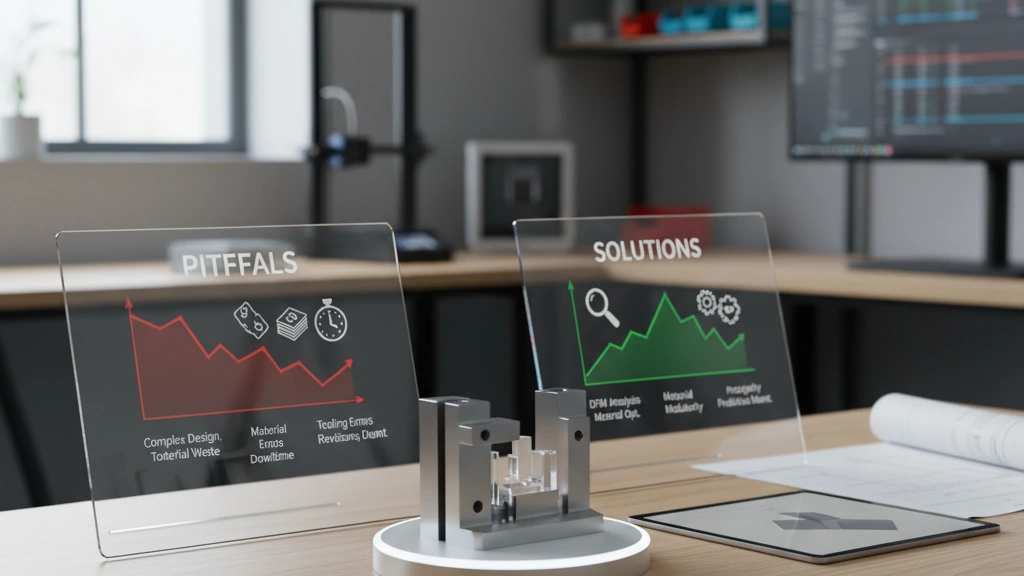
When dealing with injection mold costs, hidden fees can quickly add up. Watch out for surprise charges on freight, revisions, and testing—always set aside a contingency budget to cover these extras.
Another common mistake is underestimating your production scale. Picking the wrong mold type for your volume can lead to higher costs or delays down the road. Make sure you choose molds that fit your run size—prototype molds for low volume, multi-cavity molds for larger batches.
Don’t fall into the quality vs. cost trap. Cheap molds might save money upfront but can cause part defects, higher scrap rates, and more downtime. Stick with certified vendors who have a proven track record to avoid costly rework.
Here’s a real-world example: A client rushed to cut costs on mold design by skipping Design for Manufacturability (DFM) reviews. The result? Multiple costly revisions and molding delays. With DFM input upfront, these issues could have been caught early, saving time and money.
Key Takeaways:
- Budget extra for hidden fees like shipping and testing
- Match mold type to production volume
- Avoid cheap molds; prioritize trusted, certified vendors
- Invest in DFM early to prevent expensive changes later
Steering clear of these pitfalls keeps your injection mold cost manageable and your project on schedule.
The Future of Injection Mold Cost Management
Injection mold cost management is evolving fast, and keeping up with the latest trends can save you serious money down the line. Here’s what’s shaping the future:
Emerging TrendsAdditive manufacturing hybrids: Combining 3D printing with traditional molding can cut tooling time and lower initial expenses. You get complex parts faster without huge upfront costs.
Automation: Increased use of robotics and AI in mold production streamlines processes, reducing labor costs and mistakes. This means better pricing for you and faster delivery times.Sustainability ImpactsMore companies are opting for eco-friendly materials that meet stricter regulations but also reduce waste and energy use.
Regulatory incentives and tax breaks for using sustainable materials and processes are helping manufacturers offer competitive pricing while staying green.Partner with Vast
Ready to optimize your injection mold expenses? Reach out to Vast for a personalized cost audit and consultation tailored to your project. We’ll help you spot savings, avoid pitfalls, and get the best quality mold within your budget — all while keeping future trends in mind.
FAQs About Injection Mold Cost
Here are quick answers to some common questions about injection mold cost and pricing:
| Question | Answer |
|---|---|
| What’s the average cost of simple injection molds? | Typically $1,000 to $5,000 for single-cavity prototypes, depending on size and complexity. |
| How long does it take to build an injection mold? | Usually 4 to 8 weeks, though rush orders can speed this up with extra fees. |
| Can offshore outsourcing save costs? | Yes, often 20–50% cheaper, but consider shipping, quality control, and longer lead times. |
| What’s the difference between mold cost and per-part pricing? | Mold cost is the one-time upfront tooling expense; per-part cost covers materials, cycle time, and finish per unit. |
| How does Vast help with cost-effective molding? | We offer personalized cost audits, expert design tips, and vendor matching to minimize expenses without cutting quality. |
If you want to explore your injection mold cost in detail or get a custom quote, reach out to us anytime. We’re here to help you save smart and produce with confidence.
 English
  Spanish (Peru)
  German
  Korean
  Spanish (Spain)
  Italian