
Explore the PVC extrusion process with expert insights on equipment, materials, steps, and optimization for high-quality PVC profiles and pipes.
When it comes to manufacturing durable, versatile plastic products, understanding the PVC extrusion process is essential. Whether you’re producing pipes, window profiles, or industrial sheets, mastering how molten PVC is shaped through extrusion unlocks efficiency and consistent quality. In this guide, you’ll get a clear, expert breakdown of the entire PVC profile extrusion workflow—from raw materials and machine components to troubleshooting common defects. Ready to demystify one of the most cost-effective and scalable plastic shaping methods? Let’s dive into the heart of PVC extrusion and see how precision engineering drives superior results every time.
What is PVC and Why Extrusion?
PVC (Polyvinyl Chloride) is a versatile thermoplastic polymer widely used across industries. It comes in two main forms:
- Rigid PVC (uPVC): Strong, durable, and commonly used for construction, piping, and window profiles.
- Flexible PVC: Softened with plasticizers for applications like cables, flooring, and medical tubing.
Key Material Properties
| Property | Description | Benefit |
|---|---|---|
| Chemical Resistance | Resists acids, alkalis, and many solvents | Ideal for piping and chemical tanks |
| UV Stability | Maintains integrity under sunlight exposure | Perfect for outdoor use |
| Flame Retardancy | Self-extinguishing properties | Enhances safety in construction |
| Low Cost | Economical material compared to alternatives | Cost-effective manufacturing |
Why PVC Over Other Plastics?
Compared to PE (Polyethylene) and PP (Polypropylene), PVC stands out because of its:
- Superior rigidity (especially in uPVC form) supporting structural applications
- Better weather resistance and longer lifespan outdoors
- Built-in flame retardancy without extra additives
- Wide range of formulation options for flexible and rigid uses
This makes PVC the go-to plastic in construction, piping, and electrical industries across the United States.
Evolution of PVC Extrusion
PVC extrusion began in the 1930s with simple single-screw machines making pipes and profiles. Over decades, advances like twin-screw extruders and sophisticated tooling enhanced precision, output, and product consistency. Today’s extrusion lines deliver complex multi-layer profiles and high-volume pipes with tight tolerances—key to meeting modern market demands for quality and efficiency.
PVC extrusion combines material versatility with efficient manufacturing—explaining its dominance in both traditional and emerging applications.
Key Components of a PVC Extrusion Line
A successful PVC extrusion process starts with the right equipment working together smoothly. Here’s a quick rundown of the essential parts of a PVC extrusion line:
- Hopper and Feeding System: This is where raw PVC resin and additives are loaded. A steady, controlled feed ensures consistent quality and output.
- Extruder Types:
- Single-screw extruders are common for basic PVC profiles and pipes.
- Twin-screw extruders (either conical or parallel) offer better melting, mixing, and higher output—ideal for complex compounds or special PVC blends.
- Barrel, Screw, and Heaters: These components work together to melt and plasticize the PVC. The barrel houses the screw, and heaters maintain the precise temperature zones needed (usually between 160–200°C).
- Die and Tooling: Custom designed dies shape the molten PVC into desired forms—whether profiles, pipes, or sheets. Die design influences final product precision and surface finish.
- Downstream Equipment: After shaping, products pass through various finishing tools like:
- Calibration tanks and vacuum sizing for stabilizing shape and size
- Haul-off pullers that maintain constant pull speed
- Cutters for accurate length trimming
- Stackers for efficient collection and packaging
At Vast, we focus on high-efficiency twin-screw extruders that provide precise control over temperature and pressure. This means smoother runs, less waste, and better product consistency—critical for the demanding US market.
Step-by-Step PVC Extrusion Process
Here’s a clear overview of the PVC extrusion process, from raw materials to finished products:
Step 1: Raw Material Preparation
Start by mixing PVC resin with stabilizers, lubricants, fillers, and pigments. These additives ensure the final product has durability, color, and proper flow characteristics.
Step 2: Feeding and Compounding
The prepared mix is fed into the hopper. It goes through dry blending or pelletizing to create a uniform compound, ready for extrusion.
Step 3: Melting and Plasticization
Inside the extruder barrel, the mixture heats up and melts. The screw rotates to plasticize the PVC, making it fluid enough for shaping.
Step 4: Shaping Through the Die
Molten PVC is pushed through a custom extrusion die designed for profiles, pipes, or sheets. Die design and temperature control are critical to achieve the right shape and surface quality.
Step 5: Calibration and Cooling
The hot extrusion passes through calibration tanks or vacuum sizing systems to keep dimensions exact. Cooling happens here, often using water baths or air cooling.
Step 6: Haul-Off and Cutting
Next, haul-off pullers steadily pull the cooled PVC product forward. Cutters then slice it into the required lengths.
Step 7: Quality Inspection and Finishing
Finally, each piece undergoes inspection. Surface treatments, co-extrusion layers, or other finishing touches are added if needed before packaging.
Visual aids like diagrams or infographics often help explain this flow clearly, especially when training new operators or presenting process improvements.
Types of PVC Extrusion
PVC extrusion comes in several types, each serving different industry needs:
- Profile Extrusion: Used for making window frames, decking, fencing, and other construction profiles. These are often rigid PVC, valued for durability and weather resistance.
- Pipe and Tubing Extrusion: Common in plumbing, electrical conduits, and medical tubing. Pipes need precision in diameter and wall thickness, with rigid PVC dominating here for its strength and chemical resistance.
- Sheet and Film Extrusion: Flat sheets or thin films used in signage, packaging, or protective covers. These are often flexible or semi-rigid depending on additives and processing.
- Co-extrusion: This method produces multi-layered products, like profiles with a rigid PVC core and a flexible or decorative outer skin. It improves functionality and aesthetics without extra finishing.
- Foam PVC Extrusion: Lightweight, closed-cell foam panels for insulation, signage, or cladding. The foam reduces weight and adds thermal properties while keeping PVC’s durability.
Each extrusion type matches specific industry demands, and mastering these allows U.S. businesses to customize products efficiently with Vast’s advanced twin screw extruders and precision tooling.
Critical Process Parameters and Optimization
Controlling key parameters is a must for a smooth PVC extrusion process. Here’s what we focus on to keep quality high and rejects low:
| Parameter | Typical Range / Role | Optimization Tips |
|---|---|---|
| Temperature Zones | Barrel & die: 160–200°C | Maintain steady temps to avoid degradation or incomplete melting. Use precise heaters and sensors. |
| Screw Speed | Depends on line, usually moderate for uniform melt | Balance speed for consistent output without overheating or shear damage. |
| Pressure | Critical at die and barrel for shaping PVC | Monitor to prevent melt fracture or flow issues. Adjust to match screw speed and resin grade. |
| Throughput Rate | Matches screw speed and downstream equipment | Optimize to maximize efficiency without sacrificing product quality. |
Additives also play a big part:
- Impact Modifiers: Improve toughness without losing flexibility.
- Processing Aids: Help the PVC melt flow better and reduce die build-up.
- UV Stabilizers: Protect products from sunlight damage, crucial for outdoor use.
Energy Efficiency Tips
- Use modern, insulated barrels and dies to reduce heat loss.
- Implement variable frequency drives (VFDs) on motors to save power.
- Recover and reuse process heat where possible.
How Vast Optimizes for Zero Defects
At Vast, we fine-tune every setting using smart controls and real-time data monitoring. Our high-efficiency twin screw extruders allow precise control of temperature, pressure, and speed. This approach means fewer rejects, less downtime, and consistent, top-quality PVC profiles and pipes tailored for U.S. customers.
Keeping these critical parameters in check means reliable, high-performance PVC extrusion — exactly what the market demands.
Common Applications of Extruded PVC Products
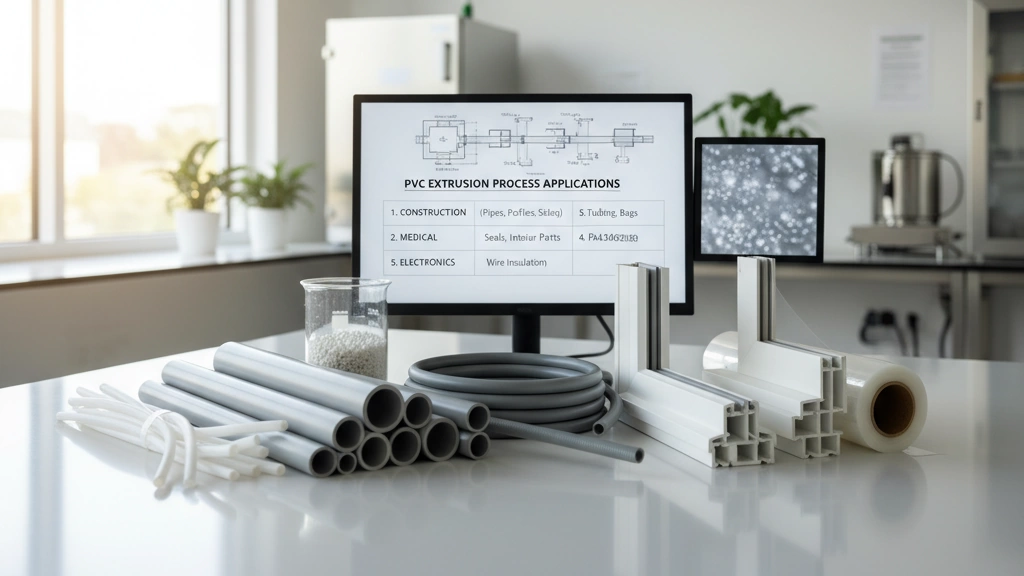
Extruded PVC products are everywhere in the U.S., serving a wide range of industries thanks to their durability, cost-effectiveness, and versatility. Here’s where you’ll commonly find them:
- Construction: PVC is a top choice for windows, doors, siding, and roofing. It’s weather-resistant, low maintenance, and holds up well over time, making it huge in residential and commercial buildings.
- Automotive: From seals and trims to wire insulation, PVC extrusion delivers flexible, tough components that withstand chemicals and heat inside vehicles.
- Medical: PVC tubing and IV lines are standard in healthcare because PVC is biocompatible and easy to sterilize. Extrusion allows precise, clean shapes critical to patient safety.
- Packaging & Consumer Goods: Rigid and flexible PVC products are used for packaging, containers, and various everyday items. Its clarity and strength stand out here.
Vast has supplied many high-demand sectors with specialized extrusion lines. For example, we’ve helped manufacturers ramp up production of PVC window profiles with tight tolerances and consistent quality, critical for the U.S. market’s demanding climate and building codes. Likewise, our extruders support fast, reliable production of medical-grade tubing, meeting FDA standards with ease.
PVC’s adaptability and Vast’s extrusion technology make these products dependable solutions across industries nationwide.
Troubleshooting Common PVC Extrusion Issues
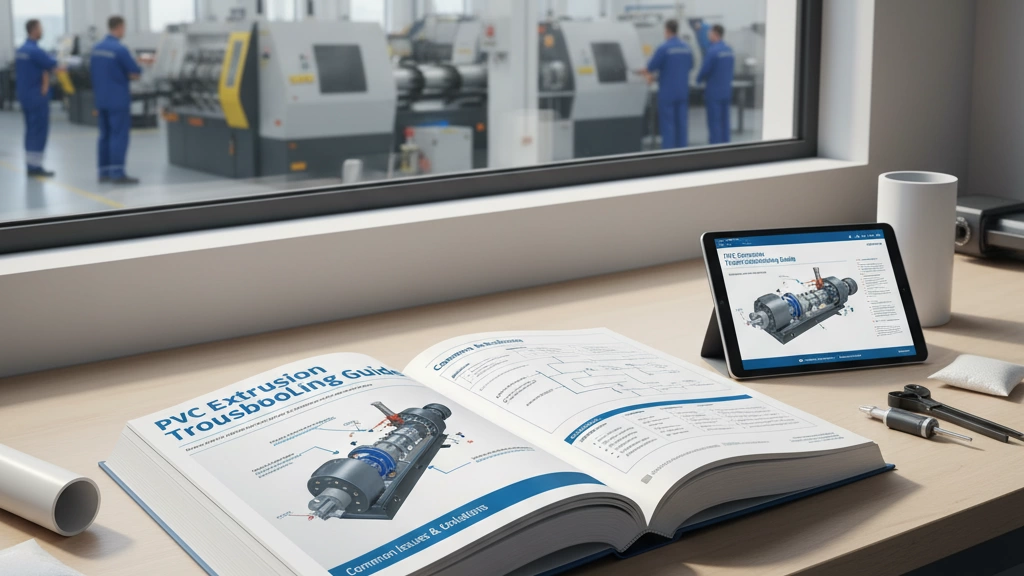
Even with top-notch equipment like Vast’s twin screw extruders, PVC extrusion can run into a few common problems. Here’s how to spot and fix them fast:
Surface Defects (Sharkskin, Melt Fracture)
- Cause: Too much shear or improper die design
- Fix: Lower screw speed, adjust shear rates, or redesign the extrusion die to improve flow
Dimensional Inconsistencies
- Cause: Poor vacuum calibration or unstable haul-off speeds
- Fix: Optimize vacuum sizing tanks and stabilize haul-off puller rates to keep dimensions tight
Yellowing or Degradation
- Cause: Excessive heat or insufficient stabilizers in PVC compounding additives
- Fix: Reduce melt temperature, increase heat stabilizers, and review pigment packages
Bubbles or Voids
- Cause: Moisture trapped in raw materials or inadequate drying
- Fix: Use better drying processes before extrusion and maintain dry resin storage
Poor Fusion Between Layers
- Cause: Low processing aid levels or insufficient back pressure in the extruder
- Fix: Add processing aids and increase screw back pressure for better melt blending
Quick Troubleshooting Table
| Issue | Common Cause | Simple Fix |
|---|---|---|
| Sharkskin Surface | High shear, poor die design | Adjust die, slow screw speed |
| Dimensional Variations | Weak vacuum, haul-off speed | Tune vacuum tank, steady haul-off |
| Yellowing/Degradation | High heat, low stabilizers | Lower temperature, add stabilizers |
| Bubbles/Voids | Moisture in resin | Improve drying, control moisture |
| Poor Layer Fusion | Low processing aids, pressure | Boost additives and back pressure |
Staying ahead with these fixes ensures your PVC profile production line runs smoothly, delivering top-quality profiles and pipes every time.
Advantages and Challenges of PVC Extrusion
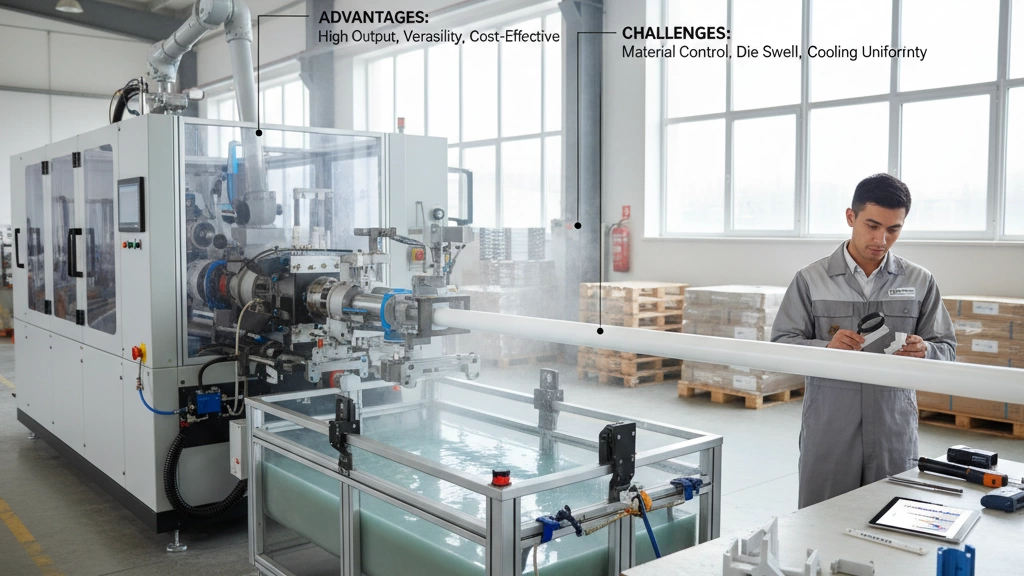
PVC extrusion offers several clear benefits that make it a go-to choice across many industries in the U.S.:
Advantages:
- High Speed Production: Extrusion lines can operate fast, helping meet demand without slowing down.
- Low Waste: The process is efficient, producing minimal scrap and leftover material.
- Recyclability: PVC scraps and off-cuts can often be reprocessed, reducing landfill impact.
- Customization: You can easily create different profiles, pipes, and sheets with tailored shapes and properties.
But, like any process, PVC extrusion isn’t without its challenges:
Challenges:
- Thermal Sensitivity: PVC can degrade if temperatures aren’t carefully controlled during extrusion.
- Environmental Concerns: Traditional PVC formulations sometimes include additives like lead stabilizers, raising eco and health flags.
The good news? The industry has moved on. Many manufacturers now use lead-free formulations and safer processing additives to address environmental issues.
Sustainability Trends:
- Increasing use of recycled PVC to lower virgin material consumption.
- Development of eco-friendly additives that improve stability without harmful chemicals.
- Emphasis on energy-efficient extrusion lines that cut power use and carbon footprint.
For U.S. customers, these improvements mean PVC extrusion offers a reliable, cost-effective option that’s also moving toward greener production.
Future Trends in PVC Extrusion
The PVC extrusion process is evolving fast, especially here in the U.S. Automation is a big deal now—Industry 4.0 technologies like IoT monitoring are helping operators track every part of the line remotely. This means faster responses to issues and better overall control, which cuts downtime and boosts product quality.
On the materials front, there’s a growing push toward advanced options. Bio-based PVC and nanocomposites are gaining traction, offering buyers greener, stronger products with improved performance. These innovations help meet stricter environmental standards while keeping costs reasonable.
High-speed extrusion lines paired with energy-saving tech are changing the game. Companies like Vast lead the way by delivering systems designed for maximum output with minimal energy use. This not only lowers production expenses but also supports sustainability goals — a must for many U.S. manufacturers and consumers today.
In short, the future of PVC extrusion blends smart automation, smarter materials, and smarter machines to keep up with market demand and environmental needs.
 English
  Spanish (Peru)
  German
  Korean
  Spanish (Spain)
  Italian