
Discover how vertical machining centers deliver precision CNC milling with high-speed spindles, advanced controls, and versatile applications.
If you’re involved in precision manufacturing, you already know that the vertical machining center (VMC) is the workhorse driving efficiency and accuracy on the shop floor. But what exactly makes a VMC indispensable for modern milling and drilling? Whether you’re an engineer, shop owner, or manufacturing enthusiast, mastering the ins and outs of a vertical machining center is the key to unlocking faster cycle times, tighter tolerances, and smarter workflows. In this guide, we cut through the jargon and deliver clear, practical insights on how these CNC powerhouses can transform your production—no fluff, just the facts you need to make informed decisions and elevate your machining game.
The Fundamentals: What Makes a Vertical Machining Center Tick
If you’ve ever wondered how a vertical machining center (VMC) works or why it’s such an essential tool in manufacturing, you’re in the right place. Let’s break down the basics, from its evolution to the core parts and how it operates in real-world settings.
Historical Evolution and Key Advancements
The VMC has come a long way from early manual milling machines. The shift to CNC vertical mills in the 1970s revolutionized precision machining by automating complex cutting tasks. Over the years:
- Spindle speeds increased dramatically, allowing high-speed VMC spindles to handle delicate, detailed work.
- Tool changers evolved from manual swaps to fully automated VMC tool changers with multiple tools ready to go.
- Enhanced rigidity and thermal controls improved milling accuracy and machine lifespan.
- Modern control systems added user-friendly programming interfaces, transforming setup and operation.
These advancements make vertical machining centers versatile and reliable for countless industries today.
Core Components Breakdown
Understanding a VMC’s key parts explains why it works so efficiently:
- Spindle: The heart of the machine, rotating the cutting tool at variable speeds, from a few hundred to tens of thousands of RPM.
- Tool Changer: Automatically swaps tools during machining, minimizing downtime and boosting productivity.
- Axes (X, Y, Z): These three primary axes move the tool and/or workpiece precisely in 3D space, enabling complex shapes and features.
- Base: The heavy, stable foundation absorbs vibrations and ensures the machine’s rigidity and accuracy.
- Enclosure: Shields operators from chips and coolant spray while containing debris for safer, cleaner operations.
How It Works: Loading, Programming, and Operations
Operating a VMC involves a blend of setup, programming, and execution:
- Loading: The operator mounts the workpiece securely on the table or fixture.
- Programming: Using CNC software, the machining path and tool changes are coded—often with CAM programs generating G-code for precision.
- Operations: Once started, the spindle spins the cutting tool, moving along programmed axes. The tool changer swaps tools as required, allowing multi-step machining in one setup.
From rough cuts to finishing passes, the VMC delivers precision, speed, and repeatability, making it indispensable in modern machining workflows.
Getting these fundamentals right helps unlock the full potential of vertical machining centers, setting the stage for the advanced specs and diverse applications we’ll explore next.
Types of Vertical Machining Centers: Finding the Right Fit for Your Needs

When choosing a vertical machining center (VMC), it’s important to know the different types available so you can pick one that suits your shop’s needs.
Fixed-Column vs. Moving-Column Designs
Fixed-column VMCs keep the column stationary while the table moves along the axes. They’re usually more rigid and better for heavier workpieces. Moving-column designs have the column move along one axis, often allowing for larger parts and more flexibility but sometimes at a slight cost to rigidity.
High-Speed vs. Heavy-Duty Models
High-speed VMCs focus on fast spindle speeds and quick tool changes, perfect for precision work like aerospace or electronics. Heavy-duty models prioritize power and torque to handle tougher materials, which makes them ideal for automotive or mold making where strength is key.
Compact and Bridge-Type Variants
Compact VMCs are space-saving machines designed for smaller shops or lighter jobs without sacrificing too much power. Bridge-type designs offer extra rigidity with a support structure over the work area—great for larger parts or jobs demanding high stability.
Customization Options
Many VMC machines offer options like multi-tool changers, advanced automation, or specific spindle types to tailor the machine exactly to your production needs. Whether you want added axes, automation for lights-out machining, or special cooling systems, customization makes your VMC work smarter for you.
Knowing these types helps you match your budget and production demands to the right vertical machining center.
Key Specifications and Features: Specs That Drive Performance
When picking a vertical machining center (VMC), the specs matter because they directly impact how well the machine performs. Here’s a quick rundown of the essentials:
| Feature | What It Means | Why It Matters |
|---|---|---|
| Spindle Power & Speed | Determines cutting force and material range; rated in HP and RPM | Higher power handles tougher materials; faster speeds boost productivity |
| Tooling System | Types of tool changers and tool capacity | Quick tool changes save time, support complex jobs |
| Accuracy & Rigidity | Precision of cuts, machine vibration control | Ensures tight tolerances, long tool life |
| Thermal Control | Methods to manage heat build-up (coolant, materials) | Prevents warping, keeps parts within spec |
| Control System & UI | User interface and CNC programming ease | Intuitive controls reduce programming errors, speed learning |
| Automation & Productivity | Features like pallet changers, probing, and software integration | Boosts uptime, reduces manual intervention |
Spindle Power and Speed
A strong spindle lets you cut harder materials like steel with ease. Typical spindles range from 10 to 30+ HP with speeds from 8,000 to 20,000 RPM or more in high-speed models. Fast spindles combined with a smart tool changer reduce cycle times dramatically.
Accuracy, Rigidity, and Thermal Control
Precision matters in industries like aerospace and medical. Look for VMCs with a rigid cast iron base and thermal compensation technology to maintain accuracy through long runs—even as parts and machines heat up.
Control Systems and User Interface
Modern VMCs come with easy-to-learn CNC controls with touchscreen interfaces. These reduce mistakes, speed up setup, and offer customizable programming. Connectivity for remote monitoring and software updates is a big plus here.
Productivity Enhancers and Automation
Options like robotic loaders, pallet changers, and in-process probing make a big difference in daily output. Automation not only increases throughput but also reduces operator fatigue and errors.
Getting the right specs means matching your workflow, material needs, and output goals with a machine built to handle those demands without downtime or costly errors.
Applications Across Industries: Where VMCs Shine
Vertical machining centers (VMCs) are incredibly versatile, making them a go-to choice in many U.S. industries where precision and productivity matter.
Aerospace and Defense Precision Parts
In aerospace and defense, the demand for tight tolerances and complex geometries is high. VMCs handle these challenges with ease, machining lightweight alloys and high-strength materials used in aircraft components and military equipment.
Automotive and EV Manufacturing
The automotive sector, especially with the rise of electric vehicles (EVs), relies heavily on VMCs for rapidly producing engine parts, chassis components, and battery housings. Their ability to switch between tools quickly helps keep assembly lines moving efficiently.
Medical and Electronics Micro-Machining
For medical devices and electronics, precision is everything. VMC machines excel in micro-machining tiny features on implants, surgical instruments, and circuit boards—where accuracy down to microns matters.
Mold and Die Production
Mold makers and die shops prefer VMCs for creating detailed molds and dies used in plastics, metal casting, and stamping. Rigidity and thermal control in these machines help maintain the sharp detail needed for quality molds.
Case Study: Throughput Improvements
One Midwest manufacturer of automotive parts reported a 40% increase in throughput after upgrading to a high-speed VMC with a faster tool changer and advanced control system. This upgrade cut cycle times and reduced downtime, proving how the right vertical machining center can directly boost efficiency.
These examples show why vertical machining centers remain a staple for U.S. manufacturers aiming for precision, speed, and reliability across a wide range of applications.
Vertical vs. Horizontal Machining Centers: A Head-to-Head Comparison
Design and Setup Differences
Vertical machining centers (VMCs) have a vertical spindle orientation, meaning the cutting tool moves up and down. Horizontal machining centers (HMCs) have a horizontal spindle, allowing parts to be loaded from the side. This difference changes the way chips fall and how parts are clamped.
- VMCs are simpler to set up and typically take up less floor space.
- HMCs often require more room but provide better chip evacuation naturally, thanks to gravity.
- Horizontal machines usually handle larger, heavier parts; vertical ones are great for smaller, more complex pieces.
Pros and Cons Table
| Feature | Vertical Machining Center | Horizontal Machining Center |
|---|---|---|
| Cost | Lower upfront cost | Higher upfront cost |
| Chip Management | Chips fall downward, may need manual clearing | Chips drop away from tool automatically |
| Part Size | Best for small to medium parts | Great for large, heavy pieces |
| Setup Flexibility | Easier for quick changes and prototyping | Less flexible, more setup time |
| Maintenance | Simpler maintenance routines | More complex due to design |
Choosing Vertical for Flexibility and Prototyping
If you’re running a shop in the U.S. that values quick turnaround and versatility, a vertical machining center is a solid choice. They’re user-friendly, affordable, and ideal for prototyping or small batch production. Plus, many VMC models come with intuitive controls and compact layouts perfect for tight floor plans.
For local manufacturers needing a reliable, adaptable CNC vertical mill, VMCs hit the sweet spot between performance and cost-efficiency.
Best Practices for Operation and Maintenance: Maximizing Uptime
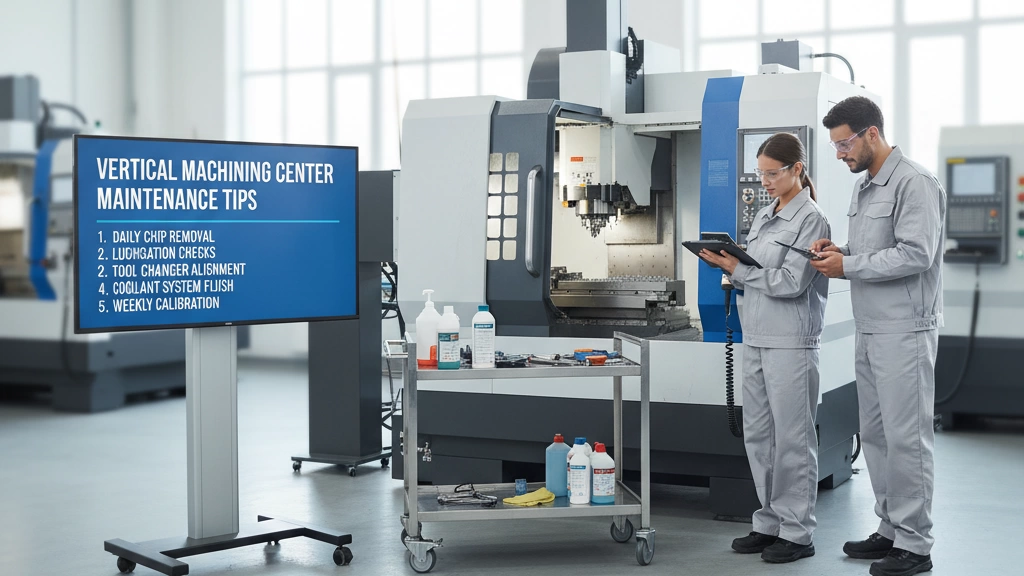
Keeping your vertical machining center running smoothly is all about smart operation and regular maintenance. Here’s how to get the most out of your VMC and minimize downtime.
Setup and Programming Tips
- Double-check setups: Always verify workpiece alignment and tool offsets before starting. A little extra time here prevents costly errors.
- Use proven programs: Stick to tested CNC programs or simulate new ones first to avoid crashes or tool damage.
- Leverage tool changers: Organize your VMC tool changer wisely to reduce changeover times during production.
- Keep tooling sharp: Dull tools hurt accuracy and increase cycle time, so replace or re-sharpen as needed.
Maintenance Schedules and Checks
- Daily checks: Clean the machine surface, remove chips, and check coolant levels.
- Weekly upkeep: Inspect tool holder and spindle condition, and lubricate guide rails.
- Monthly tasks: Test axis backlash, check belt tension, and inspect electrical connections.
- Annual overhaul: Have a qualified technician perform a full inspection and calibration.
Troubleshooting Common Issues
- Tool wear or breakage: Monitor tool life and address vibrations or cutting forces causing damage.
- Inconsistent cuts: Check machine leveling, spindle runout, and tool locking mechanisms.
- Program errors: Review G-code for syntax mistakes or incorrect parameters, especially with complex 3-axis machining.
- Coolant problems: Confirm coolant flow rates and replace filters regularly to avoid overheating or poor finishes.
Safety Protocols Compliance
- Emergency stops: Familiarize all operators with emergency button locations and proper procedures.
- Personal Protective Equipment (PPE): Enforce the use of safety glasses, hearing protection, and gloves.
- Regular training: Conduct safety refreshers focusing on machine guards, lockout/tagout, and handling chips and coolants safely.
- Keep the area clear: Ensure work zones are clean and free of obstacles to prevent slips or trips near the VMC.
Following these simple but effective practices keeps your vertical machining center productive, reliable, and safe – exactly what you need for consistent manufacturing success.
Future Trends: The Next Generation of VMC Technology
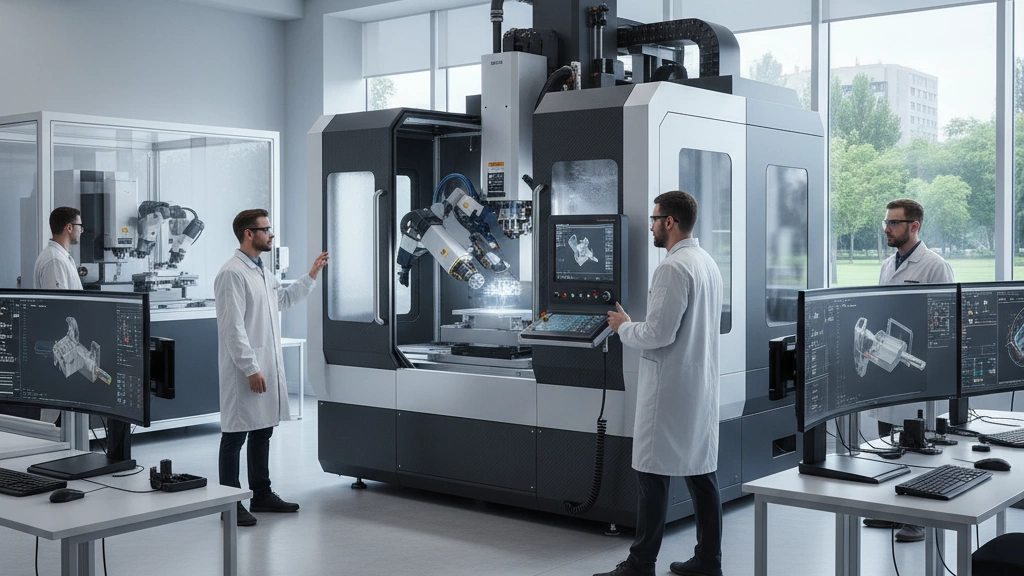
The world of vertical machining centers is evolving fast, driven by new tech that helps shops stay competitive and efficient. Here’s what’s shaping the future of VMCs in the U.S. market.
AI and IoT for Predictive Maintenance
Smart machines are becoming the norm. With AI (artificial intelligence) and IoT (Internet of Things) sensors, vertical machining centers can now monitor themselves in real-time. This means spotting wear, potential failures, or performance drops before they cause downtime. For U.S. manufacturers looking to cut unexpected stops, this predictive maintenance is a game-changer.
Hybrid and Multi-Tasking VMCs
Gone are the days when a VMC just milled or drilled. The next-gen VMCs combine multiple functions—turning, milling, grinding—all in one machine. These hybrid VMCs save floor space and boost productivity by cutting down on tool changes and setups. For businesses focused on versatility and quick turnaround, multi-tasking machines bring real value.
Sustainability and Energy Efficiency
Sustainability is front and center for U.S. manufacturers today. New models emphasize energy-saving motors, smart thermal management, and even regenerative braking systems that recycle energy. These features help reduce electricity bills and lower environmental impact—two major benefits as green standards tighten and consumers demand eco-friendly practices.
Market Outlook and Growth Projections
The VMC market is expected to grow steadily in the U.S., driven by demands in aerospace, automotive, and medical industries. Rising adoption of automation and IoT ensures vertical machining centers will become smarter and more connected. Investing in the latest VMC technology not only prepares your shop for today’s challenges but also future-proofs it against evolving manufacturing needs.
Stay tuned to these trends to make smart, cost-effective choices when upgrading or buying your next vertical machining center.
Choosing the Right VMC: Buyer’s Checklist and Vast Recommendations
Picking the right vertical machining center (VMC) is all about matching your needs with the right specs, support, and budget. Here’s a quick buyer’s checklist to keep you on track:
Evaluation Criteria: Specs, ROI, and Vendor Support
- Specs that matter: Look for spindle power and speed that suit your materials and production volume. Check tool changer capacity and machine accuracy too.
- Return on Investment (ROI): Consider how the VMC will boost your throughput and reduce downtime. A higher upfront cost might pay off with faster cycles and less maintenance.
- Vendor support: Good tech support and easy access to service are key. Choose vendors who offer training, quick parts replacement, and ongoing consultation.
Budget Tiers: Entry to Premium
- Entry-level: Great for small shops or light production with basic features but solid build quality. Perfect if you’re starting or prototyping.
- Mid-tier: Balances speed, precision, and automation for growing businesses needing more versatility.
- Premium: High-end VMCs pack the best in spindle power, rigidity, and advanced controls—ideal for heavy-duty or high-precision industries like aerospace or automotive.
Vast Product Lineup and Services
Many U.S. suppliers now offer a wide range of VMCs—from compact 3-axis vertical milling centers to heavy-duty bridge-type machines. They also back you with services like on-site installation, custom tooling solutions, and software upgrades to keep your equipment running smooth.
Call to Action: Tools and Demos
Before buying, request demos or virtual walkthroughs to see the machine in action. Use product configurators or ROI calculators to fine-tune your choice. Don’t hesitate to ask for sample parts or testing with your specific materials. This hands-on approach helps you pick the perfect VMC for your shop’s unique needs.
Choosing wisely means you’ll get the most from your CNC vertical mill—improving productivity, quality, and profitability.
 English
  Spanish (Peru)
  German
  Korean
  Spanish (Spain)
  Italian