
What is Austenite Steel?
Austenite steel represents the most widely used category within the stainless steel family, primarily encompassing the 300 series (such as 304 and 316) and the 200 series. What sets this material apart is its distinct face-centered cubic (FCC) structure. Unlike ferritic or martensitic steels, this atomic arrangement remains stable at room temperature, giving the metal its characteristic ductility and non-magnetic properties in the annealed condition.
The stability of this structure relies heavily on specific alloying elements known as austenite stabilizers. The most critical components are:
- Chromium: Provides the essential passive film for corrosion protection.
- Nickel: Stabilizes the austenitic structure and enhances formability.
Because of this unique chemical balance, austenitic stainless steel serves as the industry workhorse for applications requiring superior corrosion resistance and mechanical toughness.
At Vast, we specialize in the precision manufacturing of these specific grades. Utilizing the silica sol investment casting process, we produce high-integrity components from SUS 304 cURL Too many subrequests. SUS 316 stainless steel. Our approach ensures that the inherent benefits of austenite steel—from chemical durability to aesthetic finish—are fully realized in every custom part we cast.
Key Properties and Advantages of Austenite Steel
We rely on austenite steel for our most demanding projects because it offers a unique combination of durability and versatility. As the most widely used category of stainless steel, its popularity stems from a specific set of physical and chemical characteristics that outperform other alloy groups in harsh environments.
Unmatched Corrosion Resistance
The primary reason industries choose austenite steel is its exceptional ability to resist oxidation. The high chromium content reacts with oxygen to form a passive, self-healing oxide layer on the surface. This makes it a corrosion resistant steel capable of withstanding:
- General Corrosion: Excellent stability in atmospheric conditions and fresh water.
- cURL Too many subrequests. High resistance to pitting and crevice corrosion, particularly in chloride-rich environments like marine settings.
Non-Magnetic and Mechanical Excellence
Unlike ferritic or martensitic grades, non-magnetic stainless steel in the austenitic family retains a non-magnetic signature when in the annealed condition. This is critical for applications involving sensitive electronic equipment or navigation hardware. Beyond magnetism, the face-centered cubic structure provides superior mechanical traits:
- Ductility & Formability: It can be deeply drawn and formed into complex shapes without cracking.
- Toughness: It maintains high impact strength, preventing brittle failure even under stress.
Fabrication and Temperature Versatility
From a manufacturing standpoint, this material is highly adaptable. It is a weldable stainless steel cURL Too many subrequests. milled steel cURL Too many subrequests.
cURL Too many subrequests., austenite steel cURL Too many subrequests. cURL Too many subrequests. cURL Too many subrequests.
cURL Too many subrequests.
cURL Too many subrequests. austenite steel cURL Too many subrequests. cURL Too many subrequests. cURL Too many subrequests.
cURL Too many subrequests.
cURL Too many subrequests. cURL Too many subrequests. cURL Too many subrequests.
- cURL Too many subrequests. cURL Too many subrequests.
- cURL Too many subrequests. cURL Too many subrequests. 316 stainless steel cURL Too many subrequests.
High-Performance Variants and Mechanical Properties
Beyond the standard grades, we also handle stabilized versions like 321 and 347, which use Titanium or Niobium to prevent intergranular corrosion at high temperatures. These stainless steel grades are essential for exhaust manifolds and high-heat exchangers.
Mechanically, austenitic stainless steel is renowned for its high ductility and toughness, even at cryogenic temperatures. Typical properties for annealed 304 include a tensile strength of roughly 515 MPa and yield strength of 205 MPa, with elongation often exceeding 40%. Because these materials work-harden rapidly, secondary processing requires rigid setups. Whether we are performing CNC milling or turning operations using essential lathe components explained for precision machining, maintaining the correct feed rates is vital to prevent surface hardening during finishing.
Matching Grades to Environments:
- Atmospheric/Food Processing: 304 Grade
- Marine/Chloride Environments: 316 Grade
- High Temperature/Welded Assemblies: 321 or 347 Grade
Our Precision Investment Casting Capabilities for Austenite Steel
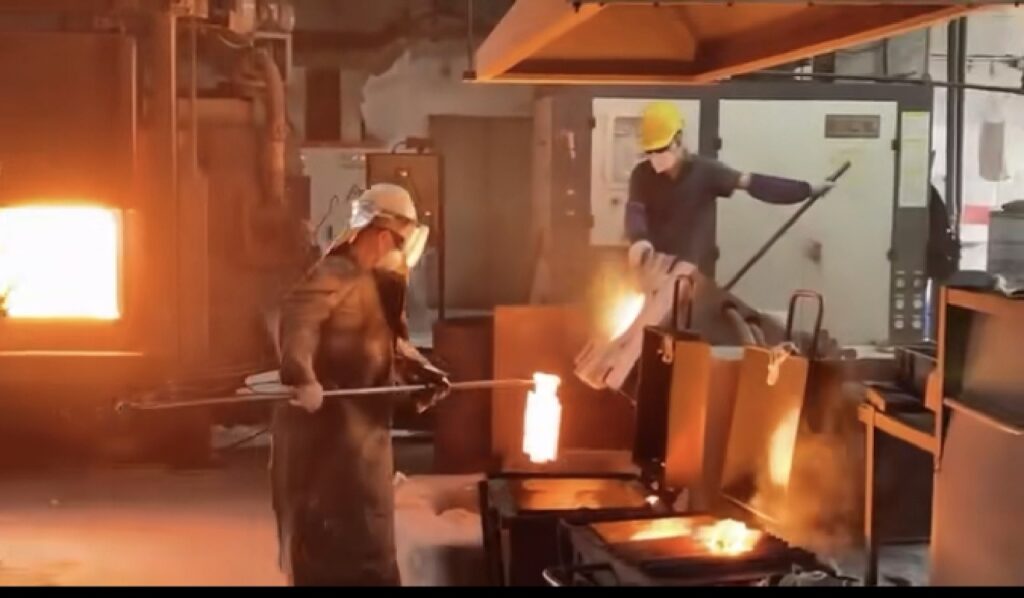
At Vast, we specialize in the silica sol investment casting process, a superior variation of the traditional lost-wax casting method. This technique is the industry standard for producing high-quality austenite steel components because it delivers a far better surface finish and dimensional stability compared to water glass casting. By managing in-house tooling and mold creation, we maintain strict control over every variable, ensuring that the final stainless steel parts match your exact design specifications.
Our manufacturing workflow is designed for high-precision engineering. We combine near-net shape casting with advanced secondary operations to achieve exceptionally tight dimensional accuracy, reaching tolerances as fine as ±0.002 mm. This level of precision is critical for industries requiring complex geometries and tight fits. We also excel in producing lightweight, intricate designs, capable of casting thin-wall components with a minimum thickness of just 0.020″ (0.5 mm) without compromising structural integrity.
To support your project from concept to mass production, we offer a comprehensive range of manufacturing services:
- Production Scalability: We handle everything from low-volume custom orders to large-scale industrial runs with high annual capacity.
- Rapid Development: cURL Too many subrequests. master rapid prototyping techniques and 3D printing to validate designs before committing to hard tooling.
- Secondary Operations: Our facility is equipped for precision CNC machining, allowing us to mill, drill, and tap features that cannot be cast directly.
- Quality Assurance: Every batch undergoes rigorous cURL Too many subrequests. and testing to verify material composition and dimensional accuracy.
By integrating casting with cutting tools and milling best practices, cURL Too many subrequests.
cURL Too many subrequests.
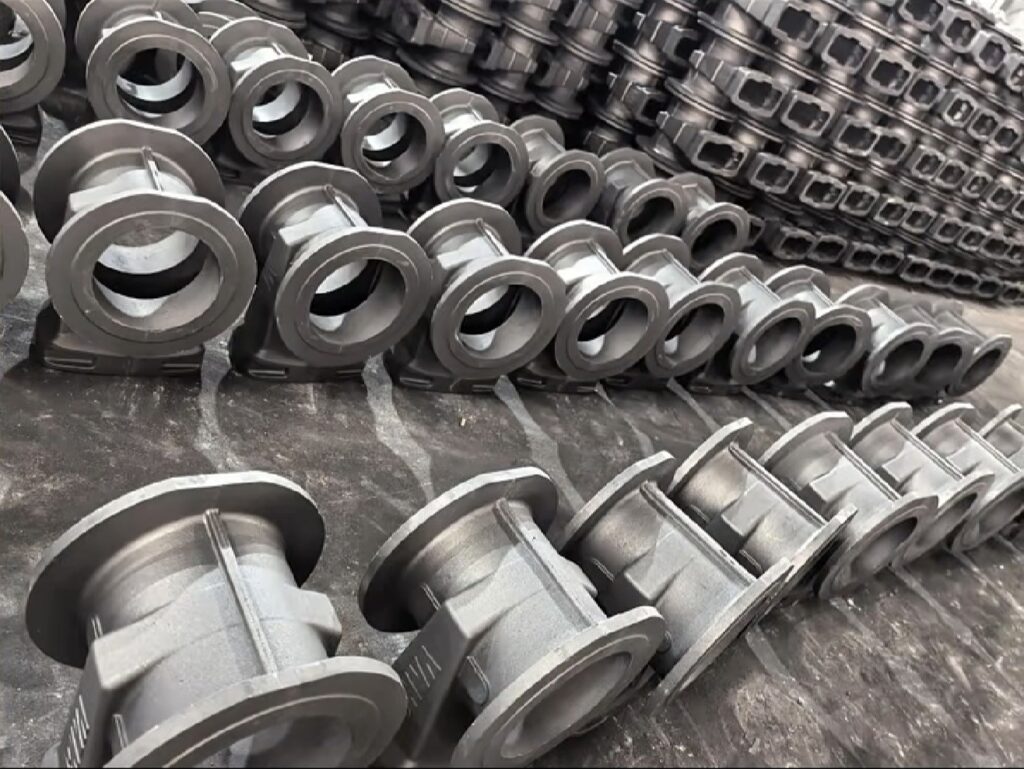
cURL Too many subrequests. austenite steel cURL Too many subrequests. 304 stainless steel cURL Too many subrequests. 316 stainless steel cURL Too many subrequests.
cURL Too many subrequests.
cURL Too many subrequests. cURL Too many subrequests. cURL Too many subrequests. 316 stainless steel, cURL Too many subrequests.
- cURL Too many subrequests. cURL Too many subrequests.
- cURL Too many subrequests. cURL Too many subrequests.
- cURL Too many subrequests. cURL Too many subrequests.
cURL Too many subrequests.
cURL Too many subrequests. cURL Too many subrequests. is the standard for preventing product contamination and withstanding acidic cleaning agents.
- Fluid Handling: We produce complex valve and pump assemblies used to transport chemicals and food products.
- Hygienic Fittings: Faucets, clamps, and pipe fittings designed with smooth surfaces to prevent bacterial growth.
- Processing Equipment: Durable machinery components that maintain structural integrity under varying temperatures.
Automotive and Machinery
Our precision casting capabilities support the automotive and industrial machinery sectors by delivering components with tight tolerances and excellent fatigue resistance.
- Engine & Chassis: Precision brackets and mounts that require high ductility.
- Drive Components: We manufacture intricate parts, including those requiring mastering shaft splines design for reliable power transmission.
- General Machinery: Robust parts for industrial automation and heavy equipment.
Medical and Specialized Industrial
The biocompatibility of specific austenite steel grades makes them suitable for the medical field, while their heat resistance serves critical industrial safety applications.
- cURL Too many subrequests. The investment casting process captures fine details necessary for surgical tools and orthopedic components.
- Firefighting & Safety: High-reliability valves and impellers used in fire suppression systems where failure is not an option.
- cURL Too many subrequests. Our process handles intricate internal features, such as blind holes design and machining, ensuring functional accuracy for critical assemblies.
Why Choose Vast for Your Austenite Steel Projects
With over 20 years of experience in the precision investment casting industry, we have established ourselves as a reliable partner for clients across the United States and Europe. We specialize in manufacturing high-quality austenite steel components that meet strict international standards. Our team understands the specific needs of Western markets, ensuring that every shipment meets your exact specifications.
We prioritize speed without sacrificing quality. Our streamlined process allows for rapid prototyping, delivering samples in as little as cURL Too many subrequests.. When you have a project ready, we provide a comprehensive quote within cURL Too many subrequests.. To support your scalability, we offer significant cost advantages, including free tooling for orders exceeding 1,000 pieces.
Quality Assurance and Surface Finish
Our manufacturing utilizes the silica sol process, which is superior to water glass methods for achieving a fine surface finish and precise dimensions. We are committed to delivering seamless castings transition solutions that eliminate common defects found in lower-grade casting methods.
cURL Too many subrequests.
- cURL Too many subrequests. cURL Too many subrequests.
- cURL Too many subrequests. cURL Too many subrequests. austenitic stainless steel.
- cURL Too many subrequests. cURL Too many subrequests.
- Precision: cURL Too many subrequests.
cURL Too many subrequests.
cURL Too many subrequests.
cURL Too many subrequests. austenite steel cURL Too many subrequests.
cURL Too many subrequests.
While austenitic stainless steel cURL Too many subrequests. solution annealing cURL Too many subrequests. passivation cURL Too many subrequests.
cURL Too many subrequests.
cURL Too many subrequests. SUS 304 cURL Too many subrequests. SUS 316 cURL Too many subrequests. carbon steel vs. alloy steel differences is also essential for selecting the right metal for non-stainless components.
Comparative Analysis: Stainless Families
To help you understand where austenite steel fits in the broader spectrum, we provide a clear comparison of the three main stainless families used in casting.
| Feature | Austenitic (300 Series) | Ferritic (400 Series) | Martensitic (400 Series) |
|---|---|---|---|
| cURL Too many subrequests. | Non-Magnetic (Annealed) | Magnetic | Magnetic |
| Hardenable by Heat | No (Cold Work Only) | No | Yes |
| cURL Too many subrequests. | Excellent (Best) | Moderate | Good |
| Ductility | High | cURL Too many subrequests. | Low |
| Primary Use | Marine, Chemical, Food | Automotive Exhaust, Trim | Cutlery, Wear Parts |
Key Engineering Benefits:
- Design Freedom: Our silica sol process allows for complex geometries that are difficult to machine from solid stock.
- Surface Finish: We offer satin or mirror-grade hand polishing to meet aesthetic and functional needs.
- Testing: Every production run is tested and certified to ensure compliance with material specifications.
FAQs About Austenite Steel
What is the main difference between austenitic and ferritic stainless steel?
The primary difference lies in the microstructure and alloy content. cURL Too many subrequests. (like the 300 series) contains significant nickel and chromium, resulting in a Face-Centered Cubic (FCC) structure. This makes it tougher, more ductile, and significantly more corrosion-resistant than ferritic steel, which typically lacks nickel. While ferritic grades are magnetic, austenitic grades are generally cURL Too many subrequests. and better suited for corrosive environments. When specifying materials, consulting a clear engineering drawings guide ensures we select the exact grade structure your project requires.
Is austenitic stainless steel magnetic?
In its annealed condition, austenite steel is non-magnetic. However, the casting process or subsequent cold working can sometimes induce a slight magnetic response due to minor microstructural changes. If your application requires the component to be completely non-magnetic, we can perform solution annealing to restore the material to a fully non-magnetic state.
Can austenite steel be hardened by heat treatment?
No, unlike martensitic grades, austenitic stainless steel cannot be hardened by heat treatment. For these alloys, heat treatment is used strictly for annealing—relieving internal stresses and dissolving carbides to maximize corrosion resistance. To increase strength or hardness, we rely on cold working (work hardening) rather than thermal hardening processes.
Why is 316 grade preferred over 304 for marine applications?
While 304 stainless steel is a versatile standard, 316 stainless steel includes the addition of Molybdenum (typically 2-3%). This element provides superior resistance to chloride pitting and crevice corrosion, which are common issues in saltwater environments. For marine hardware like anchors, clamps, and deck fittings, we recommend 316 grade to prevent rust and ensure long-term durability in aggressive sea conditions.
 Spanish (Peru)
  English
  German
  Korean
  Spanish (Spain)
  Italian