
Discover expert guidance on friction fit assemblies including tolerance charts, pressure calculations, and precision components for durable mechanical joints.
If you’ve ever struggled with parts slipping or fasteners failing under pressure, friction fit might be the simple, powerful solution you’re missing. This mechanical fastening technique relies on the subtle but strong grip created when two components are sized just right—no bolts, no adhesives, just precision and pressure. Whether you’re assembling shafts, bearings, or housings, understanding how a friction fit works can save time, reduce costs, and boost reliability. Ready to master this essential engineering method and elevate your designs? Let’s get into the nuts and bolts of why friction fit could be your next game changer.
The Fundamentals: How Friction Fit Works and When to Use It
Ever wondered how some parts just hold tight without screws or adhesives? That’s friction fit in action—a simple yet powerful assembly method relying on the interference between two parts. When a slightly oversized shaft is pressed into a slightly smaller hole, the materials deform just enough to create a solid grip. This interference creates friction that holds components together securely under torque, vibration, and load.
Core Mechanics
- Principle of Interference: The shaft’s diameter exceeds the hole’s size, creating an intentional overlap.
- Material Deformation: Both parts elastically deform to fit, generating pressure at the interface.
- Friction Coefficients: The grip strength depends on surface roughness and material compatibility, which affect friction forces.
Types of Friction Fits
Understanding fit categories helps avoid common assembly headaches:
| Fit Type | Interference Range* | Typical Applications | Common Materials |
|---|---|---|---|
| Light Fit | 0.01 – 0.05 mm | Quick assembly/disassembly parts | Aluminum on steel |
| Medium Fit | 0.05 – 0.1 mm | Bearings, automotive components | Steel on steel |
| Heavy Fit | >0.1 mm | Aerospace critical joints | Titanium on titanium |
*Ranges vary with material and tolerance standards.
Ideal Applications
Friction fits excel where torque transmission and reliability are crucial:
- Automotive: Gear shafts, bearing seats.
- Aerospace: Lightweight brackets needing precise alignment.
- Consumer Electronics: Motor shafts, connectors that can withstand repeated use without loosening.
Common Pitfalls
Even experienced engineers can face issues with friction fits:
- Over-Interference: Too much interference can cause cracks during assembly.
- Under-Interference: Too little interference leads to loosening under load.
- Diagnostic Tips:
- Always check tolerance charts before design.
- Use interference pressure calculations to predict stress.
- Test assemblies under operational torque to confirm fit security.
Getting friction fit right means balancing precision with material behavior. It’s a reliable joint method when applied thoughtfully—eliminating fasteners without sacrificing strength.
Comparing Friction Fit to Other Assembly Methods: Making the Right Choice
When choosing how to join parts, friction fit stacks up differently against other common methods like clearance fits, transition fits, adhesives, and mechanical fasteners. Each has its own perks and drawbacks depending on your application and budget.
Side-by-Side Breakdown
- Friction Fit: Uses interference between parts for a solid hold without extra hardware. Best for torque transmission and vibration resistance.
- Clearance Fit: Always some space between parts, making assembly easy but not great for torque or heavy loads.
- Transition Fit: Somewhere between friction and clearance, offering moderate holding force with easier assembly than heavy friction fits.
- Adhesives: Great for lightweight joints and sealing, but tricky to disassemble and sensitive to temperature.
- Mechanical Fasteners: Bolts, screws, and pins are versatile and allow easy disassembly, but add cost, weight, and potential loosening under vibration.
Pros and Cons Table
| Method | Strength | Cost | Disassembly | Vibration Resistance |
|---|---|---|---|---|
| Friction Fit | High | Moderate | Difficult | Excellent |
| Clearance Fit | Low | Low | Easy | Poor |
| Transition Fit | Moderate | Moderate | Moderate | Fair |
| Adhesives | Moderate | Low-Moderate | Difficult | Moderate |
| Mechanical Fasteners | High | Moderate-High | Easy | Varies (can loosen) |
When to Switch: From Prototypes to Hybrids with Vast’s Transitional Kits
For early design phases, friction fits can be tricky to prototype due to tight tolerances. That’s where Vast’s transitional kits come in handy. They combine friction fits with adjustable features, making it easy to test different interference levels without machining new parts.
As projects move to production, switching to full friction fits or hybrid solutions (friction plus adhesive or fastener) lets you lock in strength and reliability while streamlining assembly.
Picking the right joining method depends on your product’s needs, expected loads, cost goals, and whether you need to take things apart later. Friction fits shine when you want a clean, strong connection with minimal parts — especially popular in the U.S. for automotive and industrial uses where durability counts.
Design Essentials: Tolerances, Calculations, and Material Selection for Success
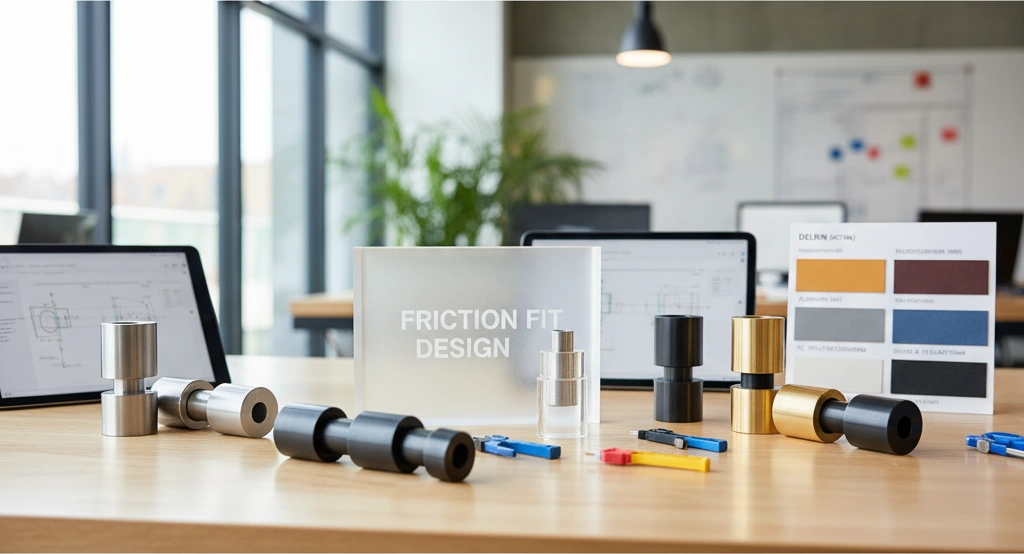
Getting the friction fit right starts with understanding tolerances and calculations. Using standard tolerance charts like ISO 286 and ANSI B4.1 helps ensure the shaft and hole dimensions match perfectly to create that needed interference. For example, ISO 286 provides clear guidance on shaft-hole fits, making it easier to pick the right interference fit for your parts and avoid issues like loosening or cracking.
Step-by-Step Calculation
To nail your friction fit, calculating the interference and the resulting pressure is key. The basic formula looks like this:
- Interference (Δ) = Shaft diameter – Hole diameter
- Pressure (p) = (Interference × E) / (Diameter × Thickness)
(E is the material’s modulus of elasticity.)
You can find free downloadable calculators online that speed up these calculations, so you don’t have to do it manually every time.
Material Impacts
Materials heavily influence fit performance:
- Thermal expansion: Metals like aluminum expand more than steel when heated, which can loosen or tighten fits unexpectedly.
- Surface finish: Smoother surfaces increase friction, improving fit strength. Rough surfaces might cause wear or galling during assembly.
- Corrosion resistance: Choose materials or coatings that withstand your environment to avoid fit loosening over time.
Pro Tips
- Use finite element analysis (FEA) to predict how your materials behave under different pressures. This helps avoid over-interference and part failure.
- Consider pre-toleranced components like Vast’s kits. They’re designed to save you time by matching tolerances precisely, cutting down design revisions and assembly headaches.
By combining the right tolerances, smart calculations, and proper material choice, you set your friction fit up for smooth, reliable performance.
Assembly Techniques: From Prototype to Production
Tools and Methods
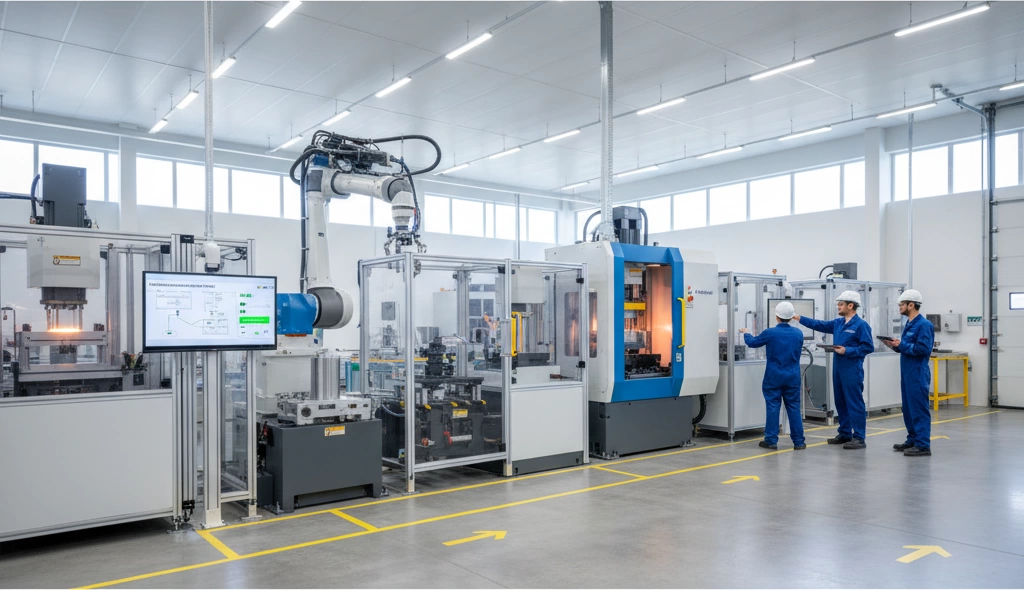
For friction fit assembly, the right tools matter. At the prototype stage, hand-pressing or simple arbor presses work well for small parts and testing. As you move to production, hydraulic presses bring consistent force, improving repeatability and reducing risk of damage. Always consider safety: wear eye protection, secure parts properly, and never exceed recommended force to avoid cracks or warping.
Step-by-Step Guide
- Surface Prep: Clean mating surfaces to remove dirt or oil—this helps maximize friction. Light sanding or polishing improves grip in some cases.
- Temperature Treatments: Use heating (shrink fit) or cooling to temporarily expand or contract parts for easier assembly, then let them return to room temp for a tight fit.
- Force Application: Apply steady, even pressure with presses. Avoid sudden jolts that may cause misalignment or damage.
- Torque Verification: After assembly, checking torque transmission ensures the friction fit is holding properly, especially in torque-critical applications like automotive shafts.
Troubleshooting
- Galling: Occurs when metal transfers between parts, causing rough spots. Fix by using lubrication or changing surface finishes.
- Misalignment: If parts don’t sit flush, re-check tolerances and use guiding tools to ensure proper fit.
- Vast Case Studies: Vast’s solutions have cut failure rates by improving process control and pre-toleranced components, reducing costly downtime.
Scaling Up
When volume runs hit thousands of units, manual methods slow down. Automation is key: robotic pressing systems deliver consistent pressure and speed, with sensors to catch defects instantly. This helps keep quality high and costs predictable in large-scale friction fit production.
Advanced Considerations: Durability, Testing, and Innovations
Long-Term Performance
When it comes to friction fit joints, durability is key. Over time, fatigue from repeated stress can weaken the interference fit. Environmental factors like temperature swings, corrosion, and dirt can also degrade the joint. Regular maintenance checks, such as inspecting for loosening or surface wear, help keep friction fits reliable for the long haul.
Testing Protocols
To ensure a friction fit holds up, we rely on standard testing methods:
- Pull-out strength tests measure how much force it takes to separate the parts.
- Vibration simulations check how well the fit resists loosening under constant movement.
- Industry benchmarks, such as Vast’s testing data, help validate fit reliability under real-world conditions.
Emerging Trends
Friction fit technology is evolving. Some key innovations include:
- Hybrid friction-adhesive systems combine interference fit with bonding for extra strength.
- 3D-printed parts allow precise control over tolerances for better fits and reduced waste.
- Sustainable designs focus on recyclable materials and reduced energy use during assembly.
Case Study: Aerospace Bracket Assembly
In aerospace, every ounce counts. Using optimized friction fits for bracket assemblies, manufacturers saved weight and cut costs by reducing the need for additional fasteners. The tight tolerances improved torque transmission and vibration resistance, boosting both safety and performance on aircraft.
By keeping these advanced factors in mind, friction fit assemblies can deliver strong, durable joints tailored for demanding US markets like automotive, aerospace, and electronics.
 English
  Spanish (Peru)
  German
  Korean
  Spanish (Spain)
  Italian