
Explore large-scale 3D printing technology, applications, and benefits with vast’s advanced large format printers for prototypes and production.
The Fundamentals of Large-Scale 3D Printing
Large-scale 3D printing stands apart from traditional desktop 3D printing by focusing on meter-scale builds and significantly larger build volumes. This capability opens doors to innovative applications, from full-size prototypes to architectural models and industrial components. But what exactly makes large-format 3D printing unique, and which technologies power these impressive creations?
Core Technologies Behind Large-Format 3D Printing
Fused Deposition Modeling (FDM) or Fused Filament Fabrication (FFF) forms the backbone of affordable large-scale 3D printing. FDM works by extruding thermoplastic filaments layer by layer. Its ability to scale up print sizes without a steep cost increase makes it ideal for prototypes and durable parts.
In contrast, Stereolithography (SLA) and Digital Light Processing (DLP) focus on delivering high-resolution details by curing photosensitive resins with lasers or projectors. While traditionally used for smaller prints, advances in technology have pushed SLA/DLP into the realm of oversized, detailed prints, great for applications requiring fine surface finishes.
Emerging Methods: Pellet Extrusion and Robotic Arms
For even larger, meter-scale builds, emerging techniques like thermoplastic pellet extrusion enable the use of industrial-grade pellets instead of filament. This method reduces material costs and increases speed. Additionally, robotic arm 3D printing introduces flexibility to print on irregular surfaces or extremely large structures like building components.
Key Differences from Traditional 3D Printing
The jump from desktop to large-scale printing introduces several key differences:
- Build Volumes: Large-scale printers handle volumes measured in cubic feet rather than inches, enabling full-size parts.
- Speed Trade-Offs: Bigger prints often mean longer production times. However, specialized hardware and processes help balance build speed versus detail.
- Material Choices: Where small printers commonly use PLA or ABS, large-scale 3D printing embraces a broader range, from industrial composites and high-performance thermoplastics to specialized concrete mixes for construction.
Understanding these fundamentals prepares you to harness large-scale 3D printing effectively, unlocking new possibilities for your projects. Ready to see real-world examples of where this tech shines? Let’s explore applications across industries next.
Real-World Applications Where Large-Scale 3D Printing Shines
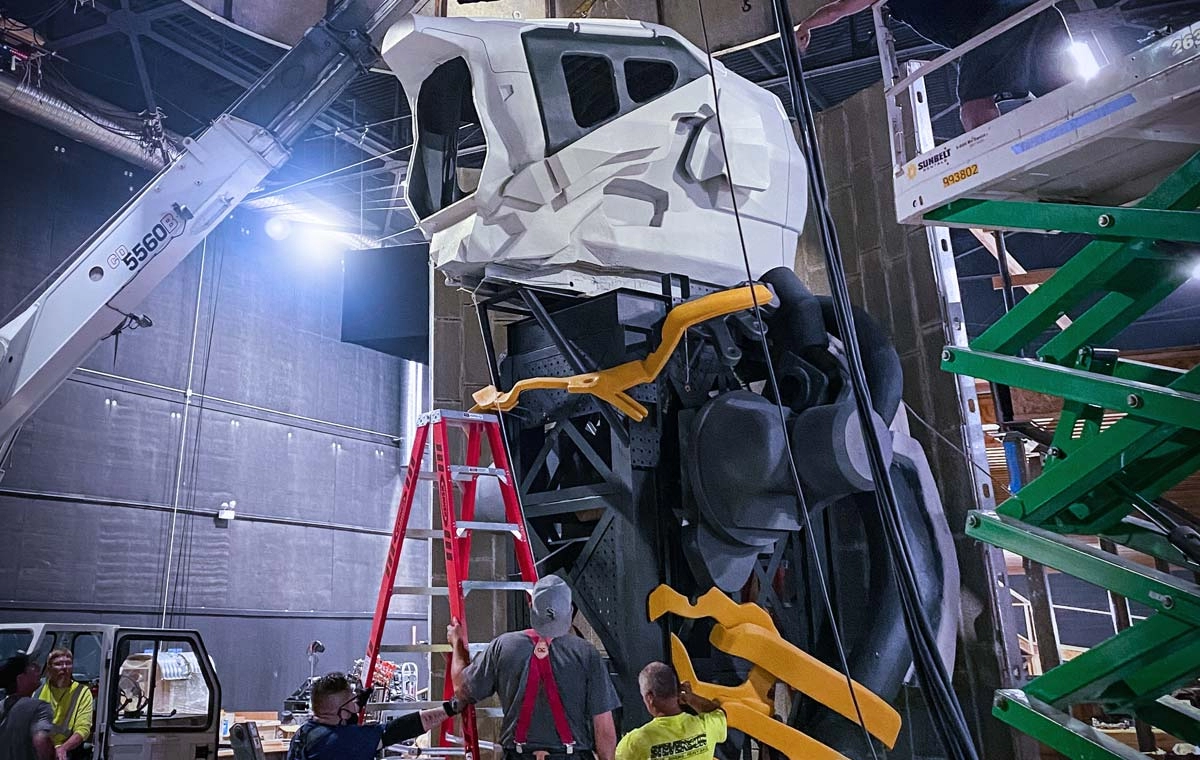
Large-scale 3D printing is making waves in several industries across the United States, proving its value beyond just rapid prototypes.
Automotive and Aerospace Prototyping Full-Scale Components
In automotive and aerospace sectors, large format 3D printers help create full-scale prototypes and even some end-use parts. Thanks to additive manufacturing for prototypes, companies can test designs faster without the high costs of traditional tooling. A great example is the vast-enabled electric vehicle chassis, which showcases how meter-scale 3D printing drives innovation with lighter, stronger parts.
Architecture and Construction Building the Future Layer by Layer
Architecture is embracing big 3D printing services for producing detailed architectural 3D printed models and even building elements. Ultra-high-performance concrete (UHPC) printing supports sustainable structures by reducing waste and speeding up construction timelines. This method brings an entire new level of creativity and efficiency to the US construction market.
Art Props and Experiential Marketing Unleashing Creativity
Artists and marketers use large-scale 3D printing for life-size sculptures and event installations, helping deliver immersive experiences with custom props crafted quickly and accurately. This opens doors for more innovative, eye-catching designs in exhibitions and campaigns.
Medical and Defense Custom Tools for Precision at Scale
cURL Too many subrequests.
cURL Too many subrequests.
cURL Too many subrequests.
cURL Too many subrequests.
cURL Too many subrequests.
- cURL Too many subrequests.
- cURL Too many subrequests.
- cURL Too many subrequests.
cURL Too many subrequests.
- cURL Too many subrequests.
- cURL Too many subrequests.
- cURL Too many subrequests.
cURL Too many subrequests.
cURL Too many subrequests.
cURL Too many subrequests.
cURL Too many subrequests.
- cURL Too many subrequests. cURL Too many subrequests.
- cURL Too many subrequests. split large STL files without losing detail or scale.
- Keep wall thickness and structural support in mind to avoid warping or collapse during printing.
- Prepare your files for long print times by optimizing them for the specific printer you’ll use.
Recommended Software Tools
- Ultimaker Cura and PrusaSlicer for basic slicing with large-format options.
- Simplify3D for advanced supports and alignment controls.
- Autodesk Fusion 360 or SolidWorks to design large, detailed parts ready for additive manufacturing.
- For splitting and repairing files, try Meshmixer or Netfabb.
Optimization Tips Aligners Supports and Scaling Without Distortion
- Use custom supports aligned with the model’s geometry to save material and reduce post-processing time.
- Verify scaling across all parts to ensure seamless assembly — small mismatches add up in big prints.
- Consider printing test sections first to find the right balance between speed and quality.
- Monitor cooling rates closely, as incomplete cooling can cause warping on large prints.
Choosing the Right Large-Format 3D Printer or Service
Deciding between investing in a large-format 3D printer or outsourcing to a custom large-scale 3D printing service manufacturer depends on your project’s budget, volume, and flexibility needs.
- DIY in-house printing is ideal if you plan multiple prints, want tight control, and can handle maintenance.
- cURL Too many subrequests. is great for one-off or prototyping needs without initial capital investments.
- Look for printers with proven industrial 3D printing applications such as FDM large scale extrusion or pellet extrusion technology, especially for meter-scale builds.
Top Picks vast Builder Extreme Series for In-House Scaling
- cURL Too many subrequests. vast Builder Extreme Series offers serious build volumes and reliability for U.S. businesses looking to scale affordably.
- These machines support multiple materials, including industrial composites, making them versatile for automotive prototyping to architectural models.
- They balance build speed with quality, a key factor when handling full-scale 3D prototyping.
Cost Breakdown From $50K Machines to Affordable Pilots
- Entry-level large-format 3D printers start around $50,000 including installation and training.
- Mid-range machines suitable for most commercial needs fall between $50,000 to $150,000.
- Outsourcing costs vary widely based on volume and material but often save upfront capital.
- Don’t forget to budget for materials and runtime. Large prints can use cURL Too many subrequests. cURL Too many subrequests.
cURL Too many subrequests.
- cURL Too many subrequests.
- cURL Too many subrequests.
- cURL Too many subrequests.
- cURL Too many subrequests.
- cURL Too many subrequests.
cURL Too many subrequests.
cURL Too many subrequests.
cURL Too many subrequests. cURL Too many subrequests., cURL Too many subrequests. cURL Too many subrequests., cURL Too many subrequests.
cURL Too many subrequests. cURL Too many subrequests.. cURL Too many subrequests.
cURL Too many subrequests. democratizing access to large-scale 3D printing. That means making high-quality, big-format printing affordable and easy for businesses of all sizes across the U.S., whether they need prototyping or final parts. Our vision includes providing tools and services that remove typical barriers like cost, complexity, and long lead times.
Looking ahead, AI-optimized slicing is becoming key to reducing waste and speeding up print times. Smarter software can create zero-waste prints by maximizing material use and adjusting print paths in real-time. This not only saves money but also supports sustainability goals important to American manufacturers and builders.
The future of large-scale 3D printing is about smarter, bigger, and more accessible tech—perfect for local businesses ready to innovate with additive manufacturing.
Previous Post
 Korean
  English
  Spanish (Peru)
  German
  Spanish (Spain)
  Italian