
Discover the essentials of horizontal milling, key differences from vertical milling, and expert tips to optimize heavy-duty machining workflows.
Understanding the Basics of Horizontal Milling Machines
If you’re new to machining or exploring different milling options, you might wonder what sets horizontal milling apart. Simply put, horizontal milling refers to a process where the cutting tool is mounted on a horizontal spindle that rotates perpendicular to the workpiece. This setup allows the cutter to remove metal efficiently from the surface or edges of the material.
In horizontal milling, the spindle is positioned parallel to the table, which means the cutting action usually occurs on the side of the cutter rather than the bottom. This key difference enables specialized operations like slab milling and gang milling, which are excellent for heavy-duty material removal and high-volume production.
Main Components and How They Work
A horizontal milling machine consists of several critical parts:
- Horizontal spindle: Holds the cutter and rotates parallel to the workpiece.
- Arbor: A shaft that supports the cutter, allowing for quick changes and use of multiple cutting tools.
- Worktable: Moves in multiple directions (usually X and Y axes) to position the workpiece.
- Knee and saddle: Support the table and allow vertical and crosswise movement.
- Drive system: Powers the spindle and controls speed based on the cutting task.
- Controls: Can range from manual handwheels to advanced CNC systems depending on the machine.
Each component plays an integral role in precision metal removal and chip evacuation during milling. The design helps handle tougher metals and complex shapes much better than some vertical milling counterparts.
Types of Horizontal Mills From Manual to CNC
Horizontal milling machines vary widely, and choosing the right type depends largely on your production needs:
- Manual horizontal mills: Best for small shops and simple jobs. They require skilled operators but provide flexibility.
- Semi-automatic horizontal mills: Offer a mix of manual control and automation, increasing efficiency.
- CNC horizontal mills: Use computer numerical control to perform complex and repeatable tasks with precision. CNC horizontal mills are ideal for heavy-duty milling applications and high-volume manufacturing.
Every type offers unique advantages, but CNC horizontal mills lead when it comes to scalability, repeatability, and handling intricate gang milling operations.
Understanding these basics gives you a solid foundation to explore the horizontal milling process in more detail and decide what fits your shop or project best. Next, we’ll compare horizontal vs vertical milling to help you choose the right approach.
Horizontal vs Vertical Milling Key Differences and When to Choose Each
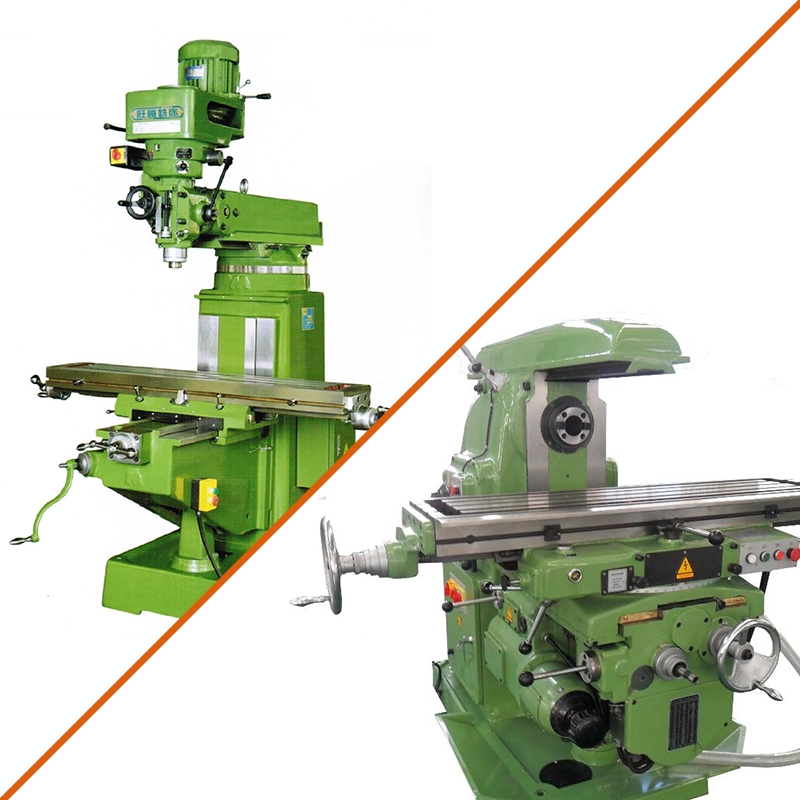
Choosing between horizontal and vertical milling comes down to understanding their main structural and operational differences.
Structural and Operational DifferencesHorizontal milling machines have a spindle that runs horizontally. This design allows arbor-mounted cutters to extend outwards, making it easier to handle heavy-duty milling and long cuts, like slab milling. The setup supports efficient chip evacuation because gravity helps clear debris from the cutting area.
Vertical milling machines feature a spindle that points downwards. This layout is great for precision metal removal and detailed work, giving easier access for operators to change tools and set up jobs.Pros and Cons Comparison
| Feature | Horizontal Milling | Vertical Milling |
|—————————-|————————————|——————————–|
| Cutting Ability | Better for heavy-duty, deep cuts | Better for lighter, detail work |
| Chip Evacuation | Efficient, as chips fall away | Less effective, chips may clog |
| cURL Too many subrequests. cURL Too many subrequests.
| cURL Too many subrequests. cURL Too many subrequests.
| Versatility cURL Too many subrequests.
cURL Too many subrequests.
- Choose horizontal milling cURL Too many subrequests.
- cURL Too many subrequests. vertical milling cURL Too many subrequests.
cURL Too many subrequests.
cURL Too many subrequests.
cURL Too many subrequests.
cURL Too many subrequests.
cURL Too many subrequests.
cURL Too many subrequests.
- cURL Too many subrequests. cURL Too many subrequests.
- cURL Too many subrequests. cURL Too many subrequests.
- cURL Too many subrequests. Milling two parallel surfaces simultaneously using multiple cutters on the arbor.
- Face milling: Producing smooth, flat surfaces with face mills mounted on the horizontal arbor.
These techniques are great for heavy-duty milling applications, where you need power and precision combined.
Advanced Techniques Gang and Form Milling
For more complex projects, gang milling and form milling take center stage. Gang milling involves mounting multiple cutters on the arbor at once to machine several features in a single pass, boosting efficiency. Form milling uses specially shaped cutters to create curved or contoured surfaces.
Both advanced techniques require skillful setup and control but can drastically reduce machining time and improve repeatability, especially when working with CNC horizontal mills.
By mastering these steps and techniques, you can leverage the full capabilities of horizontal milling machines for a wide range of manufacturing needs.
Applications and Benefits in Modern Manufacturing
Horizontal milling machines are a staple in many manufacturing settings across the United States. They shine in industries that need heavy-duty milling applications, like automotive, aerospace, and heavy equipment manufacturing. These machines handle everything from precision metal removal to slab milling techniques, making them versatile for shaping large parts or complex components.
Ideal Industries and Use Cases
- Automotive: Producing engine blocks, transmission housings, and other parts where chip evacuation in milling is critical.
- Aerospace: Creating precise, durable parts that meet strict tolerance requirements.
- Heavy Equipment: Working on large, tough materials needing arbor-mounted cutters for efficient material removal.
- cURL Too many subrequests.: Performing gang milling operations for efficient tool production.
- General Manufacturing: Handling a wide range of materials and tasks with both manual and CNC horizontal mills.
Key Benefits Efficiency Precision and ROI
Using horizontal milling offers several advantages that matter to U.S. manufacturers:
- Increased Efficiency: The design allows faster chip removal and cooling, boosting productivity during long runs.
- Precision: With stable setups and rigid construction, horizontal machines deliver consistent accuracy, which is essential in modern manufacturing.
- Higher ROI: Their durability and ability to handle complex jobs reduce downtime and costs in the long run.
- Versatility: From simple slab milling to advanced gang and form milling, these mills adapt to many tasks.
- Ease of Integration: CNC horizontal mills fit well into automated production lines, helping companies scale up seamlessly.
For any business focused on quality and throughput, horizontal milling machines provide a solid foundation to stay competitive in today’s market.
Best Practices Troubleshooting and Maintenance Tips
Keeping your horizontal milling machine running smoothly means sticking to some basic best practices. Always start with safety—wear proper gear, keep guards in place, and double-check setups before running the machine. Proper chip evacuation is key to avoid buildup that can hurt both parts and cutters.
When troubleshooting common issues like poor surface finish or unusual vibrations, check for worn cutters, loose fixtures, or misaligned parts. Regularly inspect arbor-mounted cutters and replace them as needed to maintain precision metal removal.
Safety and Optimization Protocols
- Wear safety glasses and gloves during operation
- Keep work areas clean to prevent accidents
- Use proper clamping and fixturing to avoid part movement
- Maintain proper coolant flow for chip evacuation and tool cooling
- Follow manufacturer guidelines for speed and feed rates based on the material
cURL Too many subrequests.
Routine maintenance extends your machine’s life and reduces downtime. Key steps include:
- Lubricate moving parts regularly to reduce friction
- Clean the machine thoroughly to prevent dust and chips from settling
- cURL Too many subrequests.
- cURL Too many subrequests.
- cURL Too many subrequests.
cURL Too many subrequests.
cURL Too many subrequests.
cURL Too many subrequests.
- cURL Too many subrequests.
- cURL Too many subrequests.
- cURL Too many subrequests.
- cURL Too many subrequests.
cURL Too many subrequests.
 Korean
  English
  Spanish (Peru)
  German
  Spanish (Spain)
  Italian