
Explore different rivet types, materials, and applications to choose the perfect fastener for your DIY or industrial projects with expert guidance.
If you’ve ever found yourself stuck trying to choose the right rivet types for your project, you’re not alone. Picking the perfect rivet can make or break your assembly, whether you’re working on metal repairs, DIY builds, or industrial fabrications. In this guide, you’ll get a clear breakdown of the most common rivet types, their strengths, and where they shine. From blind rivets that work with one-sided access to heavy-duty solid rivets, we’ll cut through the confusion so you can pick the ideal fastener every time. Let’s get you fastening smarter and faster—no guesswork needed.
What Are Rivets A Quick Primer on How They Work
Rivets are simple yet powerful fasteners used to join two or more materials permanently. Think of them as sturdy pins that hold parts together by passing through aligned holes. Once inserted, the rivet’s tail end is deformed—usually hammered or pressed—to create a second “head,” locking the pieces in place.
Core Definition and Mechanics
At its core, a rivet consists of a smooth cylindrical shaft with a head on one end. After pushing the rivet through the materials, the exposed end is upset (flattened or shaped) to form a tight, secure joint. This deformation prevents the rivet from falling out and distributes stress over a wider area.
Unlike screws or bolts, rivets do not rely on threads. Instead, their strength comes from the interference fit and the metal deformation, which resists vibration and loosening.
Advantages Over Alternatives
Why choose rivets over bolts or screws? Here’s why rivets often come out ahead:
- Permanent joints: Rivets create joints that don’t loosen under vibration or heavy stress.
- One-sided installation: Blind rivets enable fastening where only one side is accessible.
- Consistent clamping force: The deformation process applies uniform pressure across the joined materials.
- Lightweight and flush finishes: Rivets add minimal bulk, ideal for aerodynamics or sleek designs.
- Corrosion resistance: Riveting eliminates the possible gap-related corrosion problems seen with threaded fasteners.
In essence, rivets offer a reliable, low-maintenance fastening method favored in construction, aerospace, automotive, and countless manufacturing fields. Ready to find out which rivet type suits your project best? Let’s dive deeper.
The Main Types of Rivets Breaking Down the Essentials
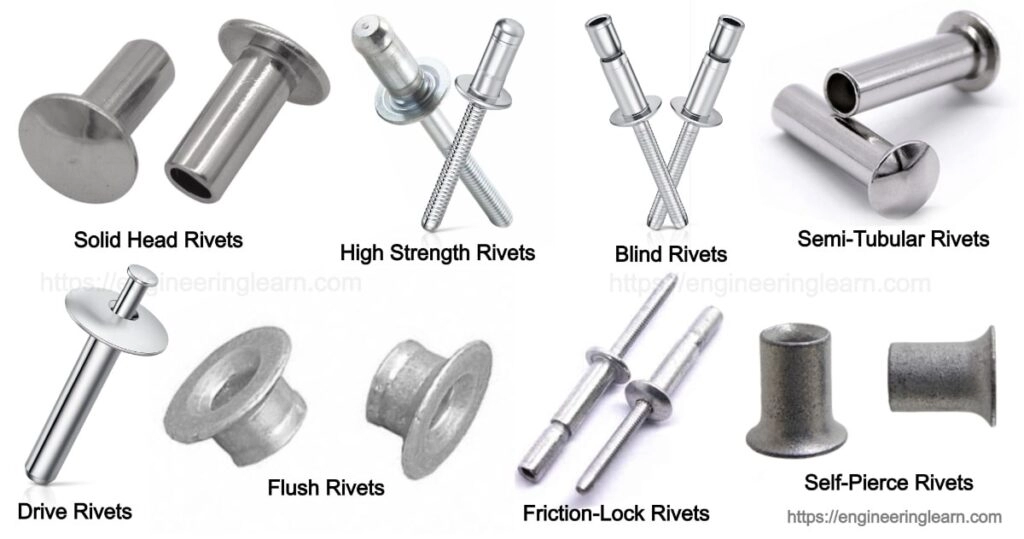
When it comes to rivet types, each has its own strengths and best uses. Here’s a quick look at the main ones:
Solid Rivets The Gold Standard for Heavy Duty Strength
Solid rivets are the classic choice for strong, permanent joints. Used a lot in aerospace and structural work, they require access to both sides of the materials being joined. If you need extreme durability and don’t mind the installation effort, solid rivets deliver unmatched performance.
Blind Rivets Pop Rivets One Sided Access Made Simple
Blind rivets, often called pop rivets, are perfect when you only have access to one side of the workpiece. They’re popular for repairs, automotive work, and metal fabrication. Easy to install with a rivet gun, these keep things fast and efficient without compromising reliability.
Tubular and Semi Tubular Rivets Lightweight for High Volume Assembly
Tubular and semi tubular rivets have a hollow shaft that makes them lighter and easier to install than solid rivets. They’re great for applications needing quick assembly like electronics, appliances, or automotive interiors. Semi tubular rivets offer a good balance of strength and speed.
Split Rivets Versatile for Soft Materials and Quick Joins
Split rivets work well with softer materials like leather, plastic, or fabric. Their design spreads and holds securely without heavy tools. If you’re fastening soft or thin materials, split rivets provide a user-friendly and reliable solution.
Drive and Oscar Rivets Flush Finishes for Specialized Needs
Drive rivets are hammered in from one side, offering a flush finish that’s neat and clean. Oscar rivets are similar but designed for easier removal and reuse. Both are suited for applications where appearance matters or where you need a smooth surface without protruding rivet heads.
Each rivet type serves a unique purpose depending on access, materials, strength requirements, and installation speed. Knowing these basics helps you pick the right fastener for your job.
Rivet Head Styles Matching Form to Function
Rivet head styles play a big role in how well a rivet works for your project. The shape of the head affects strength, appearance, and how the rivet sits once installed. Picking the right head style means matching it to the job’s needs and the materials you’re working with.
Common Rivet Head Styles
- Flat HeadSits flush with the surface, making it great for tight spaces or where a smooth finish is important. Often used in aerospace or automotive where aerodynamic or clean looks matter.
- Round HeadThe most traditional type with a domed shape. It’s strong and easy to spot during installation. Good for general use and projects where the rivet head will be visible.
- Countersunk HeadTapers into the surface for a recessed fit. Ideal when you don’t want the rivet to stick out, like furniture or metal panels. Perfect for when you want a neat finish without extra sanding or grinding.
- Large Flange HeadOffers extra surface area to spread the load, helping prevent pull-through in softer materials like aluminum or plastic. Frequently used with blind rivets where gripping power is key.
- Pan HeadA low-profile head with slightly rounded edges that work well on soft materials without tearing them. Often chosen for lightweight assemblies or electronics.
When to Use These Head Styles
- Structural joints often call for flat or countersunk heads to balance strength and finish.
- Temporary or maintenance-heavy setups might prefer round or pan heads for faster inspection and replacement.
- Soft materials need large flange or pan heads to reduce surface damage and increase grip.
- Flush surfaces demand countersunk heads to avoid bumps or snags.
In short, knowing your rivet head styles helps you pick the right fit – functional, strong, and neat for your specific project needs.
Materials Matter Selecting Rivets by Composition and Environment
Choosing the right rivet material is just as important as picking the right type. The material affects strength, corrosion resistance, and suitability for the job. Here’s a quick look at common compositions and where they work best:
- Aluminum Rivets: Lightweight and corrosion-resistant, aluminum rivets are great for outdoor projects, marine applications, and where weight matters. They’re widely used in aircraft and automotive industries.
- Steel Rivets: Strong and durable, steel rivets handle heavy-duty tasks well, especially structural rivets in construction or aerospace. They may need coatings like zinc plating to resist rust.
- Stainless Steel Rivets: Offer excellent corrosion resistance and strength. Perfect for environments exposed to moisture, chemicals, or extreme weather.
- Copper Rivets: Soft and malleable, copper rivets are often used in electrical work or decorative applications where conductivity or appearance is key.
Match your rivet material with the environment and materials you’re joining. Using a material that won’t corrode or react negatively with your project ensures a secure, long-lasting hold. For example, avoid mixing aluminum rivets with steel components unless you use barriers to prevent corrosion.
When in doubt, consider the type of stress the rivet will endure—shear, tension, or vibration—and select accordingly. This helps you avoid issues like premature failure or loosening over time.
By focusing on composition and environment, you can make sure your rivet choice fits the job perfectly and delivers reliable performance every time.
Common Applications Where Rivet Types Shine in Real Projects
Rivets are everywhere in U.S. projects, proving their worth across industries and everyday fixes. Here’s where different rivet types really stand out:
- Construction and Structural WorkSolid rivets are commonly used in aerospace and heavy machinery due to their unmatched strength. Think steel frameworks, bridges, and aircraft where structural integrity is key.
- Automotive and TransportationBlind pop rivets are perfect here. They work well when you have access to only one side of the panel, common in car body panels, trailers, and railcars.
- Electronics and AppliancesTubular and semi tubular rivets fit well in electronics assembly, offering lightweight fastens without compromising speed. Their ease of installation helps speed up mass production.
- HVAC and Sheet MetalDrive rivets and split rivets are often found in HVAC ducts and light sheet metal work. They provide quick joins without needing heavy tools.
- Furniture and WoodworkingSplit rivets can be used to fasten softer materials like wood or leather, making them handy for crafting and DIY projects.
- Marine and Outdoor EquipmentAluminum rivet materials are common for corrosion resistance, especially in boats, outdoor gear, and lightweight structures exposed to the elements.
Knowing which rivet type shines in your specific project makes all the difference—whether you’re after strength, quick assembly, or a neat finish, there’s a rivet ready to fit your needs.
How to Choose the Right Rivet Type A Step by Step Buyers Guide

Picking the right rivet type can seem tricky, but it really comes down to a few key factors. Here’s a step-by-step guide to help you zero in on the best option for your project:
1. Understand Your Project Needs
- Access: Do you have access to both sides of the material? If yes, solid rivets could work. If not, blind pop rivets are your go-to.
- Material Thickness: Thicker materials often need solid or structural rivets for strength. Thinner materials can handle tubular or semi-tubular rivets.
2. Consider Strength Requirements
- Heavy Duty: For load-bearing or high-stress joints, solid rivets or aerospace structural rivets provide the best durability.
- Light Duty: For lighter assembly or soft materials, split or drive rivets might be enough.
3. Factor in Material Compatibility
- Environment: Aluminum rivet materials resist corrosion well, making them ideal for outdoor or marine use. Steel versions are tougher but can rust without coatings.
- Base Materials: Match rivet material to what you’re fastening – softer metals like aluminum or copper for softer materials, steel for tougher substrates.
4. Choose the Proper Head Style
- Consider if you need a flush finish (like with drive or oscar rivets) or a wider head for grip (such as with dome or countersunk heads). The right rivet head style affects both strength and appearance.
5. Size It Right
- Use a basic rivet sizing guide: rivet length should be at least 1.5 times the total thickness of the materials joined. Proper sizing ensures a tight fit and strong hold.
6. Think About Installation Method
- Some rivets require special tools (solid rivet installation needs hammering or pneumatic tools), while blind rivets just need a rivet gun. Pick what fits your setup.
Quick Check
- Can you access both sides? If yes, consider solid or tubular rivets.
- Need quick installs? Blind pop rivets save time.
- Working with soft materials? Split or semi tubular rivets work well.
- Looking for corrosion resistance? Aluminum rivets are safer bets.
By following these steps, you’ll spend less time guessing and get the perfect rivet type tailored to your project’s demands.
Installation Best Practices and Pro Tips from Vast
Getting the installation right is critical for rivets to perform their job well. Here are some solid tips to keep your projects strong and reliable:
- Choose the Right Rivet Size: Always match the rivet size to the material thickness. Too short won’t hold, too long can cause misalignment or damage. Use a rivet sizing guide to make sure you’re spot on.
- Prep the Holes: Clean and deburr holes before installing rivets. This helps the rivet sit flush and avoids stress points that could weaken the join.
- Use Proper Tools: For solid rivet installation, a rivet hammer or pneumatic rivet gun works best. Blind pop rivets need a quality rivet gun for clean, one-sided access. Tubular and semi tubular rivets usually require hand riveters designed for those types.
- Apply Consistent Pressure: Whether using a manual or power tool, smooth and steady pressure ensures the rivet expands correctly, creating a secure, vibration-resistant joint.
- Mind the Material: Aluminum rivet materials are great for lightweight or corrosion-prone jobs. Steel or structural rivets are better for heavy-duty applications like aerospace or construction.
- Check Rivet Head Styles: Pick the right rivet head for your surface needs—flush heads for smooth finishes, round heads for rougher surfaces.
- Avoid Over-Driving: Too much force can damage the rivet or material. Practice on scraps if you’re new to rivet installation.
- Inspect Your Work: Double-check for proper clinch, tightness, and no cracks around the hole before considering the job done.
By sticking to these practices, your rivet joins will hold tight and last longer, giving your projects professional-grade durability.
Rivet Alternatives and Emerging Trends
While rivets are a go-to for many projects, there are some solid alternatives gaining traction, especially where flexibility or speed is key. Bolts and screws often replace rivets when disassembly or adjustment is needed. Compared to rivets, bolts offer easier removal but may add weight or bulk.
Adhesive bonding is another growing trend in industries like aerospace and automotive. It provides a clean finish and distributes stress evenly but usually needs precise surface prep and curing time.
In terms of fastening tech, blind fasteners like structural rivets and improved pop rivets are becoming tougher, handling tougher materials with better seals. Plus, manufacturers are developing rivets made from advanced alloys and composites for corrosion resistance and lightweight strength, perfect for marine and outdoor applications.
To sum up, while rivets remain popular for their reliability and simplicity, checking alternatives like bolts, adhesives, or newer fastener designs can save time or improve performance based on your project needs. Keep an eye on these trends if you want the best fit for your next job.
 English
  Spanish (Peru)
  German
  Korean
  Spanish (Spain)
  Italian