
Explore detailed types of shaft including transmission, machine, and drive shafts with material guides and design tips for optimal mechanical performance.
Core Functions and Key Characteristics of Mechanical Shafts
Ever wonder what makes a shaft crucial in machinery? At their core, mechanical shafts are all about transmitting torque and rotational motion. They connect power sources like motors to different parts of a machine, ensuring smooth movement and consistent power flow. Beyond just spinning, shafts also support loads, holding gears, pulleys, and other components in place.
It’s important to note that shafts differ from axles—while shafts actively transfer power, axles typically just support weight without transmitting torque. This distinction helps in choosing the right part for the job.
Mechanical shafts endure various stresses during operation:
- Torsional shear from twisting forces
- Bending loads as the shaft supports attached components
- Axial loads when forces act along the shaft’s length
These stresses must be carefully managed to avoid failure. In fact, shaft failures account for up to 30% of machinery downtime, highlighting the need for proper design, materials, and maintenance.
Understanding these fundamental roles and challenges sets the stage for exploring the different types of shafts and their applications in engineering.
Comprehensive Classification Types of Shafts
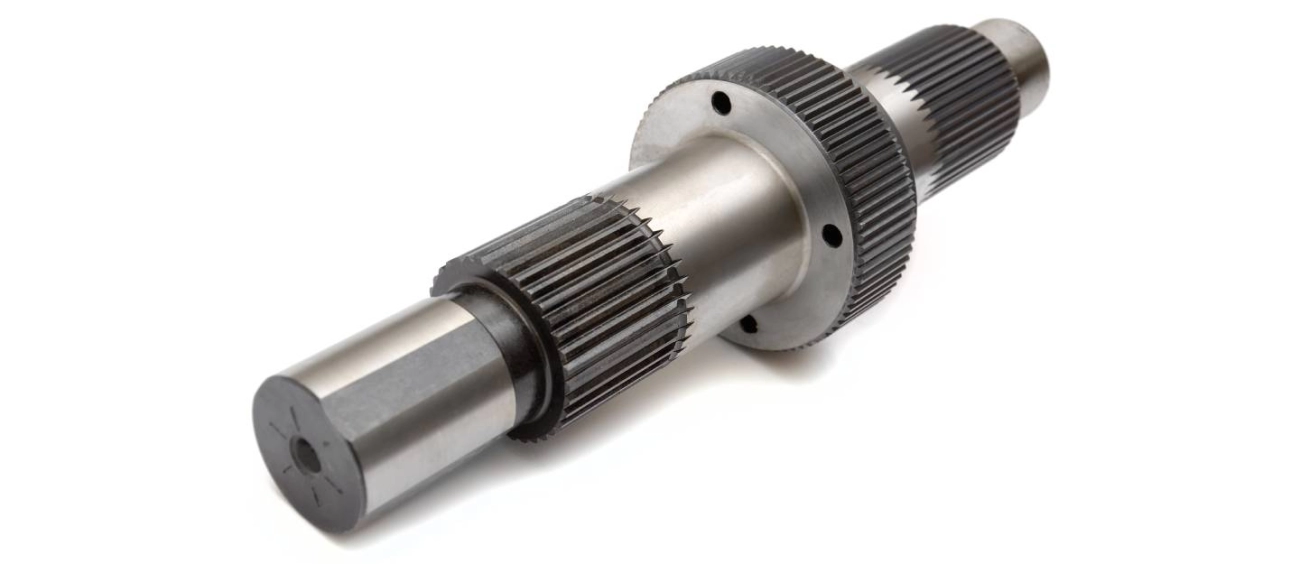
Shafts come in different types, each made for specific roles in machines and vehicles. Here’s a quick breakdown to help you spot the right type for your needs.
Transmission Shafts
These shafts transfer power from the source (like a motor) to the load (like a gearbox).
Subtypes:
- Countershafts: Transfer power between gears.
- Intermediate Shafts: Connect multiple components in a system.
- Line Shafts: Long shafts moving power across distances.
- Multi-Machine Drives: Share power among several machines.
Used in: Conveyor belts, industrial gearboxes, and power plants.
Machine Shafts
These are built into machines, supporting gears, pulleys, and bearings.
Subtypes:
- Stepped Shafts: Differing diameters for stress control.
- Crankshafts: Convert up-and-down motion into rotation.
Used in: Engines, turbines, CNC machines.
Axle Shafts
They don’t transmit power but carry weight and let wheels rotate.
Subtypes:
- Live Axles: Rotate and drive the wheels.
- Dead Axles: Fixed, just support the load.
Used in: Cars, trucks, railcars.
Drive Shafts
These connect engines or motors to differentials or propshafts, delivering torque.
Subtypes:
- Solid Shafts: Strong but heavier.
- Hollow Shafts: Lighter and reduce weight without losing much strength.
Used in: Vehicles, boats, and marine engines.
Specialized Shafts
Designed for unique tasks to improve machine function.
- Camshafts: Control timing in engines.
- Spline Shafts: Transfer torque using grooves or teeth.
- Composite Shafts: Made from lightweight materials, common in aerospace.
| Shaft Type | Load Capacity | Alignment Needs | Cost |
|---|---|---|---|
| Transmission Shafts | Medium to High | Precise | Moderate |
| Machine Shafts | High | Tight | Moderate to High |
| Axle Shafts | Load Bearing | Moderate | Low to Moderate |
| Drive Shafts | High Torque | Critical | Moderate to High |
| Specialized Shafts | Varies | Very Tight | High |
Knowing these types helps you pick the right shaft based on your project’s load demands, alignment precision, and budget.
Materials for Shafts Selection Guide for Durability and Performance
Choosing the right material for shafts is key to lasting performance and durability. Here’s a straightforward breakdown of common shaft materials used in the U.S. market:
| Material | Key Properties | Pros | Cons | Typical Uses |
|---|---|---|---|---|
| Carbon and Alloy Steels | High strength, easy to machine (e.g., 1045 steel) | Affordable, widely available | Susceptible to rust without treatment | General machinery, shafts needing toughness |
| Stainless Steels | Corrosion resistant (e.g., 316 grade) | Excellent for harsh environments | More expensive, harder to machine | Marine, chemical plants, food processing |
| Aluminum & Titanium Alloys | Lightweight, high fatigue resistance | Reduces overall weight, resistant to corrosion | Costly, less strength than steels | Aerospace, lightweight applications |
| Composites (Carbon Fiber) | Strong, vibration damping properties | Great for reducing vibrations, light | Expensive, limited repair options | High-end aerospace, racing shafts |
Choosing the Right Material
When picking shaft materials, consider:
- Load Type: Heavy torque? Go steel. Light, high-speed? Aluminum or composites work well.
- Environment: Harsh or corrosive environments call for stainless or composites.
- Cost Efficiency: Steel is usually more budget-friendly, aluminum and composites cost more upfront.
- Lead Time: CNC machining of alloy steels is common in the U.S. and can cut lead times by up to 20%, helping you get parts faster.
This decision matrix helps select the best match for your machinery’s demands, balancing strength, durability, and cost.
Shaft Design Principles Engineering for Reliability

Designing a shaft right is key to keeping machines running smoothly and avoiding downtime. The main focus is on handling stresses safely. For torsion (twisting), engineers use the formula tau = Tr / J, where T is torque, r is shaft radius, and J is the polar moment of inertia. For bending stress, it’s sigma = My / I, with M as the bending moment, y the distance from the neutral axis, and I the moment of inertia. These help predict how a shaft will react under load.
Precision in tolerances and surface finishes is just as crucial. Tools like GD&T (Geometric Dimensioning and Tolerancing) ensure parts fit properly, while controlling surface roughness reduces friction and wear, improving shaft life.
Correct alignment and coupling setup prevent early failures. Choose rigid couplings for solid connections or flexible couplings when some movement or misalignment is expected. This avoids unnecessary stress and vibrations that can cause cracks or shaft breakage.
Some best practices include:
- Using stepped shafts to distribute stress better—thicker sections where loads are high, thinner sections elsewhere
- Opting for hollow shafts where possible to save weight without losing strength
Common mistakes to avoid are ignoring fatigue effects, especially with repeated cycles. Even if a shaft holds up under one load, thousands of cycles can cause cracks if fatigue isn’t considered during design.
Keeping these design principles in mind leads to shafts that perform reliably and last longer in real-world US industrial setups.
Real World Applications and Case Studies
Shafts play a critical role across many industries in the US, powering everything from cars to energy systems. In automotive manufacturing, crankshafts are essential—they convert the engine’s pistons’ up-and-down motion into rotational power that drives your vehicle. On the factory floor, line shafts are common in conveyor systems and assembly lines, providing reliable power transfer over long distances.
Energy sectors rely on turbine shafts to smoothly transmit rotational energy from turbines to generators, keeping power plants running efficiently. These shafts must withstand intense stress and high speeds without failure.
A notable case involved Vast, a US-based manufacturer, creating a custom spline shaft for a pump system. This specialized shaft reduced vibration by 40 percent, improving performance and extending equipment life. This kind of innovation highlights how tailored shaft solutions can make a big difference in industrial setups.
Currently, there’s a growing trend toward sustainable materials, especially in electric vehicle (EV) drivetrains. Lightweight composite shafts and advanced alloys help improve efficiency and reduce energy loss, aligning with the shift toward greener, more efficient transportation technologies.
Key takeaways:
- Automotive crankshafts convert reciprocating motion to rotational power.
- Manufacturing line shafts keep production moving reliably.
- Energy turbine shafts handle high stress to generate electricity.
- Custom spline shafts reduce vibration and boost machinery life.
- Sustainable materials are rising in EV shafts for better efficiency.
Understanding these real-world uses helps US businesses select the right shaft types and materials for maximum performance and cost-effectiveness.
Maintenance Troubleshooting and Future Innovations
Keeping shafts in top shape is critical to avoid costly downtime. Regular inspection is key—look for signs of wear, cracks, and abnormal vibrations. Using vibration monitoring tools helps catch issues like imbalance or misalignment before they cause major problems. For crack detection, nondestructive testing (NDT) methods such as ultrasonic or magnetic particle inspection are effective and widely used.
Common failure modes include misalignment, overloading, and fatigue. Prevent these by ensuring proper shaft alignment during installation and using suitable couplings—rigid or flexible depending on the application. Avoid overloading by matching shaft capacity with operational demands and maintaining balanced loads.
Looking ahead, smart technology is shaping the future of shafts. Smart shafts embedded with sensors can monitor stress, temperature, and vibrations in real time, sending alerts to maintenance teams. This IoT-driven approach boosts reliability and reduces unexpected failures, making shafts safer and more efficient in industries like automotive and aerospace.
By staying proactive with maintenance and embracing these innovations, you can extend shaft life and improve overall machinery performance.
 English
  Spanish (Peru)
  German
  Korean
  Spanish (Spain)
  Italian