
Learn major types of casting processes with pros and cons material options cost factors and best uses for manufacturing
What is Metal Casting?
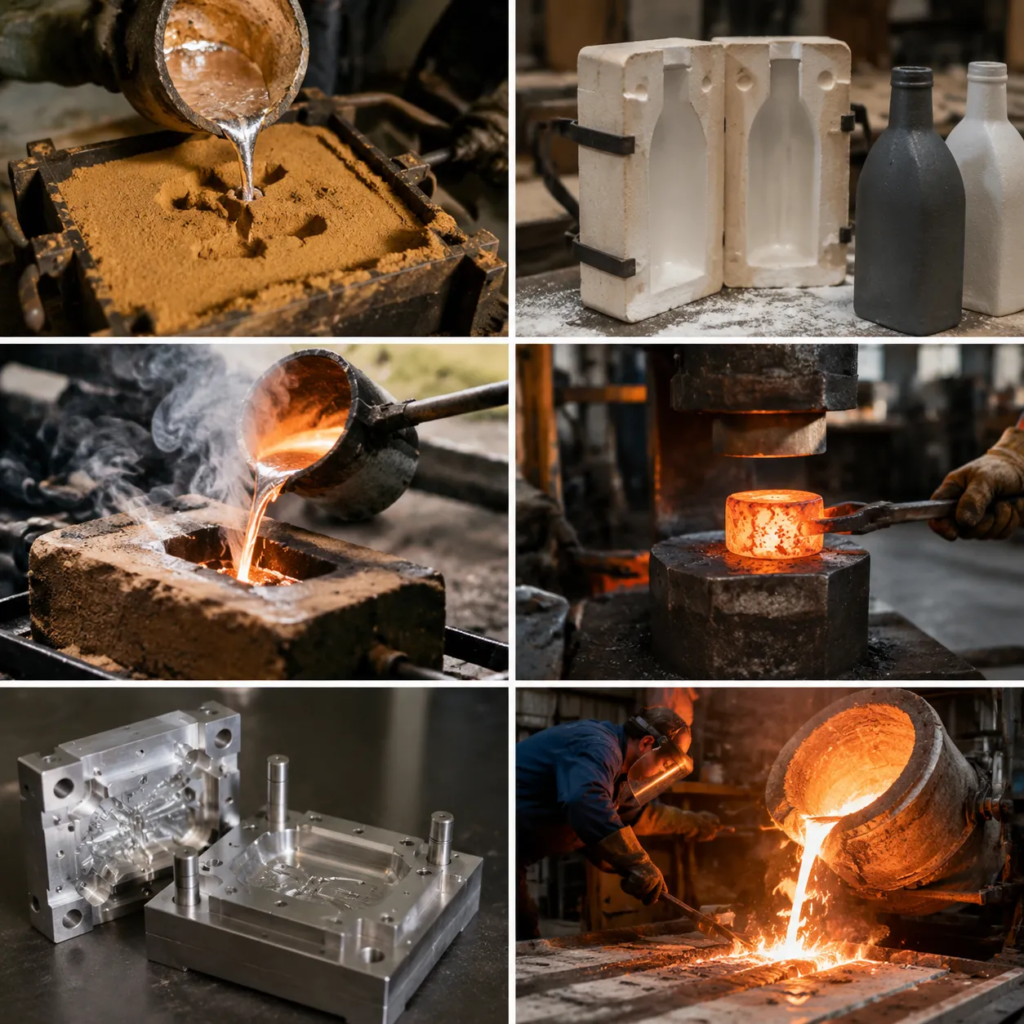
Metal casting is a foundational manufacturing process where molten metal is poured into a mold cavity, allowed to solidify, and then removed to create a specific shaped part. As a cornerstone of modern manufacturing, this process allows us to create complex geometries and intricate designs that would be incredibly difficult or expensive to achieve through traditional machining.
The metal casting process follows a straightforward, highly efficient workflow in our foundry:
- Patternmaking: We design a physical model of the final part.
- Mold Preparation: A mold is created around the pattern, leaving a hollow cavity inside.
- Melting & Pouring: We heat the chosen metal to its liquid state and pour it into the casting mold.
- Cooling & Solidification: The molten metal cools down and takes the shape of the cavity.
- Finishing: The solid metal part is removed, cleaned, and finished to achieve the required dimensional accuracy and surface finish.
Common Materials Used in Casting
Different types of casting require specific metals based on the final product’s application. We regularly work with four primary metals:
| Material | Key Properties | Common Applications |
|---|---|---|
| Iron | Excellent wear resistance, high fluidity, great dampening capacity | Engine blocks, heavy machinery bases, pipes |
| Steel | High strength, excellent toughness, superior weldability | Structural components, gears, railroad wheels |
| Aluminum | Lightweight, corrosion-resistant, high thermal conductivity | Automotive parts, aerospace components, consumer electronics |
| Bronze | Low friction, excellent corrosion resistance, highly durable | Bearings, bushings, marine hardware, statues |
Sand Casting: The Foundation of Metal Shaping
Sand casting is one of the oldest and most dependable types of casting in manufacturing history, dating back thousands of years. At its core, the process involves packing a refractory material—usually sand—around a pattern to form a casting mold. Once the pattern is removed, we pour molten metal into the cavity to create the final part. Because of its incredible flexibility and cost-effectiveness, it remains a dominant force in modern foundry manufacturing.
Green Sand vs. Resin Sand Molds
We generally utilize two primary types of sand mixtures depending on the project requirements:
- Green Sand Molds: A traditional blend of sand, clay, and water. The term “green” refers to the moisture content rather than the color. It is highly reusable, eco-friendly, and perfect for rapid production.
- Resin Sand Molds: This method uses chemical binders to lock the sand grains together. It creates a much stronger, more rigid sand mold, which translates to superior dimensional accuracy and a cleaner surface finish.
Pros and Cons of Sand Molds
| Advantages | Disadvantages |
|---|---|
| Low upfront tooling and development costs | Rougher surface finish compared to die casting |
| Can cast incredibly large and heavy components | Lower dimensional tolerance limits |
| Works with almost any molten metal or alloy | Slower production cycle times per part |
Typical Applications
Sand casting is the ultimate choice for heavy-duty components where structural integrity matters more than a mirror-like finish. We routinely use this metal casting process to produce engine blocks, cylinder heads, heavy machinery bases, pump housings, and large valves. When you need robust components from a reliable metal casting company, sand molds deliver unmatched scalability and material versatility.
Investment Casting: The Lost Wax Casting Process
When we need exceptional dimensional accuracy and a flawless surface finish, we turn to investment casting. Often called lost wax casting, this method is one of the oldest and most precise types of casting used in modern foundry manufacturing.
How Lost Wax Casting Works Step-by-Step
- Pattern Creation: We inject wax into a die to create a replica of the final part.
- Tree Assembly: We assemble multiple wax patterns onto a central wax sprue (a “tree”).
- Shell Building: We dip the tree into a ceramic slurry and coat it with stucco sand, repeating this until a hard ceramic shell forms around the wax.
- Wax Removal: We heat the shell to melt out the wax, leaving a hollow ceramic mold.
- Pouring: We pour molten metal into the preheated ceramic casting mold.
- Knockout: Once cooled, we break away the ceramic shell to reveal the final metal parts.
Why Choose Investment Casting?
This process delivers unmatched precision for complex geometries. Because the mold is created around a seamless wax pattern, we can eliminate the parting lines common in sand molds.
Best Metals and Applications
| Feature / Detail | Investment Casting Specifications |
|---|---|
| Best Metals Used | Stainless steel, aluminum, bronze, carbon steel, and superalloys. |
| When to Choose It | For intricate designs, thin walls, tight tolerances, and parts requiring minimal machining. |
| Common US Industries | Aerospace components, firearms, medical implants, and high-end automotive parts. |
While the tooling costs for the initial wax dies are higher than some other types of casting, the reduction in secondary machining and finishing costs makes it highly economical for high-value, precise production runs.
Die Casting: High-Speed Metal Molding
Among the different types of casting, die casting stands out for high-speed mass production. We use this process when projects require high-volume runs, tight tolerances, and excellent surface finishes. Instead of using sand molds, die casting forces molten metal into reusable steel molds (dies).
Gravity vs. Pressure Die Casting
The two primary methods differ by how the metal enters the mold:
| Feature | Gravity Die Casting | Pressure Die Casting |
|---|---|---|
| Metal Flow | Fed by gravity | Injected under high pressure |
| Production Speed | Moderate | Very high |
| Wall Thickness | Thicker walls | Thin, complex walls |
| Tooling Cost | Lower | Higher |
Hot-Chamber vs. Cold-Chamber Machines
We select the machinery based on the melting point of the alloy being cast:
- Hot-Chamber Die Casting: The injection mechanism is submerged directly in the molten metal. This setup allows for rapid cycle times. We use it for low-melting-point alloys like zinc, magnesium, and lead.
- Cold-Chamber Die Casting: The metal is melted in a separate furnace and ladled into the injection chamber. We use this method for high-melting-point metals like aluminum and brass to prevent damage to the injection equipment.
Benefits of High-Speed Mass Production
- Net-Shape Parts: Produces parts that require minimal post-cast CNC machining.
- Dimensional Consistency: Reusable steel dies ensure every part matches the exact specifications.
- Smooth Surface Finish: Delivers clean surfaces straight out of the mold.
Common Industries Relying on Die Cast Parts
- Automotive: Engine blocks, transmission cases, and brackets.
- Electronics: Connector housings, shielding, and heat sinks.
- Consumer Goods: Power tool housings and appliance hardware.
Centrifugal Casting
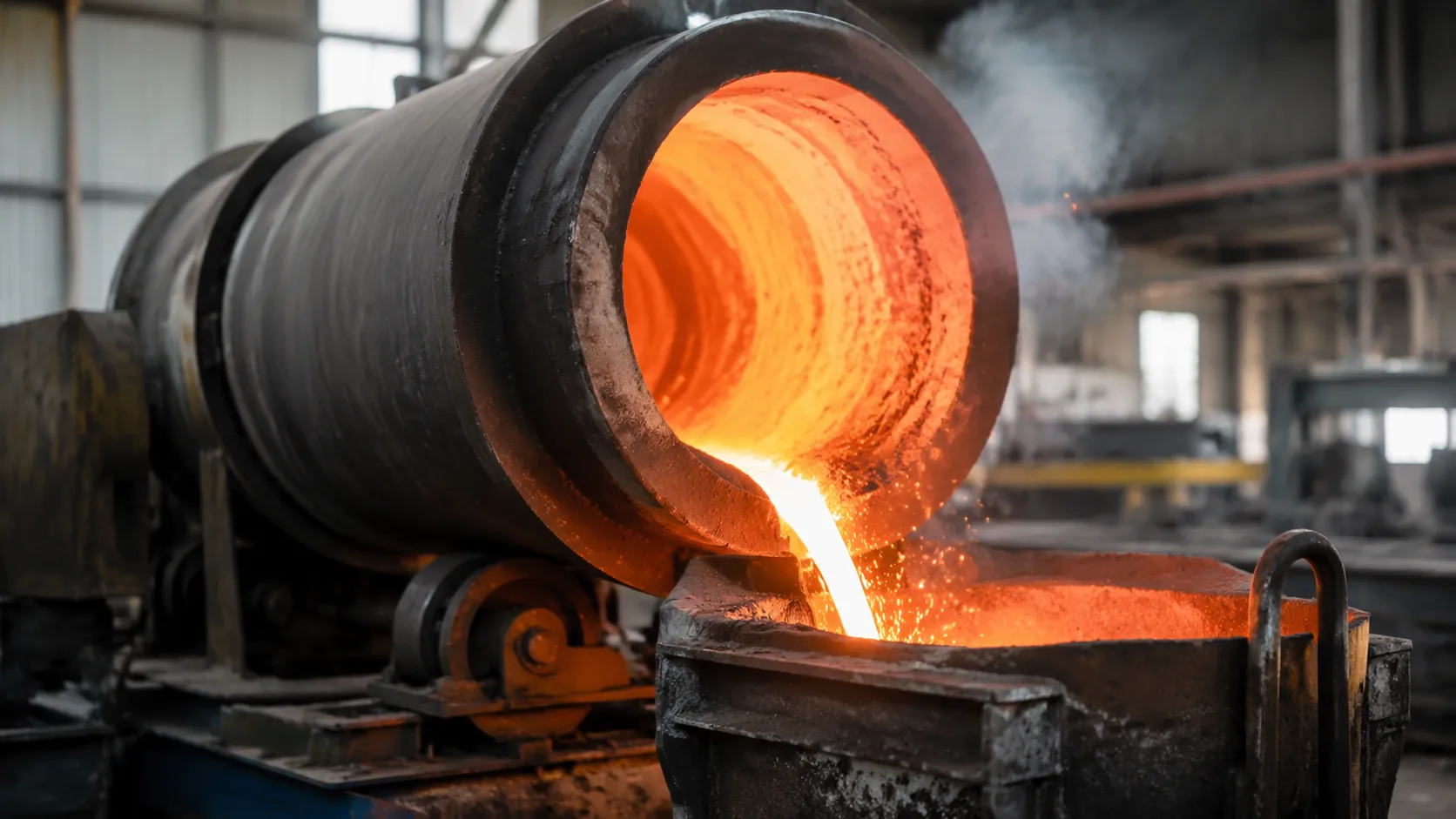
When we need to produce flawless hollow parts, we rely on centrifugal casting. Instead of using static molds, this metal casting process rotates the mold at high speeds while we pour in the molten metal. Centrifugal force pushes the heavier, clean metal to the outer walls while forcing lighter impurities to the center, where we can easily machine them away.
[Image of centrifugal casting process]
True vs. Semi-Centrifugal Casting
We divide this method into two primary techniques based on the shape of the final product:
- True Centrifugal Casting: The mold spins on a horizontal or vertical axis to create perfectly cylindrical parts without using a central core.
- Semi-Centrifugal Casting: The mold spins around a vertical axis, using a core to create internal shapes. We use this variation for symmetrical, wheel-like parts.
Ideal Applications and Material Benefits
This process is our go-to choice for manufacturing high-quality pipes, tubes, and rings. By leveraging rotational force, we achieve superior structural integrity and excellent material density that standard pouring methods cannot match.
| Feature | Centrifugal Casting Benefit |
|---|---|
| Common Products | Water pipes, bush bearings, cylinder liners, and jet engine rings. |
| Material Density | Ultra-dense grain structure with virtually zero trapped air or gas pockets. |
| Defect Reduction | Drastically minimizes common casting defects like porosity and shrinkage. |
| Structural Integrity | Exceptional directional solidification, delivering high mechanical strength for heavy-duty US industrial applications. |
Continuous Casting
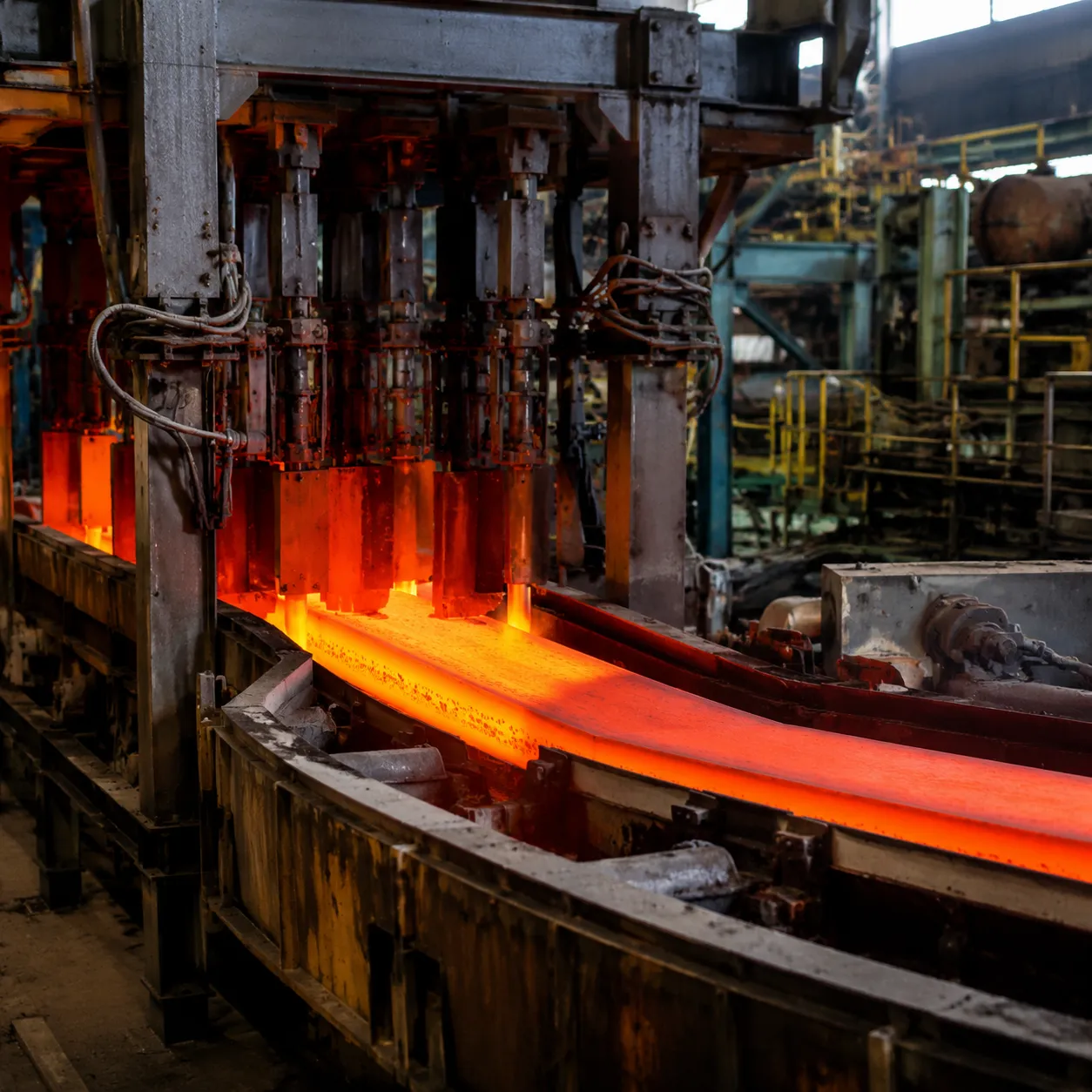
When we need to produce massive volumes of raw material without stopping, we turn to continuous casting. Unlike traditional batch methods, this metal casting process solidifies molten metal into a continuous strand of semi-finished shapes like billets, blooms, or slabs in an uninterrupted flow.
Mass Efficiency and Cost Reduction
This method completely transformed foundry manufacturing, especially for steel production. By skipping the step of pouring individual molds and reheating ingots, we cut down on energy, labor, and scrap waste.
| Feature | Continuous Casting Benefit |
|---|---|
| Production Speed | Non-stop, high-volume production of slabs and billets |
| Material Yield | Significantly less scrap metal compared to traditional molds |
| Quality Control | Highly uniform structural integrity and surface finish |
| Cost Efficiency | Lower energy consumption and reduced handling costs |
By keeping the molten metal moving continuously through a water-cooled casting mold, we achieve excellent dimensional accuracy and consistent quality across miles of metal. It is the ultimate backbone for high-volume raw material manufacturing.
Other Notable Types of Casting
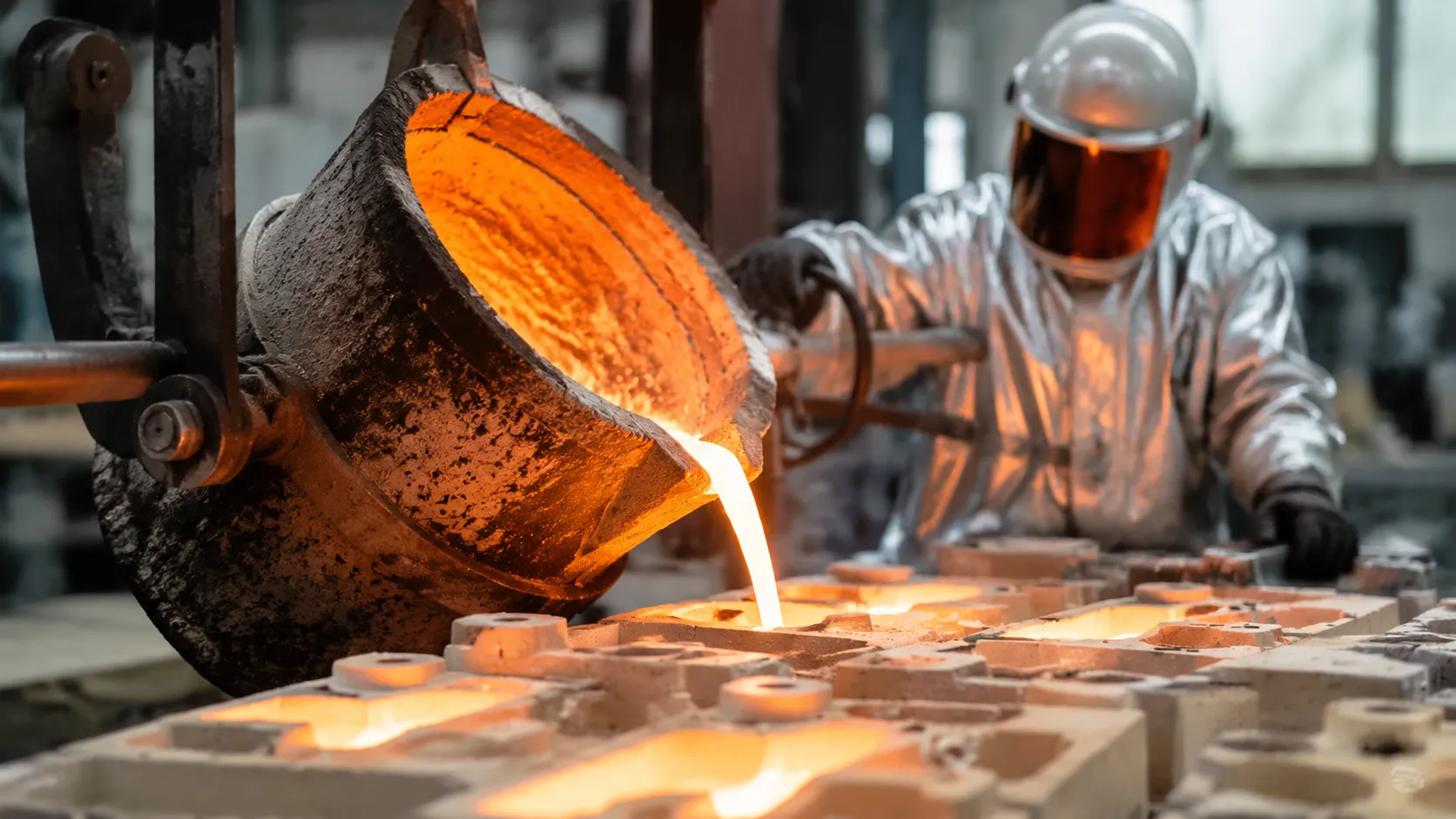
While sand and die casting handle the bulk of high-volume production, we also utilize several specialized types of casting to meet unique design requirements. When standard methods can’t deliver the exact surface finish or complex geometry you need, these alternative foundry manufacturing processes step in.
Shell Mold Casting
This method uses a heated metal pattern coated with a resin-sand mixture to form a thin, hardened shell. The Benefit: Offers better dimensional accuracy and faster production rates than traditional sand molds. Best Used For: Small to medium-sized parts that require precise tracking, like gear housings and connecting rods.
Plaster Mold Casting
Instead of sand, we use a gypsum plaster mix to create the casting mold. The Benefit: The plaster creates an exceptionally smooth surface finish and allows for intricate details. Best Used For: Non-ferrous metals like aluminum or copper alloys, often for lock components or decorative fittings.
Ceramic Mold Casting
Similar to plaster, but we use ceramic materials that can withstand extremely high temperatures. The Benefit: Allows us to pour high-melting-point molten metal while maintaining exceptional precision and a flawless finish. Best Used For: Impellers, complex machinery components, and specialized tooling.
Vacuum Casting
By drawing the molten metal into the mold cavity using a vacuum, we completely eliminate trapped air and gasses. The Benefit: Prevents common casting defects like porosity, ensuring a highly dense, structurally sound finished product. Best Used For: High-integrity components where material failure is not an option.
How to Choose the Right Casting Method
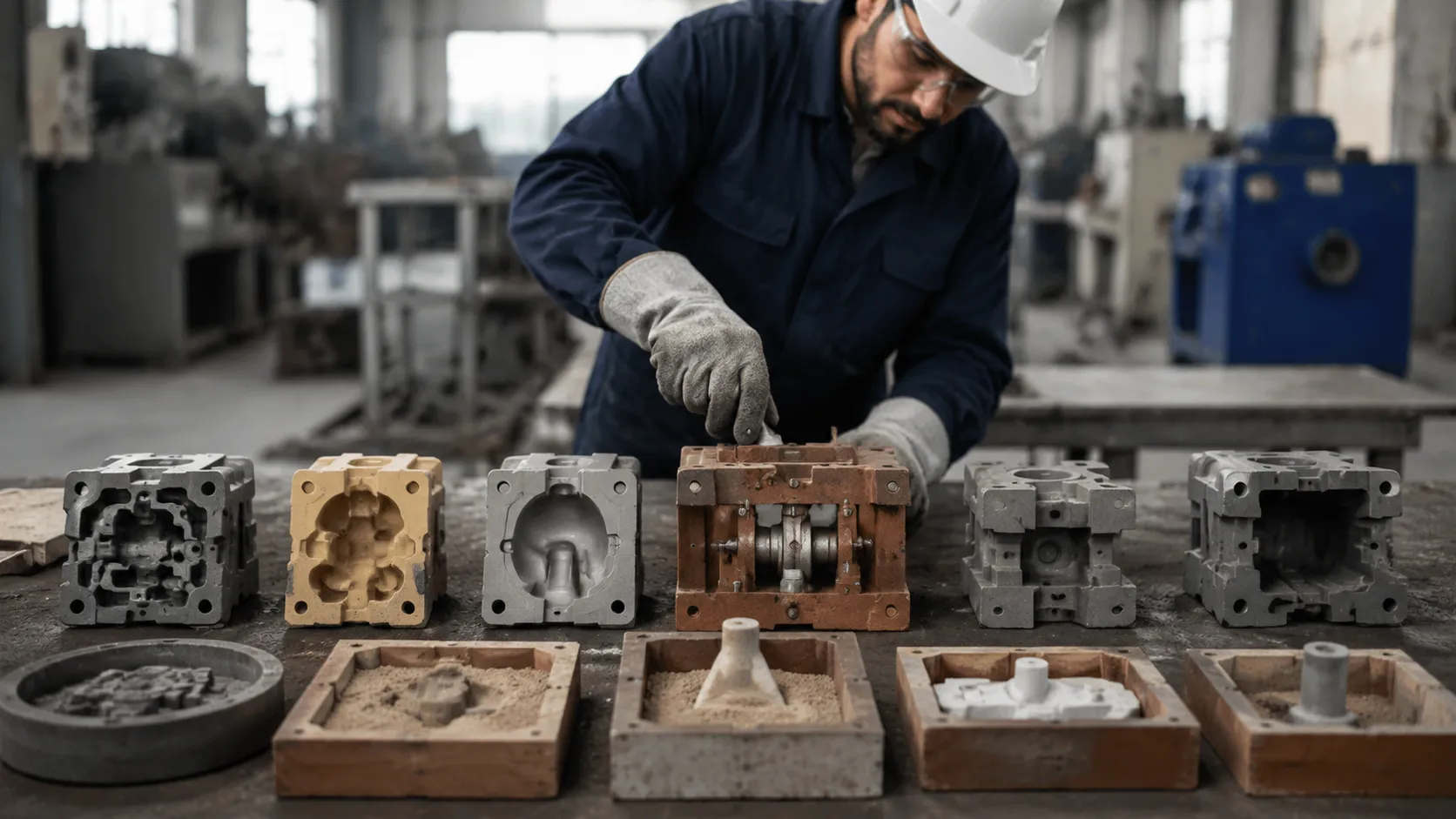
Choosing the right types of casting for your project directly impacts your production budget, timeline, and product quality. As foundry manufacturers, we always evaluate four critical pillars to match your design with the ideal metal casting process.
Production Volume and Scale
Your total order volume dictates the tooling setup. For high-volume production, high-initial-cost methods like pressure die casting drastically lower the per-part cost. For low-volume prototypes or massive industrial components, a sand mold offers the best flexibility.
Material Compatibility and Melting Points
Not every molten metal behaves the same way in every casting mold. Ferrous metals with high melting points (like steel) require sand or ceramic molds, whereas non-ferrous alloys (like aluminum, magnesium, and zinc) thrive in permanent metal molds.
Dimensional Accuracy and Surface Finish
If your part requires strict tolerances and a smooth surface finish right out of the mold, lost wax casting (investment casting) minimizes the need for secondary machining. Sand casting, while reliable, yields a rougher texture that often requires extra finishing.
Casting Method Comparison Matrix
| Selection Factor | Sand Casting | Investment Casting | Die Casting |
|---|---|---|---|
| Production Volume | Low to Medium | Low to Medium | High to Ultra-High |
| Tooling Cost | Very Low | Moderate | Very High |
| Dimensional Accuracy | Low to Medium | High | Excellent |
| Surface Finish | Rough | Smooth | Excellent |
| Best Used For | Large iron/steel parts | Complex, precise geometries | Mass-produced aluminum parts |
Budget Constraints and Tooling Costs
We weigh upfront tooling investments against piece-part costs. Permanent steel dies require heavy upfront capital but deliver the lowest cost per part at scale. Conversely, sand casting keeps your upfront costs near zero but carries higher labor costs per unit. Balancing these financial constraints ensures you get the highest quality part at the correct market price.
FAQs About Types of Casting
What is the most common type of casting?
Sand casting is by far the most popular method we use in foundry manufacturing. It accounts for the majority of total casting tonnage globally because it is incredibly cost-effective, handles massive components, and works with almost any molten metal.
Which casting process provides the best surface finish?
Investment casting (lost wax casting) and pressure die casting offer the finest surface finish and highest dimensional accuracy. Investment casting is our go-to for complex geometries, while die casting wins for high-volume production of smooth, non-ferrous parts.
What is the difference between sand casting and die casting?
We break down the main differences between these two popular types of casting below:
| Feature | Sand Casting | Die Casting |
|---|---|---|
| Mold Material | Temporary sand mold | Permanent steel die |
| Production Volume | Low to medium | High-volume production |
| Surface Finish | Rougher, usually needs machining | Excellent, smooth as-cast finish |
| Tooling Cost | Low upfront cost | High initial tooling investment |
| Material Choice | Ferrous and non-ferrous metals | Mainly non-ferrous (aluminum, zinc) |
Can all metals be used in every casting method?
No. Every metal casting process has material limitations based on melting points and mold durability. For example, we cannot easily use high-melting-point ferrous metals like steel in standard die casting because the extreme heat would quickly destroy the permanent steel dies. Conversely, a sand mold can handle almost any molten metal temperature without issue.
 English
  Spanish (Peru)
  German
  Korean
  Spanish (Spain)
  Italian