
Explore the high-strength 7075 aluminum alloy with detailed properties, heat treatments, machining guides, and aerospace applications.
Chemical Composition and Alloy Designation
7075 aluminum alloy is part of the 7000 series, known for its high strength and aerospace-grade quality. Its exact chemical makeup mainly includes:
- Zinc (Zn): 5.6% to 6.1% – The primary alloying element that boosts strength and hardness.
- Magnesium (Mg): 2.1% to 2.5% – Enhances strength through precipitation hardening.
- Copper (Cu): 1.2% to 1.6% – Improves hardness and overall mechanical properties.
- Chromium (Cr): 0.18% to 0.28% – Adds corrosion resistance and toughness.
- Others: Trace amounts of iron, silicon, manganese, titanium, and zinc balance to 100%.
This precise balance gives 7075 its signature strength, placing it among the strongest aluminum alloys available. The high zinc and copper content contribute to excellent tensile strength and fatigue resistance, making it ideal for critical structural components. At the same time, chromium helps control grain structure, improving corrosion resistance compared to other 7000 series alloys.
In short, the 7075 alloy designation points to this specific chemistry. Manufacturing standards such as ASTM B209 or AMS 4061 specify these ranges closely, ensuring consistent performance. The chemical makeup directly impacts how 7075 behaves during heat treatment, machining, and practical use—especially for aerospace and defense applications where reliability counts.
Mechanical and Physical Properties of 7075 Aluminium Alloy
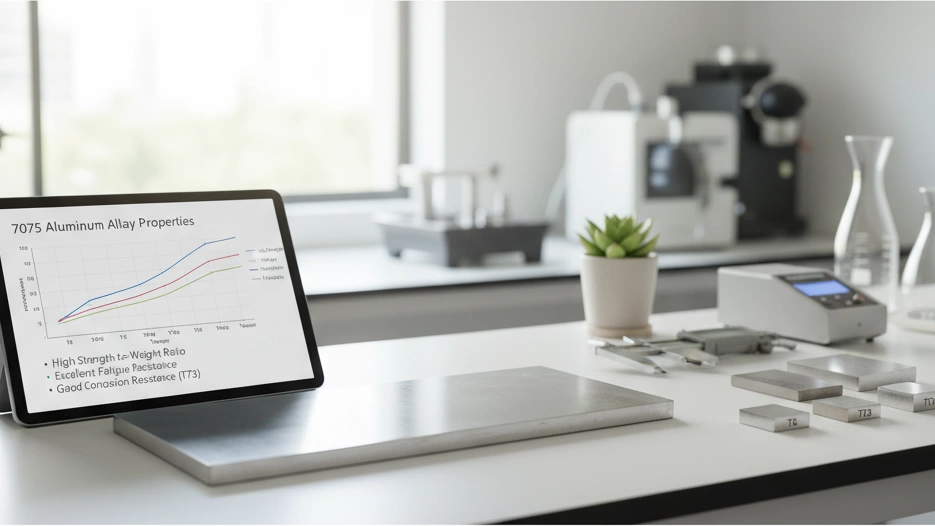
7075 aluminum alloy stands out for its excellent strength and lightweight nature, making it a favorite in demanding applications. Here’s a quick look at its key mechanical and physical traits:
- cURL Too many subrequests. About 2.81 g/cm³ (0.102 lb/in³), which is typical for the 7000 series aluminum alloys, offering a great strength-to-weight ratio.
- Tensile Strength: Varies with temper but generally ranges from 73,000 psi (in softer tempers) up to 83,000 psi or more in T6 and T651 tempers. This high tensile strength is a big reason it’s dubbed a high strength aluminum alloy.
- Hardness: 7075 T6, for example, rates around 150 Brinell hardness, making it notably harder than common alloys like 6061.
- Fatigue Strength: It offers good fatigue resistance, which helps in aerospace and defense parts that face repetitive stress, although stress corrosion cracking can be a concern without proper temper selection.
- Electrical Conductivity: Around 33% IACS (International Annealed Copper Standard), lower than softer alloys but acceptable for structural uses where strength is priority.
- Corrosion Resistance: Varies by temper. T6 offers decent corrosion resistance but can be prone to stress corrosion cracking. Tempers like T73 and T7351 improve corrosion resistance significantly, making them better for marine or high-humidity environments.
In short, 7075 aluminum alloy is all about combining tough mechanical performance with a lightweight profile, but you need to pick the right temper depending on your corrosion and fatigue needs.
Heat Treatment Tempers Explained
7075 aluminum alloy comes in several heat treatment tempers, each offering a different balance of strength and corrosion resistance. Here’s a quick breakdown of the most common ones used in the U.S. market:
- T6: This is the go-to temper for high strength. It’s solution heat-treated and artificially aged, giving 7075 peak tensile strength—usually around 73 ksi. But it’s more prone to stress corrosion cracking compared to other tempers, so it’s great where strength is king but corrosion isn’t a big concern.
- T651: Similar to T6 but includes a stress-relieve stretch during processing. This reduces residual stress and slightly improves dimensional stability, which is why aftermarket CNC blanks often specify T651. It keeps nearly the same strength as T6.
- T73: If you need better corrosion resistance and improved stress corrosion cracking resistance, T73 is your choice. It’s over-aged, so strength drops to about 65 ksi, but it’s much tougher in harsh environments — ideal for aerospace and marine parts that see more moisture and stress.
- T7351 and T7651: These tempers are variations of T73 with controlled stretching (like the 651 temper) to reduce residual stresses. They have slightly higher strength than T73 and good corrosion resistance, making them popular for structural aerospace components.
- RRA (Retrogression and Re-Aging): This heat treatment method is a two-step process that first softens the alloy to make it easier to form or machine, then re-hardens it without compromising corrosion resistance. RRA parts find use where complex shaping and good final strength are both needed.
Each temper tweaks strength, machinability, and corrosion resistance to fit different needs. For U.S. businesses in aerospace, defense, or automotive sectors, picking the right 7075 temper helps optimize performance and longevity in your parts.
Machinability and CNC Guidelines for 7075 Aluminium Alloy
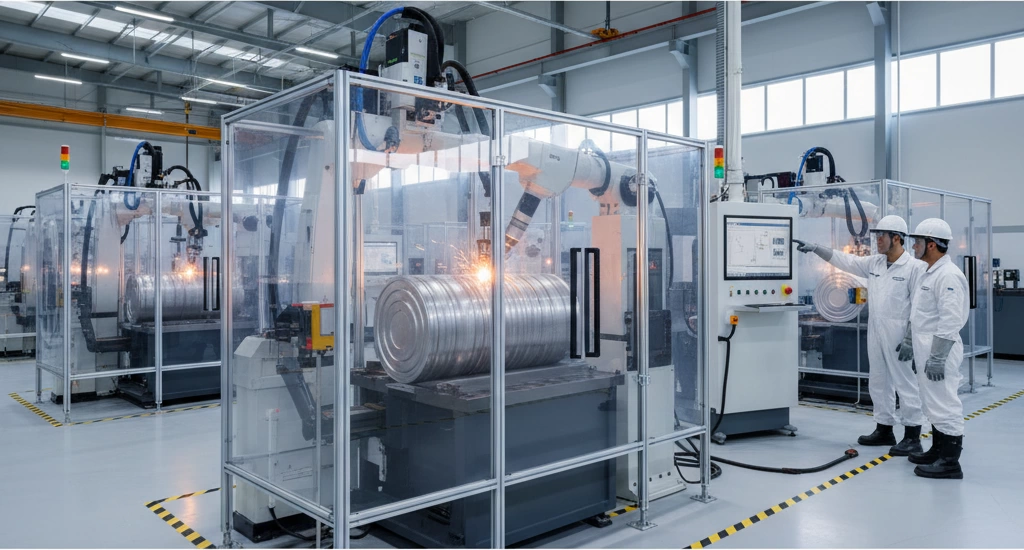
7075 aluminum alloy is a popular choice for CNC machining thanks to its high strength and good machinability, but it needs the right setup to get the best results.
Tooling:
Use sharp, carbide tools with coated edges (like TiN or TiAlN) to handle 7075’s toughness. High-speed steel tools can work but wear out fast.
cURL Too many subrequests.
cURL Too many subrequests.
cURL Too many subrequests.
cURL Too many subrequests.
cURL Too many subrequests.
cURL Too many subrequests.
cURL Too many subrequests.
cURL Too many subrequests.
cURL Too many subrequests.
cURL Too many subrequests.
cURL Too many subrequests.
cURL Too many subrequests.
cURL Too many subrequests.
cURL Too many subrequests.
- cURL Too many subrequests.
- cURL Too many subrequests.
- cURL Too many subrequests.
cURL Too many subrequests.
cURL Too many subrequests.
7075 aluminium alloy is a go-to in several demanding industries across the U.S. thanks to its high strength and durability. Here’s where you’ll find it making an impact:
- Aerospace: Known as an aerospace grade aluminum, 7075 is used for aircraft structures, fuselage frames, and wing spars. Its excellent strength-to-weight ratio keeps planes light yet sturdy.
- Defense: Military gear, including armor plating and weapon components, often rely on 7075 for toughness under stress and impact.
- Automotive: High-performance sports cars and motorcycles use 7075 alloy parts for lightweight frames, suspension components, and fasteners where strength counts.
- Sports Equipment: Bicycles, climbing gear, and high-end fishing rods benefit from the alloy’s fatigue resistance and light weight.
- Tooling and Machinery: 7075 T6 and T651 plates are standard for jigs, fixtures, and precision machining tools where hardness and stability are required.
This alloy’s popularity in these sectors comes down to its combination of strength, machinability, and fatigue resistance — perfect for U.S. industries wanting reliable, high-performance aluminum solutions.
7075 vs 6061 – Head-to-Head Comparison
When choosing between 7075 aluminum alloy and 6061 aluminum, it’s all about what you need—strength, cost, corrosion resistance, or machinability. Here’s a quick breakdown:
| Feature | 7075 Aluminum Alloy | 6061 Aluminum Alloy |
|---|---|---|
| cURL Too many subrequests. | High strength, up to 83 ksi tensile | Moderate strength, around 45 ksi |
| Cost | More expensive due to alloying | More affordable, widely available |
| Corrosion Resistance | Lower; prone to aluminum stress corrosion cracking | Better corrosion resistance |
| Machinability | Good but requires sharp tools, careful feed rates | Easier to machine, forgiving to tooling |
| Heat Treatment | Needs precise tempers like T6, T651 | Also heat treatable, less complex |
| Applications | Aerospace, defense, high-load parts | Structural frames, automotive, pipes |
Decision Tips:
- Pick 7075 if strength and weight savings matter most, especially in aerospace or military gear.
- Choose 6061 for better corrosion resistance and easier machining at a lower price.
- If welding is involved, 6061 is usually your friend; 7075 is tricky.
- For everyday projects with moderate strength needs, 6061’s versatility wins.
In short, 7075 is your go-to for high-strength, lightweight applications in the U.S., while 6061 serves well for general use with better corrosion toughness and lower cost. Keep your project needs front and center when picking between these two.
Advantages and Limitations of 7075 Aluminium Alloy
Advantages
- High Strength: 7075 aluminum is one of the strongest aluminum alloys available, making it ideal for applications where strength matters.
- Good Fatigue Resistance: It handles repeated stress well, which is key for aerospace and automotive parts that see constant use.
- cURL Too many subrequests. Despite its strength, it stays light, helping reduce overall weight in aircraft, vehicles, and sports equipment.
- Wear Resistance: cURL Too many subrequests.
Limitations
- cURL Too many subrequests. cURL Too many subrequests.
- Cost: cURL Too many subrequests.
- cURL Too many subrequests. cURL Too many subrequests.
- cURL Too many subrequests. cURL Too many subrequests.
cURL Too many subrequests.
cURL Too many subrequests.
cURL Too many subrequests.
cURL Too many subrequests.
cURL Too many subrequests.
cURL Too many subrequests.
cURL Too many subrequests.
- cURL Too many subrequests.
- cURL Too many subrequests.
- cURL Too many subrequests.
- cURL Too many subrequests.
- Tight dimensional tolerances for precision fit
- Instant online quoting and fast lead times
Whether you’re in aerospace, defense, or high-performance automotive, the U.S. market supports quick access to quality 7075 alloy with the specifications and service you need.
 Korean
  English
  Spanish (Peru)
  German
  Spanish (Spain)
  Italian