
Precision lost-foam casting services for complex metal parts with high accuracy fast quotes quality testing and custom alloy support.
What is Lost-Foam Casting?
Struggling with complex internal geometries, restrictive tooling designs, or excessive machining costs on your assembly line? Lost-foam casting provides a streamlined, highly efficient solution for manufacturing intricate metal components.
At its core, lost-foam casting is an advanced evaporative-pattern casting process. Unlike traditional methods, it entirely eliminates the tedious and time-consuming wax melt-out phase. We use precision EPS foam patterns to create exact replicas of your parts. When molten metal is poured into the dry sand mold, the foam vaporizes instantly on contact. The metal perfectly fills the void left behind, resulting in a highly accurate, near-net-shape casting.
The immediate benefits of this expendable pattern casting method include:
- Zero Core Requirements: Produce highly complex internal cavities without the need for traditional sand cores.
- No Parting Lines: Achieve a flash-free metal casting that slashes post-processing time.
- Rapid Production: Skip the wax melting step entirely for faster turnaround times.
The precisionvast Difference: Driven by CAE Simulation
We do not leave complex geometry metal casting to trial and error. The precisionvast difference is built on state-of-the-art CAE (Computer-Aided Engineering) simulation. Before a single drop of metal hits the sand, our engineers digitally test and optimize the entire pour.
By simulating the exact behavior of the molten metal and the foam vaporization process, we eliminate risks early.
How our CAE simulation protects your procurement process:
- Defect Prevention: Identifies and resolves air pockets, shrinkage, and flow issues digitally.
- Thermal Optimization: Maps cooling rates to ensure maximum structural integrity and prevent warping.
- Cost Reduction: Eliminates physical prototyping iterations, getting your custom lost foam parts to market faster and under budget.
Method Comparison: Eliminating the Melt-Out Phase
| Manufacturing Factor | Lost-Foam Casting | Traditional Investment Casting |
|---|---|---|
| Pattern Material | Expendable EPS Foam | Wax |
| Melt-Out Phase | Eliminated (Vaporizes on contact) | Required (Adds hours to production) |
| Tooling Lifespan | Exceptional (No friction or high pressure) | Moderate |
| Design Freedom | Extreme (Limitless internal channels) | High (But limited by wax removal) |
Technical Capabilities & Material Specifications
We specialize in a broad spectrum of metals to produce custom lost foam parts tailored to the demands of US manufacturing. Whether your project requires lightweight lost foam aluminum casting or heavy-duty lost foam iron casting, our foundry has the capacity to deliver. We also pour carbon steel, alloy steel, and premium grades, including high-performance duplex stainless steel casting for harsh environments.
Foundry Capacities & Tolerances
Here is a quick breakdown of our core lost-foam casting specifications:
| Specification | Foundry Capability |
|---|---|
| Dimensional Tolerances | ±0.005″ to ±0.010″ per inch |
| Minimum Wall Thickness | 0.10″ to 0.15″ (alloy dependent) |
| Weight Capacity | 1 lb to over 500 lbs |
| Maximum Size Capacity | Up to 60 inches |
| Raw Surface Finish (Ra) | 120 to 250 µin |
| Machined Surface Finish (Ra) | 32 µin or better |
By leveraging the evaporative-pattern casting method, we achieve high-quality, near-net-shape casting results. This precision ensures tight tolerances and excellent raw surface finishes right out of the dry sand mold, drastically cutting down on the need for expensive secondary machining.
6 Industrial Advantages of Choosing Lost-Foam Casting
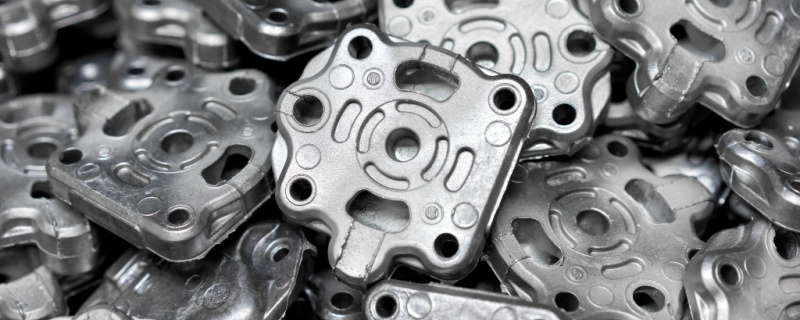
When sourcing custom metal parts for the US market, efficiency and precision dictate your bottom line. Our evaporative-pattern casting process provides six distinct competitive advantages for manufacturing your most demanding components.
- Unmatched Design Freedom: We easily handle complex geometry metal casting with intricate internal cavities. By completely eliminating the need for traditional sand cores, we can cast parts exactly as you envision them.
- Zero Draft Angles: Free your engineers from standard design restrictions. Because the foam evaporates, your parts require absolutely zero draft angles to be removed from a mold.
- Flash-Free Metal Casting: Our process eliminates parting lines and flash. This delivers a cleaner raw component right out of the foundry and drastically cuts down on expensive manual grinding and finishing times.
- High Dimensional Accuracy: We deliver true near-net-shape casting. Hitting tight tolerances right out of the gate means you spend less time on secondary CNC machining and more time assembling your final product.
- Material Efficiency: We minimize waste at every step. By pouring only the exact volume required for the finished part, we reduce scrap metal and maximize your material budget.
- Exceptional Tooling Longevity: Because the aluminum tooling only shapes lightweight EPS foam—never molten metal—it experiences virtually zero thermal wear. This provides a massive lifespan advantage and much lower long-term replacement costs when compared to high-pressure structural die casting.
Our 6-Step Lost-Foam Casting Process
We keep our manufacturing process streamlined and highly controlled. This systematic approach is what allows us to deliver complex geometry metal casting consistently to our US manufacturing partners. If you are weighing your options against other types of casting processes, you’ll notice how efficient our dry sand method is from start to finish.
Here is exactly how we manufacture your custom lost foam parts:
- 1. Pattern Creation & Assembly: We build an exact physical replica of your design using either CNC-machined or injected EPS foam. For initial runs, this expendable pattern casting step is highly cost-effective and serves as one of the best low-volume casting prototyping solutions on the market.
- 2. Refractory Coating: We dip or spray the assembled EPS foam casting pattern in a specialized liquid ceramic. Once dried, this creates a breathable but protective shell that guarantees a smooth surface finish and keeps the sand out of the molten metal.
- 3. Flask Packing: The coated pattern goes into a molding flask, and we surround it with unbonded dry sand. We use heavy-duty vibration tables to compact the sand tightly into every internal channel and cavity—completely eliminating the need for expensive, separate sand cores.
- 4. Pouring Molten Metal: This is the core of the evaporative-pattern casting technique. As we pour the molten alloy directly onto the gating, the intense heat instantly vaporizes the foam pattern. The metal perfectly replaces the foam, filling the exact void left behind in the sand.
- 5. Shakeout & Cleaning: Once the metal solidifies and cools, we simply tip the flask and the unbonded dry sand easily falls away for reuse. We then clean the raw part to remove the remaining ceramic coating shell, revealing a clean, flash-free metal casting.
- 6. Post-Processing & CNC Machining: ly, we cut away the sprues and gating systems. Because lost-foam casting inherently produces a near-net-shape casting, minimal material removal is required. We handle any final tight-tolerance CNC machining in-house to deliver a finished component that is ready to drop right into your assembly line.
Comprehensive Quality Assurance for Lost-Foam Casting
As a reliable B2B casting manufacturer, we do not guess when it comes to the integrity of your components. Our lost-foam casting process is backed by strict quality control measures from start to finish. Whether we are evaluating heavy-duty iron components or complex aluminum castings, our facility is equipped with state-of-the-art testing technology to ensure your parts meet precise specifications every single time.
We verify the quality of all custom lost foam parts using advanced testing protocols:
- CMM (Coordinate Measuring Machine): We use pinpoint digital precision to verify the exact dimensions, geometries, and tight tolerances of your final parts.
- X-Ray Inspection: We look deep inside the metal to guarantee a void-free, structurally sound component without destroying the part.
- Spectrometer Material Analysis: We confirm the precise chemical composition of the alloy right on the foundry floor, ensuring the metal makeup is exactly what you ordered.
- Hardness Testing: We verify that the metal meets the specific strength, wear resistance, and durability requirements of your project.
- Magnetic Particle Inspection: We detect microscopic surface or near-surface flaws, ensuring every precision foam casting is ready for heavy industrial use.
We build quality into the process, delivering dependable, near-net-shape components that you can trust on the assembly line.
Industries We Serve with Lost-Foam Casting
Our B2B casting manufacturing facility produces high-quality, custom lost foam parts for critical US industries. Because this process eliminates the need for complex sand cores, it is the ideal solution for complex geometry metal casting that requires exact precision and high durability.
Here are the primary sectors that rely on our lost-foam casting capabilities:
- Automotive: We manufacture highly detailed engine blocks and cylinder heads. The structural integrity required for these components is a major reason why iron casting in the automotive industry remains a cornerstone of modern vehicle manufacturing.
- Pump & Valve: Fluid control demands exact internal dimensions. Our evaporative-pattern casting easily forms complex internal fluid channels without flash or parting lines, ensuring smooth flow rates and tight seals.
- Agricultural Machinery: American farming equipment takes a beating. We supply durable, near-net-shape casting components built to withstand the heavy wear and tear of daily fieldwork.
- Heavy Construction Equipment: Structural strength is non-negotiable for earthmovers and cranes. We utilize EPS foam casting to deliver massive, rugged parts that keep heavy machinery operating reliably on tough job sites.
Lost-Foam Casting vs. Investment Casting
When looking at innovations in lost wax casting alongside our lost-foam casting services, customers often ask which route makes the most sense for their bottom line. Both deliver complex geometry metal casting without the need for internal cores, but they cater to very different manufacturing priorities.
Here is a quick breakdown of how these two processes compare:
| Feature | Lost-Foam Casting | Investment Casting (Lost-Wax) |
|---|---|---|
| Tooling Costs | Lower (Aluminum dies for EPS foam) | Higher (Heavy-duty metal dies for wax) |
| Surface Finish | Good (Slight foam bead texture) | Excellent (Extremely smooth) |
| Production Volume | Ideal for mid to high-volume runs | Best for low to mid-volume runs |
- Comparison of Tooling Costs: Custom lost foam parts require a lower upfront investment. Lost foam tooling design relies on straightforward aluminum molds to create the patterns. These cost less to produce and last significantly longer than the heavy-duty dies required for injecting wax.
- Surface Finish Differences: Investment casting wins on ultimate surface smoothness out of the mold. However, our precision foam casting still produces excellent near-net-shape casting results. You just might notice a minor micro-texture left behind on the metal by the evaporative-pattern casting process.
- Production Volume Thresholds: For scaling up, the dry sand casting method makes high-volume B2B casting manufacturing much more efficient. If you are ramping up production runs, EPS foam casting is simply faster, highly repeatable, and much more cost-effective at scale.
Frequently Asked Questions About Lost-Foam Casting
Here are the most common questions we receive regarding our lost foam foundry services and how we manufacture your custom lost foam parts.
What is the typical lead time for first-article inspection (FAI)?
For a standard lost-foam casting project, FAI samples are typically ready within 4 to 6 weeks. This timeframe includes the initial lost foam tooling design, pattern creation, and the first pour. Parts requiring highly complex geometry metal casting might add a slight buffer to the schedule.
What are the minimum order quantities (MOQs)?
As a dedicated B2B casting manufacturer, we structure our production to scale with your business. While the evaporative-pattern casting process is incredibly efficient for mass production, we typically set our MOQs between 100 to 500 units. This volume ensures that your initial tooling and setup costs remain highly economical.
How much does initial foam tooling usually cost?
One of the biggest advantages of this dry sand casting method is the drastically reduced upfront investment. Compared to traditional high-pressure die casting, foam tooling is inexpensive. Depending on the exact dimensions and complexity of the part, initial tooling costs generally run between $2,000 and $5,000.
Can precisionvast handle custom or unusual alloy requests?
Absolutely. While we routinely pour standard aluminum, iron, and carbon steel, we excel at dialing in custom chemistry. Whether your application requires extreme heat resistance or you need exceptionally tough high manganese steel castings for heavy impact and wear, our foundry lab will verify the exact material specifications to meet your project demands.
 English
  Spanish (Peru)
  German
  Korean
  Spanish (Spain)
  Italian